SMRs: Transitioning from novel technology to commercial success
Guest/partner contributor
Posted on: 3 October 2023
Jason Dreisbach of AtkinsRéalis explores what it could take to bring Small Modular Reactors to market| particularly in the UK.
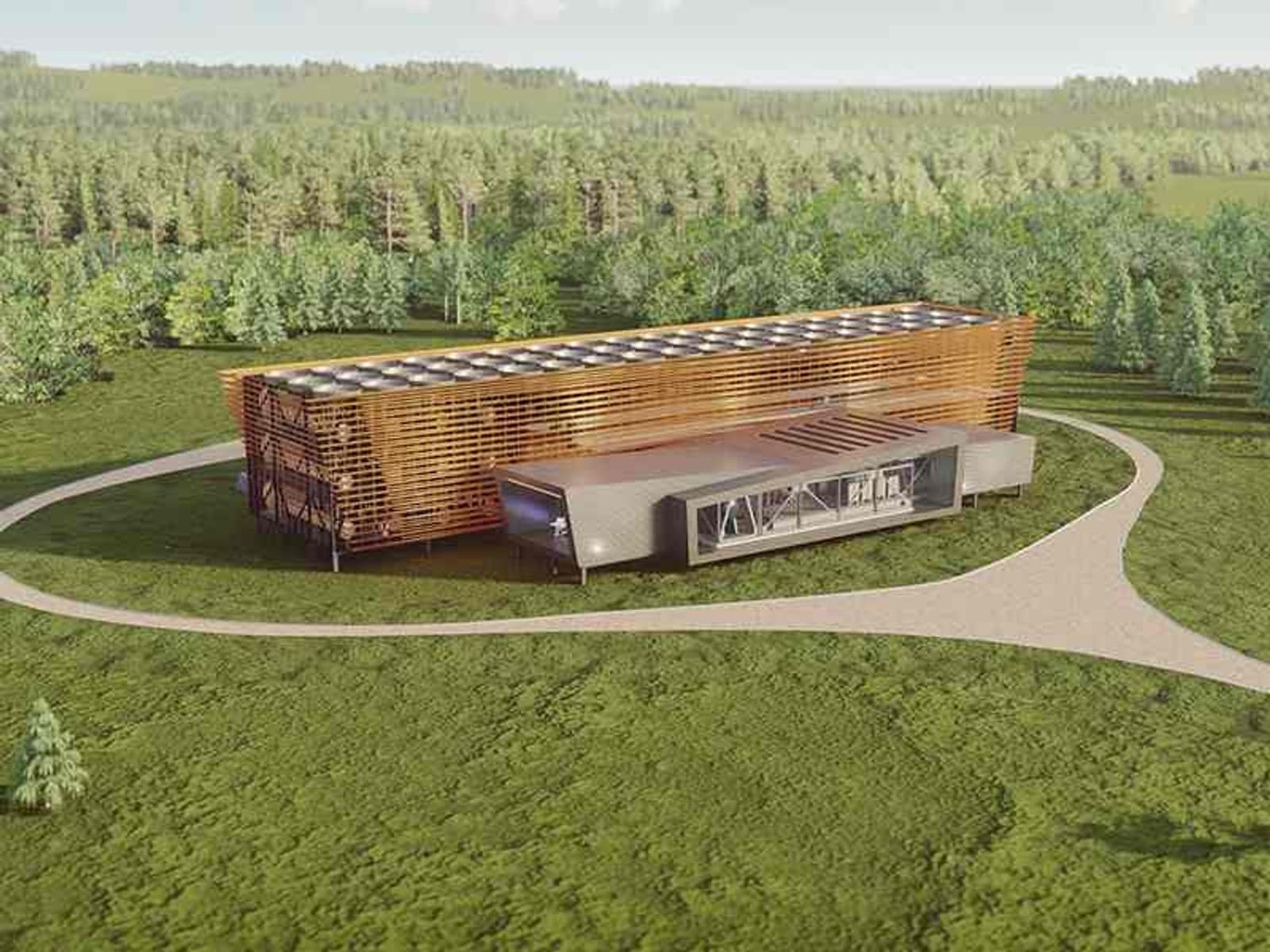
The UK Government has set an ambitious target of reaching 24GW of nuclear capacity by 2050 in its bid to move towards a low carbon energy system and safeguard security of supply. Small Modular Reactors (SMRs) deployed at pace and at scale, form a core part of the strategy.
Jason Dreisbach, chief engineer and portfolio director for AtkinsRéalis’ Advanced Energy Technologies in EMEA explores what it could take to bring Small Modular Reactors to market, particularly in the UK.
The commitment to develop SMRs is clear, and following a competitive call, the newly formed Great British Nuclear is currently assessing the best SMR technologies from across the globe to take forward with potential for major investment.

Globally, there are more than 70 SMR designs in development with hopes to commercialize. Designs and projects within various countries are at varying levels in their advancement. But there are common challenges and, to overcome them, opportunities to unlock efficiencies and benefits as the industry unites to accelerate novel technology into commercial reality.
Needless to say, safety is a huge priority. Any SMR faces a complex licencing and approval process, which could take several years. Despite the push for harmonization across counties, it is important to recognize that each jurisdiction must make its own decisions on protecting safety, security and the environment.
The other major obstacle though is an economic one. The build rate required in the UK for example is unprecedented and we’ve not seen a proposed nuclear deployment on this scale since the “Messmer Plan” in the 1970s.
Additionally, whilst SMRs may be faster to build and require less capital to develop, their cost effectiveness is yet to be proved. Potential investors are playing it safe, waiting for assurances that orders will roll in and clarity on returns on investments (ROI).
Irrespective of the technology chosen, a commitment for a minimum order of SMR units will likely be required to justify investment – ideally based on a single standardised design that can be replicated, in order to achieve economies of scale. In other words, a fleet deployment approach.
Have you read?
Steady Energy to decarbonise residential heating with SMRs
SaskPower SMR awarded Ca$74m government funding
An SMR Techno-Economic Assessment (TEA) conducted in 2016, for what was then the Department of Energy and Climate Change, honed in this recommendation. We advised that a fleet-based approach would be fundamental to securing finance for the required advanced manufacturing and assembly facilities and to delivering ROI.
Fleet deployment, using a repeatable design, is also the most cost effective and time efficient way to deliver the new infrastructure at scale and bring it online quickly. It’s a process being demonstrated already in larger nuclear builds. Hinkley Point C provides a good illustration of the benefits.
Timings on the construction elements of the second site for example have been significantly reduced using learnings and data captured from design and build of the first. And now, the proposed Sizewell C power station is set to follow the same process, replicating Hinkley Point C’s design and supply chain learnings and expertise. In effect, Sizewell C will become units 3 and 4 of the UK EPR fleet.
Through replication and innovation, it is estimated £4 billion ($4.8 billion) will be cut from the build budget of Sizewell C. Around half of these savings will come from streamlining the process of design approval from UK regulators.
SMRs could offer even further opportunities for design replication through simplification and standardisation by design to maximise the economy of series, as opposed to the economy of scale.
A successful fleet deployment of an SMR programme in the UK, and any country for that matter, could bring other benefits for the wider local and regional economy too. One being the expansion of the supply chain, leading to job creation and a much needed skills boost for the sector. There is also the potential to become a manufacturer and exporter of SMR technology, greatly benefiting the eco-system of companies investing in the development.
Digital core
Crucial to realising the commercial and efficiency benefits of replication and fleet deployment is a robust digital strategy. By using data and information management to capture lessons learned from preceding projects, it will support safe and efficient delivery of further units, improve scheduling and reduce costs.
For example, it is estimated cost savings of 4-10% could be achieved using Building Information Modelling (BIM) and a project Common Data Environment (CDE) in SMR deployment, largely gained by increases in efficiency.
It is often hard for new projects to appreciate the value of upfront investment in digitalisation, particularly when, as in the case of SMRs, there’s not yet any tangible evidence. However, it is vital the new build nuclear industry embraces digital technology.
It requires investment – both financial and resource - but as we’re seeing with other projects like Hinkley Point C and Sizewell C, the efficiencies gained can be significant from smooth data transfer, decision-making processes, and working across borders.
Digital needs to be at the core of SMR design and deployment, implemented from the ground up, to ensure the most benefits can be realised across the asset’s lifecycle, from design, construction and operation through to decommissioning.
By collecting, managing and exploiting data at each of the stages of a facility’s life, shared through collaborative CDE, it will also drive efficiencies in asset management and allow for more predictive and proactive Operations and Maintenance processes.
There are also inherent improvements in safety, and live streaming and tools such as digital twins are now often being used in other industries to reduce the number of people on site (and the associated costs and carbon footprint)—we need to learn from these other industries to make SMRs a reality.
Also of interest
GE Hitachi boss weighs in on getting new nuclear right
Why digitalisation is crucial to the nuclear industry delivering on its potential
What are the nuclear technologies of the future?
Focusing on the M in SMR
The modular in SMR offers another commercial advantage. Around 80% of an SMR could be constructed offsite, which potentially reduces the capital cost over 35% compared to a traditional site-built method. Using Modern Methods of Construction (MMC), systems and components of the SMR can be assembled in factories off-site and later transferred for installation, almost like building with Lego.
Working in this way will bring improvements in quality control and working conditions and negates the impact of inclement weather on progress. Subsequent construction management also becomes that bit easier, lowering risk and reducing costs, through shorter build schedules, productivity increases and parallel working.
Successfully implementing modularisation though will require an early emphasis on logistics during the design phase, a site design that focuses on ease of installation of the modules and stringent inspections to ensure the modules comply with the required design tolerances and safety standards. Taking into account these factors will prevent costly delays in the field during SMR construction.
Powering up
SMRs are scheduled to come online in the UK in the early 2030s, with a recent global study predicting 25% of nuclear sourced electricity will come from SMRs in 2043.
However, it will take the right support, competition and approach for SMRs to gain the financial backing they need to be rolled out at the required scale and speed.
Commitment from the Government for a fleet of units will help invigorate investors, but we must also make use of the growing suite of digital and advanced construction tools to deliver and operate SMRs safely, quickly and cost-effectively.