Tech giants pledge support for nuclear as baseload demand grows
Pamela Largue
Posted on: 13 March 2025
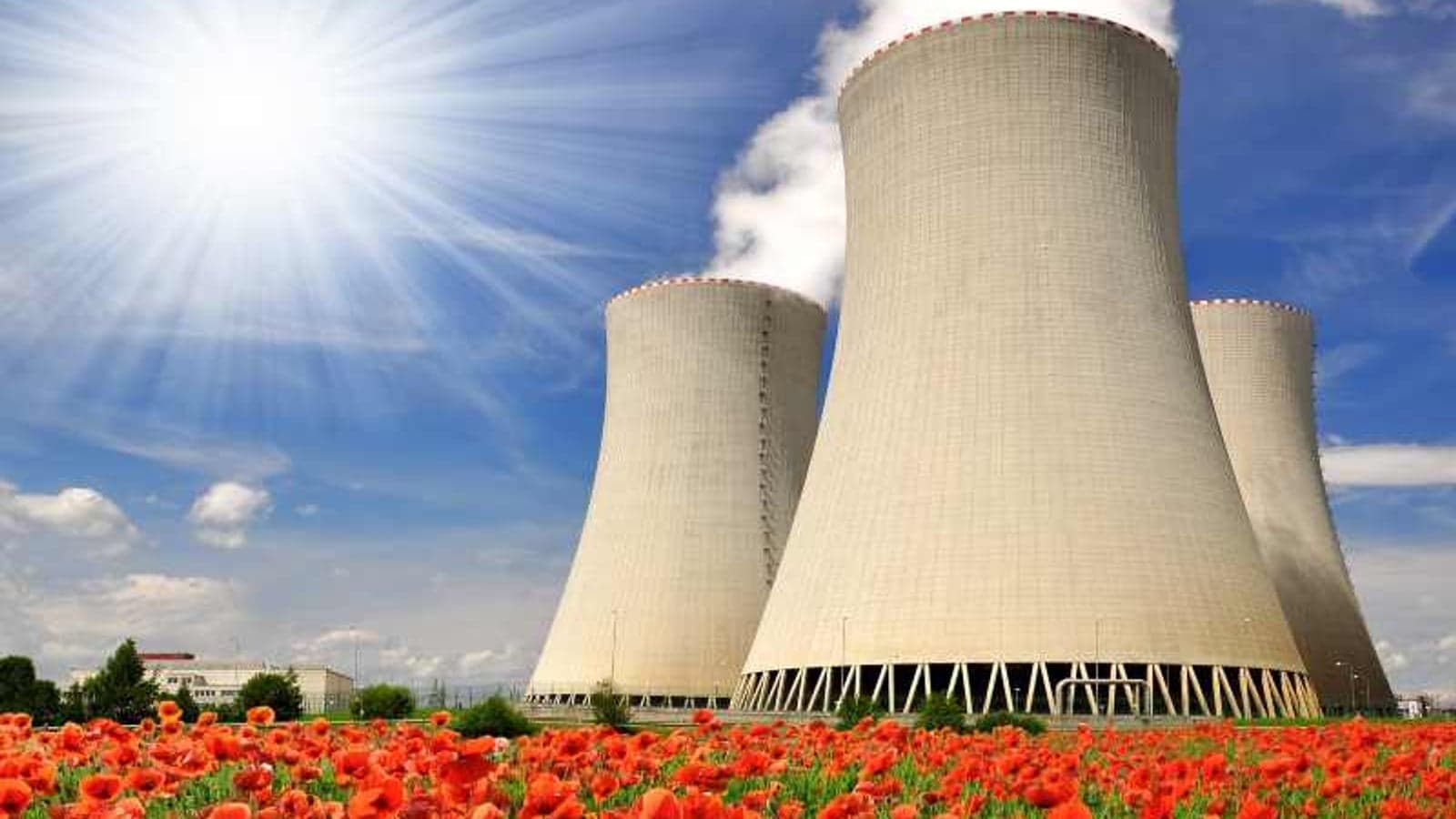
Some of the world's most influential tech companies as well as large energy users have signed a pledge to support the goal of tripling nuclear energy capacity by 2050.
Some of the world's most influential tech companies as well as large energy users have signed a pledge to support the goal of tripling nuclear energy capacity by 2050.
The pioneering committment, signed on the sideliness of CERAWeek 2025 in Houston, Texas, was made by the likes of Google. Amazon, Meta, Dow, Occidental, Allseas, OSGE, and IHI.
The pledge, facilitated by the World Nuclear Association, aims to highlight the critical role of nuclear power beyond traditional grid electricity, to support electrification and provide a stable source of industrial process heat.
By pledging their committment to developing the resource, the companies are recognising nuclear's potential to not only enhance energy security but also provide the continuous, stable, baseload power needed to support economic growth and industrial activity.
This committment sends a positive message to the market and investors, as well as to governments that regulatory frameworks need to be established to facilitate this growth.
Sama Bilbao y Leon, director general of World Nuclear Association, commented on the announcement: “The unprecedented support announced today by some of the world’s most influential companies to at least triple global nuclear capacity by 2050 sends a clear signal to accelerate policy, finance and regulatory changes that enable the rapid expansion of nuclear power. The global shift towards more nuclear highlights this is the only way we’ll deliver the abundant firm clean energy required to power growth and innovation in technology, a host of other industries and the entire economy.”
According to Laurent Odeh, chief commercial officer for Urenco, the involvement of large power users makes this pledge particularly significant. "Support from large energy users is another sign for governments to enable new nuclear projects so we can accelerate construction and meet the energy needs of both industry and the public.”
Have you read?
TerraPower and HD Hyundai partner to scale Natrium reactor supply chain
newcleo in deal to green Italian steel production
Why tech companies support nuclear
Comments from Google, Amazon Web Services and Meta all emphasised that without a secure, reliable and affordable source of clean energy, the world can not expect to meet its decarbonisation targets while continuing to support economic and industrial expansion.
Lucia Tian, head of clean energy & decarbonization technologies, Google, said: "...Nuclear power will be pivotal in building a reliable, secure, and sustainable energy future. Google will continue to work alongside our partners to accelerate the commercialization of advanced nuclear technologies that can provide the around-the-clock clean energy necessary to meet growing electricity demand around the world."
Added Brandon Oyer, head of Americas Energy and Water for Amazon Web Services: “Accelerating nuclear energy development will be critical to strengthening our nation’s security, meeting future energy demands, and addressing climate change."
Urvi Parekh, head of global energy, Meta, said: “As global economies expand, the need for a reliable, clean, and resilient energy supply is paramount. Nuclear energy, with its ability to provide continuous power, can help meet this rising demand.”
Tech companies have shown a growing interest in investing in the development of nuclear power as they seek a stable power source to support the growth of data centres and AI.
Also of interest:
Why nuclear energy could save net zero
Nuclear’s role in a balanced clean energy future
In December last year, Meta announced a request for proposals (RFP) to nuclear developers, targeting 1 to 4GW of new nuclear generation to power its data centers and AI, starting in the early 2030s.
In October 2024, US-based nuclear technology developer Kairos Power signed an agreement with Google, which will lead to the deployment of 500MW of nuclear power projects by 2035.
And across the pond in Europe, several industry giants in Sweden issued statements confirming their willingness to co-invest in new nuclear power in an effort to ensure a secure energy supply and maintain industrial strength. Industrikraft, a collaboration of 17 industrial companies including the likes of Alfa Laval, Boliden, SKF, Stora Enso, and AB Volvo, is now showing support for nuclear power as a way to accelerate and secure Swedish electricity production.
De-risking the nuclear sector
Momentum is clearly gathering in the nuclear energy sector with pledges such as the one made at CERAWeek, which builds on an earlier pledge by 14 financial institutions to triple global nuclear energy capacity by 2050.
However, a recent report released by the International Energy Agency suggests the sector needs to be de-risked before its full potential can be reached.
Risks highlighted in the report include the fact that the production and enrichment of uranium is concentrated in specific regions, namely Russia, which could pose a risk to the development of the sector evenly across the globe.
Also, to achieve the speed and scale required of new technology adoption, such as SMRs, the IEA stressed that the industry will need to bring down costs to make it more competitive with large-scale hydro and offshore wind power.
The success of a new nuclear energy era will depend on whether the large-scale infrastructure requirements can be realised. This, in turn, will depend largely on whether the right amount of investment can be unleashed, with the report noting that annual investment would need to double to $120 billion already by 2030.
In this episode of the Energy Transitions podcast, Dr Sama Bilbao y Leon, Director-General of the World Nuclear Association, highlights the importance of tripling capacity by 2050 to maximise energy security and resilience in our energy system.