Turquoise hydrogen set for production boost in US
Jonathan Spencer Jones
Posted on: 6 January 2022
US clean hydrogen producer Monolith has been awarded a $1 billion Department of Energy loan to expand its production facilities in Hallam, Nebraska.
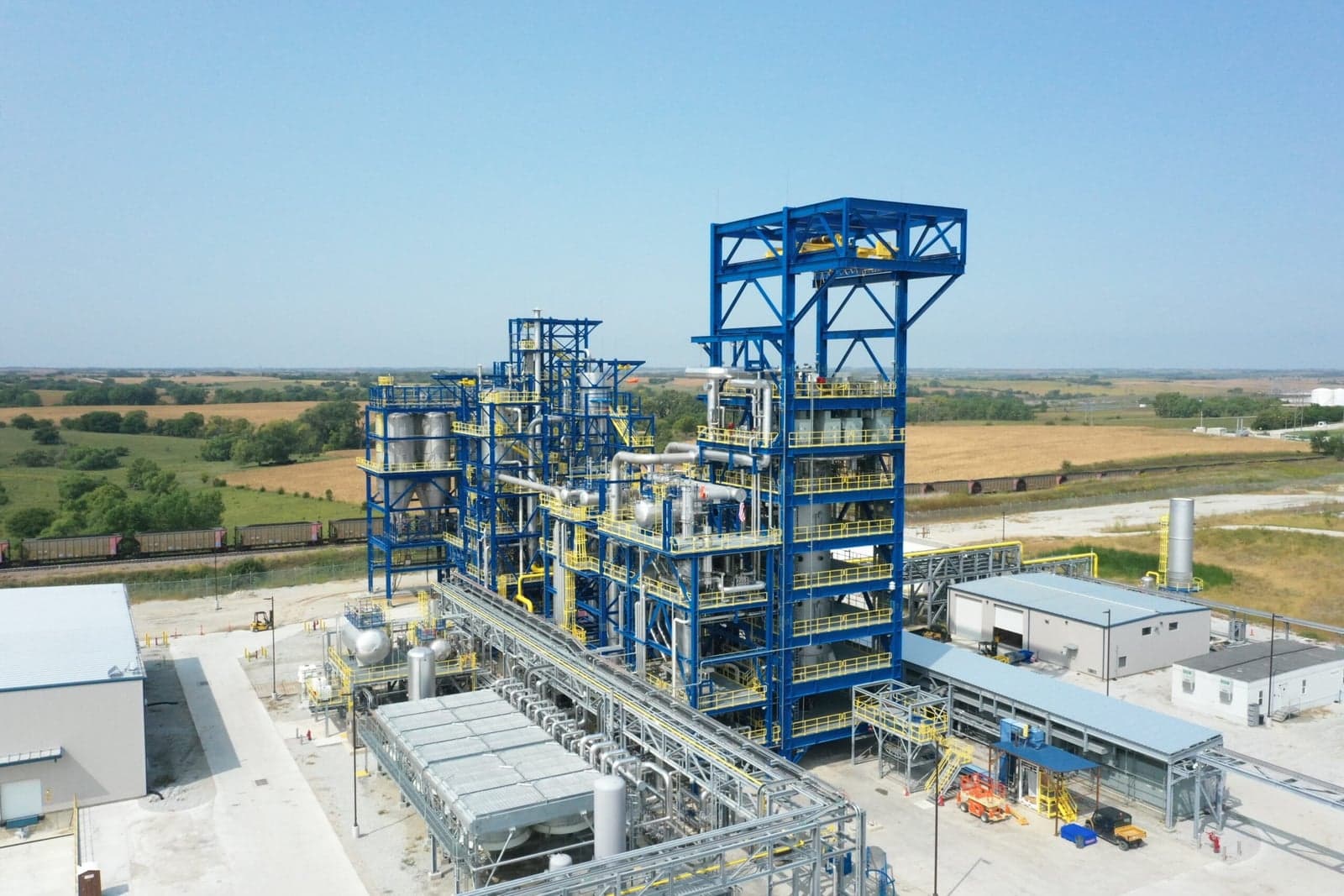
US clean hydrogen producer Monolith has been awarded a $1 billion Department of Energy loan to expand its production facilities in Hallam, Nebraska.
Monolith, one of only a few companies in the world so far to pursue clean hydrogen production, has developed a methane pyrolysis technology that uses 100% renewable electricity to convert natural gas or renewable biogas into hydrogen and carbon.
This so-called turquoise hydrogen with its low carbon emission production is thus ‘clean’, while the carbon in the form of carbon black is available for use in production of items from tyres to plastics and paints.
Monolith has gained conditional approval of the $1.04 billion loan. The intention is to scale up the hydrogen production to achieve an annual output of 194,000t of carbon black, more than ten times currently, and with much of the hydrogen going to ammonia production, 319,000t of clean ammonia.
Leading tyre manufacturers including Goodyear and Michelin will be the main off-takers of the carbon black, while the ammonia is intended for fertiliser production for the US corn belt.
“Reaching the ambitious goal of global decarbonisation by 2050 will require the innovation of American companies like Monolith and the resources of like-minded organisations like the Department of Energy,” said Rob Hanson, co-founder and CEO of Monolith.
“Monolith was founded with the belief that private sector companies could develop the innovation needed to help lead the clean energy transition, while also creating high paying green jobs and strengthening our nation's supply chain.”
Monolith’s production process is based on the superheating, i.e. heating beyond the boiling point, of natural gas by renewable electricity in a pyrolysis oven. This separates the hydrogen and carbon in the gas molecules and their removal from the chamber through separate exits enables their further use or processing.
Monolith estimates that its methane pyrolysis technology prevents 2.3t of CO2 from being released for every ton of carbon black produced. The Olive Creek expansion is expected to prevent 1Mt of greenhouse gas emissions annually compared to traditional hydrogen, carbon black and ammonia manufacturing processes.
With the loan conditional, several steps remain for it to be finalised, although these have not been specified.
In addition to the scaling of its commercial production facility, Monolith, which was founded in 2012 and is supported by investors including NextEra Energy Resources, is planning to scale its technology internationally.
In an October agreement with the South Korean conglomerate SK Inc – one of the company’s investors in the June 2021 round – Monolith will share its production and technology knowledge and pursue a joint venture for clean hydrogen and carbon black production in that country.
SK Inc would be responsible for the sales and distribution of the products in that market.
Latest content
+3
UK: £5 million for research into hydrogen production from biomass
The UK government has launched the new Hydrogen BECCS (biomass with carbon capture and storage) Innovation Programme to support the development of new technologies that will generate hydrogen from biomass and waste.
- Jonathan Spencer Jones
- 17/01/2022