US up to 15 years behind China in nuclear power| report says
Power Engineering International
Posted on: 22 June 2024
China's success in nuclear power innovation lies in its systemic and organizational approach| including state financing| a state-supported supply chain| and a government commitment to build the technology.
The United States is at least a decade and up to 15 years behind China in nuclear power, specifically rolling out next generation reactors, according to a report from the Information Technology & Innovation Foundation (ITIF), a nonpartisan research institute.
The report notes that China currently has 27 nuclear reactors under construction, more than two and a half times more than any other country. The country’s current fleet stands at 56 reactors.
China expects to build 6 to 8 new nuclear power plants each year for the foreseeable future and is projected to pass the US in nuclear-generated electricity by 2030. In total, China intends to build a total of 150 new nuclear reactors between 2020 and 2035.
China’s government has strongly prioritised domestic nuclear reactor construction. ITIF researchers said that China appears likely to use this established domestic capacity as a foundation for competitive reactor exports, much like its strategy with EVs and batteries.
In December 2023, China began operation of the world’s first fourth-generation nuclear power plant, a 200MW gas-cooled Shidaowan-1, in China’s northern Shandong province. The country has asserted that “90 percent of the technology in the new plant was developed within China.”
Have you read:
China dominates global wind turbine market shows BNEF report
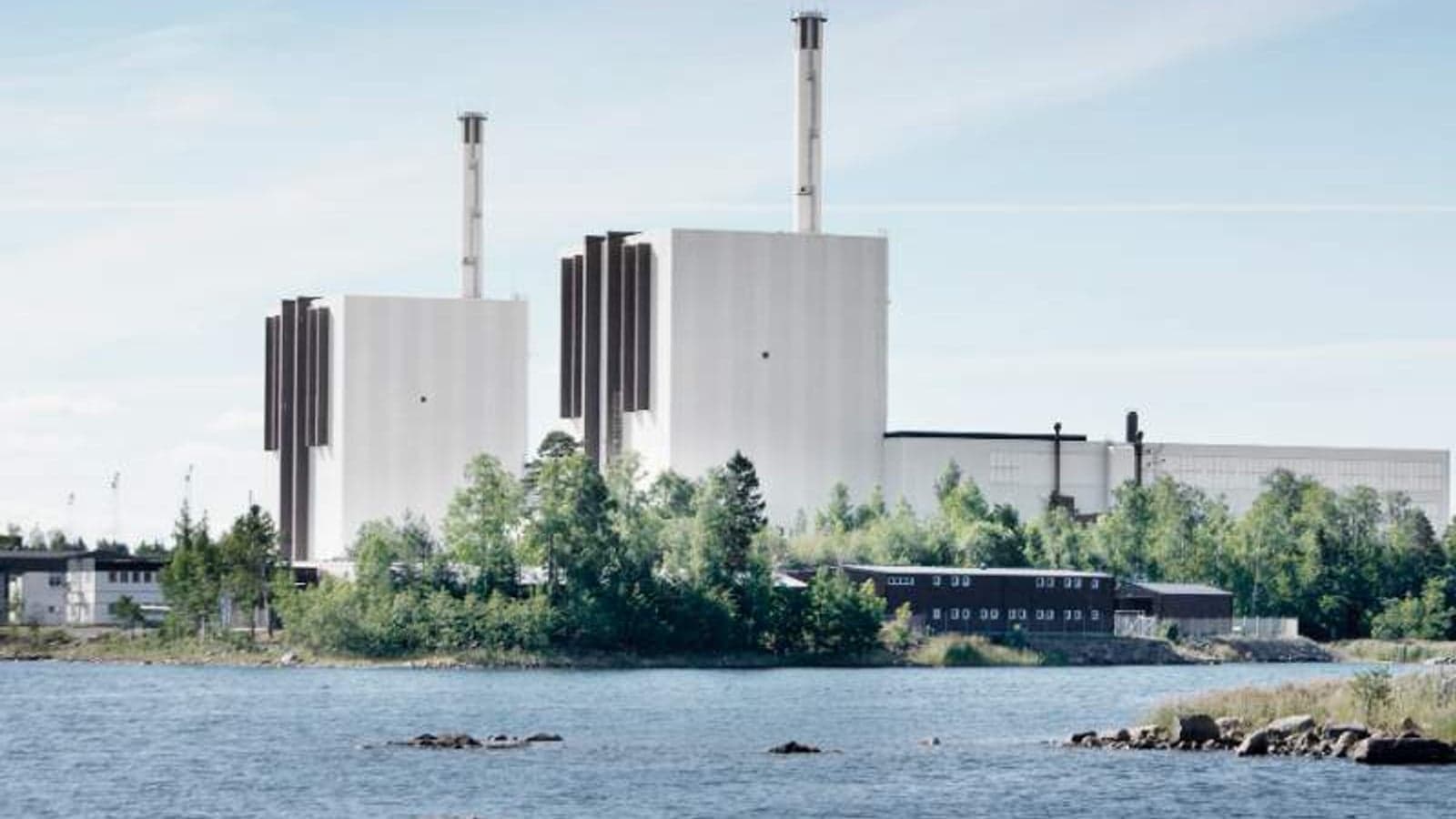
Lifetime extension planned for Forsmark and Ringhals nuclear plants
However, ITIF notes just because China is ahead of the US in building new nuclear, this does not necessarily mean that China’s largest nuclear power companies (notably state-owned enterprises) are exceptionally innovative technologically.
The institute said the bulk of China’s current fleet consists of “third-generation” nuclear reactors that were initially designed by the US company Westinghouse (the AP1000) in the late-1990s and whose technology and designs Westinghouse transferred to China in 2008 as part of a contract to build four reactors based on the AP1000’s 2005 design.
China's success in nuclear power innovation lies in its systemic and organisational approach, ITIF said. The country has developed a comprehensive national strategy for nuclear power, encompassing both federal and provincial levels. This strategy includes various supportive policies such as low-interest financing, feed-in tariffs, and other subsidies that make nuclear power generation cost-competitive. Additionally, China has streamlined the permitting and regulatory approval processes and effectively coordinated supply chains.
ITIF cited industry analyst Kenneth Luongo, who commented, “They don’t have any secret sauce other than state financing, state supported supply chain, and a state commitment to build the technology.”
The US, with 94 operational nuclear reactors, remains the world’s leader in nuclear energy output, accounting for one-third of nuclear power generated globally. The country has only launched two new nuclear reactors in the past decade, with the newest, the Vogtle Unit 4 plant in Georgia, coming online this year.
To reclaim its leadership in the nuclear reactor industry, the United States must adopt a coherent national strategy and a “whole-of-government” approach, according to ITIF. This would require several key steps.
First, federal R&D and regulatory agencies would need sufficient staffing to support innovation, down-selection, regulatory approval and deployment of new reactor types. Second, incentives, tax credits and attractive financing would need to be provided to facilitate the production of cost-competitive nuclear energy.
Additionally, policies such as streamlined export credit programmes would be necessary to support exports from US nuclear reactor producers.
Originally published by Kevin Clark on Power Engineering.