Iberdrola eyes green hydrogen for Europe’s railways
Jonathan Spencer Jones
Posted on: 4 February 2022
Spain headquartered multinationals Iberdrola and CAF Group are partnering to promote the use of green hydrogen in the railway sector.
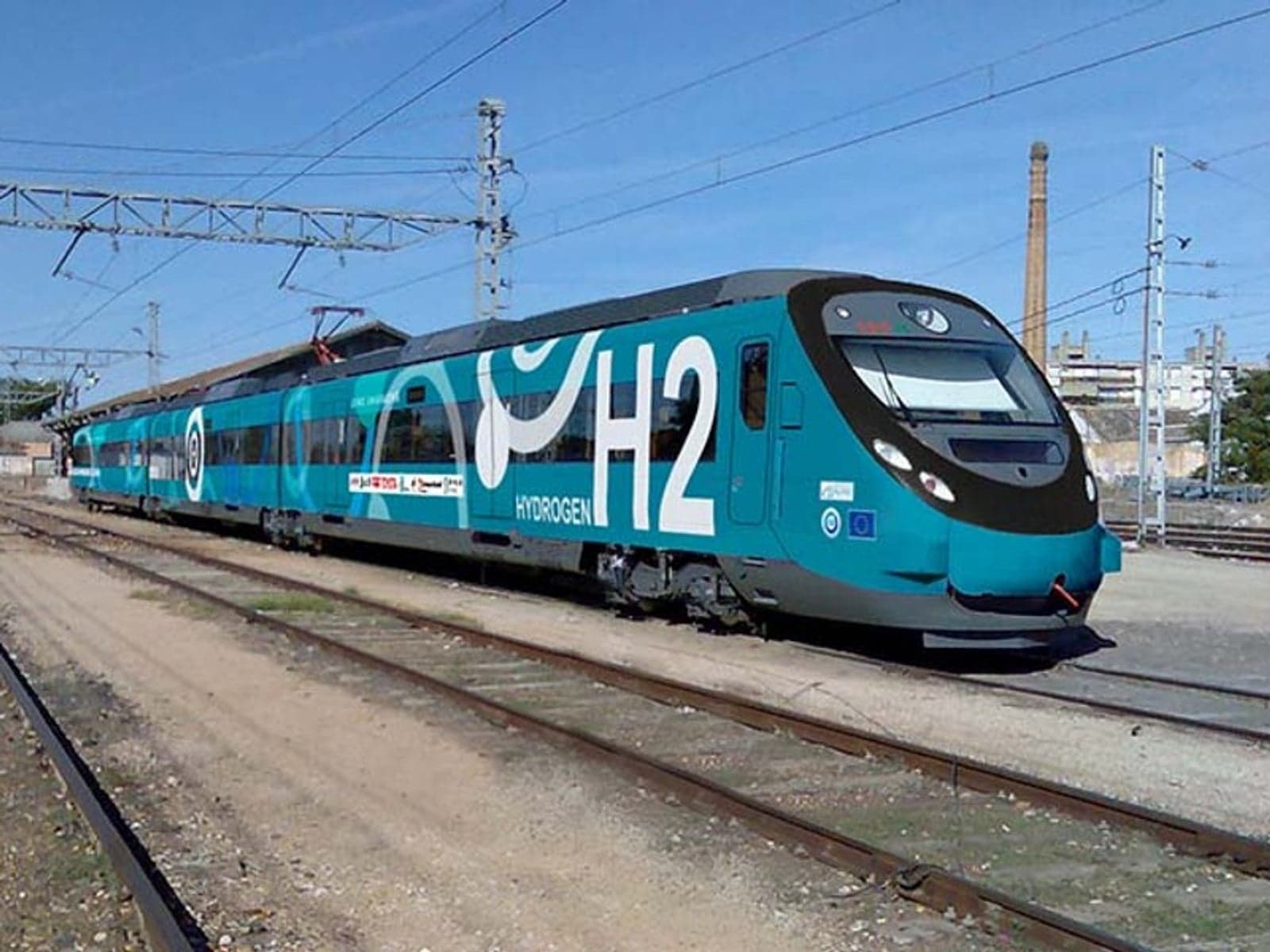
Spain headquartered multinationals Iberdrola and CAF Group are partnering to promote the use of green hydrogen in the railway sector.
The first initiative between the energy and rail companies is the supply of green hydrogen by Iberdrola for the new train CAF has developed as part of the FCH2Rail project.
Tests of the train, which are to be powered by fuel cells from Toyota based on those for its Mirai saloon vehicle, are due to start in April this year.
“By partnering with CAF we intend to continue providing solutions that will serve as a catalyst for the transition to zero emission transport,” says Millán-García Tola, Iberdrola's Global Director for Green Hydrogen.
Have you seen?
Iberdrola and H2 Green Steel to build 1GW green hydrogen plant
Peter Chochol on Rail Mobility and Energy Efficiency
“Together we will be able to deliver comprehensive solutions for transport electrification, a sector that contributes to a third of EU greenhouse gas emissions.”
Certain sections of railway lines lack electrification or are currently difficult to electrify, necessitating the use of fossil fuel powered trains. The goal of the partnership is to develop and promote alternative solutions.
Other stated goals are to improve safety, technology and competition standards in the renewable hydrogen value chain in the railway and passenger transport sectors and to encourage the growth of local companies in the sector in order to drive transformation nationally and competition in the international market.
FCH2Rail
FCH2Rail (Fuel cell hybrid powerpack for rail applications) is a four-year €14 million ($16 million) initiative led by the German Aerospace Centre to develop a hybrid bi-modal drive system that enables trains to run on electricity where overhead lines are in place and on hydrogen where there are no overhead lines.
Approximately half of the railway lines in the European Union are electrified, with diesel-powered trains used on the remaining sections of the lines. While further electrification is underway, it is an expensive and long term activity.
The other alternative is a purely battery-powered train but currently, these have a range of up to only about 70km, depending on factors such as the route profile and ambient temperatures.
The train is being developed by CAF as a modified Civia electric commuter model at its Zaragoza plant, with tests due to be undertaken in Spain and Portugal.
The energy supply system is being developed in a modular form, with the number of fuel cell and battery modules influencing the drive power and the number of hydrogen tanks determining the range. In this way, the system can be modified for use in either passenger or freight transport, while its cost-effectiveness can be improved with production economies of scale.
Key technological challenges have been around the integration and optimisation of the fuel cell system and the safe interaction of the hydrogen technology with the overhead electricity system.
It is also intended to introduce novel options such as utilising the waste heat from the fuel cells for heating and air conditioning in the train.
“CAF has long been a strong advocate for developing its own technologies for power electronics, energy storage and batteries, and more recently hydrogen,” adds Iosu Ibarbia, the CAF Group Technology Manager.
“We believe that this partnership agreement with Iberdrola is another step towards furthering this commitment and will contribute significantly to achieving the decarbonisation goals in the transport sector.”
Iberdrola green hydrogen
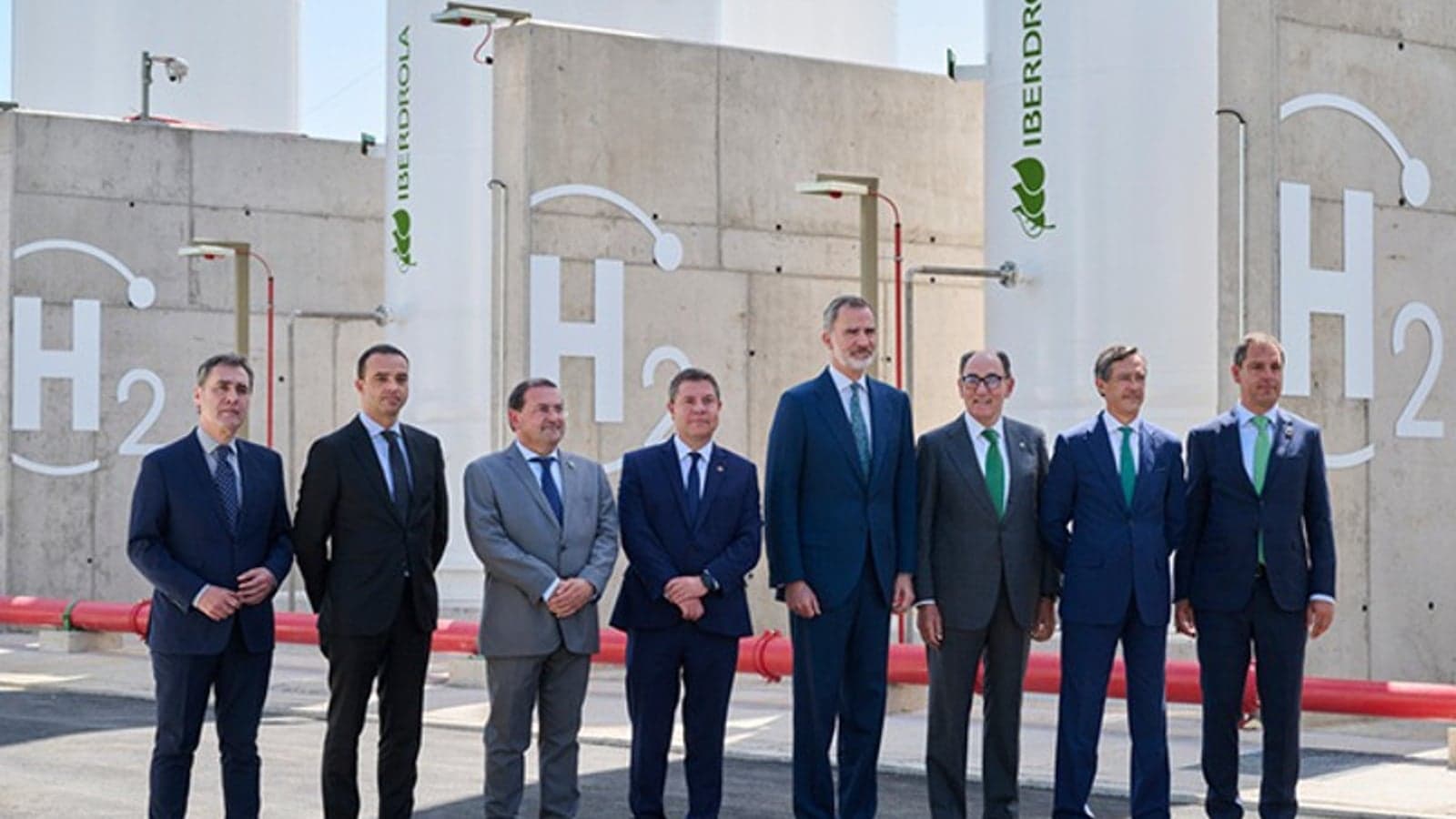
Iberdrola is to supply green hydrogen from its Barcelona Zona Franca plant, one of two in Spain so far.
The plant in Barcelona's free trade zone, near the city's airport, came into operation at the start of 2022 and initially is supplying green hydrogen for what is intended as a growing fleet of fuel cell city buses.
The aim is that the plant in what is one of Spain’s most important industrial areas will form the basis for a green hydrogen hub in the region, meeting the additional local demand including other fleets of electric vehicles.
Iberdrola’s other green hydrogen production facility is at Puertollano in Ciudad Real in central southern Spain, which is intended for the production of ammonia and zero carbon fertilisers by Fertiberia.
The company also has announced its intention with Fertiberia and others to develop a ‘Gateway to Europe’ green hydrogen cluster with up to 600MW of electrolyser capacity at Palos de la Frontera in Andalusia in the south of Spain.