Post-COP28 period pivotal to curbing climate change – IRENA
Yusuf Latief
Posted on: 10 July 2023
According to IRENA's World Energy Transition Outlook report, the coming year will be a crucial period in realing energy transition targets.
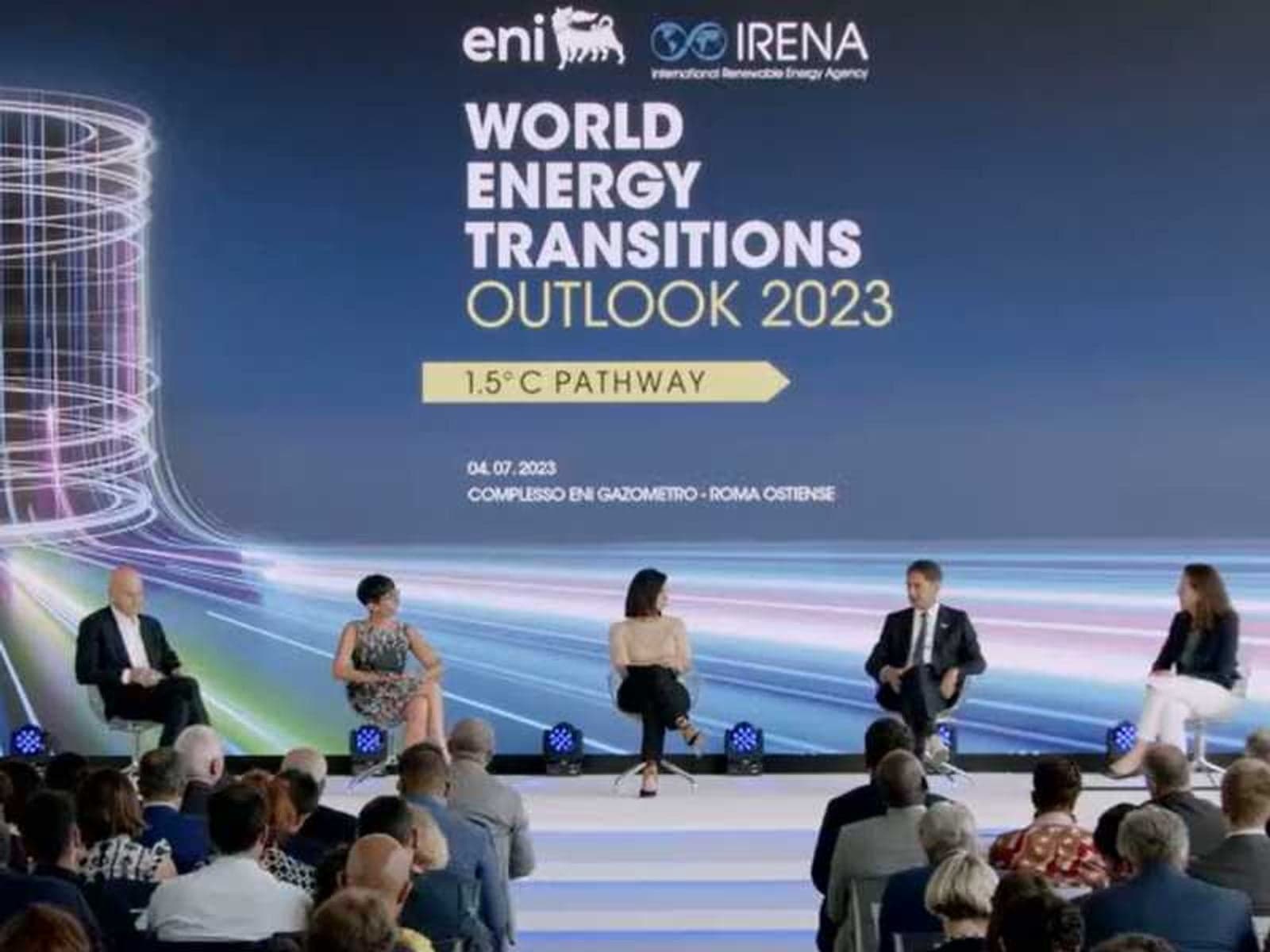
According to IRENA in their World Energy Transitions Outlook 2023 1.5°C Pathway, the period following COP28 will be pivotal for efforts to combat the effects of climate change, meet goals as outlined in the 2030 Agenda and pave the road forward to the energy transition.
According to the first volume of their report, the post-COP28 period will be critical for achieving Sustainable Development Goals (SDGs).
Specifically, IRENA states how the Global Stocktake at the 2023 United Nations Climate Change Conference (COP28) - taking place from November 30 until December 12, 2023 at the Expo City, Dubai - will need to serve as a catalyst for scaling up action in the years to 2030 to implement existing energy transition options.
In this, a significant scale up of solutions will be needed, such as for energy efficiency and electrification based on renewables, clean hydrogen and its derivates as well as sustainable biomass solutions.
Progress but strategic shift needed
Although significant progress has been made towards the energy transition, both in terms of renewable moves and policy shifts, IRENA states that today’s underlying policy and regulation systems remain shaped around fossil fuels.
Announcing the report in Rome was Elizabeth Press, Director of Planning and Programme Support at IRENA, Vice Minister of the Environment and Energy Security Vannia Gava, Commissioner of ARERA and Chairperson of the Board of Regulators at ACER Clara Poletti, Francesco La Camera, Director General of IRENA and Eni CEO Claudio Descalzi.
Said Press: "We've seen in the past decade or so a great progress in the deployment of renewable energy." However, Press added that we are not on track and "have a long way to go to catch up with the 1.5°C pathway."
Under the current trajectory, "by 2050 we would still have 34 gigatonnes of CO2, whereas the IPCC very clearly said that we have to be at 0 in the energy sector. We have a very long way to go...The system itself will have to change."
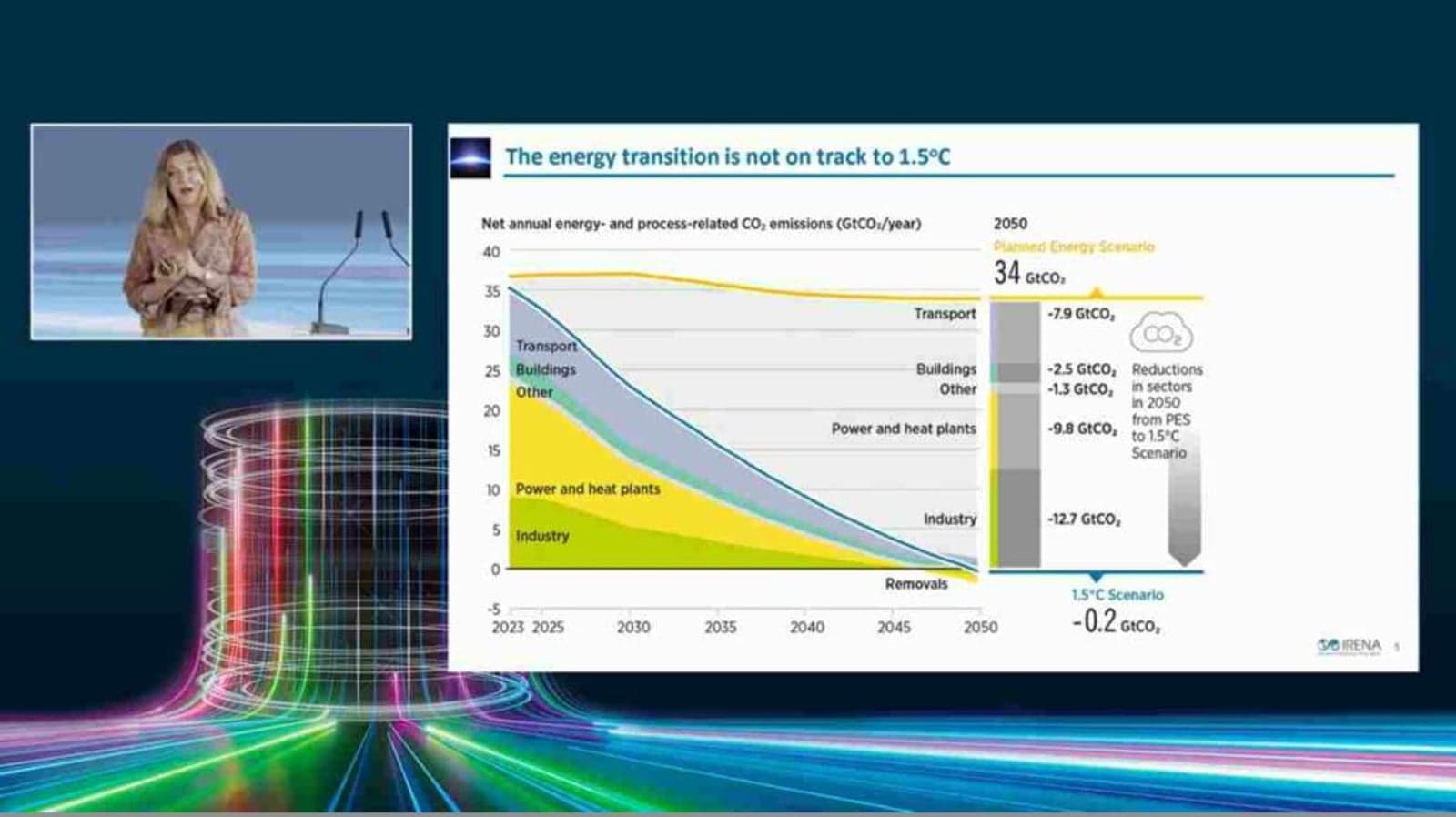
For this, the report states that it will be imperative for governments, financial institutions and the private sector to “urgently re-evaluate their aspirations, strategies and implementation plans to realign the energy transition with its intended trajectory."
Overcoming barriers
According to IRENA, policymakers will need to strike a balance between reactive measures and proactive energy transition strategies that promote a more resilient, inclusive and climate-safe system.
Several causes of current crises are the result of our fossil fuel-based energy system, which can be mediated by an energy transition based on renewables.
The speed of the change is what will thus, states their report, determine the levels of energy security as well as economic and social resilience.
“Accelerating progress worldwide requires a shift away from structures and systems built for the fossil fuel era. The energy transition can be a tool with which to proactively shape a more equal and inclusive world. This means overcoming existing barriers across infrastructure, policy, workforces and institutions that hamper progress and impede inclusivity,” states IRENA.
“Comprehensive policies are needed across all sectors to ramp up deployment (of renewables), as well as to instigate the systemic and structural overhaul required to realise climate and development objectives.”
Have you read:
100 innovations for smart electrification – IRENA
Bloomberg Philanthropies and IRENA create COP28 partnership
Additionally, for a profound and systemic overhaul of the global energy system, a strategic shift will be needed, not only accounting for decarbonisation measures for energy supply and consumption, but also towards a design supporting a resilient and inclusive global economy.
For this, IRENA calls for planning to extend beyond borders and the narrow confines of fuels to focus on the requirements of the new energy system.
Physical infrastructure will be a major focus for this. Uprades, modernisation and expansion, states the report, will increase resilience and build flexibility for a diversified and interconnected energy system.
States IRENA: “Transmission and distribution will need to accommodate both the highly localised, decentralised nature of many renewable fuels, as well as different trade routes.
“Planning for interconnectors to enable electricity trade, and shipping routes for hydrogen and derivatives, must consider vastly different global dynamics and proactively link countries to promote the diversification and resilience of energy systems.
“Storage solutions will need to be widespread and designed with geo-economic impacts in mind. Public acceptance is also critical for any large-scale undertaking and can be secured through project transparency and opportunities for communities to voice their perspectives.”
Workforce crucial
IRENA also adds how, for the energy transition to be successful, the workforce will be a key pain point that requires attention.
States the Agency in the report: “A well-skilled workforce is a lynchpin of a successful energy transition.”
According to IRENA and the International Labour Organization (ILO), the renewable energy sector employed some 12.7 million people worldwide in 2022, growing from about 7.3 million in 2012.
Additionally, modelling shows tens of millions of additional jobs will likely be created in the coming decades.
“A broad range of occupational profiles will be needed. Filling these jobs will require concerted action in education and skills building, and governments have a critical role in coordinating efforts to align the offerings of the education sector with projected industry needs - whether in the form of vocational training or university courses.
“To attract talent to the sector, it is crucial that jobs are decent and that women, youth and minorities have equal access to job training, hiring networks and career opportunities.”