Will there be one winner in the global industrial race?
Guest/partner contributor
Posted on: 19 January 2024
Europe, the US and China have all won rounds of the energy transition, but as the global industrial race gains pace, will they join forces? Joseph Jacobelli is optimistic.
Europe, the US and China have all won rounds of the energy transition, but as the global industrial race gains pace, will they join forces? Joseph Jacobelli is optimistic.
The bulk of the world has taken a shift from fossil fuels to heart. In fact, 195 parties signed the 2015 Paris Agreement, unanimously calling for lower global greenhouse gas emissions and global carbon neutrality by 2050.
The climate crisis is global, and a rapid worldwide energy transition requires strong global collaboration, cooperation, and coordination.
Unfortunately, the signatories are highly split. Partly because of different stages of economic development and partly due to ideological differences.
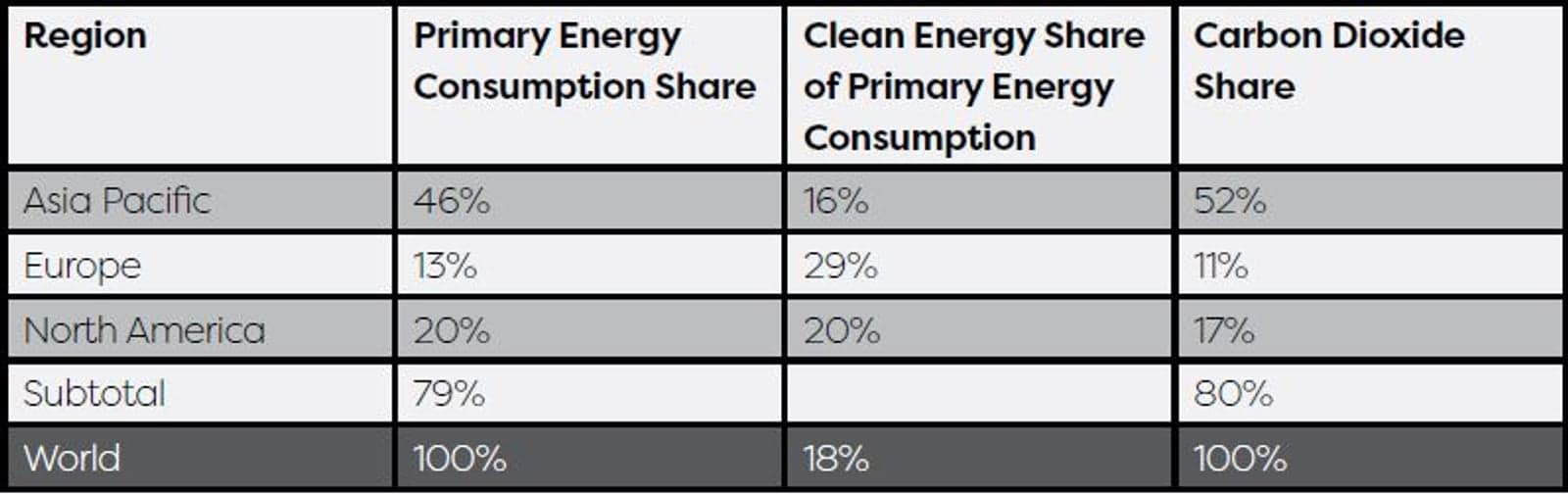
In a split world, three regions lead the global energy transition: Asia Pacific, Europe, and North America. The share of global primary energy consumption is 46% for Asia Pacific, 13% for North America and 20% for Europe, based on data from The Energy Institute.
Different paths
The energy transition in the three regions has taken different paths due to different drivers and action plans, but it is still gaining momentum, as evidenced by their clean energy output increase.
Asia Pacific is the world’s biggest energy consumer and polluting region. It is made up of over 60, mostly developing, economies, resulting in highly unharmonised net-zero policies.
The region’s leading economy, as well as the biggest energy consumer and polluter, China, has made enormous progress. China is working to achieve peak carbon emissions before 2030 and achieve carbon neutrality before 2060. It first tepidly pushed green energy in the late 2000s and then began a massive build out effort in the 2010s.
Authorities constructed — and continuously adjusted — a body of policies as opposed to one grand plan. It encouraged manufacturers, especially solar and wind equipment ones, and generators to boost clean energy production in ways similar to other countries, including preferential loans, tax exemptions or incentives, and priority approvals.
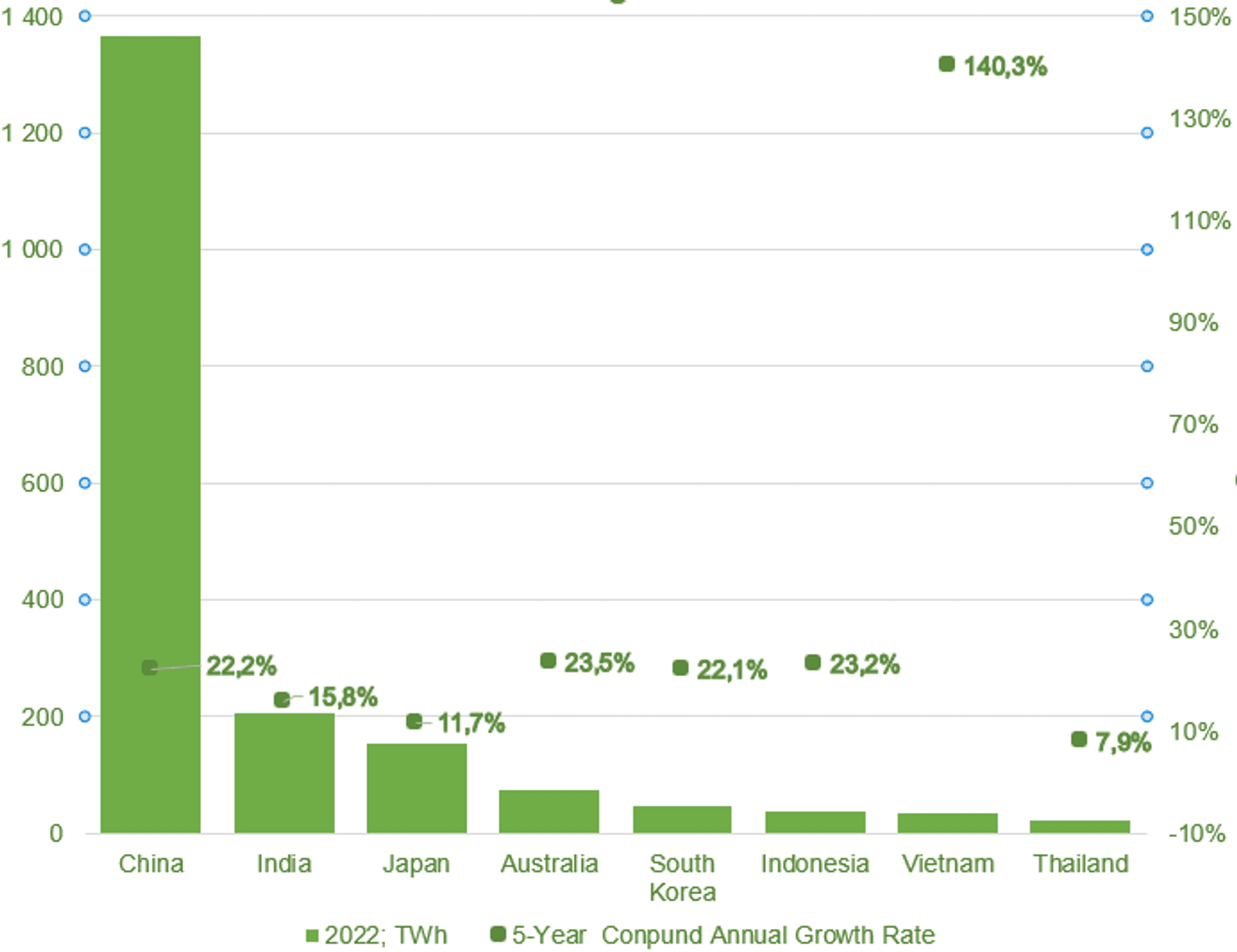
In 2022, China generated about 1,367TWh from renewable energy, about 31% more than Europe and 67% more than North America. The massive growth in the domestic market and its export prowess put its wind and solar manufacturers in the top ten in the world. The region’s second and third largest renewables producers, India (206TWh) and Japan (152TWh), are slowly but surely hastening the rate of clean energy installation as well.
Other countries in the region with strong momentum include Australia (74TWh), Indonesia (38TWh), South Korea (48TWh), and Vietnam (35TWh).
Europe’s wins and losses
Europe has been an energy transition policy leader, but execution has been choppy. The region is led by countries of the European Union, accounting for 76% of renewable energy output (786TWh). They are led by Germany (237TWh), Spain (103TWh), and Italy (72TWh).
The EU set legislation promoting renewables in the late 2000s. It introduced a target of 32% of final energy consumption by 2030 in 2018, raising it to at least 42.5%, and aiming for 45% in 2023. To drive this, the EU issued Renewable Energy Directives (RED), or legal frameworks for the development of clean energy, which have now reached the fourth iteration.
The REDs were complemented with a series of packages and plans, including Clean Energy for all Europeans, REPowerEU, and Fit for 55.
On the manufacturing side, some EU clean energy equipment producers are still globally competitive despite the immense competition from other countries, especially China.
Aware of these challenges, the European Commission concurrently launched several programmes to support the financing of clean tech projects and fund innovation.
Have you read?
State of the EU: Brussels launches clean tech competitive initiatives
One year into IRA sees challenging critical mineral demand intensify
Influence of the IRA
North America is dominated by the US which accounted for 88% (720TWh) of renewable energy generation. The nation has a long history of promoting renewable energy dating back to the late 1970s. Yet the growth rate of renewable energy installations has been choppy due to inconsistent and intermittent government policies, unlike China or the EU.
In August 2022, though, clean energy got a massive boost with President Biden’s signing of the Inflation Reduction Act (IRA). The act comprises $0.5 trillion in new expenditure and tax credits to increase clean energy, cut healthcare costs, and raise tax proceeds.
Measures include injecting $400 billion in federal funding for clean energy projects, providing loans to “upgrade, repurpose, or replace energy infrastructure”, and incentivising private sector investments through tax credits.
Many domestic and international experts concur that the IRA has been a relative success. It put the US back on the global climate action map. It provided a giant boost to clean energy projects and related manufacturing in the US. It created “eight years’ worth of clean energy investment … in the country, equivalent to more than $270 billion”, stated the World Economic Forum.
A three-region race
The energy transition in Asia Pacific, Europe, and North America is characterised by significant differences in government policies and incentives, financing, and execution.
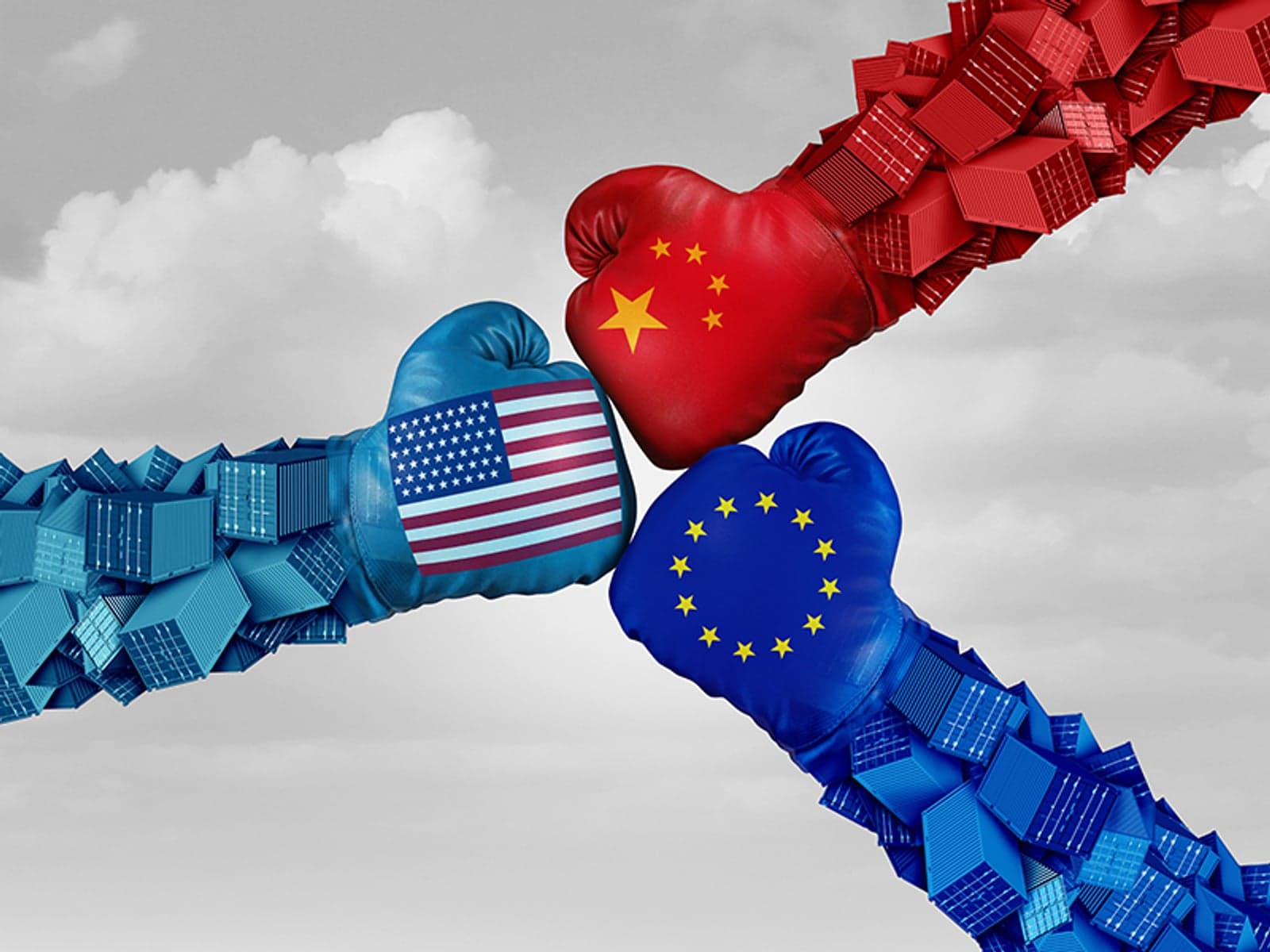
Currently, limited cooperation or collaboration exists among the three regions, and some may quantify this as a clean energy industrial race. Especially, one between China, the EU, and the US.
Each region is aggressively building new clean energy generation facilities and supporting domestic equipment manufacturers.
Also of interest
EV sales remain in top gear with China in the driving seat
What the Inflation Reduction Act means for the US and Europe
They all seek to build integrated domestic value chains which they want to protect through trade restrictions, such as EU and US import duties on solar panels made by Chinese makers, including those assembled in Cambodia, Malaysia, Thailand, and Vietnam using Chinese components.
Also, there is great scrutiny over Chinese clean energy developers investing in the EU or the US. The picture is even more complex when it comes to electric vehicles. There are two areas where one could be bullish on closer ties among all of these nations when it comes to working together on clean energy.
Firstly, it may be very difficult for EU and US manufacturers to produce some clean energy equipment as cheaply as China. The nation has benefitted from a massive domestic market which is still growing exponentially. This allowed makers to optimise economies of scale resulting in high-quality, low-cost solar power equipment.
As the EU and US ramp-up their respective solar generation capacity in the coming years there is some scope for a reduction in import duties. Global trade pendulums historically swing and as countries accelerate their respective climate action, they could be incentivised to lower barriers which would benefit local consumers through cheaper solar-generated electricity.
Secondly, finance is global and financial investors seek investment opportunities globally. Be it, for example, a European company investing in a clean energy project in the US or a US company directly or indirectly financing a Chinese wind turbine manufacturer through buying its corporate bonds or listed equities.
There is also a global momentum for financial institutions to participate in climate action more aggressively. Furthermore, as carbon credits become a more widespread financing tool, cross-border carbon financing will grow. This should mean that the momentum of cross-border financial investments may not only grow but actually increase exponentially.
The clean energy industrial race may be on, and China, the EU, and the US are leading the pack. Each region is investing heavily in clean energy technologies, and the trend is clear: the energy transition is a priority and clean energy is the future.
Once geopolitical and economic factors subside, there will naturally be enormous opportunities for collaboration and cooperation.
About the author:

Giuseppe ‘Joseph’ Jacobelli is Managing Partner at Bougie Impact Capital. He is an energy markets expert with over 30 years experience.