Horizon Europe: Five energy storage projects
Areti Ntaradimou
Posted on: 29 July 2022
Energy storage is one of the key components for Europe to secure energy supply and decarbonization and five EU projects illustrate this.
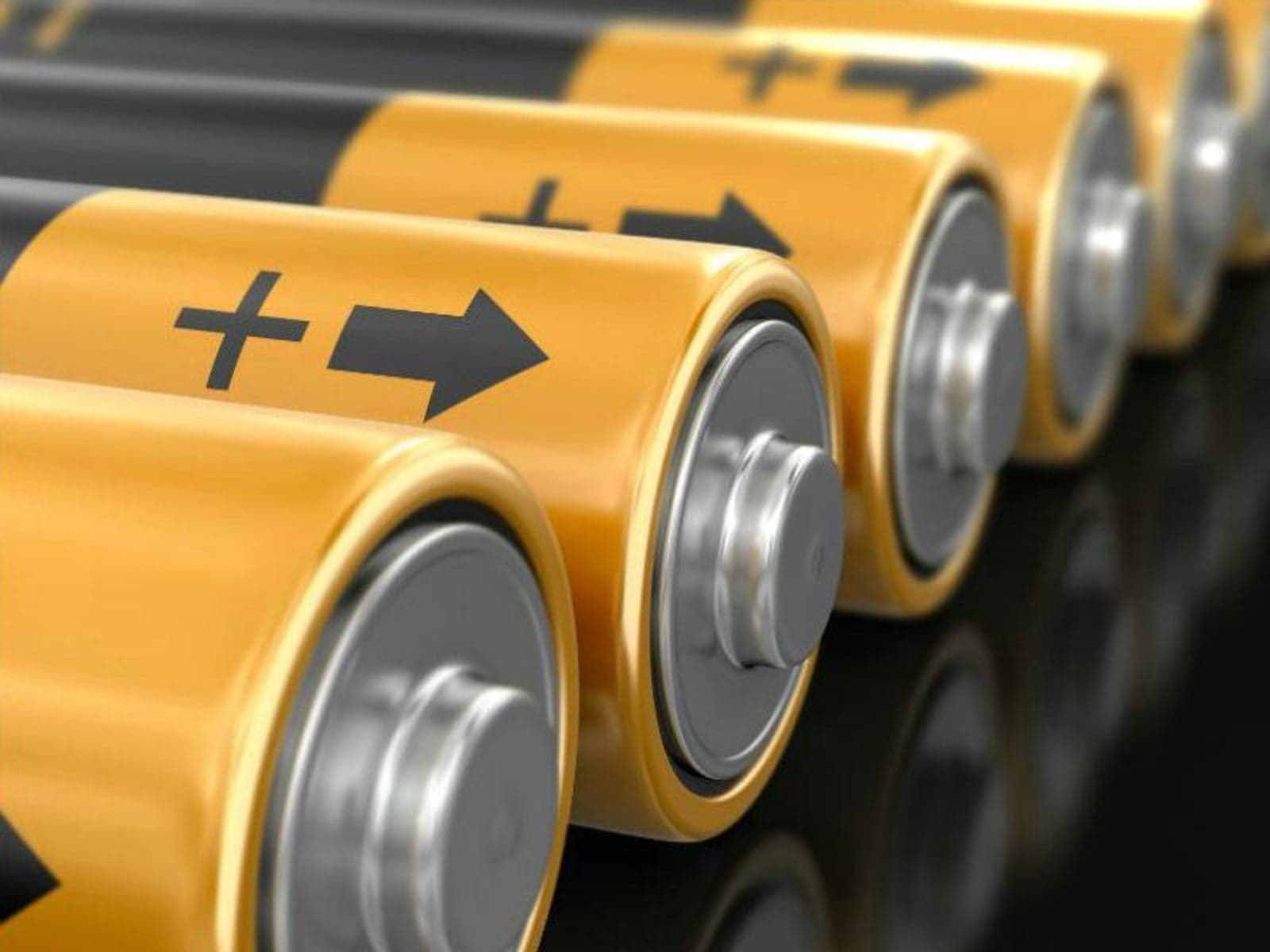
Energy storage is one of the key components for Europe to secure energy supply and decarbonisation.
In order for electricity grids to maintain a stable and safe supply of power, consumption must match production.
Unfortunately, and especially with regards to renewable energy sources, this is not always possible.
Energy storage is the solution that can simply stabilize the various fluctuations in supply and demand. It does that by saving electricity in large quantities over time.
So, for example, by storing the excess electricity produced by our PVs, we have enough power for when the sun does not shine.
It is an understatement to say that energy storage plays an enormous role in the transition towards a carbon-neutral economy and the EU's hopes and dreams for a 'green' future.
Therefore, the EU Commission has invested in a number of technologies, initiatives, and of course projects on storage in general, and batteries in particular.
In addition, the Commission published in May 2020 a Study on Energy Storage. The key findings were:
- The main energy storage reservoir in EU is pumped hydro storage;
- Lithium-Ion batteries represent most of electrochemical storage projects;
- Germany leads the segment of operational electrochemical facilities within the EU;
- Behind-the-meter storage is still growing and depends on local markets.
Now, if we take into consideration that electrification is one of the main pathways to decarbonisation, then it is easy to understand that storage technologies and devices are key enablers to a low-carbon economy.
The following EU funded projects are invested in solving the storage puzzle, in order to facilitate the energy transition in Europe.
CROSSBOW
A TSO-driven project aiming at two interrelated targets. First, the successful deployment in the market, upon completion, of the technological solutions that assist cross border management of RES and storage units for TSOs.
Second, CROSSBOW intends to commercialize its solutions and create more than 70,000 new jobs, provide access to better quality services and increase by 10% the share of renewables.
The project will focus on delivering a better control of cross-border balancing energy at interconnection points; new storage solutions – both distributed and centralized - offering ancillary services to operate virtual storage plants; and better ICT and communications.
CURRENT DIRECT
This research and innovation project wants to revolutionize the way we move goods and people by water. To achieve this, CURRENT DIRECT will use swappable containerized batteries connected to an energy as a service platform (EaaS).
Waterborne transport emissions represent about 13% of the overall European greenhouse gas emissions from the transport sector, with the potential to increase between 50% and 250% by 2050. Having both the Paris Agreement and the Green Deal in mind, reinvigorating the sector with actionable and affordable approaches is a necessity.
CURRENT DIRECT addresses EU challenges by developing and demonstrating an innovative, interchangeable waterborne transport battery system and an EaaS platform in an operational environment in the Port of Rotterdam.
E-LOBSTER
This project is proposing an innovative railway-to-grid management system, which will be able to reduce electricity losses in both the power distribution network and the light railway network.
Among the main objectives of E-LOBSTER, developing of a tool for real-time monitoring and distinguishing of the most suitable storage technologies stand out.
Last, but certainly not least, one of the project's goals is also to accommodate the needs of new energy actors such as prosumers, EVs and electrical storages.
HIGREEW
This research and innovation project will develop and validate redox flow batteries, which will be environmentally sustainable and have a high energy and power density.
At the same time, they will maximize lifetime and efficiency while minimizing cost.
In other words, the HIGREEW project (Affordable High-performance Green REdox floW batteries) aims to build a low-carbon, climate-resilient future.
The redox flow battery, which is the core of the project, is based on new water-soluble low-cost organic electrolyte compatible with optimized low resistance membrane and fast electrodes kinetics.
The above ensure a high energy density and long-life service.
LOLABAT
This project aims to develop a novel and promising battery chemistry: a rechargeable nickel-zinc battery. In theory, this battery will have very high energy and power densities, while on the same time quite low costs.
In addition, the LOLABAT project, aims in creating an environmentally-friendly battery, which will use abundant, available raw materials and non-toxic elements, while also having high recycling potential.
The goal of the project is the emergence and strengthening of a battery value chain at a European scale leading to Europe's overall re-industrialisation.