Going green is not black or white says Wärtsilä's Håkan Agnevall
Pamela Largue
Posted on: 27 November 2023
Håkan Agnevall, an engineer with a passion for uniting people and technology for the betterment of society, suggests there is no simple solution to achieving energy transition.
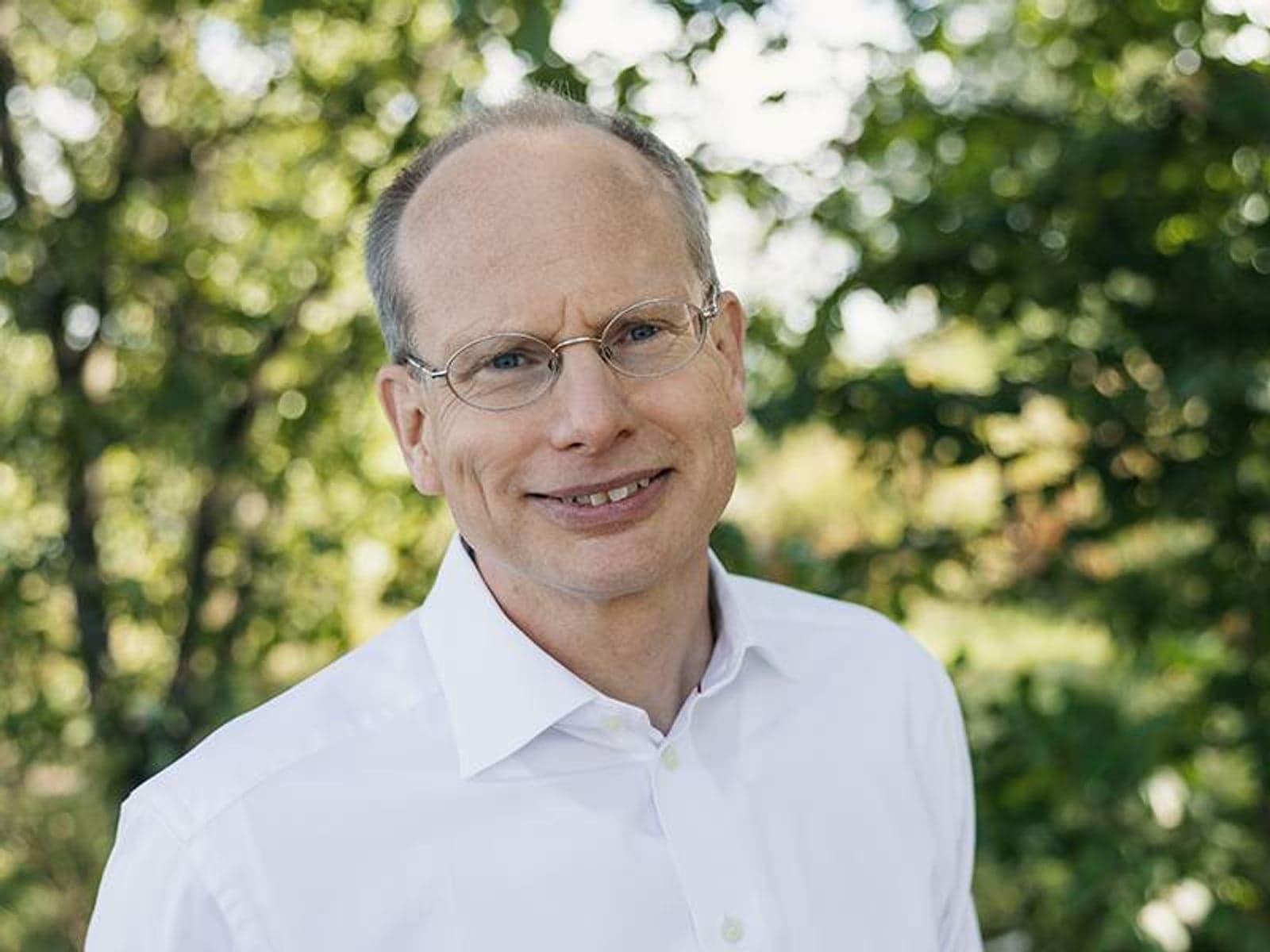
Swedish-born Håkan Agnevall is an engineer with a passion for uniting people and technology for the betterment of society. He tells Pamela Largue that there is no simple solution to achieving energy transition.
However, there is an abundance of innovation pushing us towards our decarbonisation goals.
The President of global technology company Wärtsilä hails from Scandinavia, where he believes innovation runs deep in the industrial DNA.
Indeed, he believes it’s the birthplace of technological progress that is making a tangible difference to the energy landscape. And making a difference is something Agnevall feels strongly about.
His professional path has been truly global in nature and centred around teams and sectors going through change or transition.
“To work with the team and to transform a business — you can really see the impact of your work and it’s a great source of joy.”
Previously, Agnevall was president of Volvo Bus Corporation and held leadership positions at Bombardier and ABB before becoming chief executive of Wärtsilä.
“When I got this fantastic opportunity to lead Wärtsilä, I was excited about all that was happening in our two industries: energy and marine.
“With the knowledge we have and the technologies that we are bringing, we can have a major impact on the two industries that we serve and that is really exciting.”
And he adds that these two industries are facing one of the biggest challenges of our time: decarbonisation.
Have you read?
‘The global energy transition is a collaboration, not a competition’ says Wartsila’s Malin Östman
Wärtsilä completes 100MW combined heat and power plant for German utility
Decarbonised direction
Agnevall is candid about the complexities of the green transition: he emphasises that it will take more than good intentions to reach decarbonisation goals and even with accelerated efforts, we will likely miss the 1.5 degree target.
However, rather than appear negative about this situation, he suggests how positive changes can be made to spur net zero progress.
“If we are talking about the energy system and the marine sector, that’s around 35% of global carbon emissions. This is the share of global emissions that Wärtsilä could potentially have a positive impact on.”
Agnevall recommends we recognise that we are part of an ecosystem and participate in it accordingly.
“We cannot do this alone and we need to do it with the other players.
“There are many different stakeholders participating in this new way of working,” he says, and it’s essential to reach out to customers and other industry players alike, to signal a new, decarbonised direction.
“Ten years ago, launching new technologies and engines was one of the company’s best-kept secrets. Today, we announce that we will launch ammonia this year and hydrogen in 2025.
This, he suggests, signals to the rest of the ecosystem that the technology is coming and the time has come to consider how to prepare for it.
From a policy perspective, Agnevall calls for the creation of a level playing field for new green fuels.
Besides this facilitating regulatory framework, he also emphasises the need for balancing power to stabilise the power system.
He points out the lack of the EU market mechanisms to ensure the necessary balancing power to keep the power system stable, something that is much needed in light of the shift from coal to intermittent renewables.
“Balancing power is an enabler for renewables, especially to ensure renewables become a significant portion of the overall energy mix.”
Another challenge, he suggests, is that not everyone wants green power in their backyard, which is reflected in some of Europe’s permitting challenges.
“The EU must take measures to try to stimulate the carrot and stick for member countries, to rebalance the whole view on permitting and facilitate the shift to renewables.”
"By 2025, we will launch engine technologies that are ready for 100% hydrogen fuel."
Agnevall stresses the important role of gas, despite recent lessons concerning sustainability and national security.
“We should acknowledge that gas needs to be there to make the transition. We are currently running on gas and the more hydrogen and green ammonia become available and affordable, the more we will shift from LNG.”
Agnevall stressed that this is a transition. This will take years, even decades.
From a technology perspective, progress has been made. “Wärtsilä’s engines are ready for carbon neutral fuels and by 2025, we will launch engine technologies that are ready for 100% hydrogen fuel.”
“So, from that perspective, we want to accelerate the development, but we need to be realistic.”
Because the energy sector is highly regulated, says Agnevall, market mechanisms, compensation structures and carbon tax schemes must be in place to make this happen.
And ultimately, the solutions need to be competitive and affordable, otherwise the transition will not happen. This takes time.
“We know where we want to go but all those steps on the road need to be carefully planned and carefully crafted. We have a saying in Wartsila that ‘green is not black or white’ — there is no single simple solution to the transition.”
Also of interest
Energy Transitions Podcast: Europe’s urgent need for flexible balancing power
Hydrogen’s blended future
Agnevall explains that the technology is ready to accommodate a 25% hydrogen blend, with 100% hydrogen expected in the near future.
However, infrastructure is needed and this is a challenge due to the capital investment required.
“If we consider the economics, we need to take a step back. For the whole transition to make sense, it needs to be green hydrogen: hydrogen produced from renewables.
“So, the first step is to build out the renewables and because you lose about half of the energy when you produce hydrogen with current electrolysis processes, there needs to be a lot of available green electricity before you will produce hydrogen in vast amounts.”
And until the renewable energy is available, blending will be critical, he adds. We will gradually shift the mix, decreasing the cost, which will encourage early adopters such as the chemical and cement industries, he says.
“Ultimately, what will be key for our customers is hydrogen readiness, not necessarily using a significant amount of hydrogen, but using a blend and then gradually stepping it up to 100%.
“This will be important going forward so you are not stuck with a stranded asset but that you have an asset that you can transition with.”
Tomorrow’s carbon neutrality
Agnevall spoke of Wärtsilä’s focus for the future. Wärtsilä strongly believes in the transition to renewables, said Agnevall.
“Today it’s foresight: tomorrow we will be carbon neutral. So, we are spending our R&D on the technology concept for 100% hydrogen, as well as energy storage or battery storage facilities.
Because these technologies cater to different time domains in terms of power demand, Agnevall explains that they are complementary, because of the focus on power system optimisation, a critical element of the future energy system.
“As we transition from big centralised coal generation to decentralised renewables with many types of storage, the system will be more fragmented. This will require more carefully formulated and actively managed power system optimisation.”
And this is where digital solutions, a core focus for Wärtsilä, will come in to help optimise the operations of different types of generating assets, ensuring lowest overall cost and best uptime and reliability.
For Agnevall, the most concerning part of our energy transition is not the slow technological progress: it’s the urgent need to accelerate while not neglecting the social dimension of the sustainability equation.
Despite his positive view of mankind, he believes people need to be more proactive to avoid the irreversible consequences of pushing the Earth too far. “We need to get people and society aligned with the green transition… and this is not always the case.
“Unfortunately, it is not until we really feel it on our skin that we become prepared to make changes.”