Heat for hops: How Heineken is using solar thermal to decarbonise Valencia brewery
Julia Kramer
Posted on: 15 April 2025
Enlit on the Road visited the Heineken brewery in Valencia, Spain, to learn how they decarbonise industrial processes through the use of linear Fresnel solar thermal technology.
Enlit on the Road visited the Heineken brewery in Valencia, Spain, to learn how it decarbonises industrial processes through the use of linear Fresnel solar thermal technology.
When you drive past Heineken’s Quart de Poblet brewery, just outside the city centre of Valencia, it is hard to believe that the company has an industrial-scale steam solar thermal plant on site.
Why, you'd ask?
Because, counterintuitively, the plant isn't visible to the public eye.
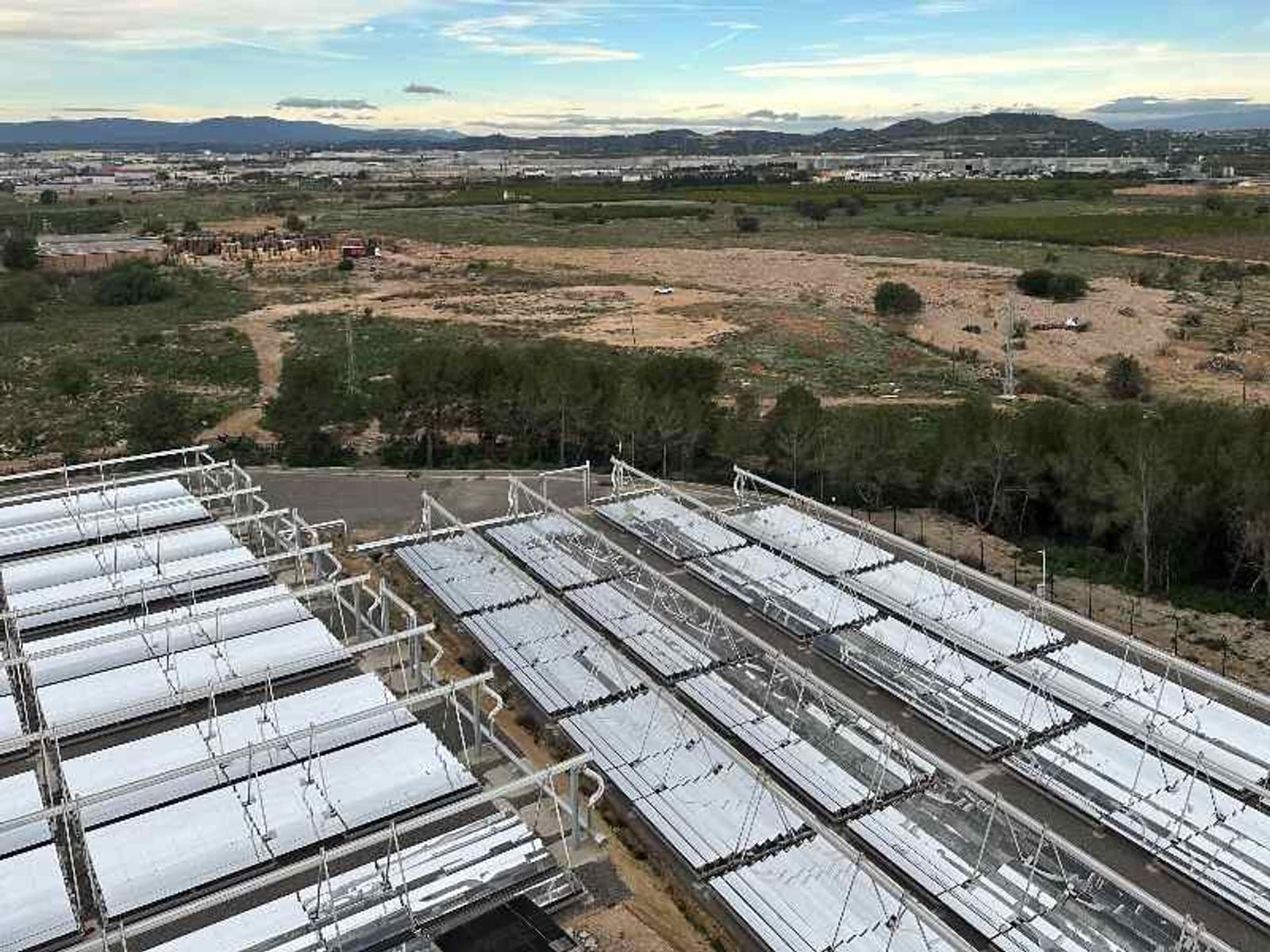
Only when you enter the premise and walk around to the back of the brewery, you get site of the thousands of mirrors - clustered in different modules and spread across different levels - essentially ‘hugging’ the brewery on every free piece of land available.
Since February 2024, this special solar thermal plant is assisting the Heineken factory with the decarbonisation of the steam production that is needed for the brewing process. It comprises of 6,000 square metres of mirrors and 182 modules, capable of heating up pressurized water to 220°C to generate saturated steam, thanks to linear Fresnel technology.
This type of concentrated solar technology uses mirrors to track the sun and reflect the sunlight into absorber tubes. These vacuum tubes with a special coating absorb the reflected energy that is then used to heat water.
The plant has a peak thermal power of 4MW and a 1.5 MWh storage capacity.
Building the solar thermal plant one module at the time
“When we build the plant, it was like building a Lego project,” says Miguel Frasquet while walking through the ‘maintenance corridor’ - the only available space between the mirror modules.
Frasquet is a solar engineer and the co-founder and chief executive of Solatom, the company that designed the plant for Heineken and came up with this 'turnkey' solution for industrial users.
He explains that this modular ‘plug and play’ approach is one of the reasons why this solar thermal plant is so innovative and unique.
“In a factory, every square meter matters. This technology [linear Fresnel] is very compact, so we can pack a lot of mirrors per square meter. This way we can actually increase the generation per unit of land,” he says, adding that the modularity also allows the system to adapt to any complex geometry and available space.
Another factor is the scale. While linear Fresnel is commonly used in large-scale projects for electricity production, industrial applications are often limited to small-scale demo projects.
“This one is the largest linear Fresnel in an industrial application for producing steam,” says Frasquet.
Powering Heineken Spain with renewable energy
Even though the plant has only been in operation for about a year, Heineken brewery manager Manuel García is already pleased with the results.
“This thermal solar plant is a huge milestone for us,” he says, noting that it makes a significant contribution to the thermal energy used by brewery.
While the brewery has been powered by 100% renewable electricity since 2020, García acknowledges that addressing the hard-to-abate production processes is crucial to ensure Heineken Spain meets its target of running entirely on renewable energy by the end of 2025.
He believes focussing on concentrated solar technologies makes sense, because Spain already has decades of experience and expertise with developing and building solar plants.
“Now we see the momentum regarding concentrated solar for industrial heat. The largest projects in Europe have been developing here in Spain, and the fastest growth in this kind of project is happening right here.”
More stories from Enlit on the Road Valencia:
Inside La Muela: Europe’s largest pumped storage hydropower plant
Valencia empowers citizens to participate in the energy transition
Energy transition is not only about renewables says Iberdrola’s innovation chief
Public-private collaboration to decarbonise industry
García believes that addressing climate change and industrial decarbonisation is not just about the transformation of production processes. He highlights the importance of public-private collaboration.
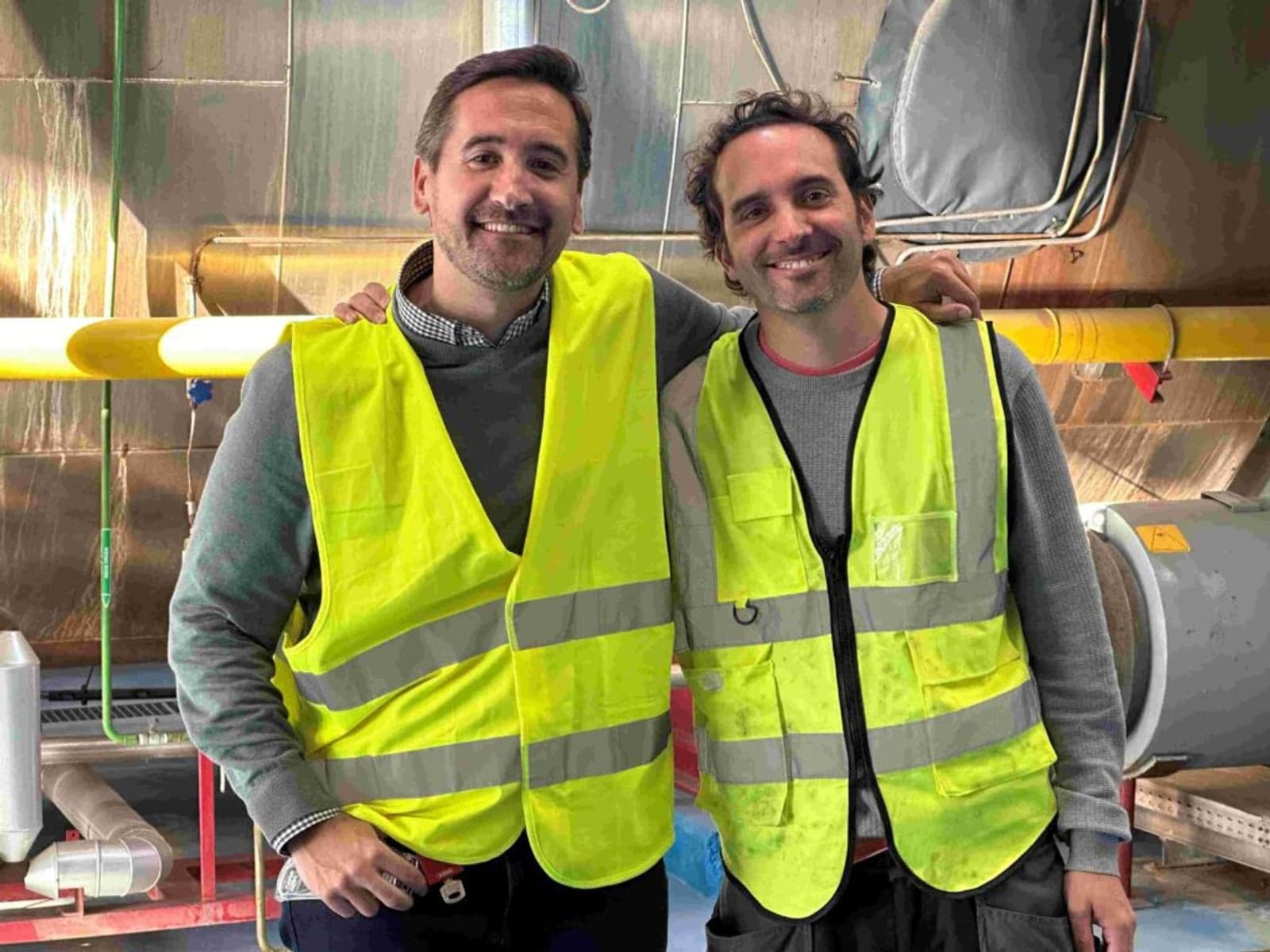
The project required an investment of €3 million and the European Regional Development Fund covered 48% of the costs through the Spanish government's Institute of Diversification and Energy Saving (IDAE).
"In this case, the subsidy we received from the IDAE has been key in order to cover this project," says García.
For Frasquet, the project also has a personal significance, since the company is founded and located in Valencia. He says it is “fantastic” that Heineken decided to invest in local technology to decarbonise its operations.
But most of all, he is passionate about the potential of renewable energy to decarbonise industry.
"What happened in Valencia a couple months ago [the Valencia floods] makes you reflect and think on what is the world that we want for tomorrow? It is clear for me, and I think for most of the people, that we need to change. And I think renewable energy has a very important role, mostly in sectors like the industrial sector, which is very hard to decarbonise."