What's next on Europe's network electrification agenda?
Yusuf Latief
Posted on: 24 October 2024
Oliver Franz of Eurelectric describes to Yusuf Latief the health and challenges of Europe's networks: the 'backbone' of its power system,
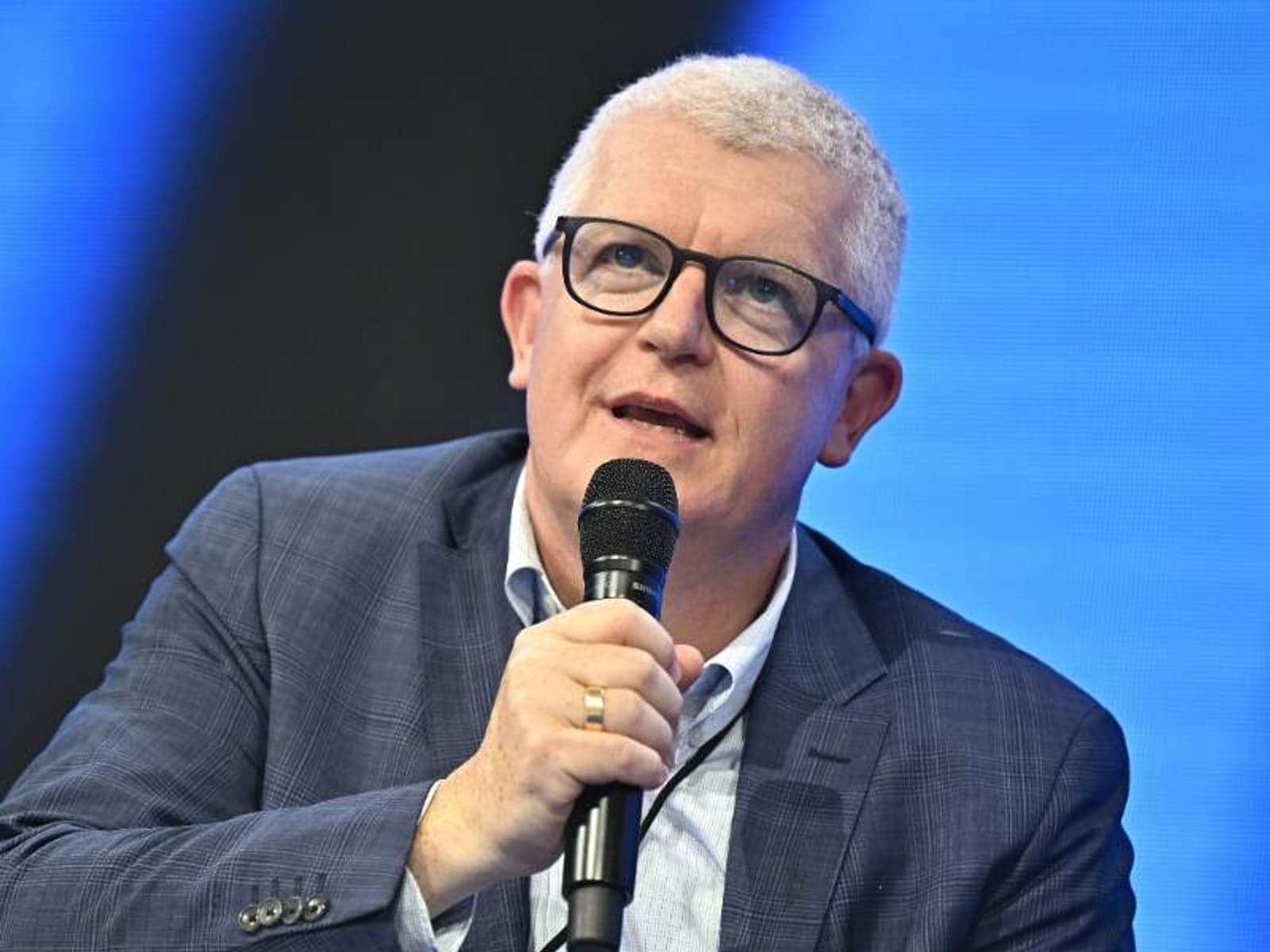
The landscape for Europe's power networks has been changing rapidly and with the new European Commission entering office and competitiveness continuing to be a key challenge for the continent's energy market, the coming years will be telling in terms of Europe's net zero path.
Ahead of the release of Eurelectric's updated Grids for Speed report on November, I spoke with Oliver Franz, Chair of the Distribution and Market Facilitation Committee at Eurelectric and VP of European Regulation at E.ON SE, to find out more.
Eurelectric has called the networks the backbone of the power system. How healthy is this backbone?
It's doing well in general.
If you look at our Grids for Speed report, for instance, there is one chart showing that the frequency and length of interruptions are going down.
If you just looked at it right now as a snapshot picture you would probably say “It works. Thank you. Done and bye.”
However, the point of the matter is that because of our net zero targets, we will still need much more grid.
The discussion that we're having in terms of finance, regulation and physical expansion means we're asking colleagues to do twice as much practically as they did one or even two years before - that's the real challenge.
So yes, I do believe it's healthy. But there are situations, for example in the Netherlands, where issues of congestion are a pain point. As an analogy, if I may: We see that the suit is getting tighter as we go and so we probably need to talk to the tailor to increase its size. And to a certain extent our tailor is the regulator.
On that note of congestion, as we continue to electrify, will bottlenecks continue to be an issue?
Of course, it depends on the country – we shouldn’t, for example, compare cases like the Netherlands with Germany, where bottlenecks are caused by production rather than demand.
But yes, I believe it's an issue we will continue to have going forward.
What we need to understand is how to manage this challenge and the complexity of it. To give you an example, we have colleagues in East Germany in an area where I believe the grid was originally built for 2.5GW of load and they already have 15GW of feed-in potential. Of course, they never feed in at 15GW, but the feed-in is still a lot larger than the actual load most often.
So the only thing they can do sensibly with that electricity is take it to the TSO grid and get it southward. They do this by building cable networks.
Why? Because they have these old poles they can't use (to upgrade) and it's faster to put new lines underground. They use tubes because of wet soil and have built a 37km ditch in one project into which they place two tubes.
Now, what’s interesting is that they not only put in the first cable, but now also a second one will be inserted as an anticipatory investment due to new solar parks and wind farms coming online.
So this is one way of managing the situation but it takes a certain boldness and a step away from the old approach of “we always do things this one way.”
Keeping in mind Mario Draghi’s competitiveness report, what are your thoughts on the current competitive landscape for Europe's energy markets?
The report is quite extensive and the focus is on the wholesale market to a certain extent, but also on the price for industry due to it being about competitiveness.
What is telling is that the Commission is now considering reshaping its budget and moving competitiveness forward on the agenda.
Whether this is just relabelling or real reform, we will see. But I believe it shows how Draghi’s report has had consequences.
I also believe that due to its focus on the wholesale market, which is technically apt, there's also a lot of focus on interconnectors and the work of ACER (the EU Agency for the Cooperation of Energy Regulators).
While, I'm fine with it and I agree with its analysis for the most part, I’m not sure whether it shows the whole picture and whether a new market design debate is helpful
More importantly, I believe the electrification aspect is a bit overlooked because we clearly see that solar PV is galloping, but everything else is lagging behind and this creates costs for the system.
Now don’t get me wrong, this is okay because we need to create these CO2-free generation potentials. But if we don't electrify at the same time on the demand side, grid fees increase, which creates a barrier to further electrification.
I believe it's right that Draghi says we need to keep our competitiveness by keeping energy costs under control. I believe he's also right in saying that this happens through homegrown electrification. But from my perspective, it’s a bit too focused on TSOs and interconnectors.
A little more focus on how to electrify on the demand side would help us spread out the cost more evenly in the end.
Have you read:
Getting a grip on the grid with Siemens Smart Infrastructure’s Stephan May
Delivering the clean energy grid of the future
The new Commission is set to enter office. What are some of the biggest challenges they will have to overcome?
Firstly, they've done a few things in the EMD (Electricity Market Design), although as Eurelectric we would have liked them to do more.
It is my understanding that the mission letter to the Commissioner designated for energy, Dan Jørgensen, includes a request that he look at grid regulation and identify potentials to improve it.
If I'm honest, I believe that some of the national dialogue I'm witnessing is already very much to the point.
But what I think needs to be considered more is the extent of regulations from regulators. Of course, they can’t stop regulating – that would not be legal under European law.
But, to use language born for a different kind of problem, they need to be more accommodative, like a central bank and monetary policy, of what is going on, because it's also their duty that we get to net zero targets.
To have a sensible understanding of how this is all going to work, I think we need a push from Brussels to get the national regulators more into contact with the national energy and climate plans.
Secondly, I think we again need to go back to the budget debate. I'm aware of course that, a: money isn't growing on trees; b: it's probably less than it was during the last budget; and c: we have the Ukrainian situation.
Having said all that, I still believe that it will be sensible for the European Union to generate or instigate a fund that is oriented towards DSOs alone, which is not limited to those units that are operating in countries that happen to qualify under the Modernisation Fund, for example.
Why? Because I believe that technology challenges are mostly the same, and it would be sensible to have one ‘tower’ in Scandinavia that you can orientate yourself to, another in the Iberian Peninsula and another, for example, between Greece and Romania, and so on.
Today we are limited to the PCI (Projects of Common Interest) process and we need to spread those options out a bit more, also to signal to the capital market that there is a political will to generate this financing for the distribution sector.
Related tags
Latest content
+1
Putin's missile barrage on Ukraine's grid is message to Europe' - DTEK
Last week’s attacks on Ukrainian grid infrastructure – causing widespread blackout in parts of the country – are being called a “message to Europe”, according to Vadym Utkin, Energy Storage Lead for DTEK, the largest private investor in Ukraine’s energy industry.
- Yusuf Latief
- 29/11/2022