Unclogging the Dutch power grid with virtual power plants
Yusuf Latief
Posted on: 18 November 2023
For Mark Beukeboom, virtual power plant technology might just answer the increasingly complex grid congestion conundrum.

Managing the flux of power supply on the grid continues to be a migraine for operators. But for Eneco’s Mark Beukeboom, flexibility and virtual power plant technology might just show us a smart method for managing the madness.
The case of the Netherlands makes for an interesting study of what to do when there’s simply no more space on the power grid.
The compact country has been consistently seeing bottlenecks to its power supply, incentivising a shift in strategy to flexibility.
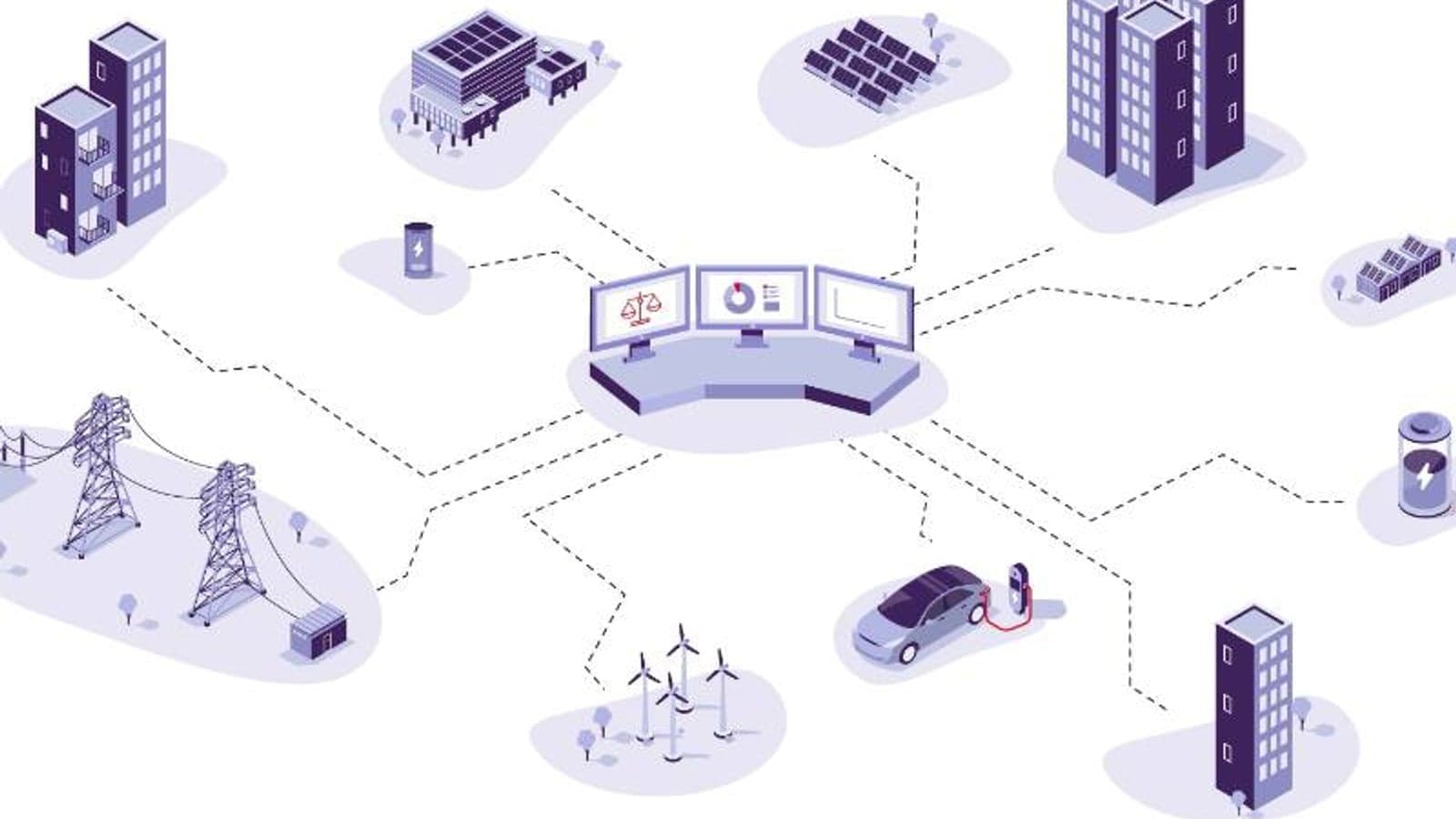
This is demonstrated by the Myriad virtual power plant project announced earlier this year by Eneco, a Dutch energy supplier, that will link all its wind farms, solar parks, batteries and other smaller and larger assets to the VPP platform it has developed.
But what makes the project special? And how does it demonstrate the importance of VPP technology for getting to net zero, especially in a country that has too much energy coming online to keep track?
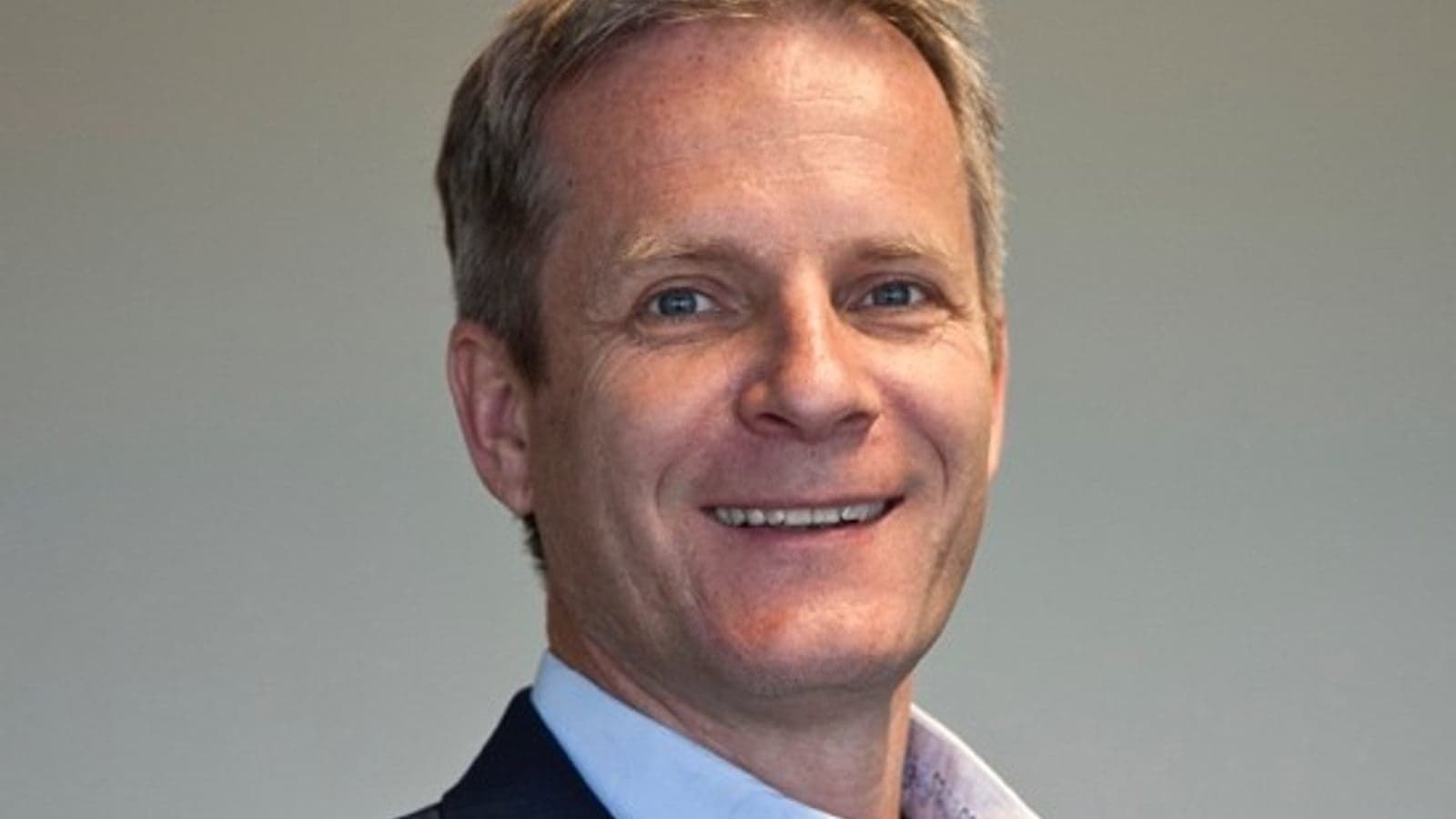
Speaking to Mark Beukeboom, Eneco's virtual power plant product manager, it became clear that the answer is simple:
The grid is clogged. Flexibility is key. And ‘steering’ – that is, guiding how energy is curtailed in mind of the energy market – is what will allow us to drive home this flexibility.
How big is the Myriad VPP and what makes it unique?
We’re talking about multiple gigawatts and more than 10,000 assets being steered, which I would say is a pretty big scale.
In terms of the ‘uniqueness’, it has to do with the products that we can dynamically allocate for our assets.
There are multiple markets active at the same time (…) and we combine them. We organise based on whatever market is the most suitable at any given moment and for the assets that we contract. We try to be active in all of the necessary markets, choosing whatever market is the most profitable at each moment.
Have you read:
Greening the grid is vital for energy transition says Schneider’s Lawrence
‘We need to think smart and fast’ to future-proof the grid
What have been some of the challenges the project faced?
One is making sure that you have optimisation; a cloud solution to know which market is good and which assets are active, from which one can pick and choose depending on the energy product.
The second is the connection to one’s assets; connecting all the hardware, all the solar parks or wind parks to the cloud, because every park has a different interface in the end and to manage that correctly requires a decent IT platform.
Additionally, trying to decouple is hard. For example, when working with the same turbine manufacturer over a couple of projects and multiple assets, we see that they get experience and know-how on how to curtail their assets.
For solar park operators, it's a bit of a challenge - we are getting there, but we're talking to engineers who haven’t actively set up a system to curtail.
An important challenge to overcome with this is establishing a standardised way of communication, having a dedicated team to orchestrate the steering across all the relevant assets and democratising all of this data.
What does this project represent about the shifting focus of grid operations in the Netherlands?
The grid is starting to be a big bottleneck for businesses that can’t even have a connection to the grid. I think that's clear.
We are willing to invest against this problem, but we don't really have the people to expand the grid as much as we want to; it takes years and years to put those cables on the ground.
Trying to find smart ways and incentivise people or businesses to adjust their power production or consumption can help a lot, even if it's just to charge an EV.
Grid operators have money available for that as well, to help with congestion, and that's where we fit in.
Also of interest:
How artificial intelligence can enable a secure and decarbonised grid
Energy Transitions Podcast: Digitalising nuclear power for enhanced grid stability
All of this starts with intraday congestion deals, an example being redispatch. However, there are more types of contracts emerging now, like capacity restriction contracts (CRCs), although the business case isn't that positive, as CRCs are just starting - we signed our first recently with regional grid operator Enexis to constrain our power production for certain assets, but this is not the best business case. W
e are also negotiating contracts for multiple assets with multiple regional grid operators, which shows that the model is really starting to get going.
From Q1 and Q2 next year and onwards, we will have a few megawatts through those CRCs, which is a very positive sign and allows a lot of other businesses to get on the grid because, in the end, it’s all about peak shaving.
If we can curtail our assets to an extent so that the grid operators have more room on the grid, then we are happy to help, but in the end, we also have to be realistic about the fact that we have contracts, such as PPA contracts, and if we curtail them, then we have to compensate.
It's always a bit of a balance.
Is the tech ready for the residential level?
At this point for consumers, the regulations aren't very favourable for their participation.
But we've got elections coming up and I think if the rules change – in Belgium, they are a bit further with this – then I hope in two years, realistically in three or four, it will be more feasible.
At the end of the day though, I think it’s a very politically driven decision, which can be sensitive as well because most people don't really understand the technology.
Do you think there is a trust issue?
We are trying to design our systems in a way that you don't collect data that you don't need - we don't need to know the private information of who is consuming what exactly.
But it's a tough question. At some point, we will be able to give a business case to consumers. They can then plug into our VPP the same way that we allow wind parks to connect and then offer flexibility with a monetary incentive.
For example, we might be able to provide a discount on their power price or enable them to actively participate in energy markets.
In Belgium, we are already getting there. We are a few steps ahead compared to the Netherlands, but that's because the regulations are different.
So if you can offer a business case to consumers, who then give us possibilities to steer, we will optimise it.
We're all in this together at the end.
We want to have more wind power and more solar power. We also want to be able to get more connections on the grid, not only during the cheap times.
Mark Beukeboom will be presenting as a panellist during the 'Providing flexibility by connecting decentralised assets at scale' session at Enlit Europe 2023, at the Decentralisation hub on Tuesday 28 November.