Linde tests membrane technology to extract hydrogen from natural gas blends
Pamela Largue
Posted on: 21 January 2022
Linde Engineering has launched a full-scale pilot plant designed to demonstrate how hydrogen can be separated from natural gas streams.
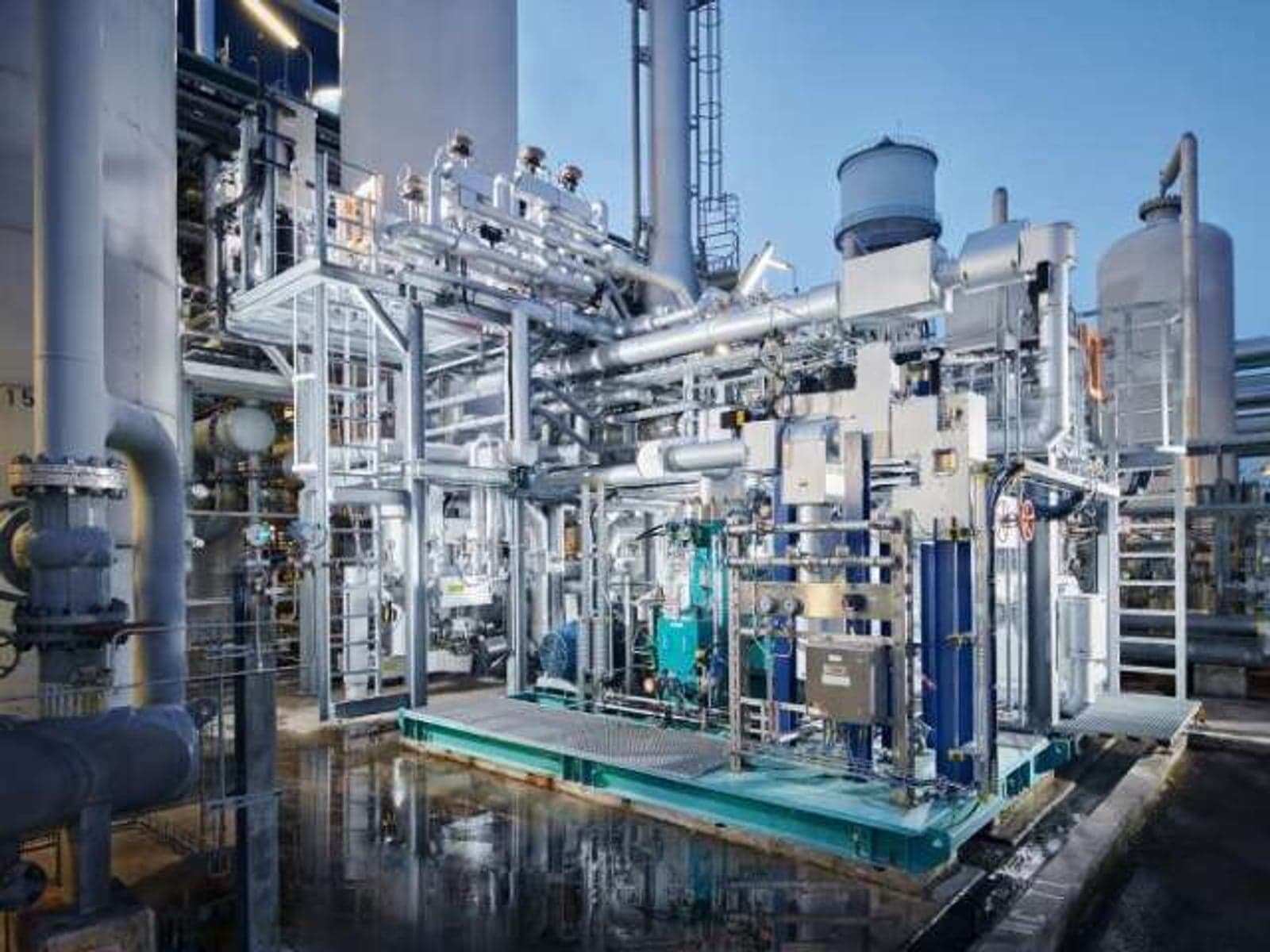
Linde Engineering has announced the launch of what it claims is the world’s first full-scale pilot plant designed to demonstrate how hydrogen can be separated from natural gas streams.
The plant in Dormagen, Germany, uses membrane technology to extract hydrogen from blended natural gas streams at the point of consumption.
Linde says membrane technology like its HISELECT could play an important role in transporting hydrogen to end users as industry feedstock, or as a source of heat, power, or transportation fuel.
John van der Velden, senior vice-president of global sales & technology at Linde Engineerin, said the Dormagen demonstration project "allows us to display essential technology for transporting hydrogen via natural gas pipelines in a real-life setting. It shows a way to leverage existing infrastructure.
Related content
Stimulating the growth of Europe’s green hydrogen economy
Equinor and SSE advance UK hydrogen storage project
The Hydrogen Factor – changing global energy dynamics
"In doing so we avoid the high costs and the long process that would be involved in building a dedicated hydrogen pipeline infrastructure.”
The hydrogen, once removed, has a concentration level of up to 90% according to Linde Engineering. Purity levels of up to 99.9999% can be achieved with further processing, using Linde's pressure swing adsorption (PSA) technology.
Membrane technologies are a critical tool in developing global hydrogen infrastructure, and increasing numbers of companies are becoming involved in expanding the sector.
This is evidenced in Europe's European Hydrogen Backbone, a growing group of now 23 European gas infrastructure companies, working together to build dedicated hydrogen transport infrastructure.