300GW North Sea offshore wind by 2050 – Ostend Declaration
Jonathan Spencer Jones
Posted on: 26 April 2023
Energy ministers from nine European countries have committed to more than doubling the planned 120GW capacity of North Sea offshore wind to at least 300GW by 2050.
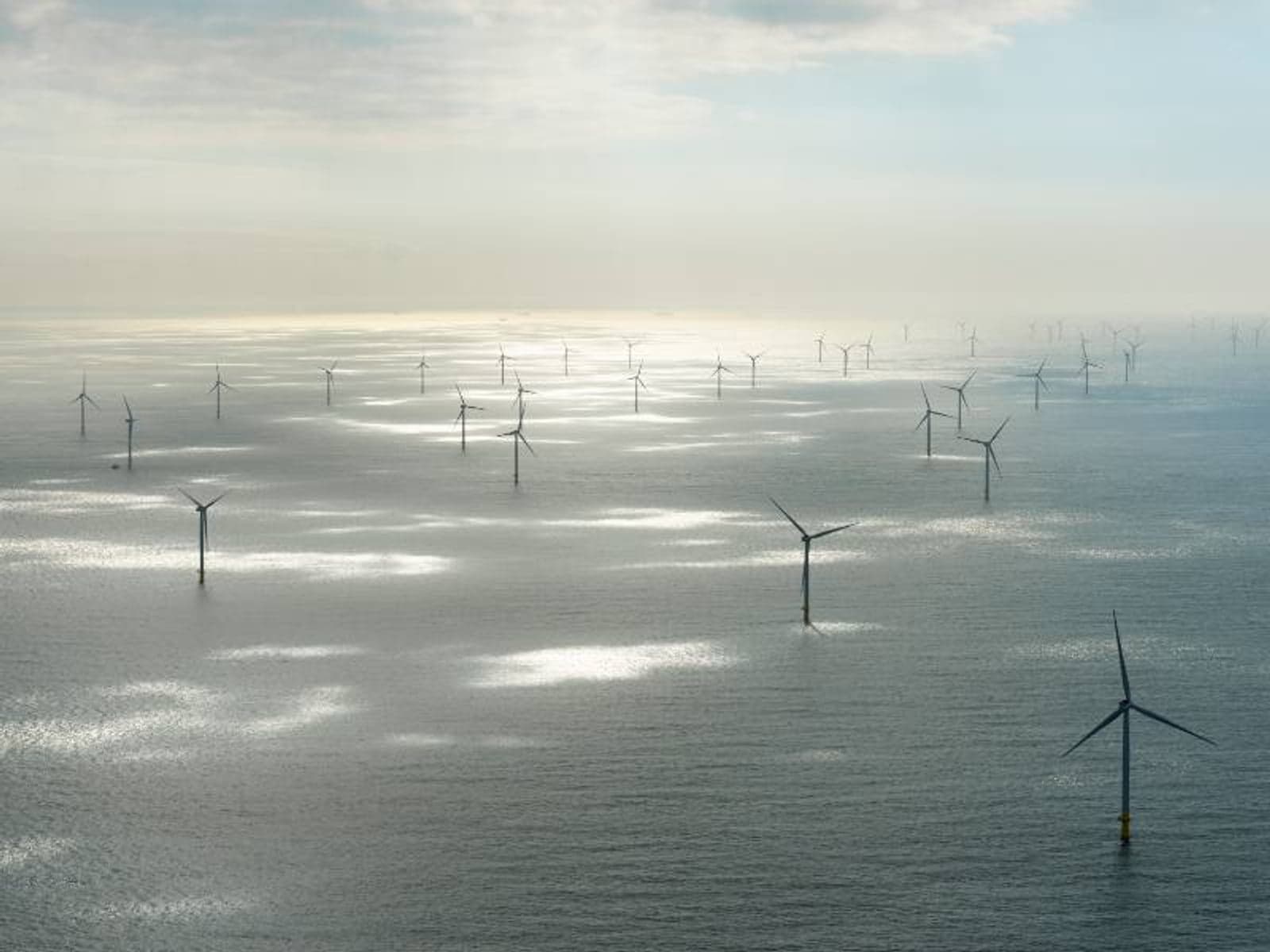
Energy ministers from nine European countries have committed to more than doubling the planned 120GW capacity of North Sea offshore wind to at least 300GW by 2050.
The commitment, contained in the Ostend Declaration of 24 April 2023, was made by the energy ministers of Belgium, Denmark, France, Germany, Ireland, Luxembourg, the Netherlands, Norway and the UK.
It follows the earlier Ejsberg Declaration of May 2022, in which the ministers of Belgium, Denmark, Germany and the Netherlands set the 120GW target for 2030.
The declaration states that progress has been made since the 2022 summit including through the conclusion of both bilateral agreements on offshore renewable generation and non-binding agreements to cooperate on goals for offshore renewable generation for the North Seas, under the revised framework for trans-European energy networks (TEN-E).
Have you read?
Denmark’s energy islands – ‘The Mars Mission of the energy system’
How Esbjerg is ‘living, not talking’ the energy transition
In addition, the transmission system operators (TSOs) from Belgium, Denmark, Germany and the Netherlands have undertaken to develop a meshed offshore grid and to identify the next steps for its realisation.
The individual country goals are as follows:
- Belgium – 6GW offshore wind capacity by 2030 and 8GW by 2040.
- Denmark – at least 5.3GW offshore wind capacity in the North Sea in 2030 with a view towards up to 35GW by 2050 and potentially more depending on demand for green power.
- France – at least 2.1GW of offshore wind by 2030 and 4.6-17GW by 2050 in the North Sea and Eastern Channel.
- Germany – at least 26.4GW offshore wind by 2030 and 66GW by 2045 in the North Sea.
- Ireland – at least 4.5GW offshore wind by 2030 and 20GW by 2050 in the North Seas.
- Luxembourg – to contribute to the combined offshore wind targets by using dedicated cooperation mechanisms allowing the financial participation in projects providing renewable energy statistics in return.
- Norway – at least 3GW of offshore wind by 2030, including 1.5 GW of floating wind, and the award of areas suitable for 30GW offshore wind by 2040.
- Netherlands – about 21GW offshore wind capacity around 2030 and feasibility studies on 50GW in 2040 and 72GW in 2050 considering physical space, ecological impact and demand.
- UK – up to 50GW offshore wind by 2030, including up to 5GW of floating wind, as well as at least 18GW interconnection capacity by 2030.
The declaration also states that the signatories will continue planning for multiple energy hubs and islands as well as hybrid cooperation, multi-purpose projects and increased connectivity by carrying out, where appropriate, a screening of the potential for offshore wind and hydrogen production in the entire North Seas.
They also will build on and further intensify common research efforts and explore new ways of building out renewable energy, including innovative partnerships with industry.
In order to support these steps, they commit to continue to engage with the European Commission, EU member states, third countries, regional fora, industry and global partners.
Prior to the summit an industry declaration from more than 100 companies representing the whole value chain of offshore wind and renewable hydrogen in Europe welcomed that the nine governments wanted to reinforce their offshore wind ambitions and called for major new investments in manufacturing capacity to meet the demand.