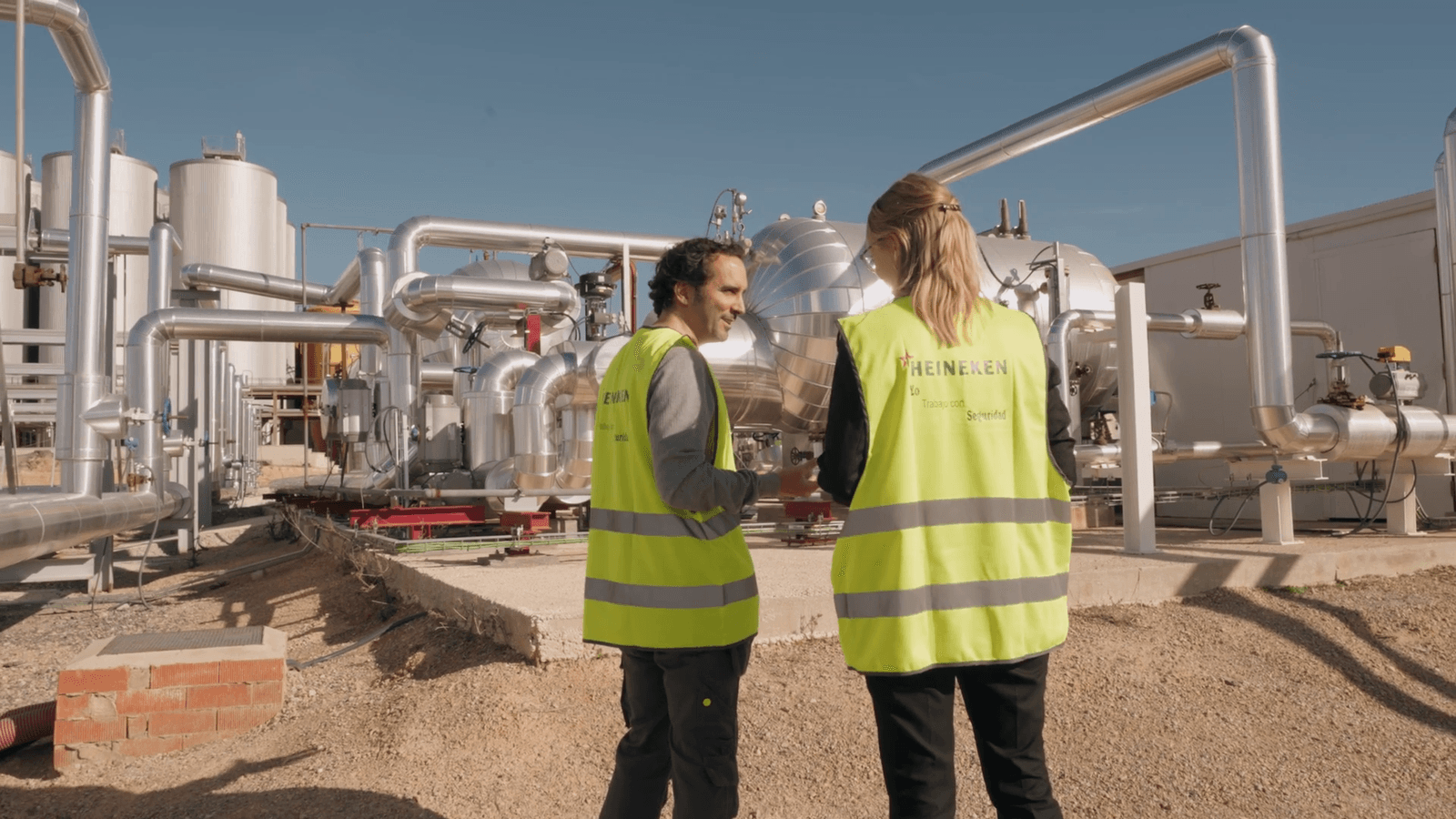
Affordable biomethane through SEMPRE-BIO project innovations
Guest/partner contributor
Posted on: 10 March 2025
SEMPRE-BIO is a pioneering European project developing new cost-efficient solutions for biomethane production.
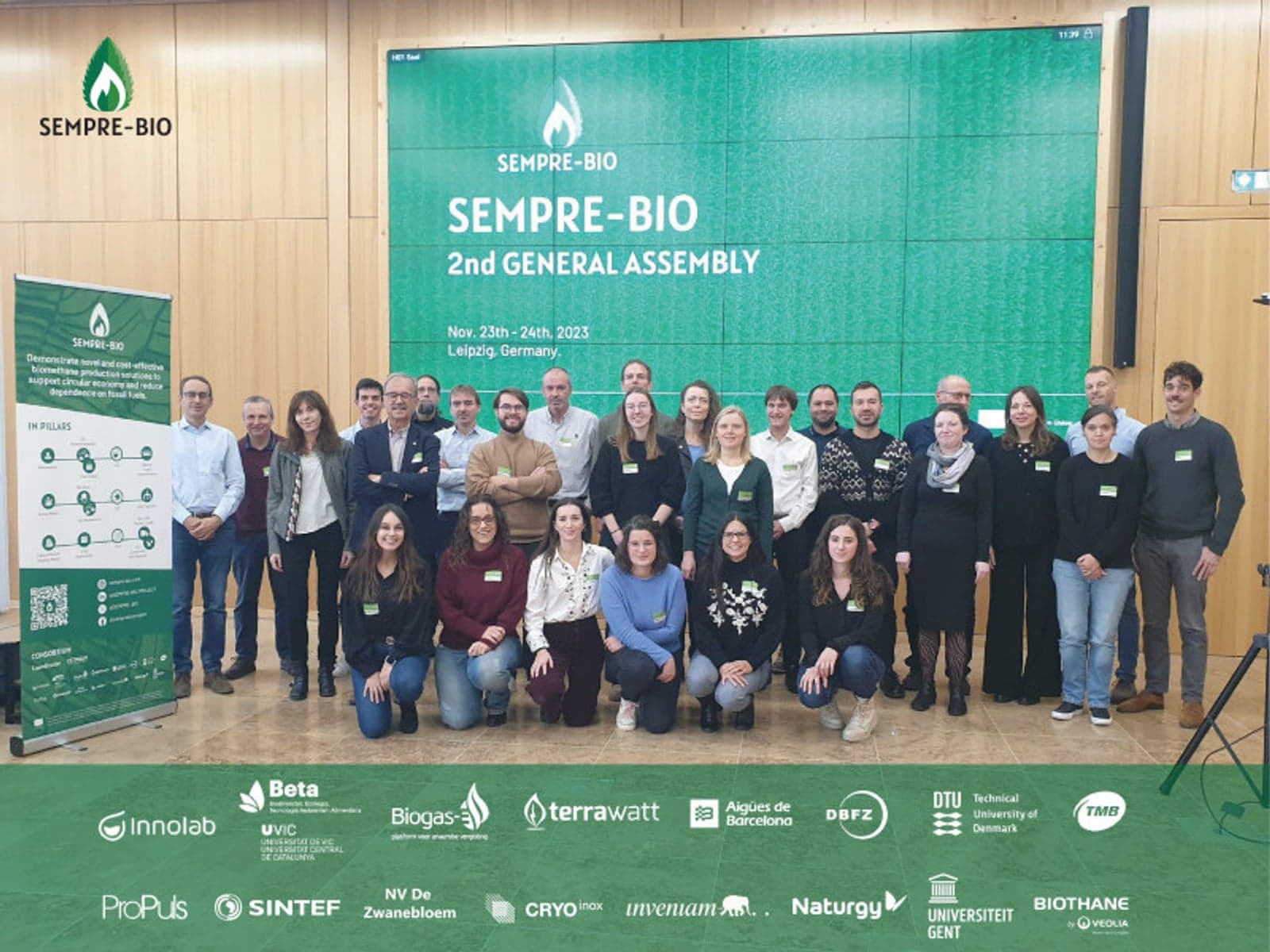
SEMPRE-BIO is a pioneering European project developing new cost-efficient solutions for biomethane production.
In May 2022, the European Commission launched REPowerEU, a bold plan to save energy, diversify energy supplies and produce clean power.
This initiative aims to phase out Russian fossil fuel imports and boost the EU’s independence in this sector. Achieving this energy transition requires a diverse mix of renewable sources, including hydro, biomass, solar and wind power.
The potential of biomethane
While hydro, solar and wind power are well-known, biomethane remains relatively unknown to the general public.
This versatile solution is gaining traction due to its wide range of applications, from home heating to vehicle propulsion and electricity generation. Biogas and biomethane, in particular, are emerging as promising alternatives to traditional fossil fuels.
Biomethane, a purified form of biogas, is a game-changer for renewable energy. It’s already available today and plays a vital role in reducing the EU’s carbon footprint. Made from organic waste like manure, food scraps and damaged crops, biomethane also offers a modern solution for waste management.
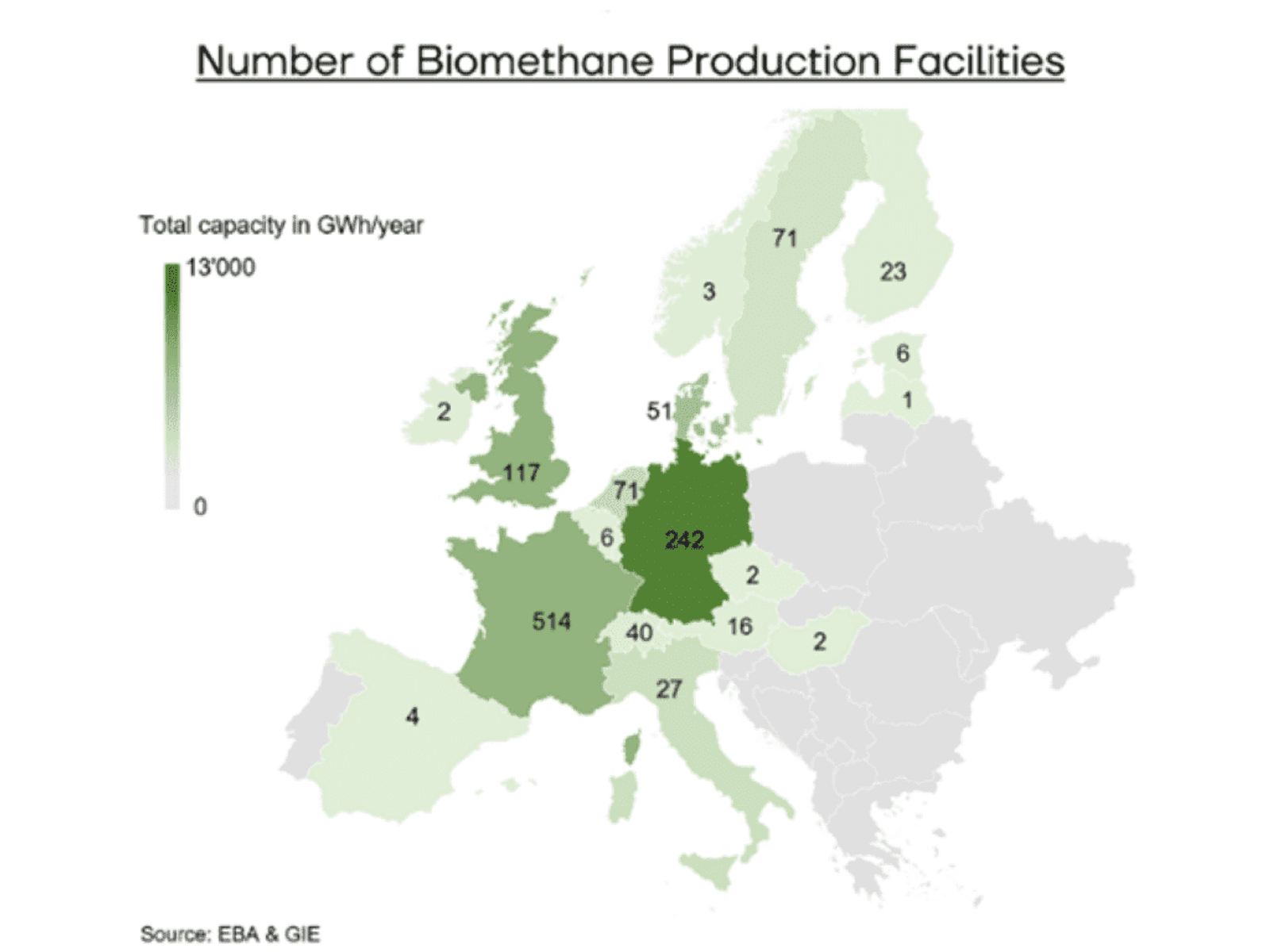
Number of biomethane production facilities in Europe. Source: EBA & GIE
Challenges in biomethane deployment
Despite its potential, several obstacles hinder biomethane’s full deployment.
There is an urgent need to form industrial partnerships to promote its sustainable production and use. Accelerating investment in biogas and biomethane technologies is crucial, as is offering incentives to make upgrading biogas to biomethane more affordable for companies.
Additionally, infrastructure issues and barriers that could hinder the cost-effective deployment of biomethane must be tackled.
Addressing these challenges is essential for biomethane to become a cornerstone of the EU’s clean energy future.
The SEMPRE-BIO project
To tackle the challenges of biomethane deployment and bolster the EU’s clean energy ambitions, the SEMPRE-BIO project was initiated.
This European-financed initiative, spanning from November 2022 to April 2026, unites 17 partners from seven countries, each bringing diverse expertise across the entire biomethane value chain, from production to utilisation.
SEMPRE-BIO is a groundbreaking effort to introduce new and cost-efficient solutions for biomethane production. The project supports the circular economy and aims to reduce dependence on fossil fuels, aligning with the REPowerEU strategy.
SEMPRE-BIO’s goals include enhancing the cost-effectiveness of biomethane conversion processes, diversifying production technologies and facilitating market uptake.
The core objective of SEMPRE-BIO is to transform theoretical models into practical applications within three European biomethane innovation ecosystems (EBIEs) or case studies.
SEMPRE-BIO EBIEs
Each EBIE showcases different innovative technologies tailored for specific feedstocks and biomethane valorisation routes.
Case study 1: Baix LLobregat, Spain
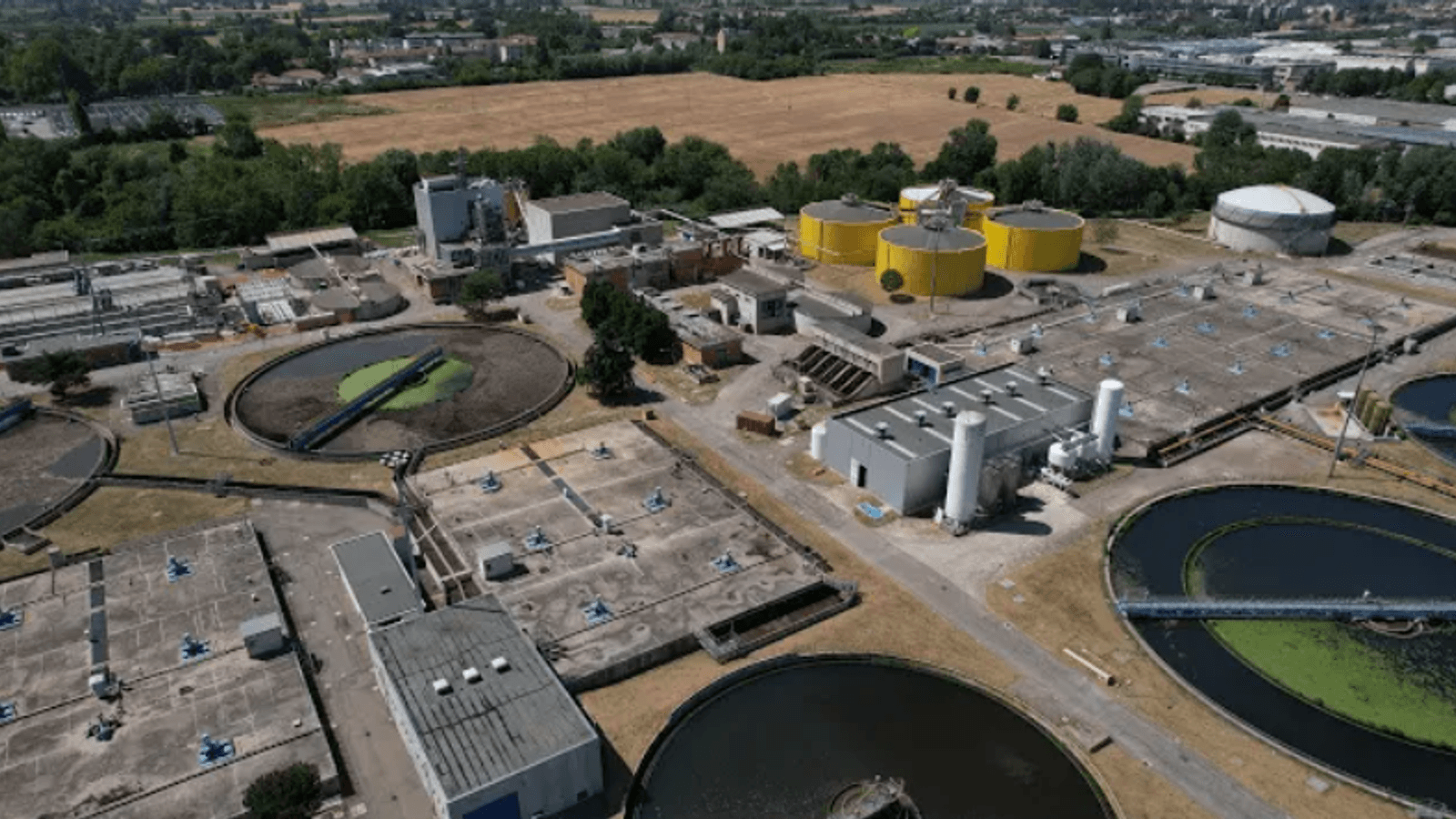
In Case Study 1, SEMPRE-BIO employs electrolysis and CO2 biomethanation to convert wastewater into valuable biomethane. This biomethane is then utilised for public transportation.
The process starts with the pretreatment of biogas produced by the wastewater treatment plant (WWTP) to maintain low concentrations of H2S, VOCs and siloxanes. Once the biogas is clean, it is fed into the reactor along with H2.
The reactor operates at a thermophilic temperature and at different pressure levels, with key parameters monitored to optimise the methane productivity. The goal is to produce high-quality biomethane, which is then compressed and stored as compressed natural gas (bio-CNG) for later use in refueling public transport buses.
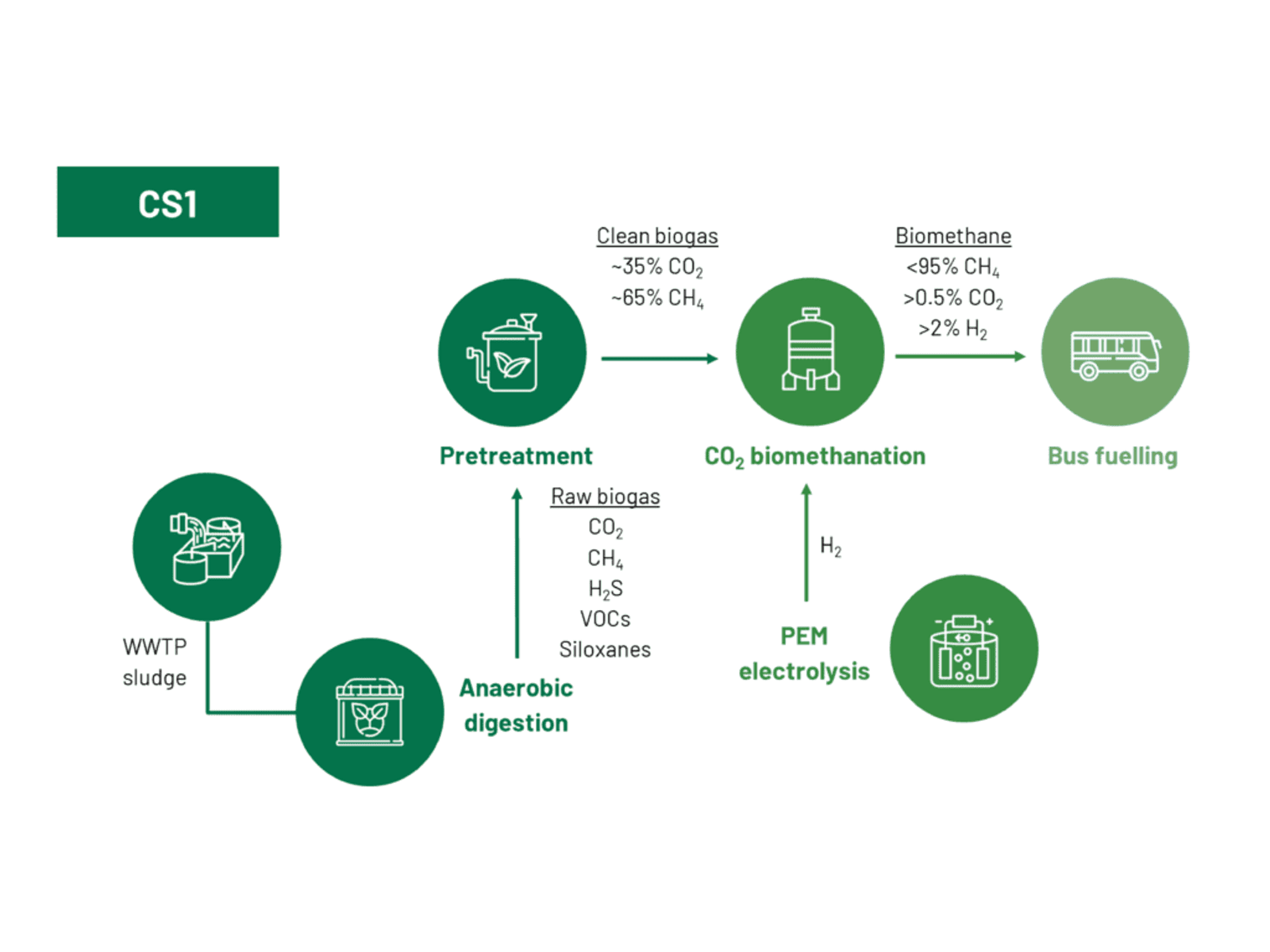
Case study 1 process.
Case study 2: Bourges, France
In Case Study 2 , SEMPRE-BIO transforms green waste into sustainable biomethane for grid injection through pyrolysis and CO methanation.
In this case, woody biomass is collected from green waste, separated and shredded. This biomass is processed in a high temperature pyrolysis unit, converting it into syngas (H, CO and CO2).
The syngas is purified to remove impurities like tars and oils, then injected into bio-methanation reactors. In these reactors, the syngas is converted into CH4 and CO2 by a bacterial consortium, producing biogas. After an epuration process, the resulting biomethane is injected into the grid to supply renewable gas.
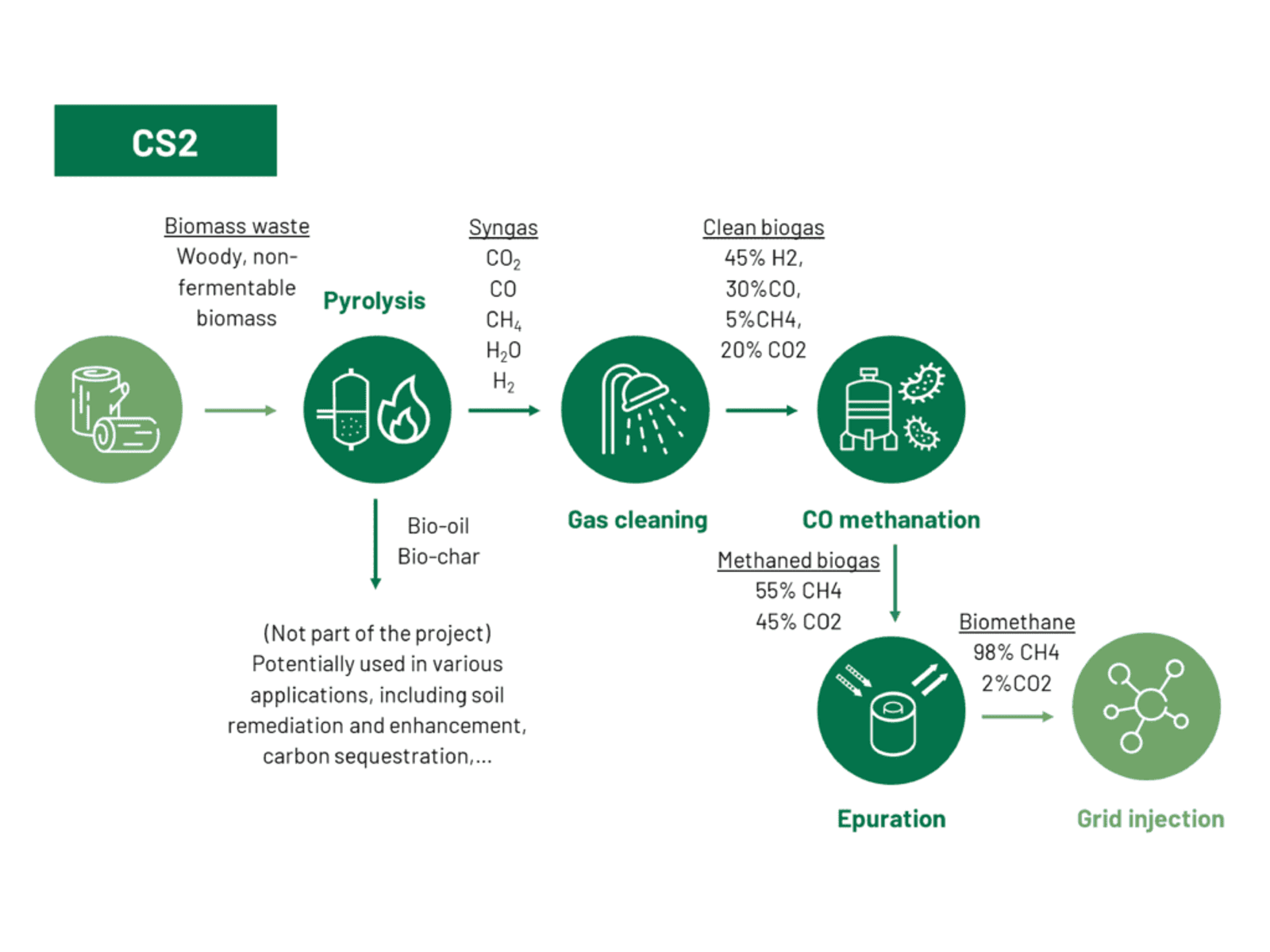
Case study 2 process.
Case study 3: Adinkerke, Belgium and CO2 valorisation
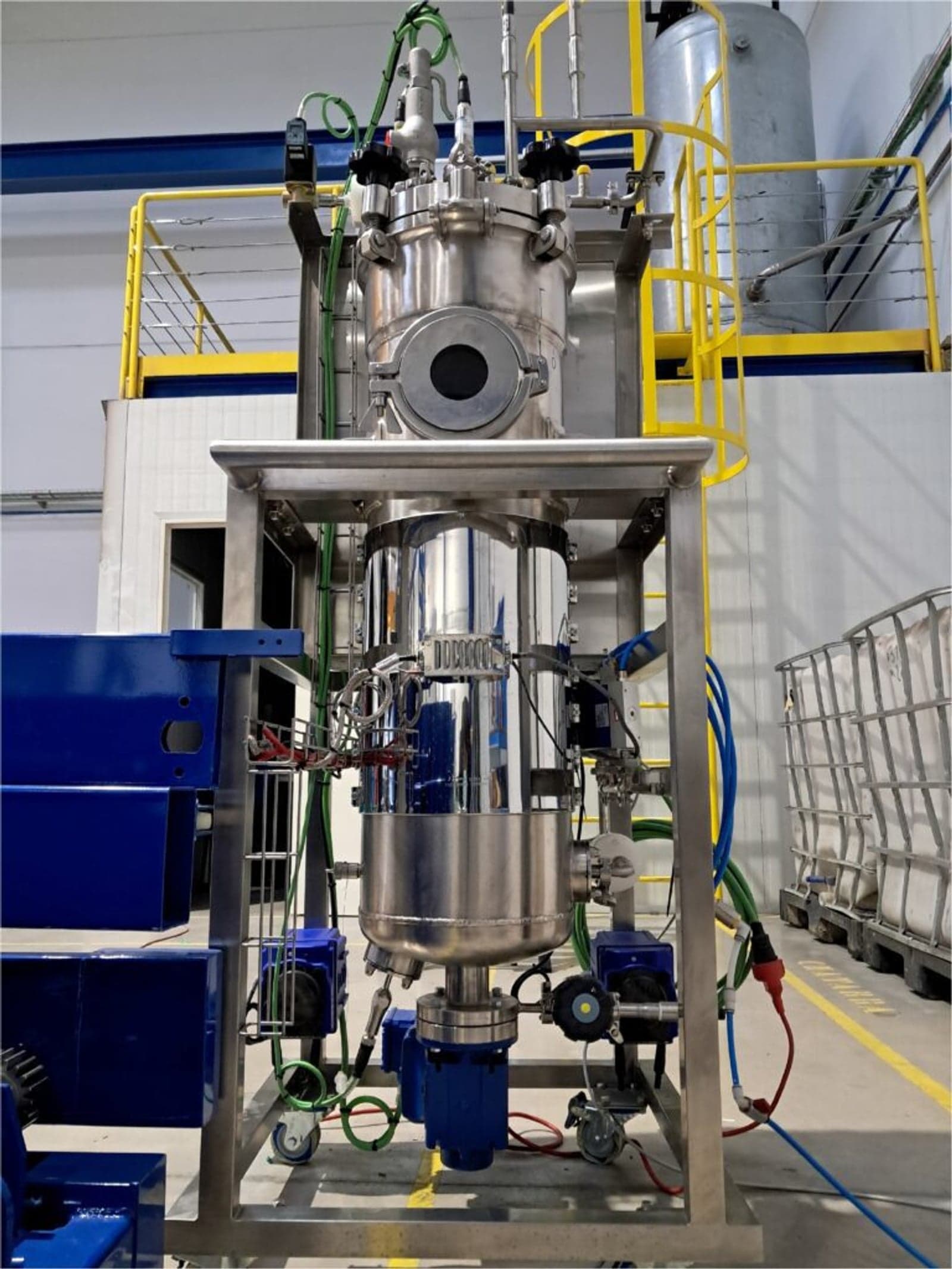
In Case Study 3, SEMPRE-BIO converts cattle manure from a dairy farm into biomethane and a liquefied CO2 stream using a cryogenic separation process, a cutting-edge technology that utilises low temperatures to purify and separate the components of biogas, mainly CH4 and CO2.
This initiative aims to meet the farm’s energy demands and convert surplus biogas into liquid biomethane (BioLNG) and liquefied CO2.
Initially, cattle manure is transformed into biogas through anaerobic digestion, followed by a purification stage to remove impurities. Using an advanced cryogenic upgrading process, the key components – CH4 and CO2 – are separated and liquefied.
The resulting BioLNG can be stored in dedicated tanks locally for subsequent uses and valorisation, ensuring flexible energy management.
Meanwhile, the liquefied CO2 is repurposed into valuable products such as biopolymers, biochemicals and alternative protein sources, utilising innovative pilot-scale technologies like a hybrid fermenter and a solar photobioreactor.
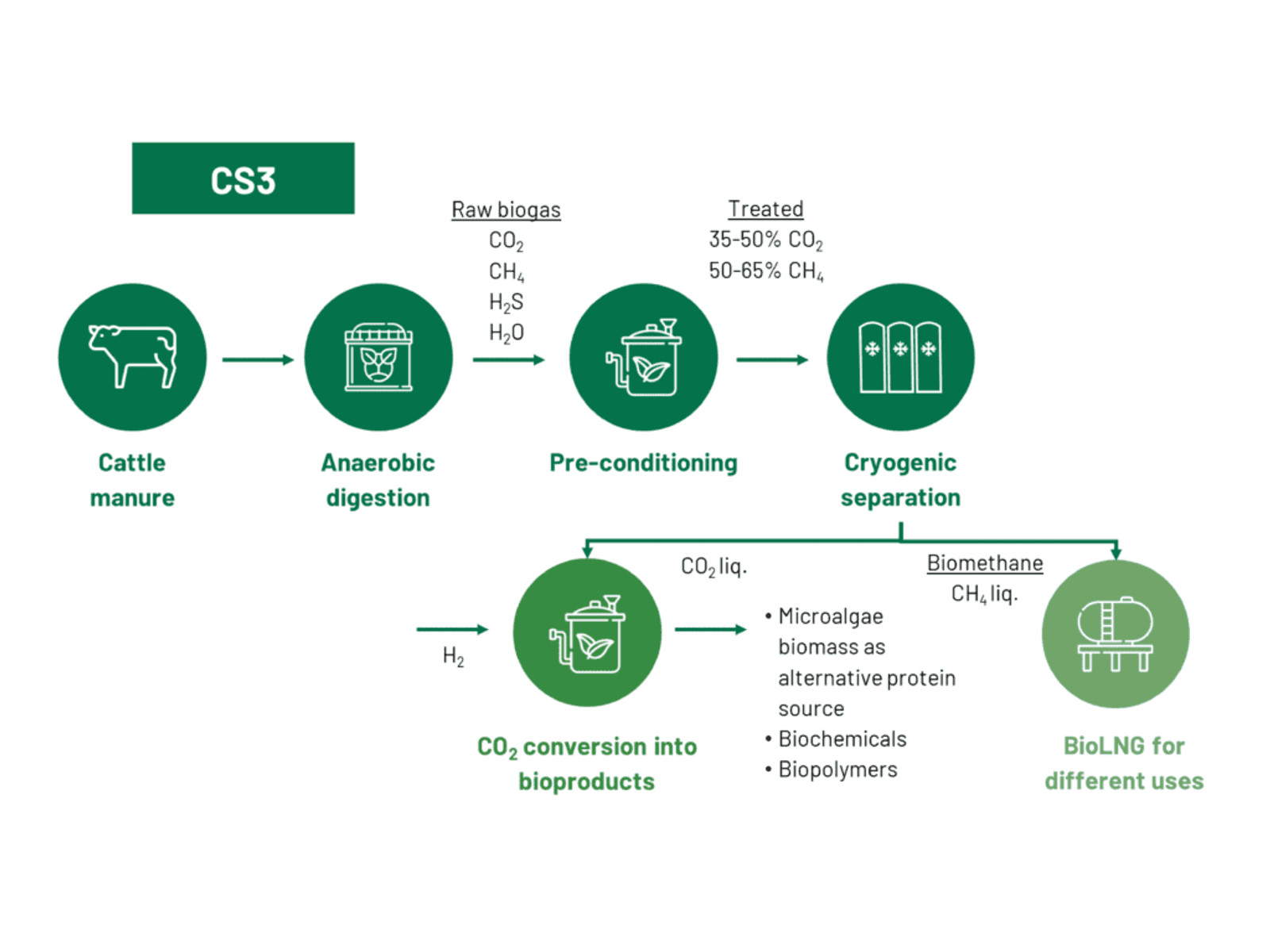
Case study 3 process.
Project goals and outcomes
The SEMPRE-BIO project aims to improve the efficiency and economics of the biomethane sector with several key outcomes and ambitious goals. It seeks to achieve a competitive biomethane price range of €55-75/MWh, significantly reducing capital expenditure by 10% through advanced modularisation techniques.
Additionally, it will create new revenue streams by capturing and utilising liquid CO2, further enhancing the economic viability of operations.
To drive innovation, the project plans to increase production by 15% using non-dominant technologies and diverse feedstocks, ensuring a more resilient and sustainable supply chain. The strategy includes boosting market uptake and actively participating in the Biorefine Cluster Europe, fostering collaboration and knowledge sharing within the industry.
Aligned with the REPowerEU initiative, this project supports the EU’s goal of reducing dependence on fossil fuels and accelerating the transition to renewable energy sources.
The long-term goals are equally ambitious. The project aims to establish 10 CS1 plants, 65 CS2 plants, and 150 CS3 plants within the next decade. By 2050, it targets a production capacity of 4.5 billion m3, which will represent 3.2% of the total biomethane market.
This comprehensive approach addresses current challenges, positioning the project as a critical driver in Europe's shift towards more sustainable energy solutions.
Learn more about the SEMPRE-BIO project. Follow us on LinkedIn, Facebook and X.