Enough biomethane production in EU to meet REPowerEU 2030 target
Jonathan Spencer Jones
Posted on: 26 July 2022
A new study from the Gas for Climate consortium estimates that in the EU-27 up to 41 billion m3 (bcm) of biomethane could be available by 2030, exceeding REPowerEU’s 35bcm target.
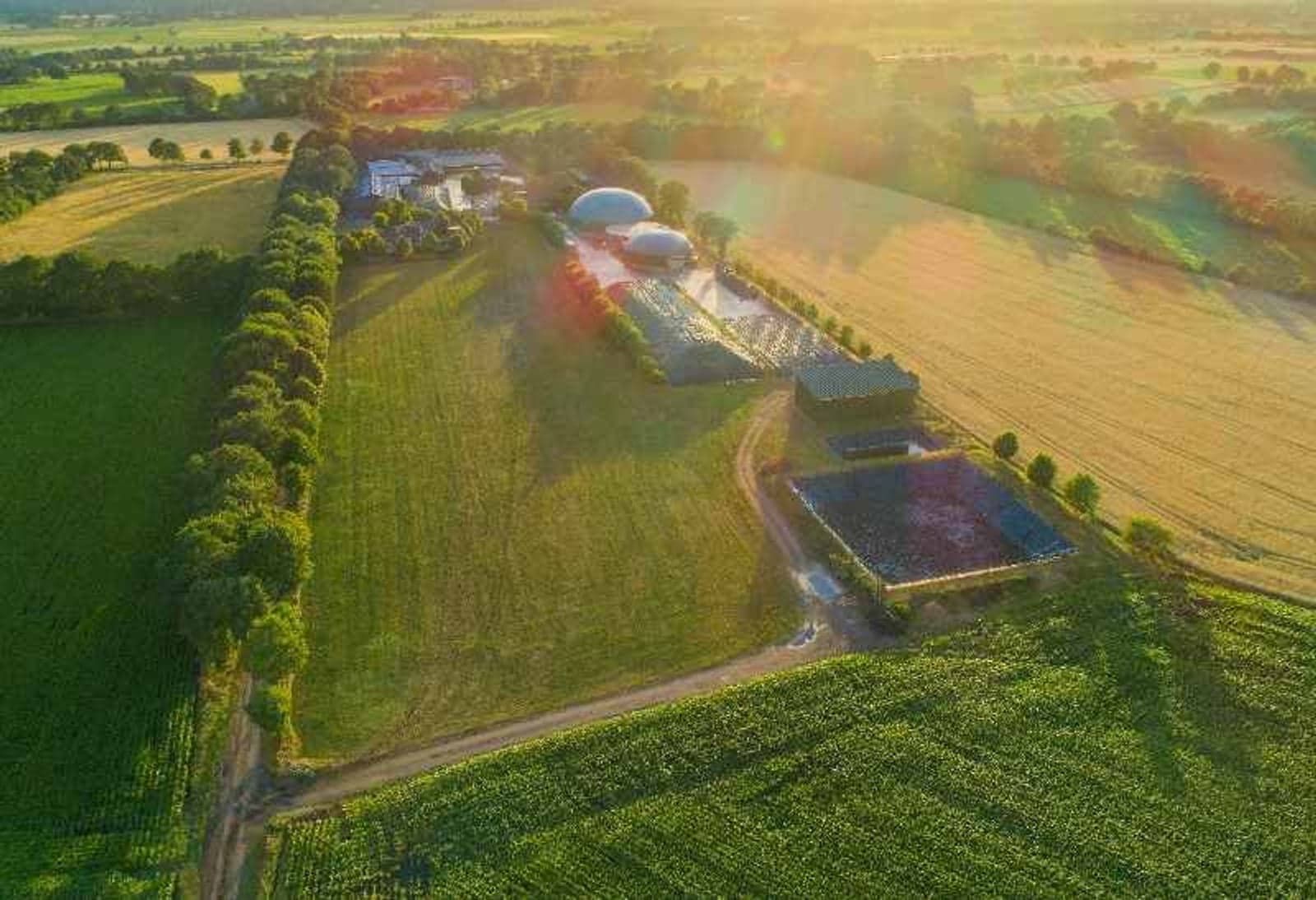
A new study from the Gas for Climate consortium estimates that in the EU-27 up to 41 billion m3 (bcm) of biomethane could be available by 2030, exceeding REPowerEU’s 35bcm target.
The study, which updates earlier estimates with the EU’s ambition to accelerate biomethane production and take advantage of advancements in technology, further finds that up to 151bcm could be available by 2050 – close to the current 155bcm natural gas imports from Russia.
Gas for Climate’s previous estimates for European production were 35bcm in 2030 and 95bcm by 2050.
Biomethane – a natural gas derived from organic sources such as landfill or food or agricultural waste – is considered to have the potential to make a significant contribution towards net zero goals, with high greenhouse gas emission reduction potential.
Have you read?
EU prepares for winter without Russian gas
COGEN World Coalition launch marks new dawn for CHP in energy transition
It is believed to be the cheapest and easiest to scale form of renewable gas available today, with uses in industry, the power sector for grid balancing, heavy transport and building heating among others.
In the light of the current world and regional affairs, it can also play a key role in reducing the dependency on Russian natural gas.
The challenge is that production must be scaled up significantly in both the short and long terms, with current biomethane production in the region at 3bcm along with 15bcm of biogas.
Biomethane potential
The study produced for Gas for Climate by Guidehouse estimates that the majority of the 2030 production, over 90%, is based on anaerobic digestion, while by 2050 thermal gasification is starting to make a meaningful contribution with over 40%.
Anaerobic digestion, a proven and market-ready technology, involves the breakdown of biodegradable material by microorganisms. The process initially produces biogas, from which biomethane can be generated with the removal of CO2 and other gas impurities.
Biomass gasification, currently existing only at a demonstration scale and yet to become commercially available, involves the breakdown of dry biomass at high temperature in a gasifier in the presence of oxygen and steam.
The top five countries for anaerobic digestion in both 2030 and 2050 consistently include France, Germany, Italy, Spain and Poland, the study reports. Key feedstocks in 2030 are animal manure providing one-third, agricultural residues one-quarter and sequential cropping one-fifth.
This contrasts with 2050 in which sequential cropping dominates with almost half, while manure and agricultural residues are reduced with each to contribute almost a fifth.
Industrial wastewater contributes over 10% of the potential in both 2030 and 2050.
For thermal gasification the top five countries in 2030 and 2050 consistently include France, Germany, Spain, Sweden and the UK. Key feedstocks in both 2030 and 2050 are forestry residues and wood waste, collectively representing almost two-thirds of the potential.
Finland and Poland also contribute significant potential in both 2030 and 2050.
Additional feedstocks
The report states the estimates derived in the study are intended to provide a “credible sense” of the overall scale at a European level and per country. However, national level estimates tend to be higher, in part because of additional feedstocks that are included.
These feedstocks, which could unlock additional biomethane potential, include some suitable for anaerobic digestion, such as algae, discarded crops, deep litter from animal husbandry and permanent grassland (only included for Germany in this study). Others suitable for hydrothermal gasification are digestate from anaerobic digestion that cannot be utilised and dredging muds.
Biomethane scale-up
In an earlier report, Gas for Climate indicated several strategies that can support biomethane scale-up.
These include increasing the size of anaerobic digestion and upgrading facilities, leading to economies of scale and cost efficiencies. Pooling of feedstock and/or biogas is one way to achieve this.
Another is transitioning supply away from biogas providing local power or heat to biomethane production where it can realise the greatest societal benefit, e.g. through implementing grid capacity solutions, such as in-grid compression of gas, to provide more flexibility for the gas system.
In addition, technology innovation is needed to increase process efficiencies and to further develop pre-treatment technologies to unlock new feedstocks for anaerobic digestion, such as straw.
Beyond 2030 the additional scale-up of biomethane requires further commercialisation of gasification technologies, syngas cleaning and methanation synthesis, which in turn requires that companies are prepared to invest in commercial scale projects.
Gas for Climate is comprised of eleven leading European gas transport companies and three renewable gas industry associations and was initiated in 2017 to analyse and create awareness about the role of renewable and low carbon gas in the future energy system.