Partner content
AI and the intelligent distribution network for tomorrow
Jonathan Spencer Jones
Posted on: 23 October 2025
Huawei's David Sun says AI is no longer optional but vital — as Huawei’s intelligent power solutions redefine grid resilience and accelerate the energy sector’s digital transformation.
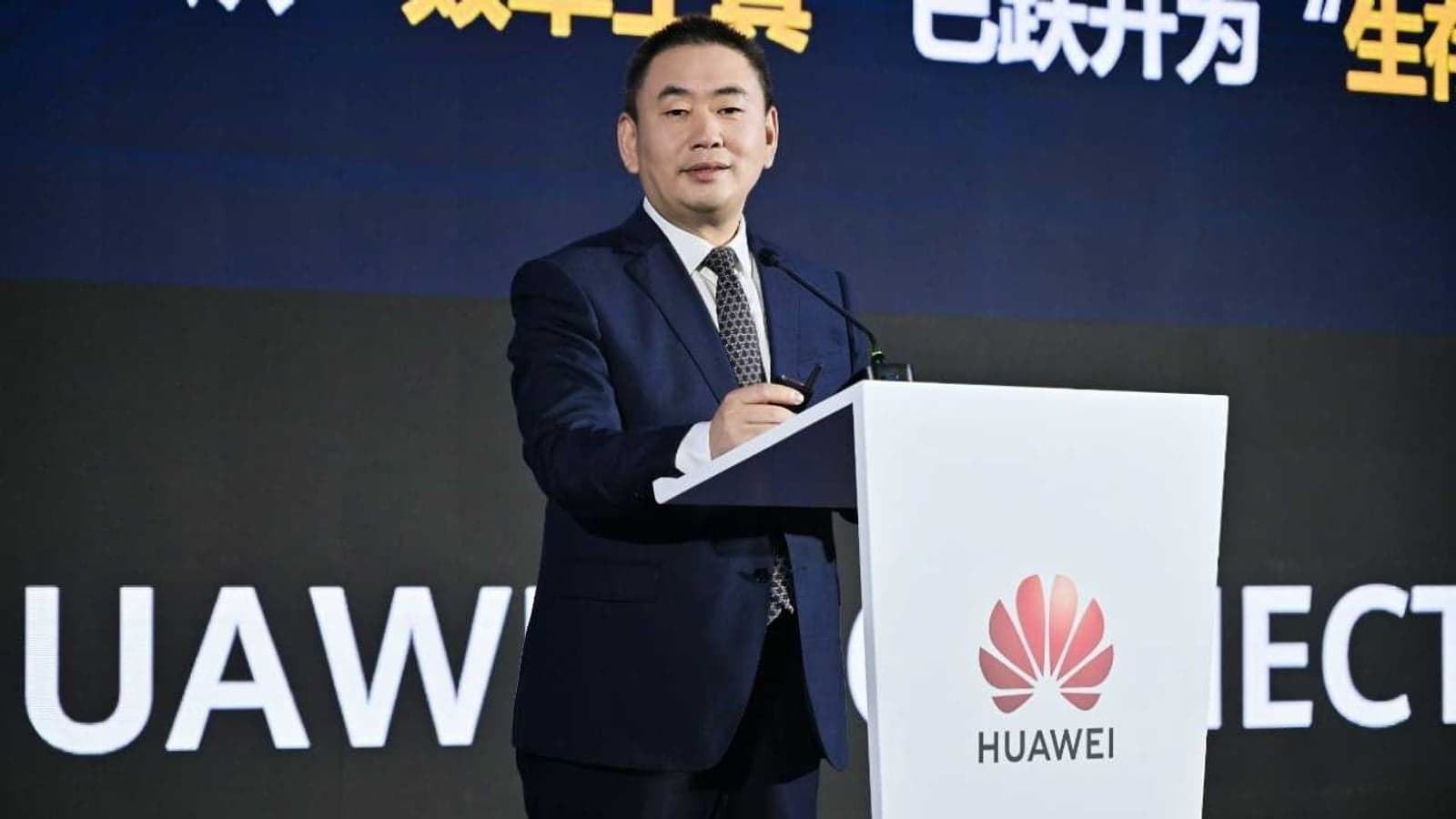
Huawei’s intelligent distribution solution is designed to provide four core capabilities for DSOs of reliable communication, edge computing, synergy, and transparency.
The utility distribution network is continuously evolving, with iterative upgrades from mechanisation to automation and now intelligence in an evolutionary process that has spurred technological innovation and business model restructuring.
This presents new challenges for the operation and management of distribution networks, while also offering strategic opportunities to enhance grid reliability and optimise resource allocation.
David Sun, CEO of Huawei's Electric Power Digitalization BU emphasised in his speech at Huawei Connect 2025 that power balance and stability are the top priorities for today’s power industry.
With this AI – in different development stages in different markets – powered by high quality, real-time data and underpinned by highly reliable communication networks, has moved from being an "efficiency tool" to a "survival essential”.
Thus, sustained growth is expected in the ICT industry’s future landscape.
“Digital and intelligent enablement is vital to addressing the uncertainties of the future power system,” asserts Sun.
Real-time grid monitoring
In the distribution landscape, with the widespread adoption of solar PV systems, electric vehicle charging points and microgrids, real-time monitoring of LV grids has become crucial for ensuring the stability of power systems.
Huawei’s intelligent distribution solution is designed as an integrated approach based on the cloud-pipe-edge-pipe-device architecture, enabling the digital transformation of the distribution network from a single point to an open, sustainable and systematic digital framework.
Communication networks
The large-scale integration of intermittent renewable energy requires digital and intelligent support, underpinned with a communication network with high reliability, low latency, and future scalability.
For instance, in China the number of substations has increased by 30% within the last eight years, placing an increasing burden on network reliability. On average, 150 HD cameras are needed in each 220kV substation, which means a huge increase in data backhaul requirements.
To address this, Huawei, in collaboration with partners, has developed an end-to-end intelligent substation solution, with connection through a unified IoT network. Cameras automatically come online to enable rapid deployment of services. Inspection videos from robots and drones are transmitted in real-time.
Multi-dimensional large language models deep mine and analyse the data, providing proactive maintenance warnings.
The solution has enabled a reduction of 40% in manual inspection time and 85% in on-site operation violations.
Digital and intelligent enablement is vital to addressing the uncertainties of the future power system
Intelligent power plant
The intelligent power plant is a complex system characterised by hierarchical collaboration, data-driven operations, and a closed-loop business process.
The solution developed leverages Huawei's advanced ICT infrastructure in networking, computing and storage, integrating technologies such as IoT, big data, AI, 5G, and digital twins.
The architecture follows a four-layer logic, with a sensing layer collecting data, a transmission layer providing connectivity, a platform layer processing and analysing the data, and an application layer implementing services.
These four layers work in concert, facilitating a transformation from traditional operations to intelligent sensing, predictive warning, collaborative optimisation and efficient control to create ultimately a power plant that is both more efficient and more economical, as well as safer and more reliable.
Leveraging AI to boost electric power intelligence
The primary goal of the future power system is to strike a balance between stability and flexibility.
In the first half of 2025, more than 10 major power outages have struck the globe affecting more than 1.2 billion persons – reflecting the key importance of stability.
By 2030, in China the installed capacity of new energy will reach 3,000GW, of which distributed PV will account for 1,000GW. There will be 110 million electric vehicles, and various adjustable loads will grow to around 10%. All these require a power system with ultimate flexibility.
To tackle these challenges, AI must play a key role along three value streams – the full electric power process, the full asset lifecycle, and full customer service.
In the power process, AI is required to play a systematic role in scenarios such as new energy power predictions, load predictions, and multi-objective optimal solutions, as well as power flow calculations and transient simulations.
In the asset lifecycle process, AI capabilities are required for predictive maintenance, preventive management, onsite operational safety and quick response in engineering scheduling and disaster relief.
You might be interested in:
Communication networks boost digital intelligence for future power system
For customer service, AI is required in areas including real-time trading, proactive service delivery, and two-way utility, customer interactions.
The economic benefits can be huge. In China, for example, by 2030 4,200TWh of power is expected to be generated by new energy. If AI were to increase the new energy accommodation by just 2.6%, it would be equivalent to the annual power generation of the Three Gorges Dam.
Such innovation requires AI leadership: “Digitalisation means AI is now a survival essential,” says David Sun.
Highlighting findings from the digitalisation and intelligence index report that half of the countries surveyed are still in the traditional grid stage and urgently need digital and intelligent technologies and that digital investment has a significant impact on power companies’ operations and profitability, he adds looking ahead, Huawei will deepen the application of digital and intelligent technologies in the power sector, injecting intelligence into core electric power production scenarios.
“We will remain committed to helping global power companies tackle systemic challenges in power systems and move towards a smarter and more sustainable future.”
Related tags
Most popular
Join the community for freeAnd get access to all content
Related companies
Huawei Technologies Co., Ltd.
Latest content
Partner content
+3
Leveraging AI to boost electric power intelligence
As power grids face rising instability and the surge of renewables, David Sun believes AI and intelligent communication networks hold the key to building a more resilient and flexible energy future.
- Guest/partner contributor
- 24/11/2025