Partner content
Leveraging AI to boost electric power intelligence
Guest/partner contributor
Posted on: 24 November 2025
As power grids face rising instability and the surge of renewables, David Sun believes AI and intelligent communication networks hold the key to building a more resilient and flexible energy future.

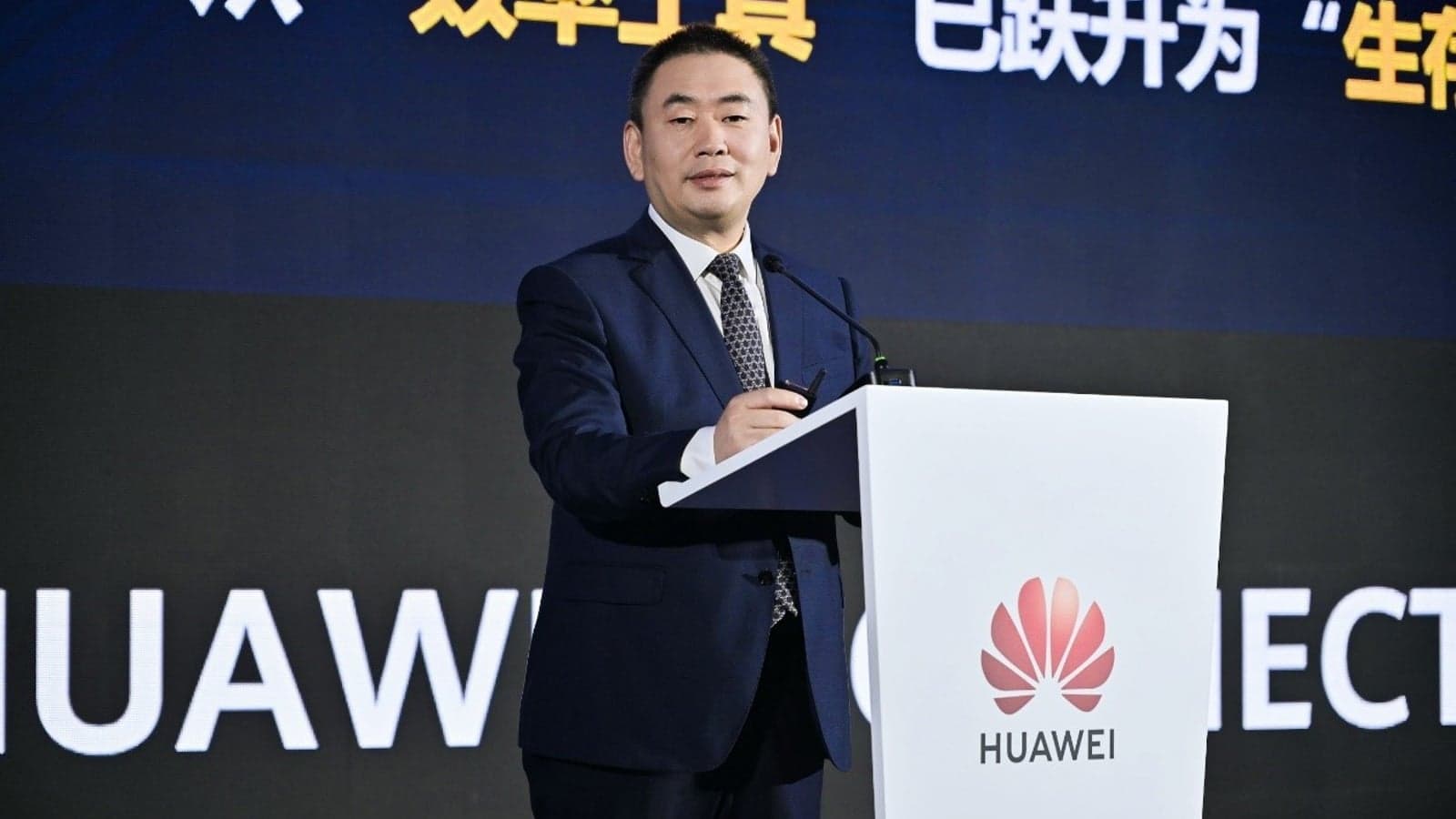
David Sun, CEO at Huawei Electric Power Digitalization BU, expresses that with outages rising and renewables reshaping demand, the power industry is at a turning point. He believes AI and connectivity will be the driving forces behind the next era of grid stability and intelligence.
What are the current trends in the power industry?
The power industry is undergoing a dual transformation — striving for both ultimate stability and ultimate flexibility. This shift is driven by several key trends. Rising instability is a growing concern, with more than 10 major power outages occurring in the first half of 2025 alone, affecting over 1.2 billion people worldwide. At the same time, the rapid surge in renewable energy is reshaping the global energy landscape.
In China, for instance, installed new energy capacity is expected to reach 3,000 gigawatts by 2030, with distributed photovoltaic systems accounting for 1,000 gigawatts. The number of electric vehicles is projected to hit 110 million, while adjustable loads will grow to around 10%. In this evolving landscape, artificial intelligence has become indispensable — no longer just an efficiency tool, but a survival essential for balancing grid stability and flexibility.
What role does AI play in the power industry’s
digital-intelligent transformation?
Artificial intelligence is emerging as a systemic enabler across three critical value streams in the power sector.
First, it optimises the full power process by addressing instability — for example, managing the projected 30% share of wind and solar generation in China by 2030 — through advanced prediction of loads and renewable output, coupled with multi-objective optimisation.
Second, AI enhances the full asset lifecycle, shifting operations from reactive to proactive maintenance and extending the lifespan of critical infrastructure. Finally, it transforms customer services by enabling real-time trading, bidirectional interaction, and proactive issue resolution, ultimately fostering a more responsive and resilient energy ecosystem.
How does AI accelerate this transformation?
AI drives transformation through three major areas:
- Predictive capabilities: First, predictive maintenance is oriented to equipment. With systematic AI adoption, proactive O&M can be performed to prevent potential risks and ensure devices run stably. Proactive intervention in the full lifecycle management of assets helps extend the asset service life.
- Proactive operations: AI is used to ensure onsite operational safety, shifting from post-event reactive tracing to proactive intervention during the event, and finally to pre-event proactive prevention. Preventive management is oriented towards people and environments that affect equipment externally: this includes environment-level, operation-level, emergency-level management as well as emergency drills.
- Market mechanisms: By 2030, 4200 TWh (Terawatt-hour) of power is expected to be generated by new energy in China. If AI increases the new energy accommodation by 2.6 percentage points, it will be equivalent to the annual power generation of the Three Gorges Dam. In the future, AI will also allow millions of households to participate in peak shaving through market mechanisms if minute-level electricity trading becomes reality.
We need to look at tomorrow from the day after tomorrow and plan a proper communication target network today.
What role does communication technology play?
For the power industry, real-time and high-quality data is essential to get the most out of AI, while highly reliable communication networks are the foundation for real-time, high-quality data. Without communication, there is no protection, automation, informatisation, digitalisation, or AI enablement.
Therefore, we need to "look tomorrow from the day after tomorrow and plan a proper communication target network today." We need to redefine digital scenarios and the communication target network, as well as reposition network security.
Main networks: Main network communication is the artery of power system. Intelligent computing communication needs to be enhanced through all-optical adoption to support digital twins and intelligent upgrades.
Medium-voltage: Medium-voltage communication is the weakest link in the current power grid. The fiber network and the wireless private network need to be integrated to support the elastic networking and flexible access of distributed energy.
Low-voltage: As the "nerve endings" of the power grid, low-voltage communication needs to be transparent and agile to perceive the running status of all elements in real time.
Security: With the exponential increase in access points, security has become more important than ever.
The State Grid Corporation of China (SGCC) and China Southern Power Grid (CSG) recently released the Communication Target Network White Paper, which emphasised the five features: “intelligent and robust main network, medium-voltage integration, low-voltage transparency, high speed and security, and space-ground integration”.
How should investors respond to these challenges?
At the Huawei Global Electric Power Summit held during HUAWEI CONNECT 2025, Huawei released the Global Digitalisation and Intelligence Index (GDII) Report for the Power Industry. In this report, there are two key findings:
Half of the countries are still in the traditional grid stage and urgently need digital and intelligent technologies to drive continuous evolution.
Digital investment of power companies has a significant impact on their safe operations and profitability.
Recommendations from the GDII 2025:
Boost investment: Allocate 3% to 5% of revenue to digitalisation for a "snowball effect" on safety/profitability.
Prioritise innovation: Focus on AI-led solutions (e.g., pumped storage, grid-forming storage).
Data infrastructure: Invest in real-time, traceable data exchange spaces and communication networks.
As emphasised in the report, half of global grids remain traditional, which urges accelerated AI and digital adoption to future-proof the industry.
Connect with Huawei
Discover the latest company news and content from Huawei on Enlit.World.