How ENPOWER AI tools support self-consumption on Chalki Island
Guest/partner contributor
Posted on: 23 June 2026
On the remote Greek island of Chalki, the ENPOWER project is demonstrating how data-driven tools can support local energy security.
Islands are often at the frontline of Europe’s energy transition. Their energy systems are smaller, more exposed to infrastructure limitations and frequently dependent on external connections or fossil-based back-up generation.
Chalki, a small Greek island in the Dodecanese, represents such a case. Although it is not connected to the Greek mainland grid, it is electrically connected to the nearby island of Rhodes. This makes energy security, local renewable energy use and efficient demand management especially important.
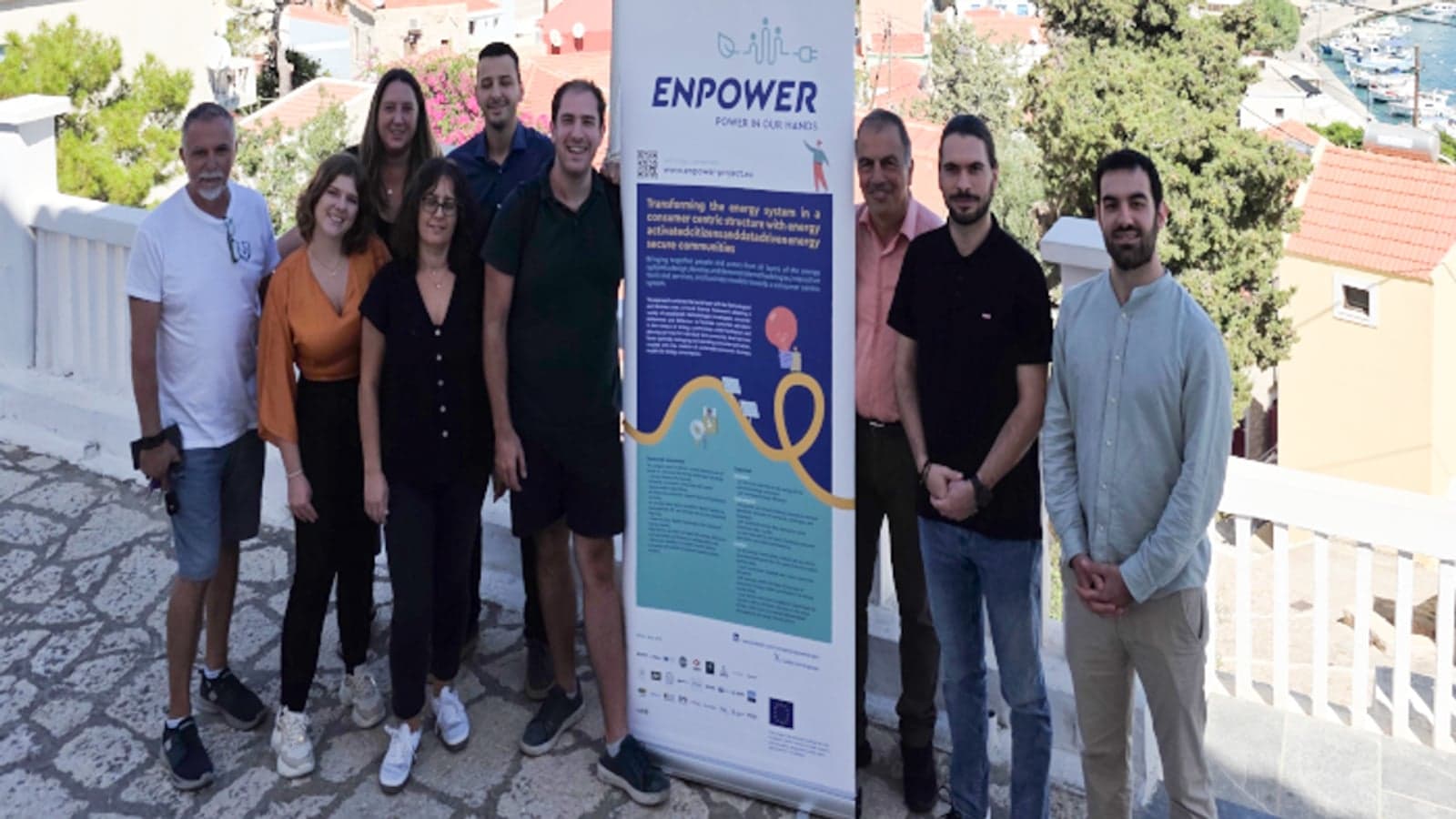
Chalki is also home to the ChalkiON energy community, one of the Greek pilot cases of the ENPOWER project [1]. Within this context, Chalki provides a valuable real-life environment to test how digital optimisation can support both the island and its energy community.
The focus is not only on producing renewable electricity locally, but also on using more of this electricity at the right time. This is where the FLEXCOMM, a self-consumption optimisation tool, becomes crucial.
FLEXCOMM methodology
FLEXCOMM was developed as a community-level self-consumption optimisation tool for the Greek pilot [2]. Its purpose is to help the energy community better align local electricity demand with photovoltaic production.
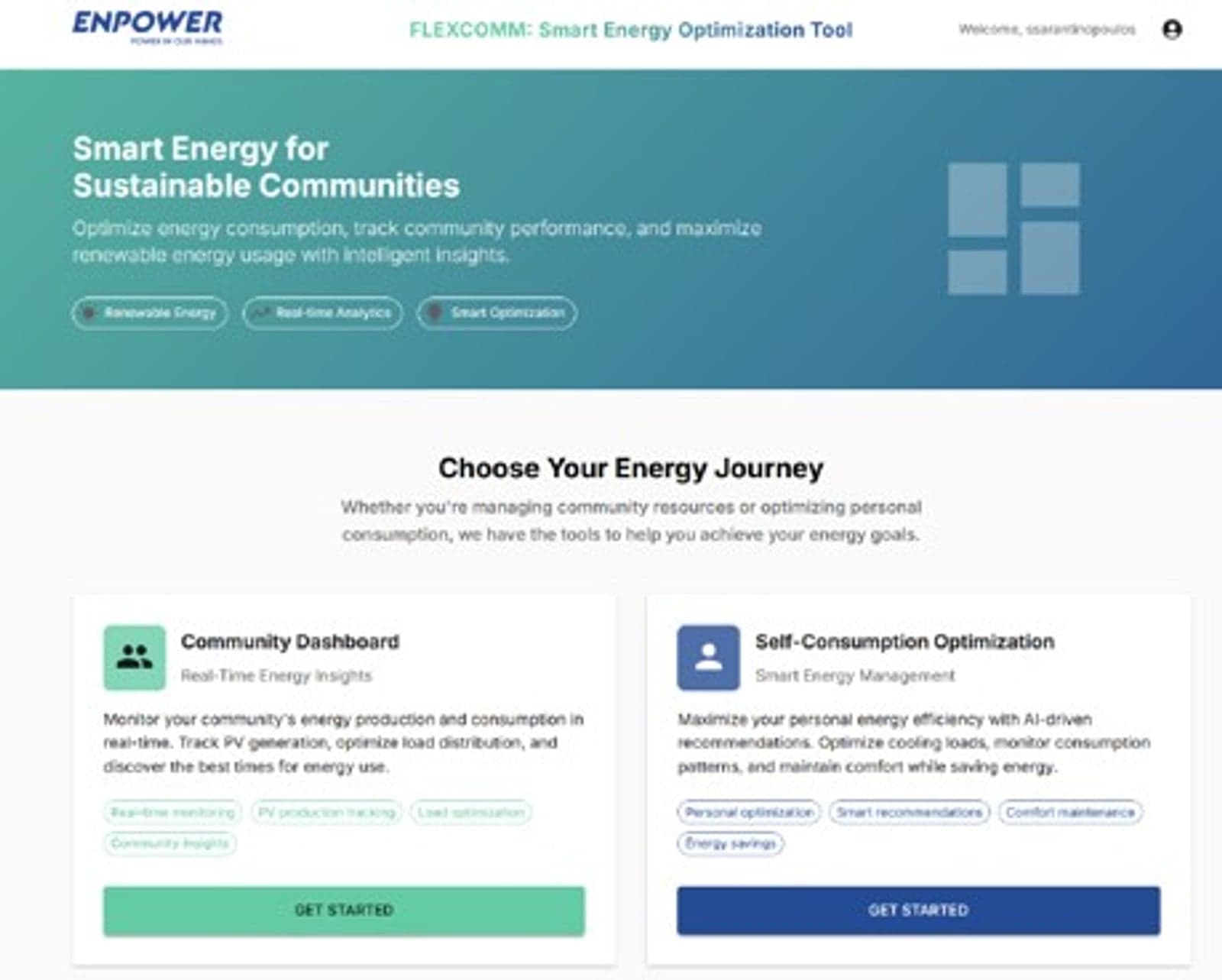
The tool combines data collection, forecasting, optimisation and visualisation in a web-based environment designed for community-level energy management. However, it also provides an overview of the island’s energy status as well and its approach relies on three main layers (Figure 1).
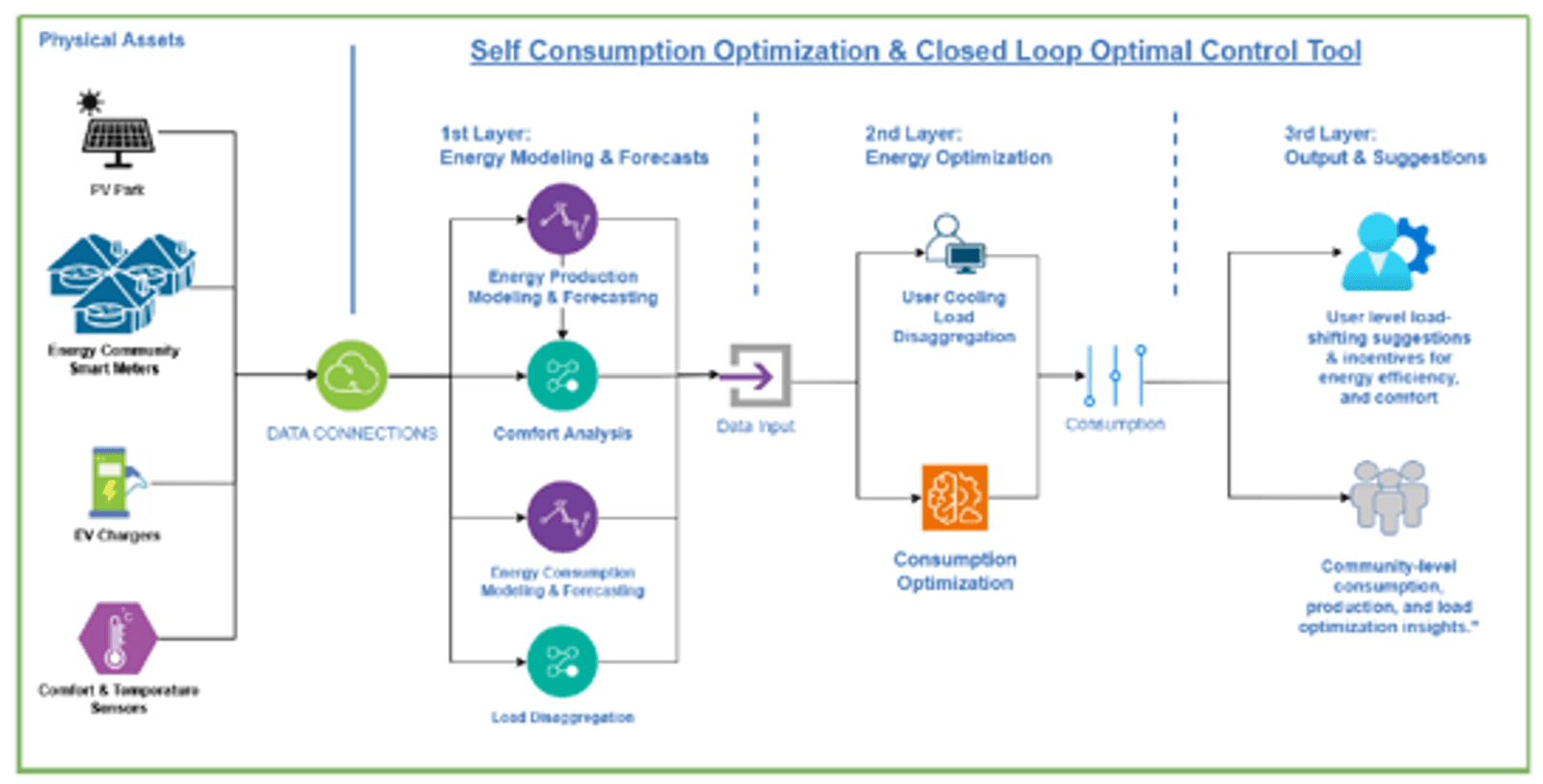
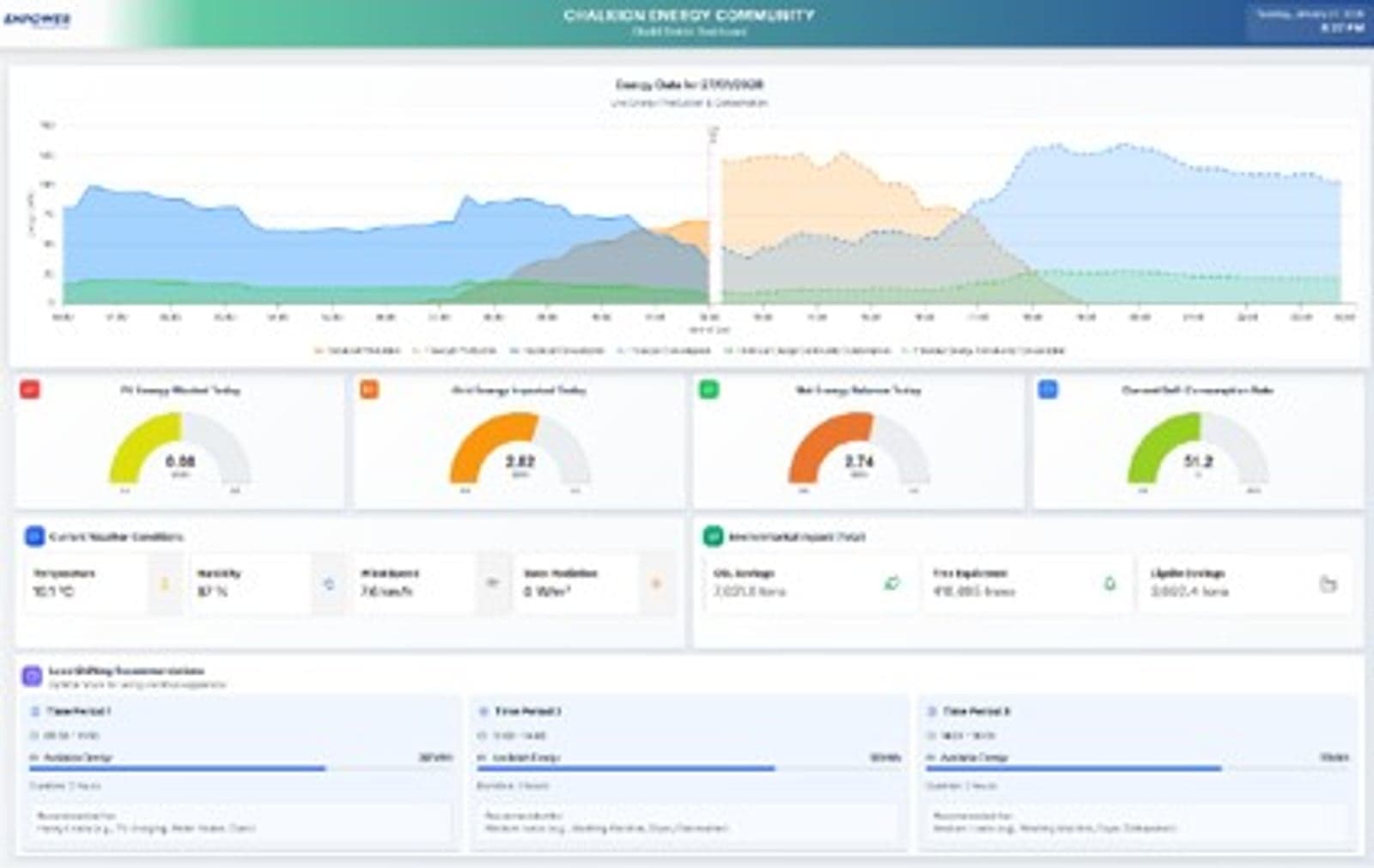
First, FLEXCOMM gathers and presents energy data from the island and the energy community. This includes information on PV generation, local demand and self-consumption performance.
By making these data visible through a dashboard (Figure 2), the tool allows community managers to move from fragmented information to near-real-time operational awareness.
Second, the tool uses forecasting and optimisation to identify suitable periods for load shifting. In practice, this means recognising when renewable production is expected to be high and encouraging consumption to move towards these windows (Figure 3).
The use of a heuristic optimisation approach supports the Greek pilot through PV production and load forecasting and helps identifying optimal time windows for load shifting.
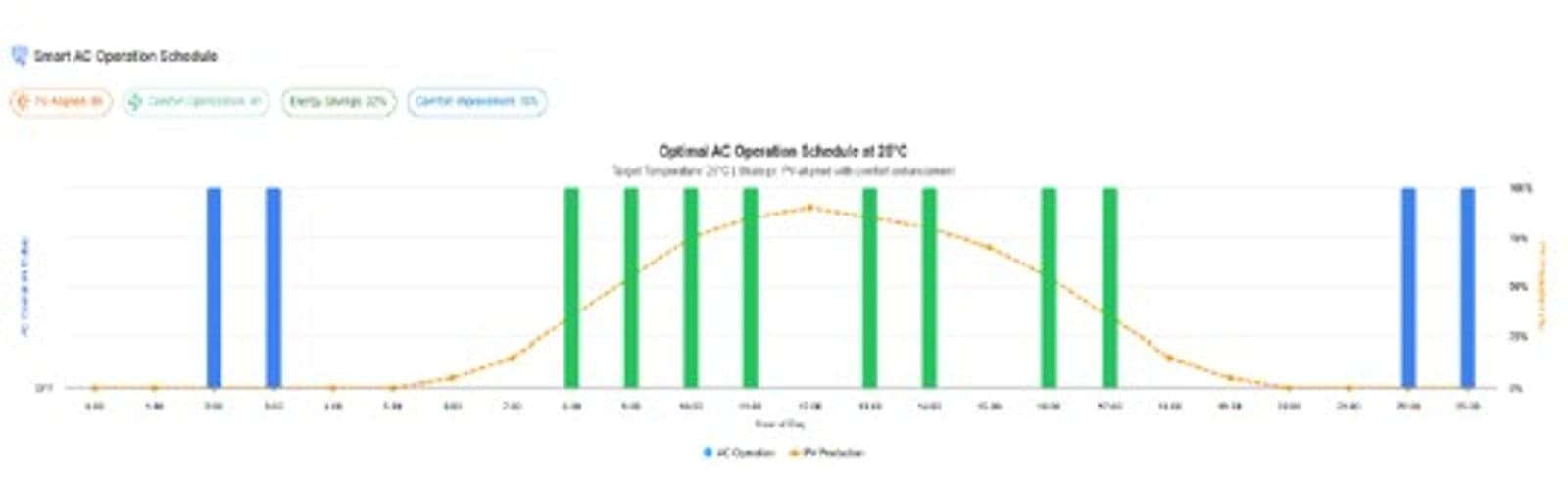
Third, FLEXCOMM is linked with closed loop optimal load control for residential users. This component focuses particularly on cooling loads, which are highly relevant for a Greek island during summer.
Using smart meter data, indoor temperature and humidity measurements, the system can disaggregate cooling loads, estimate comfort conditions, and suggest how cooling consumption could be shifted without compromising user comfort (Figure 4).
This creates a bridge between community-level energy optimisation and individual household-level flexibility.
Results and discussion
The first results from Chalki show why energy data visibility is not only useful for long-term planning, but also for day-to-day operation.
At present, the self-consumption level of the energy community is approximately 39%. This figure provides a clear baseline for understanding how much locally produced renewable electricity is actually consumed locally. For an island such as Chalki, increasing this share is highly significant: every additional percentage point of self-consumption means better use of local renewable energy, reduced dependence on external supply, and improved resilience.
During summer 2025, the use of FLEXCOMM helped the community identify that something was wrong in the operation of the PV system. The data showed an abnormal performance pattern, which led to further investigation. The issue was traced to a malfunctioning inverter. Because the problem was detected earlier than it would have been through typical procedures, the inverter was replaced sooner.
This early detection is estimated to have avoided around 30MWh of energy losses. This is an important result because it shows that optimisation tools can deliver value even before advanced flexibility mechanisms are fully activated. In this case, the value came from operational awareness is the ability to see, understand, and act on system performance data quickly.
In addition, FLEXCOMM has supported the identification of 17% aggregated flexibility. This flexibility represents the share of demand that could potentially be shifted or managed to better match renewable generation.
For Chalki, this is particularly relevant during periods of high solar production and high cooling demand. If this flexibility is activated effectively, the island can increase its self-consumption beyond the current 39% and reduce periods where renewable generation is underused.
Conclusion
Chalki demonstrates how remote islands can become livings lab for Europe’s citizen-centred energy transition. Through the ENPOWER project and the ChalkiON energy community, the island is testing how data-driven services can improve local energy performance, increase renewable self-consumption, and strengthen energy security.
The FLEXCOMM has already shown tangible value. It provides visibility over the community’s current self-consumption, supports the detection of technical problems, and identifies flexibility that can be used to better align demand with local renewable generation. The early identification of a malfunctioning inverter, with estimated avoided losses of 30MWh, shows that digital tools can create immediate operational benefits, not only future optimisation potential.
Looking ahead, the next step is to further activate the identified flexibility and support citizens in participating in demand side actions. For Chalki and similar islands, this approach can help transform renewable energy communities from passive producers into active managers of local energy security.
References
- Matsagkos, N., Kanellou, E., Fragkiadaki, A., Michalakopoulos, V., Marinakis, V., & Doukas, H., 2024. Democratise energy through energy activated citizens and data-driven communities: The ENPOWER approach. In 15th International Conference on Information, Intelligence, Systems & Applications, pp. 1-8.
- Sarantinopoulos, E., Michalakopoulos, V., Matsagkos, N., Kanellou, E., Sarmas, E., & Marinakis, V. A forecast-driven, comfort-aware load shifting optimization tool for optimizing solar self-consumption in island energy communities.
About the author
Nektarios Matsagkos graduated from the Electrical Engineering School at the National Technical University of Athens and is now a researcher at the Energy Policy Unit of the same University. He is interested in energy efficiency, sustainability and energy communities, and is part of the coordinating team of the ENPOWER project.
Related tags
Most popular
Join the community for freeAnd get access to all content
Related projects
ENPOWER
1 September 2023 - 31 August 2026
View project