AMI and cybersecurity challenges for distribution utilities in India
Guest/partner contributor
Posted on: 6 March 2025
The growing adoption of AMI in India's power distribution sector is giving rise to substantial cybersecurity challenges.
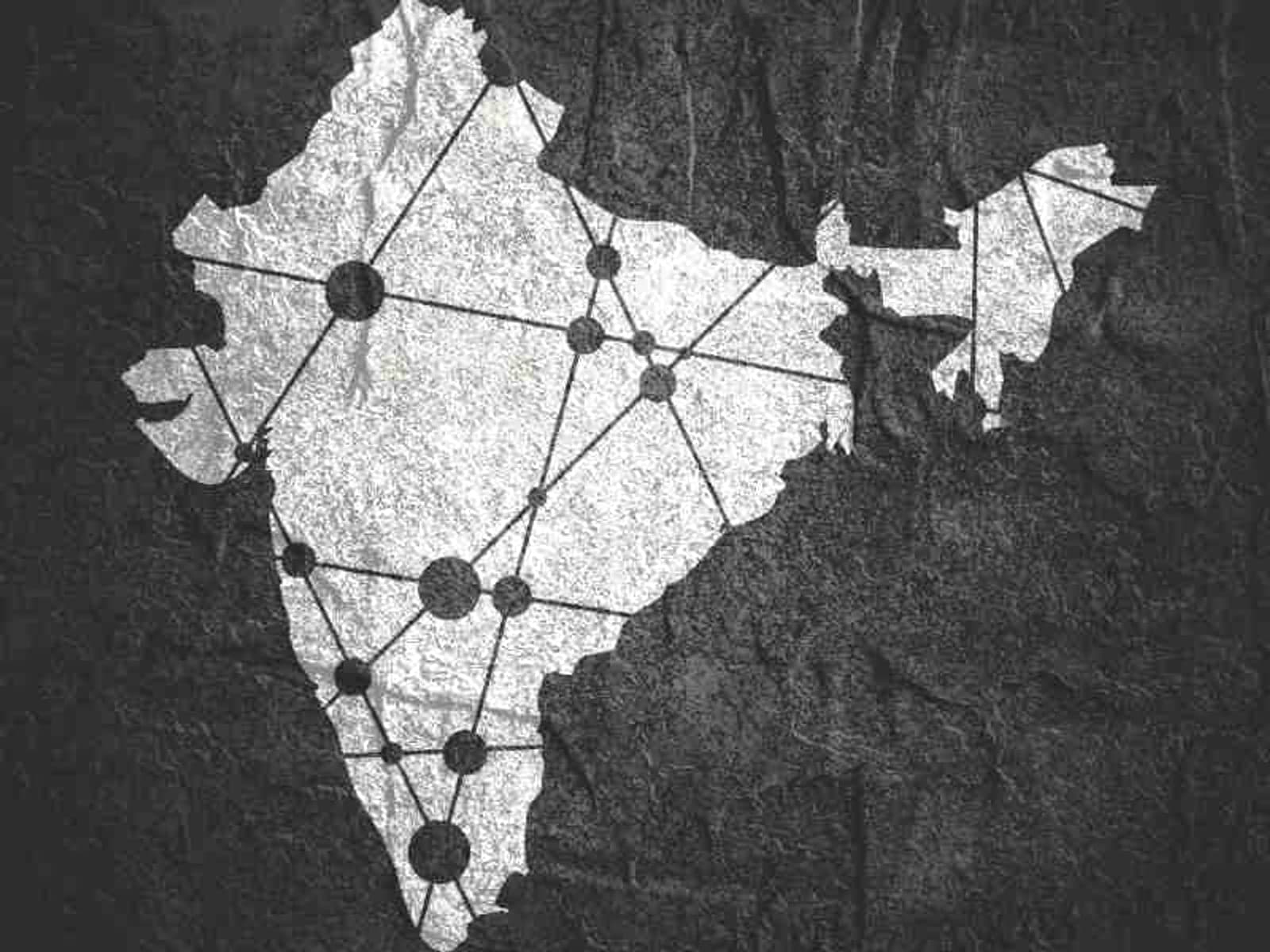
The growing adoption of AMI in India's power distribution sector is giving rise to substantial cybersecurity challenges, write Suhas M Kharad and JVS Ramakrishna of L&T Technology Services.
Advanced metering infrastructure (AMI) is crucial for ensuring smart electricity grids towards enabling secure two-way communication between utility companies and customers.
It enhances operational efficiency and customer service through real-time monitoring, automated meter reading and dynamic pricing.
However, integrating the relevant IT systems into AMI introduces the risk of significant cyber threats from agents seeking to disrupt secure and reliable communications, requiring robust security measures in mitigation.
Current scenario
India's power sector is undergoing a significant transformation through the implementation of various smart grid initiatives. Among key developments in this direction are targeted government initiatives including the nationwide Smart Grid Mission and UDAY (Ujwal DISCOM Assurance Yojana), which are pivotal in driving AMI adoption.
Several states are undergoing accelerated deployment with large-scale projects, including Assam, Andhra Pradesh, Bihar, Delhi, Gujarat, Uttar Pradesh, Karnataka, Maharashtra, Rajasthan and Tamil Nadu.
The predominant technologies used for communication in AMI systems include RF mesh, Power Line Communication (PLC) and cellular networks, with new innovations helping redefine the underlying technology framework.
Rise of cybersecurity threats
This shift to AMI has witnessed the emergence and identification of multiple cybersecurity threats at various stages of implementation.
Some of the major issues noted include data breaches, system tampering, denial of service attacks and ransomware threats. (Figure 1)

Notable intervention areas include:
● Protecting the vast amount of client data (+2 million users) against unauthorised access and misuse.
● Preventing tampering, both digital and physical, of the meters, which could lead to revenue losses.
● Ensuring reliable and secure communication channels against denial of service and malware attacks.
● Establishing compliance with India's stringent cybersecurity regulations.
These challenges underscore the need for a comprehensive, multi-layered cybersecurity framework capable of mitigating risks across the AMI ecosystem.
Have you read:
Smart meter technology advances in India
CyanConnode bags Indian smart metering contract for 6.5m communication modules
Purposeful agile innovation with a value-driven solution
Our approach toward mitigating the risks identified includes the adoption of a robust cybersecurity architecture for ensuring seamless service delivery and reliability. (Figure 2)
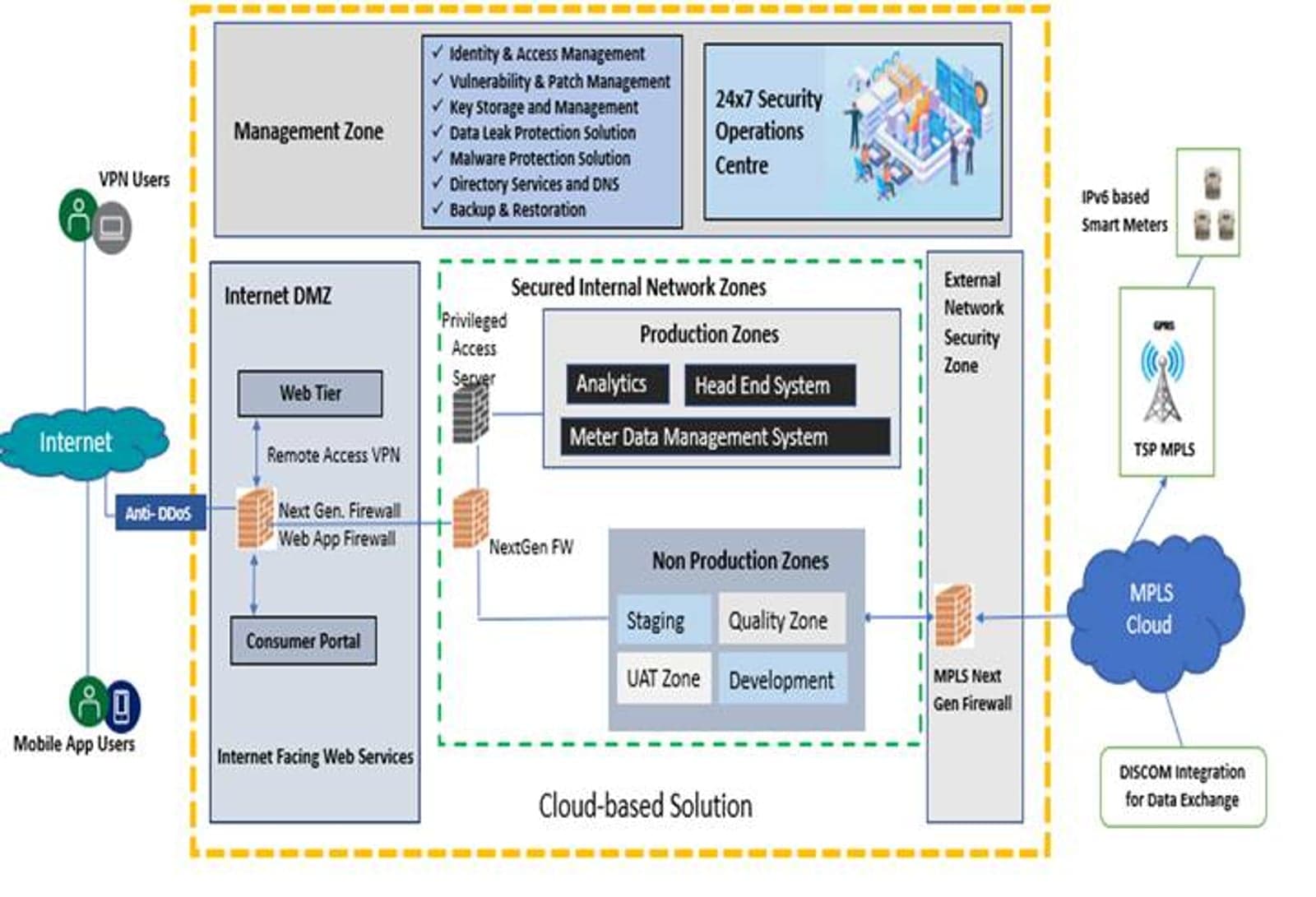
This is complemented by a reliable cybersecurity framework. The solution was developed based on our structured and proactive approach to security, addressing critical vulnerabilities while ensuring system reliability. (Figure 3)
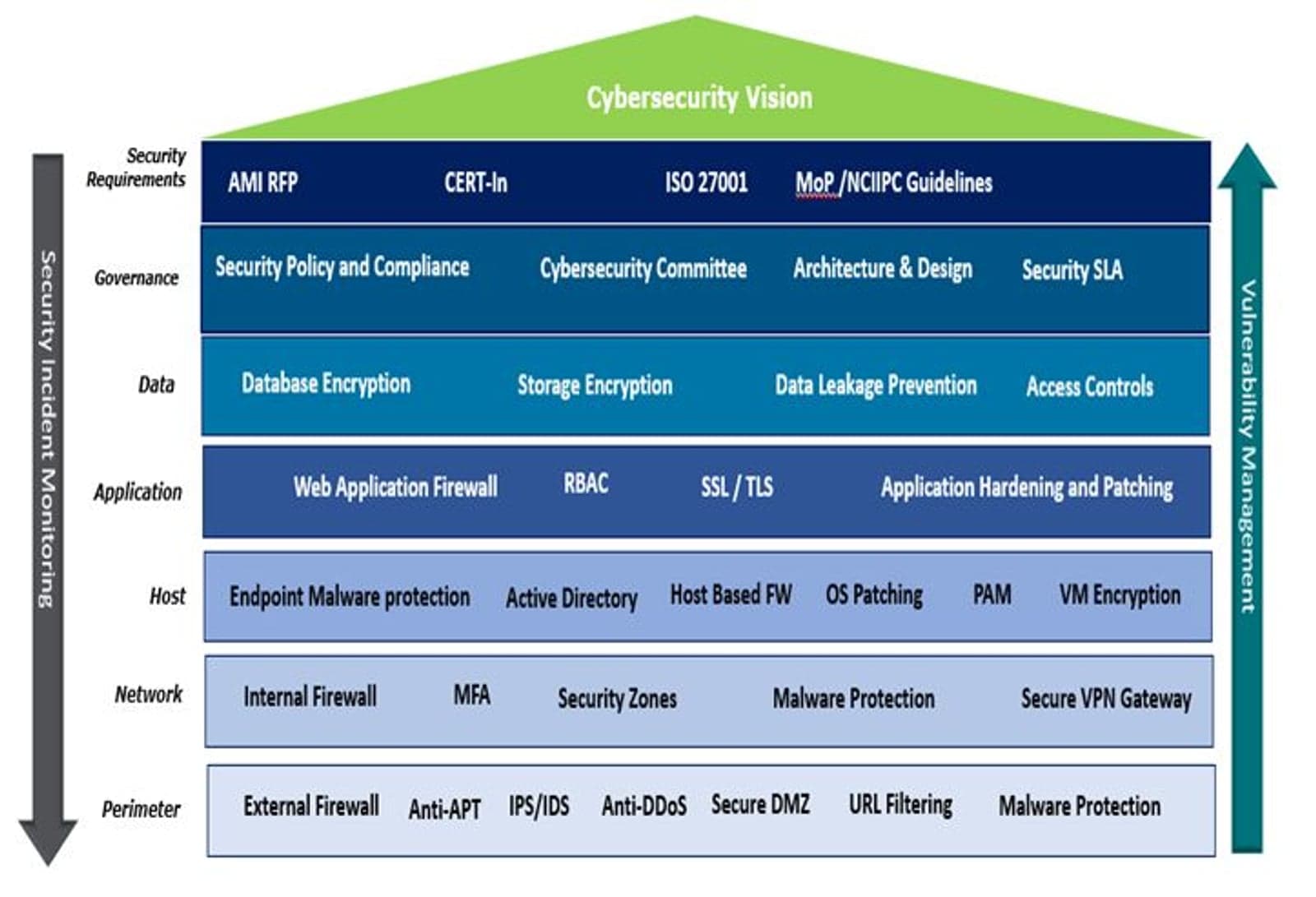
Key elements of the framework include:
● Governance and risk management with the establishment of a dedicated cybersecurity governance body and implementation of regular risk assessments and audits with incident response plans.
● Data security with encryption of data both at rest and in transit and integration of role-based access controls and tamper-resistant technologies.
● Application and host security with regular updates, vulnerability assessments and intrusion prevention mechanisms and the configuration of access controls and endpoint encryption to prevent breaches.
● Perimeter and network security with the deployment of advanced firewalls and intrusion detection systems and secure segregation of networks to minimise attack surfaces.
● Operational enhancements with tamper detection systems to safeguard meter integrity and incident response planning integrated with ongoing monitoring tools.
This solution has transformed cybersecurity from a reactive measure to a proactive and purposeful innovation in India’s power distribution landscape.
Measurable results
The implemented framework has delivered measurable results, reinforcing security and reliability across the AMI ecosystem.
It has enabled enhanced data security with the integration of encryption standards and access controls to ensure client data privacy.
Tamper resistance is enabled through alerts and secure firmware updates to minimise instances of meter tampering, while operational resilience is achieved through redundant network designs and detection systems to address potential disruptions from denial of service or malware attacks.
Regulatory compliance is delivered through alignment with critical infrastructure guidelines, such as ISO/IEC 27001 and CEA regulations
Improved awareness also has resulted in training and knowledge transfer to empower utility teams with the tools for maintain long-term cyber infrastructure integrity.
Illustrative use cases
Use case 1: Protecting customer data privacy
Scenario: A leading distribution utility implements AMI, collecting large volumes of client data including consumption patterns and personal details.
Threat: A hacker attempts to breach the database to steal sensitive information.
Solution:
● Implement end-to-end data encryption,
● Use multi-factor authentication and role-based access control,
● Conduct regular security audits and penetration tests, and
● Apply data anonymisation techniques.
Use case 2: Preventing meter tampering
Scenario: In a smart metering project, the utility faces physical and cyber tampering incidents.
Threat: Tampered meters report incorrect data, causing revenue losses.
Solution:
● Deploy meters with tamper detection alerts,
● Ensure secure, regularly updated firmware,
● Install meters in tamper-evident enclosures, and
● Implement advanced monitoring systems for irregularities.
Use case 3: Mitigating denial of service attacks
Scenario: A leading power utility faces a denial of service attack, disrupting meter communication and affecting real-time data management.
Threat: Operational disruption and potential data loss.
Solution:
● Design a redundant network for continuous communication,
● Implement rate-limiting on network requests,
● Deploy intrusion detection systems to detect unusual traffic, and
● Develop and test an incident response plan for quick recovery.
Use case 4: Defending against malware and ransomware
Scenario: An AMI system in a distribution utility is targeted by ransomware, encrypting critical data and demanding a ransom for decryption.
Threat: Loss of access to vital data and operational control, with potential financial and reputational damage.
Solution:
● Enable endpoint security for pre-empting such incidents.
Conclusion
With the continued rise in demand for more efficient and reliable utilities infrastructure, AMI has emerged as a vital component for India's power sector modernisation.
System integrators and partners must be vigilant about security threats and implement robust frameworks.
In addition to the regular development work, the SI programme director needs to ensure that the cybersecurity team is collaborating with the development team, vendors and partners for a secure ecosystem being built from ground-up.
Experience indicates that only such an integrated approach, combined with the relevant technological expertise, will drive success across the evolving power distribution landscape.
About the authors:

Suhas M. Kharad is Delivery Head of the Sustainable Smart Work BU in L&T Technology Services.

JVS Ramakrishna is Global Head of the Sustainable Smart World BU in L&T Technology Services.
Related tags
Latest in Digitalisation
All articlesPartner content
+1
Digital water management: Empowering utilities with scientific decision-making
As urban water distribution networks continue to expand and water resource management becomes increasingly complex, water utilities are facing growing operational challenges.
- Guest/partner contributor
- 03/07/2026