Asian Development Bank invests $70 billion to spur regional grid and tech co-operation
Yunus Kemp
Posted on: 4 May 2026
The finance is earmarked to drive two initiatives: the Pan-Asia Power Grid Initiative and the Asia-Pacific Digital Highway, which will connect national and subregional power systems and help close the digital infrastructure gap.
Expanding cross-border electricity trade is one of the main objectives for countries across Europe and Asia, with the latter region set to have $70 billion injected into several energy and technology projects.
The Asian Development Bank (ADB) announced it will back $70 billion in new energy and digital infrastructure initiatives by 2035, aiming to connect power grids, expand cross-border electricity trade, and improve broadband access across Asia and the Pacific.
The ADB said in a press release that the Pan-Asia Power Grid Initiative will connect national and subregional power systems so renewable energy can flow across borders, while the Asia-Pacific Digital Highway will help close the digital infrastructure gap and enable the region to benefit from AI-driven growth.
Under the Pan-Asia Power Grid Initiative, ADB is set to work with governments, utilities, the private sector, and development partners to mobilise $50 billion by 2035 for cross-border power infrastructure that can unlock renewable energy at scale.
“These two initiatives build the systems Asia and the Pacific need to grow, compete, and connect. By linking power grids and digital networks across borders, we can lower costs, expand opportunity, and bring reliable power and digital access to hundreds of millions of people,” said ADB President Masato Kanda.
He said energy and digital access will define the region’s future.
The announcement follows the EU confirming on 30 April a new call for proposals - for key cross-border EU energy infrastructure projects - that makes available €600 million from the Connecting Europe Facility (CEF) Energy programme.
Impact of the Iran war
The ADB projects growth in Asia and the Pacific to slow to 4.7% this year from 5.4% last year, while inflation is expected to accelerate to 5.2% from 3.0%, as prolonged disruptions from the (Iran) conflict raise energy prices, tighten financial conditions, and weigh on economic activity across the region.
Under an even more severe downside scenario of renewed conflict escalation, in which oil prices spike in May 2026 and remain even higher, the Bank posits that growth in developing Asia and the Pacific could slow to 4.2% this year and 4.0% next year, while inflation could reach 7.4% in 2026.
Have you read:
Meta looks to novel technologies to power AI data centres
Download: Enlit industry report 2026 on energy system resilience solutions
Push for an integrated approach to regional energy infrastructure
The initiative will focus on transmission and grid integration, including cross-border lines, substations, storage, and grid digitalisation.
It will also support power generation linked to electricity trade, including renewable energy export projects, regional renewable hubs, and hybrid generation-storage facilities.
By 2035, the ADB aims to assist in:
- integrating about 20GW of renewable energy across borders,
- connecting 22,000 circuit-kilometres of transmission lines,
- improving energy access for 200 million people, create 840,000 jobs, and
- cutting regional power sector emissions by 15%.
The Bank said it expects to finance about half of the $50 billion initiative from its own resources and raise the rest through co-financing, including from the private sector.
Up to $10 million in technical assistance will support efforts to align regulations, adopt common technical standards, prepare feasibility studies and advance other work needed for major projects.
“The Pan-Asia Power Grid Initiative marks a shift from country-to-country energy links to a regional approach to power trade. It builds on existing subregional cooperation initiatives, including the South Asia Subregional Economic Cooperation program, the Bay of Bengal Initiative for Multi-Sectoral Technical and Economic Cooperation grid interconnection planning, the ASEAN Power Grid, and the Central Asia Regional Economic Cooperation Energy Strategy 2030,” the Bank said.
The digital plan for Asia-Pacific
Also, the Asia-Pacific Digital Highway will mobilise $20 billion by 2035 to finance digital corridors, data infrastructure, and AI-ready economies.
Investments will focus on connected infrastructure, including terrestrial and subsea fibre networks, satellite links and regional data centres.
The ADB said it will also provide policy and regulatory support, including on cybersecurity risk management, and invest in skills programmes to strengthen digital and AI readiness.
“By 2035, the initiative aims to provide first-time broadband access to 200 million people and faster, more reliable digital connectivity for another 450 million people across the region. It is expected to cut connectivity costs in remote and landlocked areas by about 40% and help create 4 million jobs.”
The ADB expects to finance $15 billion of the $20 billion initiative from its own resources and raise $5 billion through co-financing, including from the private sector.
The Centre for AI Innovation and Development will be established in Seoul to support the initiative. Backed by a $20 million contribution from the Government of the Republic of Korea, the centre will promote responsible and inclusive AI adoption and help train about three million people in digital and AI-related skills by 2035.
Call for regional unity to offset impact of geopolitical conflict
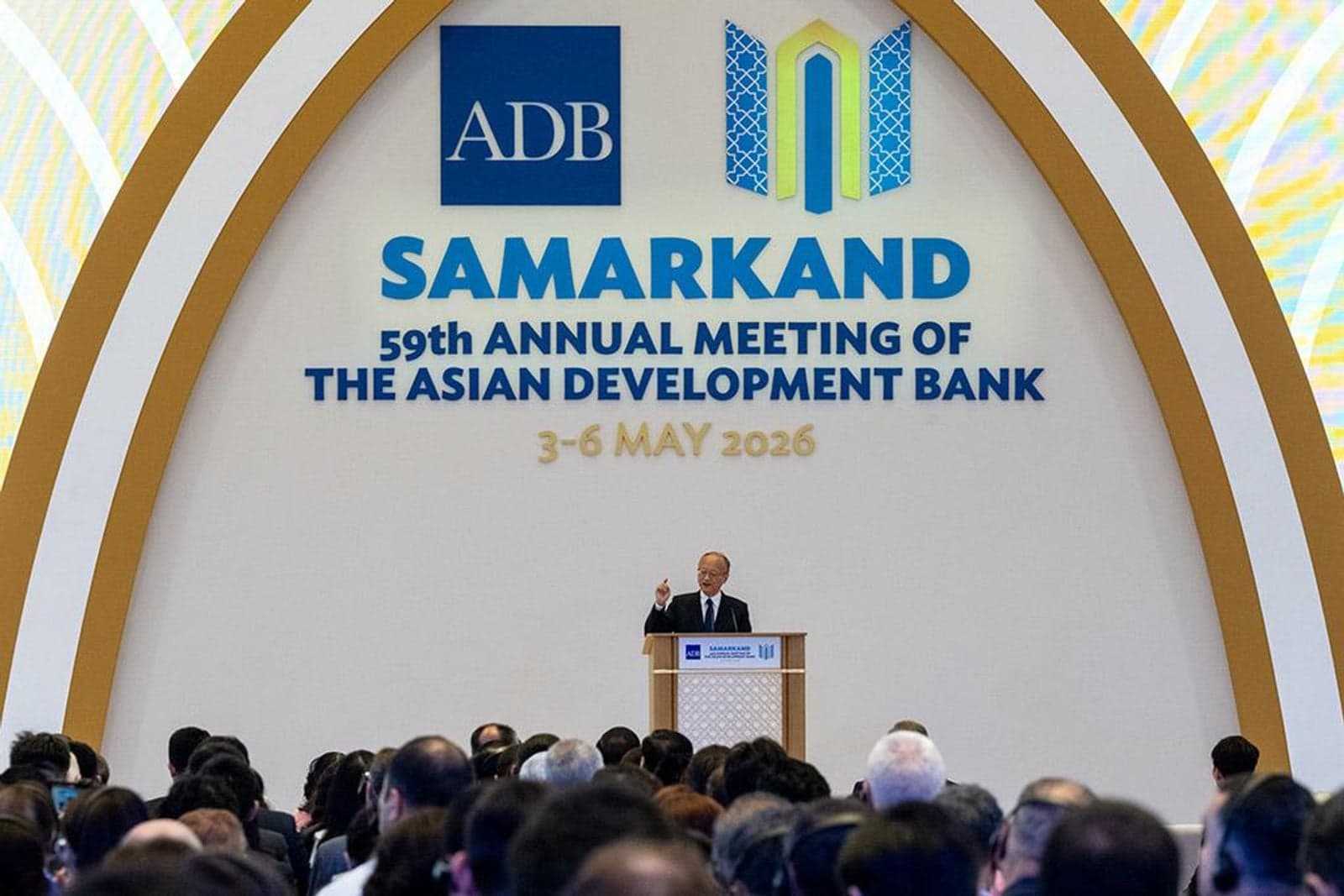
At the opening of the ADB’s 59th Annual Meeting on 4 May, Kanda urged Asia and the Pacific to “act together to develop together” through stronger cross-border connections that drive resilience and inclusive growth.
“The decisions we make at this new crossroads will secure the future for the next generation,” Kanda told the meeting’s opening session.
“In this fragmented world, traditional and isolated development responses will fail. To survive and thrive in this new era, we must build deeply connected and resilient systems.”
Kanda underscored how shocks today travel rapidly across borders - through energy markets, supply chains, and digital networks hitting communities that are least able to absorb them.
Addressing these challenges requires coordinated regional solutions that go beyond national boundaries, he said.