Avery Dennison commissions 2.7GWh concentrated solar platform
Pamela Largue
Posted on: 7 September 2023
Avery Dennison has commissioned a Concentrated Solar Thermal (CST) platform and thermal storage unit at its production plant in Turnhout| Belgium.
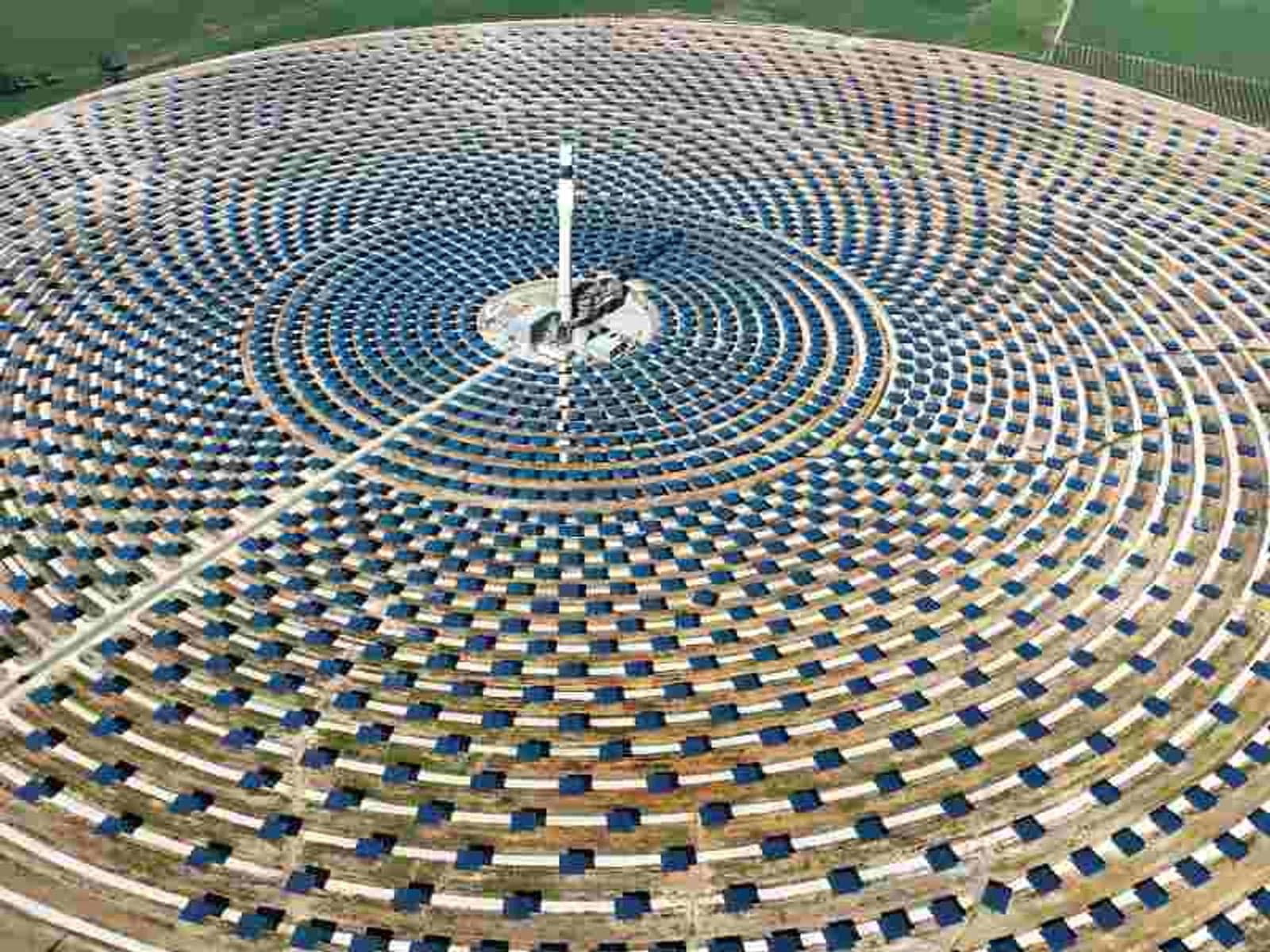
Multinational packaging and materials manufacturer Avery Dennison has commissioned a Concentrated Solar Thermal (CST) platform and thermal storage unit at its production plant in Turnhout, Belgium.
The project will reduce the plant's footprint by providing the heat equivalent to 2.3GWh of gas consumption. During summer months and high-sunshine periods, it will provide up to 100% of the factory’s heat demand.
The project contains a CST platform with 2,240 surface mirrors, a solar field peak yield of 2.7GWh thermal power, and six thermal storage modules with a capacity of 5MWh thermal power.
The platform site covers roughly 5,540 square meters and is touted to contain the largest installation of parabolic mirrors combined with thermal energy storage in an industrial setting in Europe.
Read more
CSP firm signs green hydrogen supply deal with city of Lancaster
Researchers pilot carbon capture using sunlight and mirrors
The CST platform, built by Belgian engineering firm Azteq, will concentrate energy from direct sunlight into a collector tube filled with absorption liquid. The thermal energy from this process will be stored in ENERGYNEST’s ThermalBattery and dispatched on demand.
The system is connected by the Balance of Plant (BoP) by AURA GmbH & Co. KG, and used for heat shifting between the heat sources and heat sinks.
According to Avery Dennison, the project will provide heat to run their drying ovens at the site. It's one of the initiatives being implemented by the company to decarbonise and reduce reliance on fossil fuels.
Said Mariana Rodriguez, general manager of Avery Dennison Performance Tapes Europe: “We have big ambitions to tackle climate change and achieve net zero by 2050. To meet these goals we will look across our industrial processes and identify opportunities to implement new technologies that decarbonize...The successful commissioning of the project in Turnhout is a big step forward in our sustainability plans.”
Have you read?
Solar PV industry needs to step up predictive maintenance says DNV
Nanotechnology promises improved energy storage, solar conversion
Christian Thiel, CEO of ENERGYNEST, added: “Companies across industries are considering how to best reduce their reliance on fossil fuels and decarbonise high-emitting activities, like heat production, while continuing to provide affordable, reliable goods and services to consumers. We will help solve these issues by reducing energy costs, helping the scale-out of reliable renewable energy like CST, and decarbonising heat production.”
Financing for the project was secured through the Belgian cooperative Campina Energie, the European Union’s Horizon 2020 research and innovation programme, and the Flemish Government via the Green Heat programme. The BoP was partly funded by the German Ministry for Economic Affairs and Climate Action.
Jef Van Eyck, chairman of energy cooperation Campina Energie, added: “These kinds of projects, implemented with different partners, help the Kempen region towards its goal to become climate-neutral, reduce reliance on expensive, imported energy, and strengthen our economy.”
Avery Dennison will collaborate with the Turnhout community to implement solar grazing at site. Sheep will graze the fields replacing the need for lawnmowers, thereby supporting biodiversity and the duel use of the land within an agrivoltaics context.
Belgium decarbonisation path
According to McKinsey, Belgium’s emissions per capita are among the most intensive in Europe (ranked seventh in terms of CO2 per capita out of 27 EU countries). The Belgian government however, is working to reduce energy demand, decarbonise and increase the deployment of renewables.
The International Energy Agency states that reductions in industry emissions and energy demand are mainly driven by the ETS and voluntary agreements between regional governments and industry.
These agreements focus on identifying cost-effective energy efficiency measures, with companies receiving tax relief or other incentives if these measures are implemented. The voluntary agreements focus on energy-intensive industrial facilities, but there is a greater effort to include small and medium‑sized enterprises (SMEs), states the IEA.
Analysis from McKinsey recommends that Belgian industry boost decarbonisation efforts by:
- Phasing out fossil fuels as a heat source,
- Doubling down on energy-efficiency measures,
- Harnessing and implementing technologies such as thermal storage, direct electrification, high temperature lift heat pumps, or carbon capture and storage (CCS), geothermal looping for steam or direct reduction of iron for the steel industry.