Building a business case for the emerging hydrogen economy
Pamela Largue
Posted on: 18 August 2023
The hydrogen economy is set to boom now that hydrogen| the missing piece of our decarbonisation puzzle| has finally been added.

An exclusive discussion with Professor Dr Emmanouil Kakaras, Executive Vice President NEXT Energy Business at Mitsubishi Heavy Industries EMEA, made it abundantly clear why it has taken a long time for the hydrogen economy to build momentum.
Hydrogen has been around for many years. However, it's only in recent years, with the global push for deep decarbonisation, that the hydrogen economy has really gained steam.
It seems the tide is changing now with many suggesting that the missing piece of our decarbonisation puzzle has finally been added.
Gaps in the hydrogen economy
In the early 2000s, explained Kakaras, the International Partnership on a Hydrogen Economy was formed, a global partnership to spur the development of the hydrogen economy.
This was a good first step, he said. "However, the market did not respond as we thought because we were aiming to increase hydrogen as a fuel for transport...which required significant infrastructure development".
That infrastructure was not in place and interest in hydrogen as a zero-carbon fuel was largely lost.
However, the world has been forced to reassess hydrogen's role in our energy and transport systems, said Kakaras, because of the urgent need to decarbonise, and greater emphasis on the massive rollout of renewables and energy storage.
It's these two elements that made the change in the hydrogen economy, creating a resurgence in interest.
Said Kakaras: "Hydrogen is the most effective in terms of duration and size of energy storage that we can possibly think of..."
"I am convinced that we are learning from the shortcomings of the first effort in the early 2000s, while assessing the priorities of where to target hydrogen first."
Have you read?
Hydrogen and CO2 to be produced at Babcock & Wilcox biomass-fueled plant
Australian startup bags AU$20m to scale up next-gen electrolysers
Reimagining green hydrogen: Empowering progress through digital solutions
A new business case for hydrogen
Hydrogen is part of the infrastructure business, explained Kakaras, which means the sector relies on capital investments that must be paid back, ultimately through the increased use of hydrogen.
To develop the infrastructure, there must be a focus on the transport and distribution of hydrogen, as well as a focus on developing infrastructure on the commodity side - supporting production and consumption.
"It's always a wise approach not to do all the investment up front...you need to create demand and demand creation...has to happen where green hydrogen is the most competitive substitute."
And how will we create the demand that justifies infrastructure development for carbon-free hydrogen? Kakaras points to the industrial sector as a main source of consumption.
"The start is always substituting hydrogen into large industrial consumption," added Kakaras.
After this, you gradually enter the retail business, focusing on transport or the domestic sector.
Supply and demand
According to Kakaras, the supply side is a no-brainer as green hydrogen will become increasingly available as renewable energy ramps up and offshore wind projects come online.
However, the demand side is where it becomes interesting. "If consumers opt for greener products, like green steel and green aluminum, that will make a two-fold supply route from the overseas market to Europe as an end product and [from Europe] as a locally produced green product."
Also of interest: Why hydrogen is the right-time-right-place electricity delivery option
A domestic and import market would exist.
Kakaras added that the transport sector would also play a critical role in boosting demand. "Hydrogen can play a big role as an additional vector for dropping fuels [or] substituting hydrogen in the refining process.
"It's a low-hanging fruit and can be competitive."
Ultimately, he explained, we can't stimulate economic growth without increasing demand.
It's not all good news
According to Kakaras, hydrogen-fired turbines are less efficient than gas turbines. "Introducing green hydrogen into the power process is not the most efficient way of using primary energy."
However, he emphasised that hydrogen is the most efficient way to do energy storage.
And if we wish to achieve deep decarbonisation and safeguard the stability of the electricity supply, "you will need balancing and back up power as energy storage, and that you can only achieve with hydrogen."
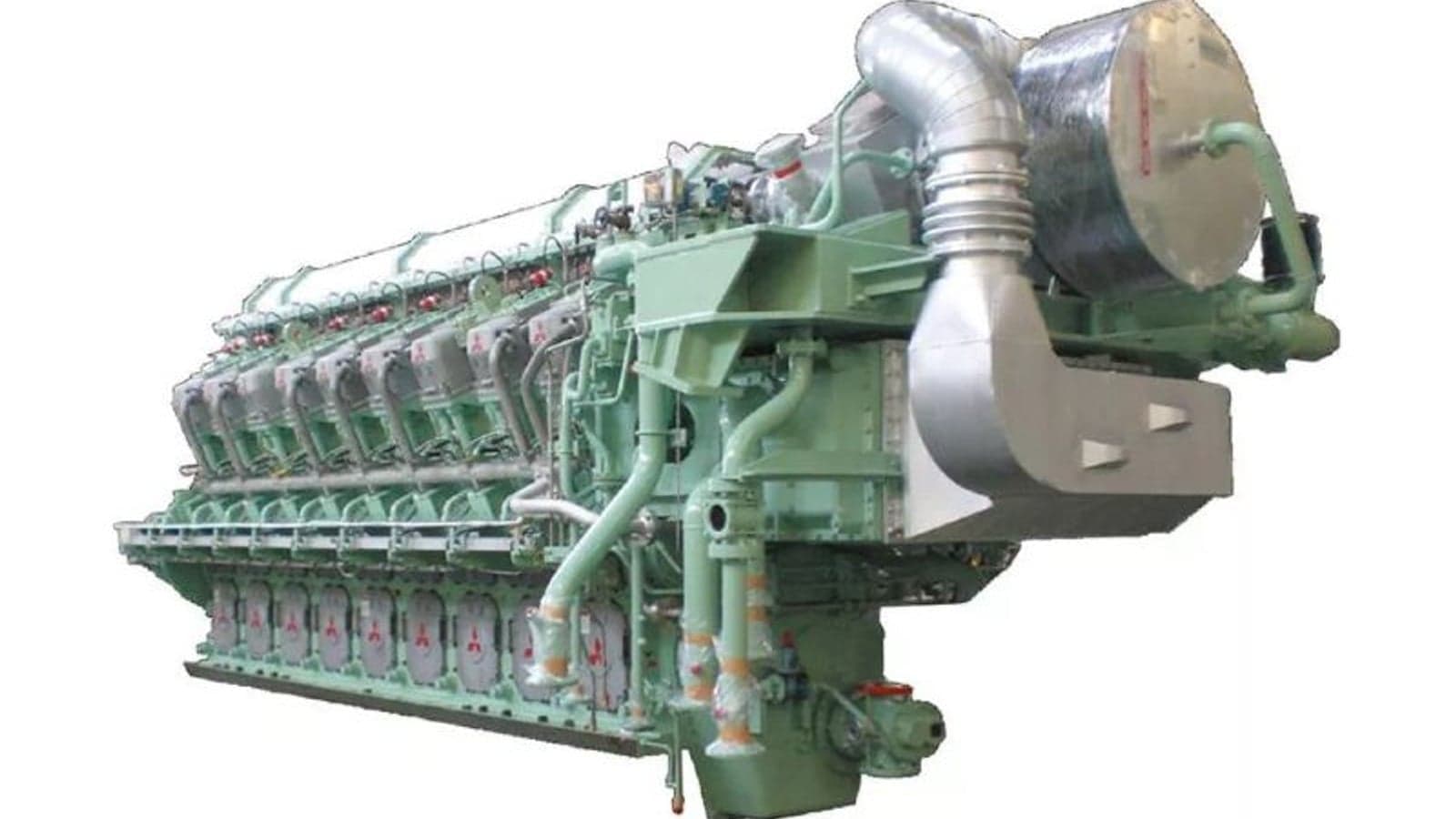
The green future of the internal combustion engine
"The inherent value of the production of a KWh with a hydrogen-fired gas turbine combined cycle is not just determined by the second law of thermodynamics and the round trip efficiency, it's also determined in its value as an uninterruptable, dispatchable energy source".
It's a difficult but realistic business case, he added.
"We can now bring this missing piece of decarbonisation without compromising the secure supply."
Of course, added Karakas, a sound business case for green hydrogen depends on the price of renewable electricity. Higher prices will make hydrogen less competitive and put off newcomers to the sector.
This would be the only potentially bad news in an otherwise good-news scenario, stated Kakaras.
For more insights into the burgeoning hydrogen economy and the impact of cutting-edge R&D, listen to the Energy Transitions podcast episode with Professor Dr Emmanouil Kakaras, Executive Vice President NEXT Energy Business, Mitsubishi Heavy Industries EMEA.