Caltech’s space-based solar mission demonstrates potential of low cost PV cells
Jonathan Spencer Jones
Posted on: 18 January 2024
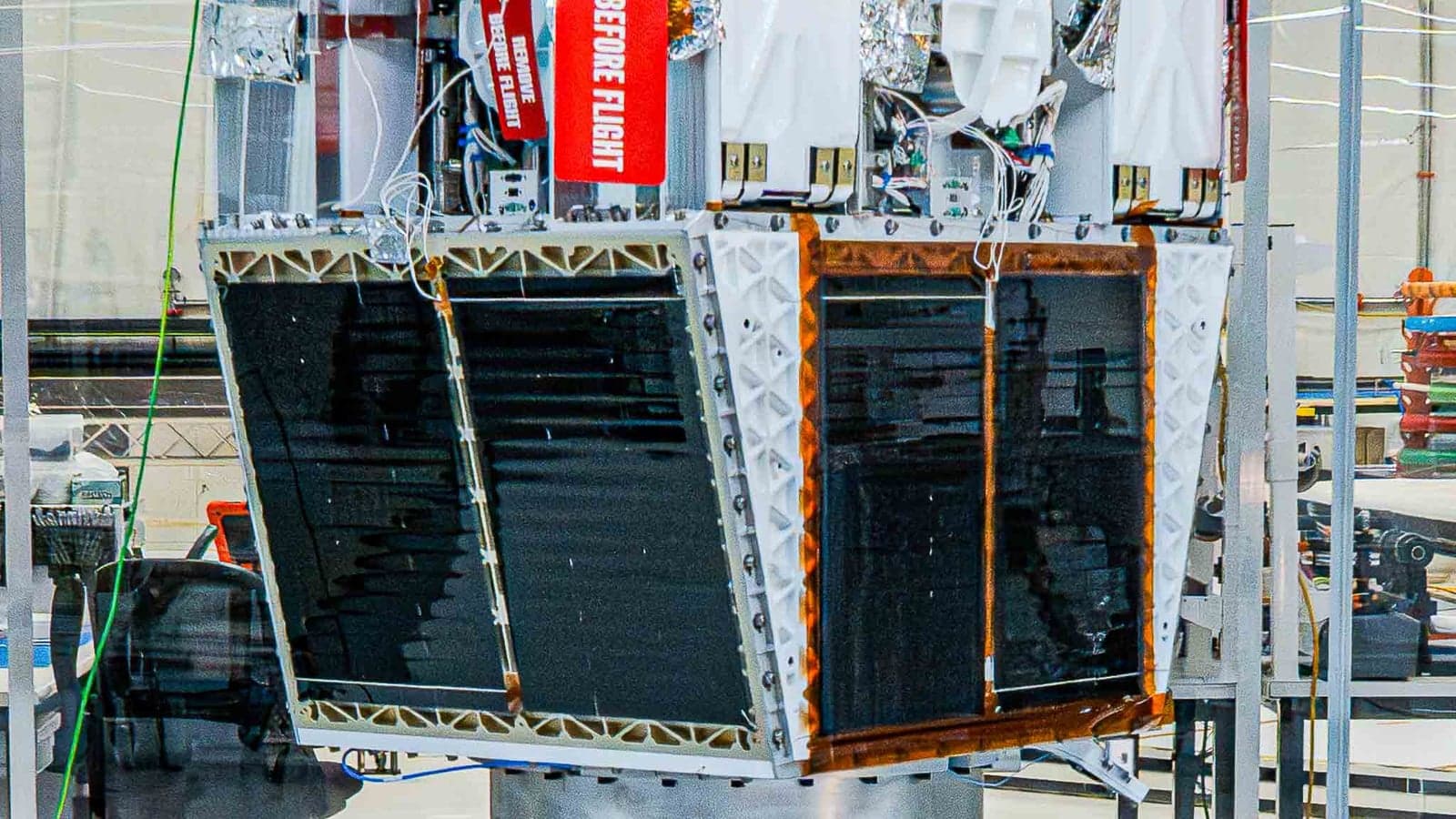
Caltech’s Space Solar Power Demonstrator (SSPD-1) carried a collection of 32 different types of PV cells to assess those best suited to the space environment
Caltech’s Space Solar Power Demonstrator (SSPD-1) carried a collection of 32 different types of PV cells to assess those best suited to the space environment.
In the so-called ‘ALBA’ experiment, the aim was to test three new classes of ultralight research-grade solar cells that could offer a low cost approach while delivering the weight and efficiency requirements for a commercial scale space-based solar operation.
These included gallium arsenide cells, cells made from thin-film perovskite and ‘quantum dot’ semiconductors that utilise nanotechnology and quantum mechanics to convert sunlight to energy.
While the full results have not been released, the Caltech team has reported that over a period of more than 240 days and subject to space weather events including solar flares and geomagnetic activity, there was tremendous variability in the performance of the perovskite cells, whereas the low-cost gallium arsenide cells consistently performed well overall.
Have you read?
Space-based solar potential endorsed by UK researchers
Task force to innovate space applications for energy
"The SSPD gave us a unique opportunity to take solar cells directly from the lab at Caltech into orbit, accelerating the in-space testing that would normally have taken years to be done,” commented Professor Harry Atwater, leader of the ALBA team.
“This kind of approach has dramatically shortened the innovation-cycle time for space solar technology."
Current PV cells commercially available for space use are typically 100 times more expensive than those cells and modules widely deployed on Earth as their manufacture employs the expensive step of epitaxial growth, in which crystalline films are grown in a specific orientation on a substrate.
The ALBA team achieved low cost non-epitaxial space cells by using cheap and scalable production processes similar to those used to make today's silicon solar cells using the gallium arsenide that is typically used to make the high efficiency space cells today.
Some of the solar cells were custom-fabricated using facilities in the project labs and the Kavli Nanoscience Institute (KNI) at Caltech, which is reported to have given a reliable and fast way to get small cutting-edge devices quickly ready for flight.
In future work, the team plans to test large-area cells made using scalable inexpensive manufacturing methods that can dramatically reduce both the mass and the cost of these space solar cells.
MAPLE and DOLCE
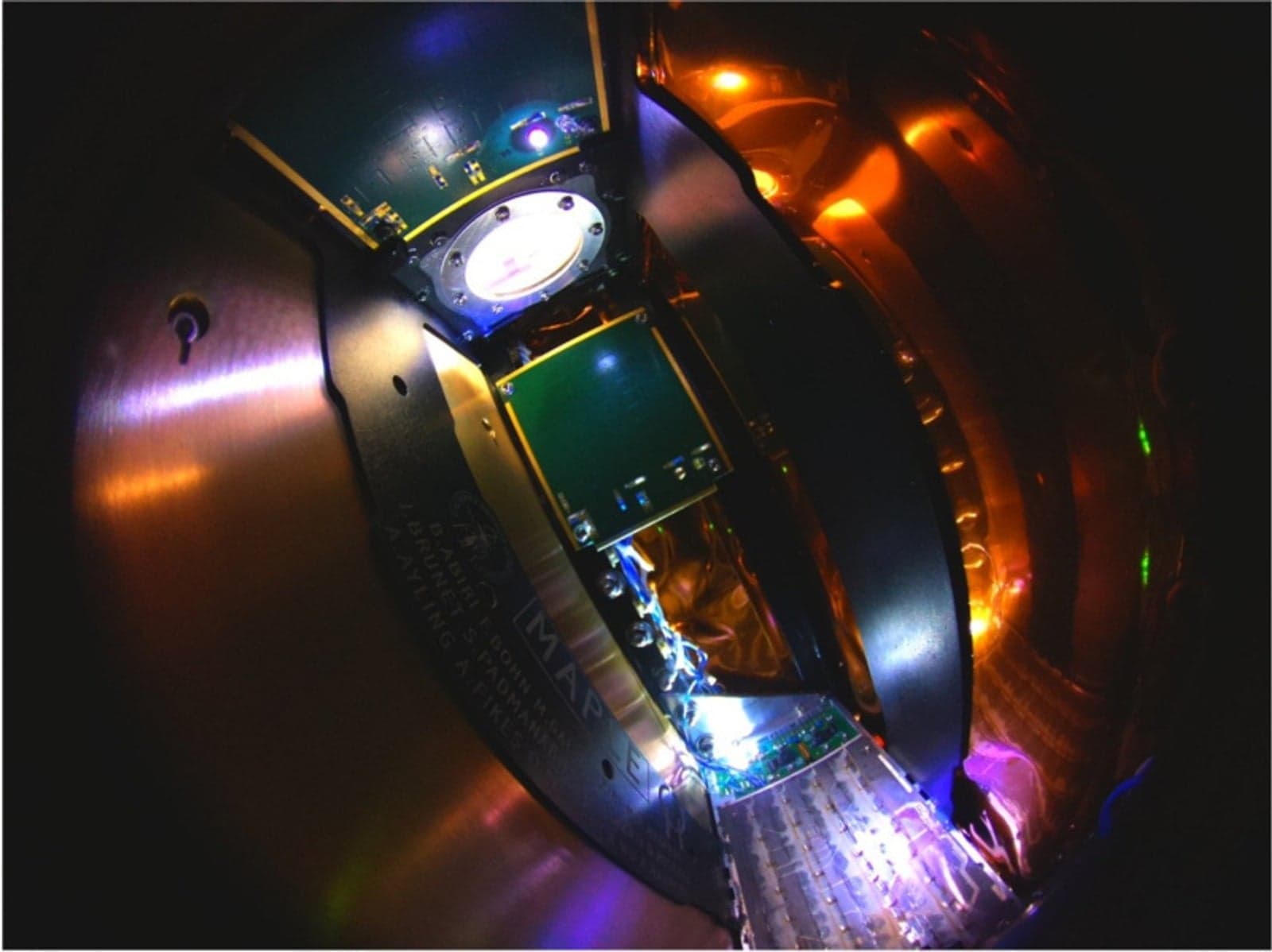
The first result reported was from the MAPLE (Microwave Array for Power-transfer Low-orbit Experiment) package, with the detection at Caltech’s Pasadena campus of energy beamed wirelessly from the satellite.
Comparison of the performance of the array early in the mission with its performance at the end of the mission indicated a drop in the total transmitted power, which is attributed to the degradation of a few individual transmitting elements in the array as well as some complex electrical–thermal interactions in the system.
Subsequently, the DOLCE (Deployable on-Orbit ultralight Composite Experiment) also was completed trialling the design of a lightweight deployable structure for the flexible solar PV membranes.
While successful, the team has now released details of some of the challenges that emerged.
During the deployment of DOLCE, a 1.8m square structure – which was intended to be a three to four-day process – one of the wires connecting the diagonal booms to the corners of the structure, which allowed it to unfurl, became snagged, stalling the deployment and damaging the connection between the boom and the structure.
Using cameras on DOLCE as well as a full-scale working model in the lab, it was established that the damaged system would deploy better when warmed directly by the Sun and also by solar energy reflected off Earth.
Once the diagonal booms had been deployed and the structure was fully uncoiled, a new complication arose with part of the structure becoming jammed under the deployment mechanism.
Again using images from the DOLCE cameras, it was possible to reproduce the jamming in the lab and develop a strategy to fix it – ultimately vibrating the whole structure to work jam free.
Moving forward
One year on from the launch of the SSPD-1 – which stopped communication with Earth on November 11, 2023 – work is continuing in the lab, studying the feedback to identify the next set of fundamental research challenges for the project to tackle.
"Solar power beamed from space at commercial rates, lighting the globe, is still a future prospect. But this critical mission demonstrated that it should be an achievable future," asserts Caltech President, Thomas F. Rosenbaum.