Space-based solar demonstration gets go ahead
Jonathan Spencer Jones
Posted on: 20 July 2026
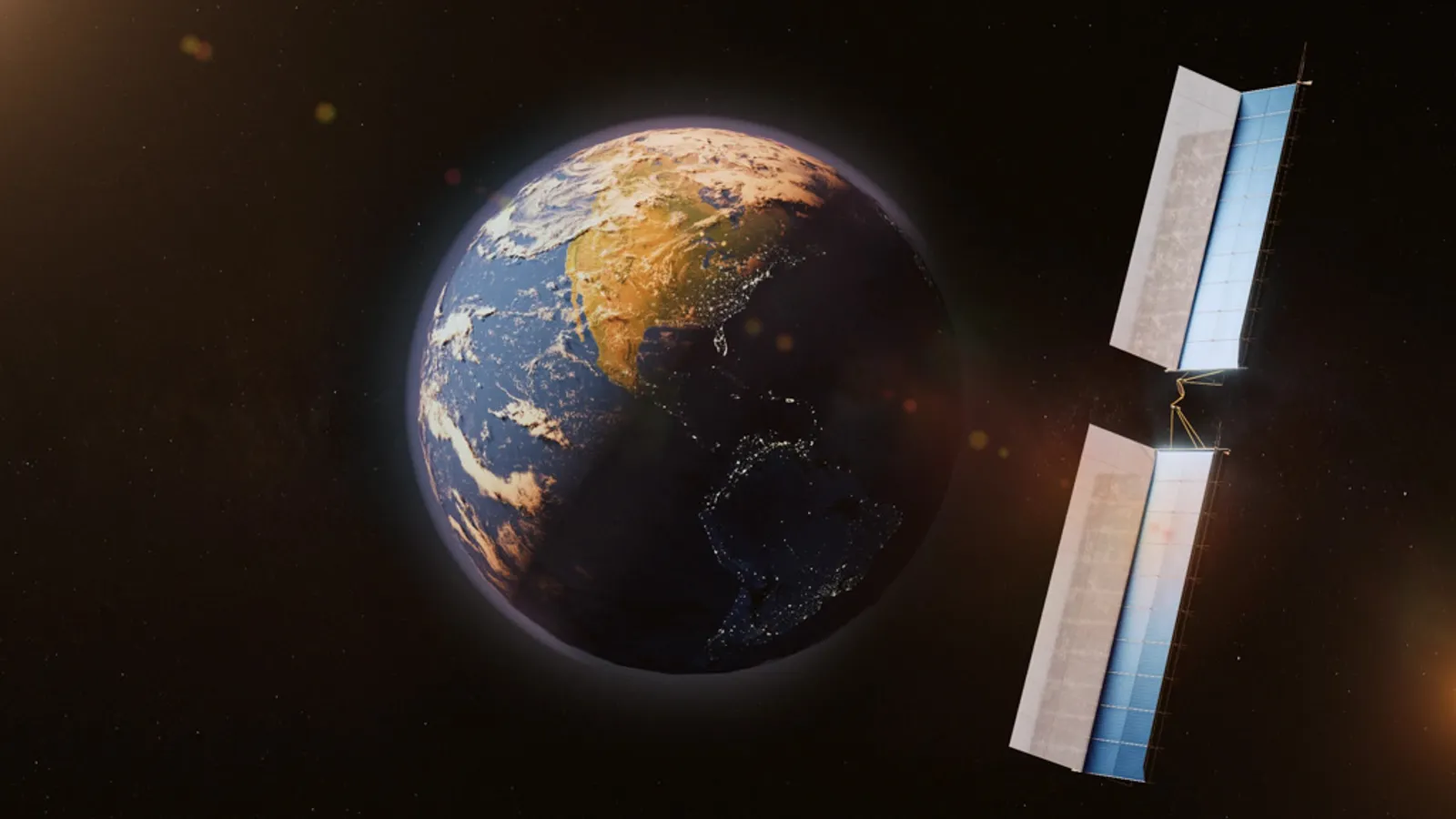
Reflect Orbital has gained Federal Communications Commission approval to deploy a demonstration space-based solar energy and light satellite.
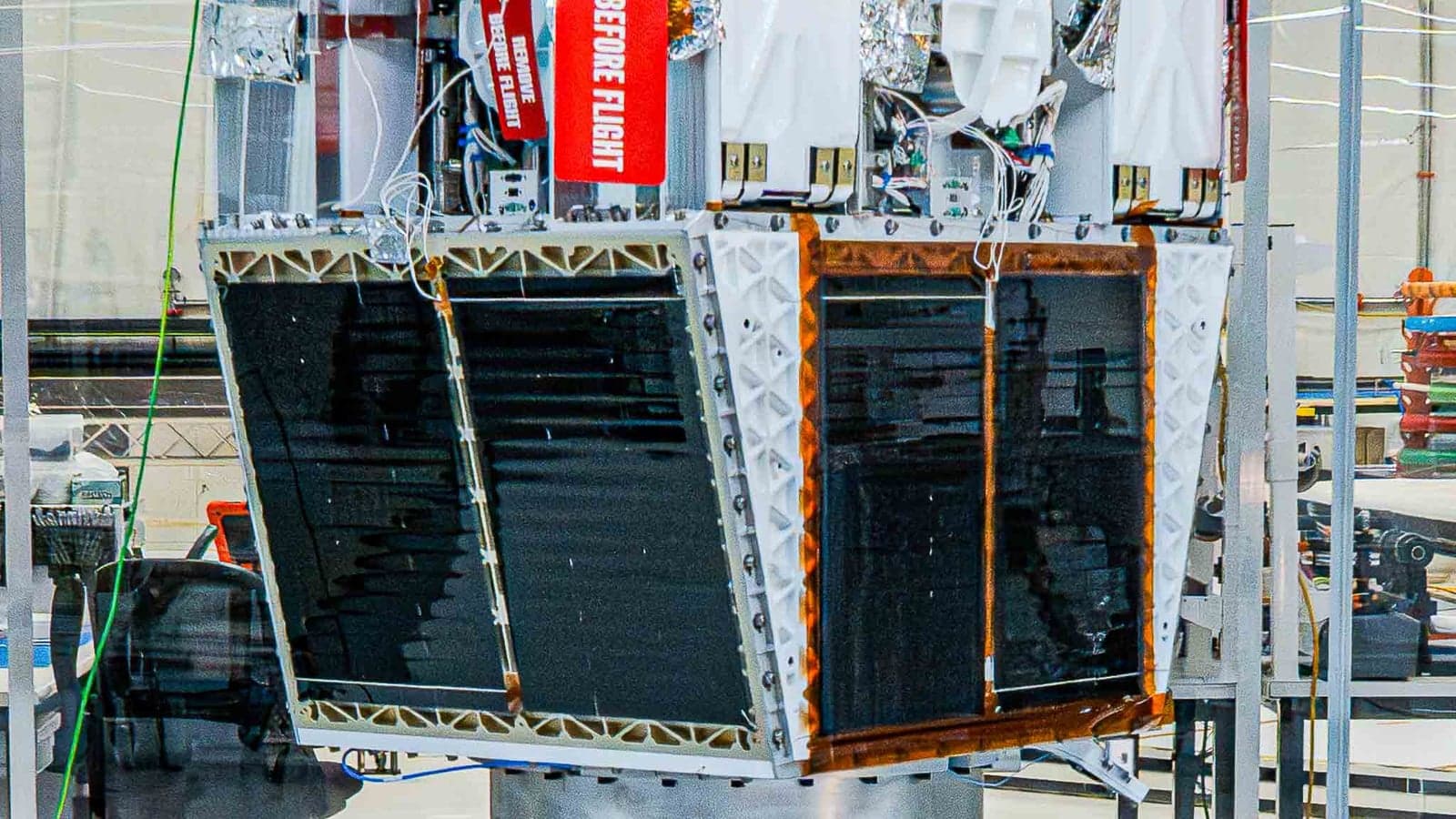
The demonstration satellite, named Eärendil-1, is due to be launched into low Earth orbit later this year.
Its intent is to validate the company’s technology and the safeguards that have been developed, and to collect real-world data to inform future plans.
“Reflect Orbital exists to demonstrate how sunlight from space can become an important part of humanity's clean energy future,” wrote Tristan Semmelhack, co-founder and chief product officer, in a blog posting.
“We’re grateful to the FCC for recognising our responsible approach to development and deployment, and we’re so excited to have the opportunity to start demonstrating the significant benefits of our technology to the world.”
Also of interest
Tech Talk | Solar geoengineering, not in Europe – for now at least
Space-based solar could deliver 80% of Europe's renewable energy needs – study
Unlike proposals to deploy massive satellites aimed to deliver utility-scale solar power to the Earth, the proposal of the Los Angeles-based Reflect Orbital is to deploy satellites delivering not only power but also light to individual – or potentially presumably localised groups of – end users on an on demand basis.
Asserting that help in shaping their proposals and intended practices has come from astronomical communities, Reflect Orbital’s approach is that the satellites’ default will be ‘off’, with the company retaining full control to turn them off, dim the light and relocate the spot at any stage.
Exclusion zones stated are near observatories, protected habitats and other sensitive sites, with every spot of light delivered being requested, approved and contained and rigorous environmental impact assessments will be conducted.
However, while Eärendil-1 represents just one satellite, Reflect Orbital’s ambition is to deploy 5,000 or more satellites by 2030 and 50,000+ by 2035.
These latter could deliver a lighting service estimated up to 36,000 lux for hours comparable to daylight or up to 100 lux 24/7 comparable to indoor work areas and an energy service with a +20% capacity factor for 300W/m2 for three hours.
Potential use cases envisaged include, in addition to supplementing daytime solar during the night, nighttime lighting for emergency responses, to extend industrial working hours or boost agriculture growth cycles.
Light and environmental pollution
Notwithstanding the stated commitment of Reflect Orbital to working with astronomers and others, the large number of proposed satellites – along with the other large numbers proposed, particularly by Musk’s SpaceX for communications and data centres – will inevitably have an impact on astronomical observations and dark skies, particularly at higher latitudes.
With low Earth orbit satellites the impact would be most acute at twilight, while satellites at higher altitudes can be visible for most of the night.
A recent paper in Monthly Notices of the Royal Astronomical Society focussed on orbiting data centres estimates that a satellite with solar panels approximately 4km square – the size to deliver 5GW of power – would have an angular diameter similar to the Moon and a brightness ranging from 1/20 of its brightness to 1/20 of the brightness of a quarter Moon.
At altitudes of 500-1,000km, these would be visible for 1.5-2 hours before and after sunset and a similar length of time before and after sunrise.
Another issue these present is the increased risk of collisions, which would result in large numbers of fragments. More than 1 million debris objects 1–10 cm in size are known to already occupy the low Earth orbit zone. With no practical way to remove them they pose further threat to passing satellites.
No less significant is the potential threat of artificial nighttime light to public health - an issue that dominates comments in Reflect Orbital's Linkedin announcement posting. In a letter submitted to the FCC on behalf of some 2.500 scientists from 30 countries, the authors state that artificial light at night is now widely recognised as a form of environmental pollution with measurable biological and ecological effects.
“The proposed scale of orbital deployment would represent a significant alteration of the natural night-time light environment at a planetary scale,” they write.
Reviewing issues including circadian regulation, wildlife navigation and plant rhythmicity, the letter says specifically of Reflect Orbital’s proposals that the available descriptions do not appear to address possible biological, ecological or public-health consequences of introducing artificial illumination from orbit.
“For example, what happens if control is lost and sustained illumination of unintended locations occurs? Such technology represents a qualitatively new class of environmental light source capable of illuminating large geographic regions without the possibilities of local shielding or opt-out mechanisms.”
Of the SpaceX proposals, the scientists suggest the satellites could contribute to a diffuse skyglow visible across extremely large geographic regions and that their motions could have distinct biological and ecological consequences.
“Careful scientific evaluation is essential before proceeding with technological developments capable of modifying the nocturnal light regime of the Earth,” say the scientists.