Can Europe’s energy transition run on slow unanimity?
Areti Ntaradimou
Posted on: 15 April 2026
Within hours of Viktor Orbán’s electoral defeat, Ursula von der Leyen moved to shift EU foreign policy beyond unanimity and into Qualified Majority Voting.
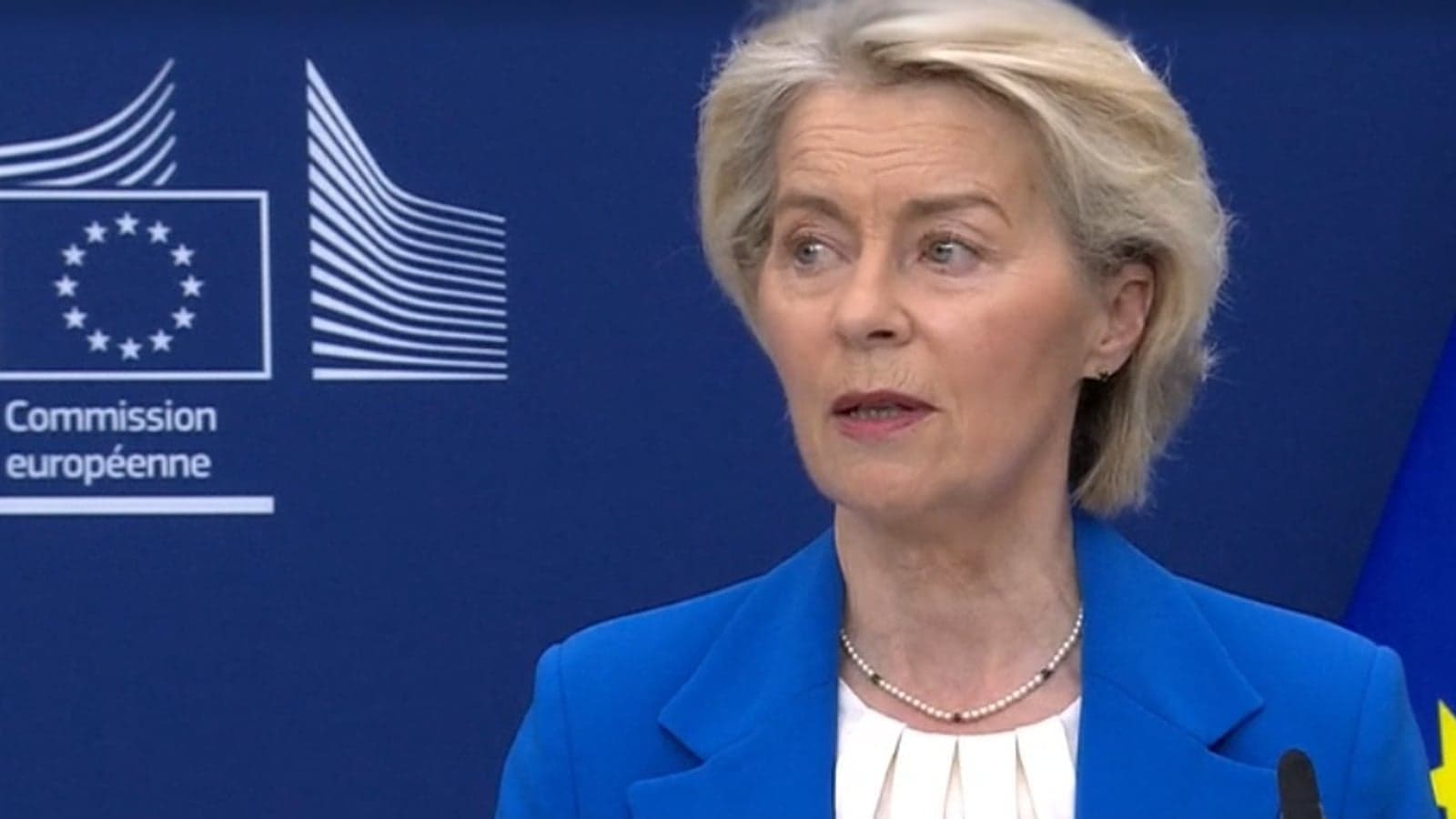
On paper, this is about governance, though its implications for energy are really hard to ignore. Because if the past four years have shown us anything, it is that Europe’s energy transition and crucially its energy security, cannot function under a system where a single capital can stall collective action.
From sanctions on Russian energy to financial support for Ukraine and the gradual phase-out of Russian gas imports, unanimity has not just slowed decisions: it has shaped them, often in a negative way.
And this comes at a moment when the EU is attempting something far more ambitious than crisis management.
The Clean Industrial Deal is not just another policy package. It is the backbone of Europe’s attempt to reconcile decarbonisation with competitiveness.
The grids package alone, targeting permitting bottlenecks and infrastructure deployment, acknowledges what the sector has been saying for years: without faster build-out of networks, the energy transition will simply not happen at scale.
Add to that CBAM (Carbon Border Adjustment Mechanism) extensions, sectoral action plans for energy-intensive industries, and a growing emphasis on electrification, and the picture becomes clear: this is a systemic transformation.
Speedy decisions
But systemic transformation requires speed. And speed requires decisions.
This is where the contradiction becomes impossible to ignore. On the one hand, the EU is pushing for accelerated permitting, faster grid connections, and more agile market frameworks.
On the other hand, it still relies on a governance model that allows energy policy - especially when it intersects with foreign policy - to be hostage to national vetoes.
Hungary was the most visible example, but not the only one. The reality is that energy remains deeply political, deeply national, and deeply sensitive.
Gas dependencies, nuclear choices, interconnection priorities - these are not abstract debates. They are tied to domestic economics and electoral politics.
Which is precisely why unanimity has survived for so long. But that does not make it fit for purpose.
Admission of misalignment
Von der Leyen’s push for Qualified Majority Voting is, in that sense, less a power grab and more an admission that the current system is misaligned with the EU’s own ambitions.
One cannot talk about a “true energy union”, about integrated markets and coordinated infrastructure, while decision-making remains fragmented at the highest level.
And yet, let’s be honest, the resistance is not irrational.
For smaller member states, unanimity is leverage. It is the guarantee that their energy mix, their security concerns, and their geopolitical positioning cannot simply be overridden by larger economies.
In a Union where energy realities differ so dramatically, from LNG dependent states to those still reliant on pipeline gas and from nuclear champions to renewable frontrunners, this matters.
The risk with QMV is not just political backlash. It is the perception that the energy transition itself becomes something imposed, rather than collectively owned.
Big risks
Still, the status quo carries its own risks and they are arguably big ones.
Delays in phasing out Russian gas were not cost-free. Neither were the compromises embedded in sanctions packages.
Every hesitation translates into prolonged dependencies, higher costs, and weaker credibility on the global stage. At a time when the EU is trying to position itself as both a climate leader and a geopolitical actor, that credibility gap is not trivial.
The uncomfortable truth is that Europe is already acting like a block in energy. Joint gas storage rules, coordinated demand reduction, collective purchasing mechanisms.
The market is integrating faster than politics. Von der Leyen is simply trying to close that gap. But whether she succeeds is another matter.
Treaty change is notoriously difficult, and political appetite for surrendering veto power remains limited. But the direction is becoming harder to ignore.
As the EU doubles down on electrification, invests in grids, and seeks to de-risk its energy system, the pressure for more streamlined decision making will only grow.
Because in the end, this is not just an institutional debate, it is a practical one. Europe cannot afford an energy transition that moves at the pace of its slowest consensus.
What do you think?
For more energy news from the European Commission, as well as podcasts and insights from EU projects, follow the Enlit Projects Zone.
Related tags
Latest content
+1
Europe cannot afford to import its energy future
If you work in energy, policy or industry, you have probably seen this pattern before. A geopolitical crisis erupts somewhere else, markets react immediately, and Europe is reminded, again, that too much of its economic stability still depends on fuels priced beyond its control.
- Areti Ntaradimou
- 28/04/2026