Home
/
Carbon capture on gas power plants: a solution available today to decarbonise the power sector
Carbon capture on gas power plants: a solution available today to decarbonise the power sector
Guest/partner contributor
Posted on: 31 March 2023
Reducing the CO2 emissions drastically is the agreed remedy by the international scientific community to stop global warming. If we agree on this statement| then we will also agree that we need to prioritise decarbonising the industries that represent the largest emissions.
Reducing the CO2 emissions drastically is the agreed remedy by the international scientific community to stop global warming, writes Rodrigo Moliner.
If we agree on this statement, then we will also agree that we need to prioritise decarbonising the industries that represent the largest emissions.
Power generation is responsible for approximately 32% of today’s CO2 emissions in Europe and 40% globally. As the demand for energy will keep increasing globally and coal is being phased out in occidental countries (it emits three times more CO2 than gas power plants), it is necessary to implement a solution that can decarbonise both existing and new built gas power plants.
While low carbon fuels like hydrogen or ammonia become available at large scale, there is a decarbonisation solution that is available today through carbon capture, sequestration and utilisation (CCUS), technology which has been applied in the oil and gas sector for decades.
Gas power a key technology
Before going deeper into CCUS, it's important to highlight why gas power is a key technology to consider in the energy mix, complementing a massive deployment of renewable energies in the future.
Because of their superior flexibility, simple or combined cycle power plants are ideally suited to complement the variable nature of renewables. They can start up quickly and ramp up or down responding to transients in renewables availability at rates that no other technology is able to (more than 75MW/min in simple cycle gas turbine) as well as remain connected to the grid at very low output levels to provide system inertia.
The grids are built around synchronous generation and, therefore, kinetic energy of rotating units is essential for providing grid stability. With the retirement of nuclear and coal units and the reduction of the time when the remaining rotating capacity is in operation, this kinetic energy is being reduced and therefore compromising the reliability of the grid.
Distributed generation and very high penetration of renewables generation can lead to system instability if grid operators don’t mitigate the variability of the resource via a combination of storage, complementary gas generation, demand side management, grid infrastructure investment, and other strategies.
Carbon capture at the exhaust flue
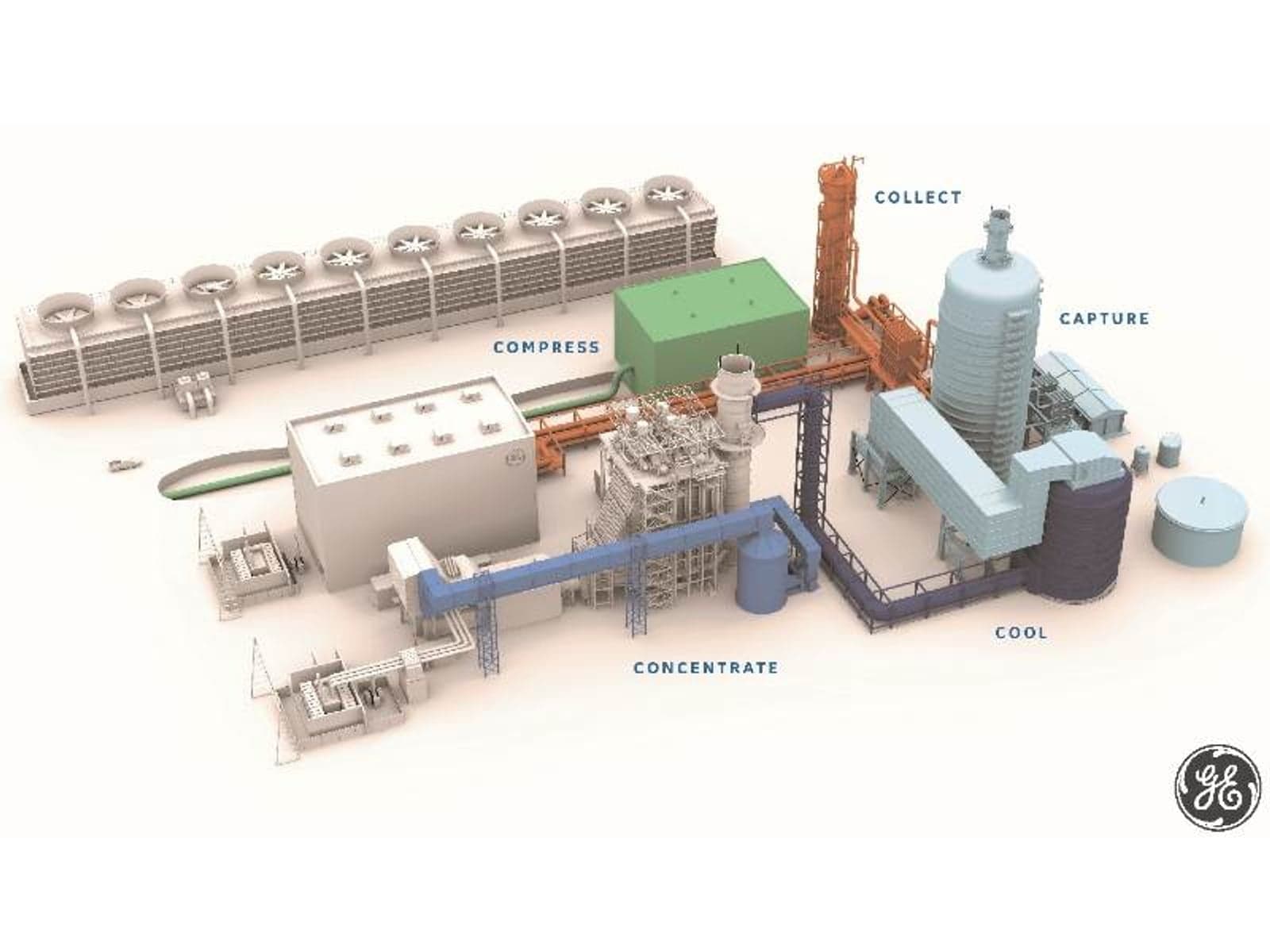
The above benefits to the electric grid and energy mix and its sustainability are underpinned with the implementation of carbon capture plants at the exhaust flue of the gas power plants.
The solution avoids lock in of CO2 emissions in existing assets as the plant is retrofittable to the existing asset. It therefore offers a life extension option to thermal power producers while being able to capture at least 95% of the CO2 emitted by the power plant. That CO2 is then compressed and either utilised in the industry as a feedstock or sequestered underground in saline formations or depleted oil and gas fields in what is known as enhanced oil recovery (EOR).
There's over 50 years of experience injecting CO2 in the earth and it has been demonstrated to be a safe practice. With the current level of CO2 emissions from fossil fuel combustion according to the IEA, geologic exploration has shown that there would be at least 200 years of CO2 storage capacity.
Some countries like the UK or the US are leading the decarbonisation efforts by strongly supporting carbon capture deployment across power generation, where GE is actively involved in several FEED (Front End Engineering Design) studies for both new and existing gas plants retrofits with carbon capture.
They have understood that gas turbines are integral to the power system and will continue to provide significant percentage of global electricity for decades, playing a critical role in the energy transition.
For other geographies to follow the set example it is necessary to establish market structures that value energy, flexibility and dependable capacity separately to encourage the optimum mix of technologies that are complementary in nature, provide energy security and drive the greatest carbon reductions in an affordable and practical way.
A transparent and predictable policy framework is needed allowing lifecycle economics to drive investment decisions factoring in a cost of carbon in some form vs. generic mandates picking one technology over another.
The knowledge, technology and experience are available to drive meaningful decarbonisation across the energy sector from today. Let's make it happen turning will into actions.
About the author:
Rodrigo Moliner has extensive experience in the gas turbine services business across EMEA that provides him with a holistic understanding of the decarbonization challenges that the customers face today.
About the company:
GE Gas Power is a world leader in natural gas power technology, services, and solutions. With the world’s largest installed base of gas turbines, we offer advanced technology and a level of experience that’s unmatched in the industry to build, operate, and maintain leading gas power plants.
GE Vernova, a dynamic accelerator comprised of our power, renewable energy, digital and energy financial services businesses, is focused on supporting customers’ transformations during the global energy transition.
Related tags
Latest content
Partner content
+3
Gas power, a multiple-facet instrument for flexible and sustainable energy
Gas power generates almost one quarter of the total electricity produced worldwide. According to the energy scenarios of the International Energy Agency (WEO 2022), it will continue to produce the same quantity of electricity in the following thirty years even if its share of the global energy mix decreases, complementing a strong deployment of renewable electricity as well as supporting the global electrification of all sectors of the economy.
- Guest/partner contributor
- 10/05/2023