Climate rollback could leave ‘grid to nowhere’ warns MEP
Vic Wyman
Posted on: 10 March 2026
European Member of Parliament Thomas Pellerin-Carlin warned during EVision that a mismatch of unambitious policy with heavy electricity sector investment risks undermining the energy transition.
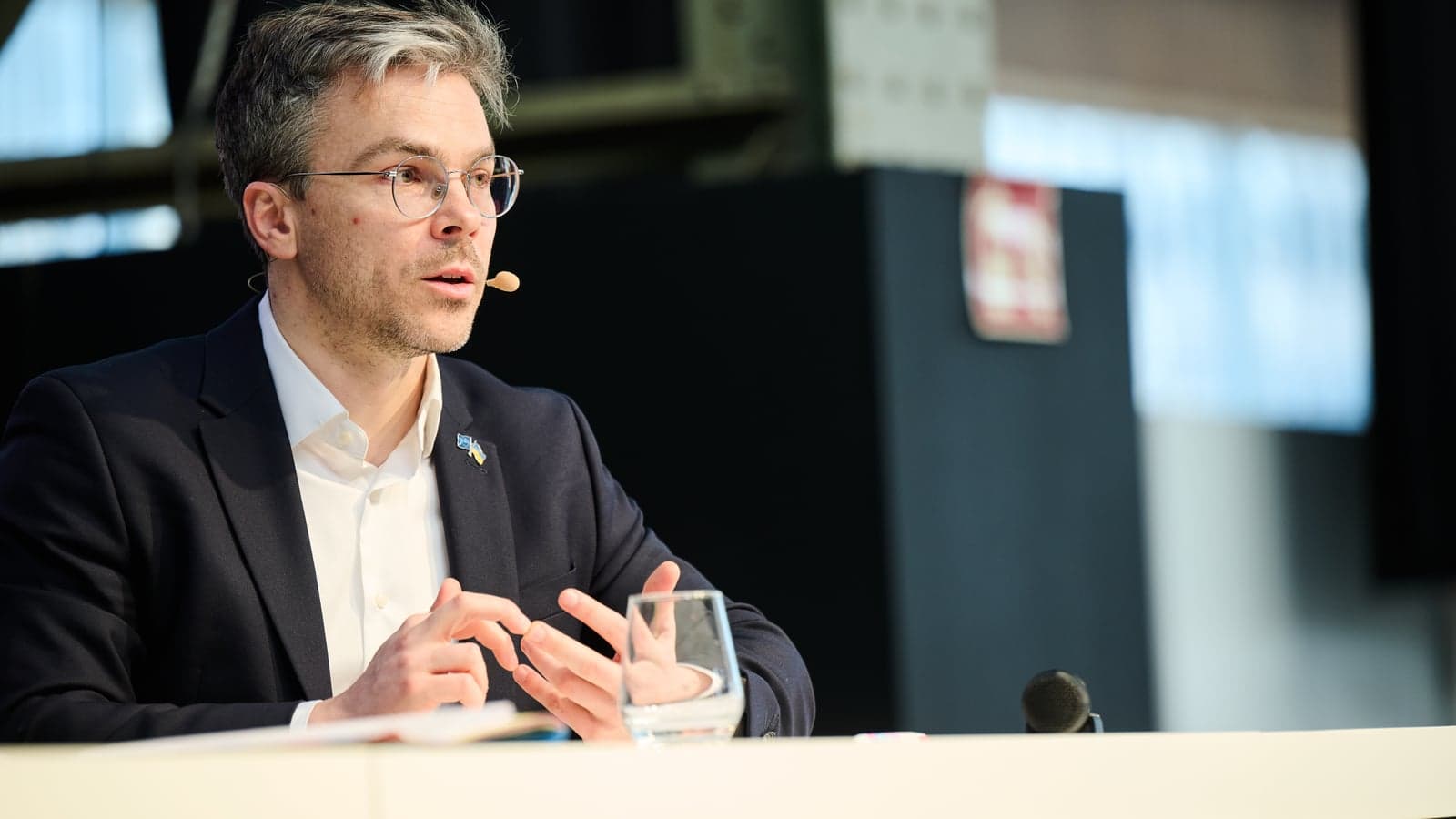
The European Commission has been backtracking on climate change commitments for 18 months and putting at risk developments including a rapid switch from internal-combustion engine vehicles to electric vehicles (EVs), claimed Pellerin-Carlin, a member of the European Parliament (MEP).
He accused the Commission of failing to boost renewables sufficiently and to optimise electricity grids. "We have seen the unravelling of energy policy."
Speaking at Eurelectric's recent EVision conference on emobility held recently in Brussels, Belgium, Pellerin-Carlin warned that a mismatch between unambitious policy and the electricity sector's heavy investments in transmission and distribution could lead to building "a grid to nowhere".
On the day that the MEP spoke, 5 March 2026, proof of his claim of backtracking was confirmed. EU countries gave final approval to a new target of cutting greenhouse gas emissions by 90% on 1990 levels by 2040 — but strong political resistance led to five percentage points of the reduction, from 2036, being from paying developing countries for carbon credits.
The EU had only previously set binding targets for 2030 (55%) and 2050 (carbon neutrality), while its own scientific advisers had recommended a 2040 target of 90—95%. The EU also postponed the introduction of a second EU Emissions Trading System (ETS2) by one year to 2028.
How many wars is it going to take to get us to understand that our safety depends on energy?
Pellerin-Carlin told EVision that some MEPs operated on assumptions — such as free trade leading to democracy in countries such as China, rising middle classes undermining authoritarians and economic ties ensuring peace — that had not been true for 20 years.
Speaking as missiles were falling over the Middle East as a result of the Israel-US attacks on Iran, he said: "There is a total lack of understanding in [the European] Parliament of the global situation."
Calling US President Donald Trump a mafia bully, Pellerin-Carlin added: "We live in a world of bullies." The EU needed to assert itself, he said, in part by boosting its industry and by ending its dependence on oil and gas: "If we do not choose to make ourselves powerful, we will disappear."
"How many wars is it going to take to get us to understand that our safety depends on energy?," Eurelectric Secretary General Kristian Ruby had asked earlier.
Signals important
Even without a watering down of EU climate goals and the benefits of EVs, electric road transport needed a bigger push, according to many at E-Vision.
For example, EV charging needed to be smart and cheaper, said Julia Hildermeir, Global Lead, Flexible Demand at the Regulatory Assistance Project, which promotes a low-energy future. She said that electricity in the EU was not as cheap as it should be, largely as a result of high taxation, and that you would only use public EV charging points if you had no choice: "The pricing of charging is too expensive."
Hildermeier said that although offers could be designed to provide signals to people to prompt charging when electricity prices were low, prices were not usually clear at charging points. However, she pointed to a ruling by the French regulator that allowed charging prices to be cut when supply was from low-operating cost generating plants, such as solar panels.
Marion Labatut, European Affairs Director at the French company EDF, said that the utility had a dedicated EV charging tariff as low as a quarter of the normal electricity price, or about €2/100kW. That was probably because a large proportion of electricity in France was produced from low-carbon plant, including nuclear.
Labatut claimed that French grids had plenty of capacity for EV charging: "There is room for integrating thousands of cars without disrupting the system." Yet, she added: "One third of the electricity is taxes and that weighs on consumers."
Consumers could also be frustrated by difficulties using public chargers, such as payment and maintenance problems, said Kostas Flokos, Chief Executive of the Greek IT firm Upcom Minds, to Enlit Media. The company, working with the Belgian university VUB, is developing software to improve the operation and management of such chargers.
Have you read?
Why skills and charging infrastructure will decide Europe’s EV future
Why cold snaps throw snowball effect of problems at EV drivers
BEGONIA operational digital platforms to redefine Europe’s energy and mobility
Consumers in the dark
A brake on the growth of EV demand is that people find it difficult to grasp the cost of ownership, Robin Loos, Head of Transport and Mobility at the European consumer organisation BEUC, told the Eurelectric meeting. However, he said: "Owning a second-hand electric vehicle is the best decision you can make." But that might be for nothing as it was difficult for people to buy one: "The supply is lacking. We need regulation."
Poor regulation was also seen by many a reason for the patchy spread of smart charging points across Europe, even though smart chargers could allow EVs to be charged when prices are low.
Yet many in the sector were optimistic about the future for EVs. Labatut pointed to a French scheme to allow lower-income households to lease 100 000 EVs, while Loos said that a recent UK consumer association guide on the best cars to buy focused on EVs.
"It is time to accelerate," claimed Yasmine Assef, Senior Principal at the consultancy Afry. "We must also give confidence to consumers." The latter would also cover the resale value of EVs and their batteries. "Those batteries can be considered part of the grid," she said. "Europe is sitting on a flexibility giant and it is on wheels."