Countdown to clean: Dwindling fossil fuels in a greener European future
Guest/partner contributor
Posted on: 12 October 2023
With the emissions targets set out at COP21 looming closer we must make tangible progress in emission reduction| writes Alan Greenshields.

The climate crisis is an increasingly present reality for billions around the world. With the carbon emission targets set out in the Paris Accord at COP21 looming ever closer and weather patterns visibly changing, we must quickly make tangible progress in emission reduction, writes Alan Greenshields, Director of Europe at ESS, Inc.
Policymakers, industry and investors must work in unison to overcome the impediments to the energy transition. There are finally signs that the severity of the situation is beginning to register and governments worldwide are taking action to reach global net-zero.
In Europe, coordinated progress is emerging across government, industry and civil society. The new executive vice president of the European Commission for the European Green Deal, Maroš Šefčovič, has stated that he will defend the bloc’s efforts to slash emissions.
In addition, this year’s formation of the Energy Resilience Leadership Group (ERLG), a coalition of Europe’s political and business leaders, will accelerate decarbonisation and energy security efforts through collaboration and coordination across sectors. The ERLG connects innovative clean technology providers with established utilities and industrial players and advises the EU and member states on policies that will enable and accelerate the deployment of low-carbon infrastructure.
Have you read?
Is the energy transition in stall mode?
UN hails Iberdrola as ‘first mover’ with pioneering climate action plan
Current state of play
The combustion of fossil fuels is not only driving climate change, but it is also leaving Europe vulnerable to energy security crises.
Our current reliance on finite resources is fundamentally unstable: nine countries control 90% of global oil deposits, and four countries own 57% of natural gas reserves. Compounded by geo-political concerns and conflicts, our energy system is fragile, and Europe currently has limited security of supply.
Renewable energy is a potential solution to these ills, but widespread adoption has proven complicated.
In the UK, for example, gas still accounts for over 50% of electricity generation – with the exception of particularly windy or sunny days. Planning permission for onshore wind parks, interconnection fees and delays, and other bureaucratic hurdles have all slowed the pace of the energy transition, risking our ability to meet climate change targets and energy security needs.
Change is afoot
The good news is that the energy transition is beginning to accelerate, driven by two factors: the increasingly low cost of renewables compared to fossil fuels, and new collaborations between policymakers and industry to make it happen.
The changing economics of energy means that renewables are now price leaders; in 2022, BNEF found that solar and wind were the cheapest new electricity resource in 96% of the world’s energy footprint. Wind and solar manufacturers have used economies of scale to drive down costs while fossil fuels remain commodities with volatile prices, vulnerable to geopolitical factors. What this means is that renewables have become the best insurance policy for stable and affordable energy.
The global political desire to kick-start the energy transition is also clear.
The Inflation Reduction Act in the United States has provided huge tax incentives for the shift to renewables, while the European Green Deal promises a broad array of measures to encourage wind and solar adoption.
Nowhere has this been more evident than in Germany, as exemplified by the traditional coal mining town of Boxberg. The town of Boxberg in Saxony is located in the historic region of Lusatia which straddles the border with Poland. For over 100 years, the mining and burning of lignite coal has dominated this region.
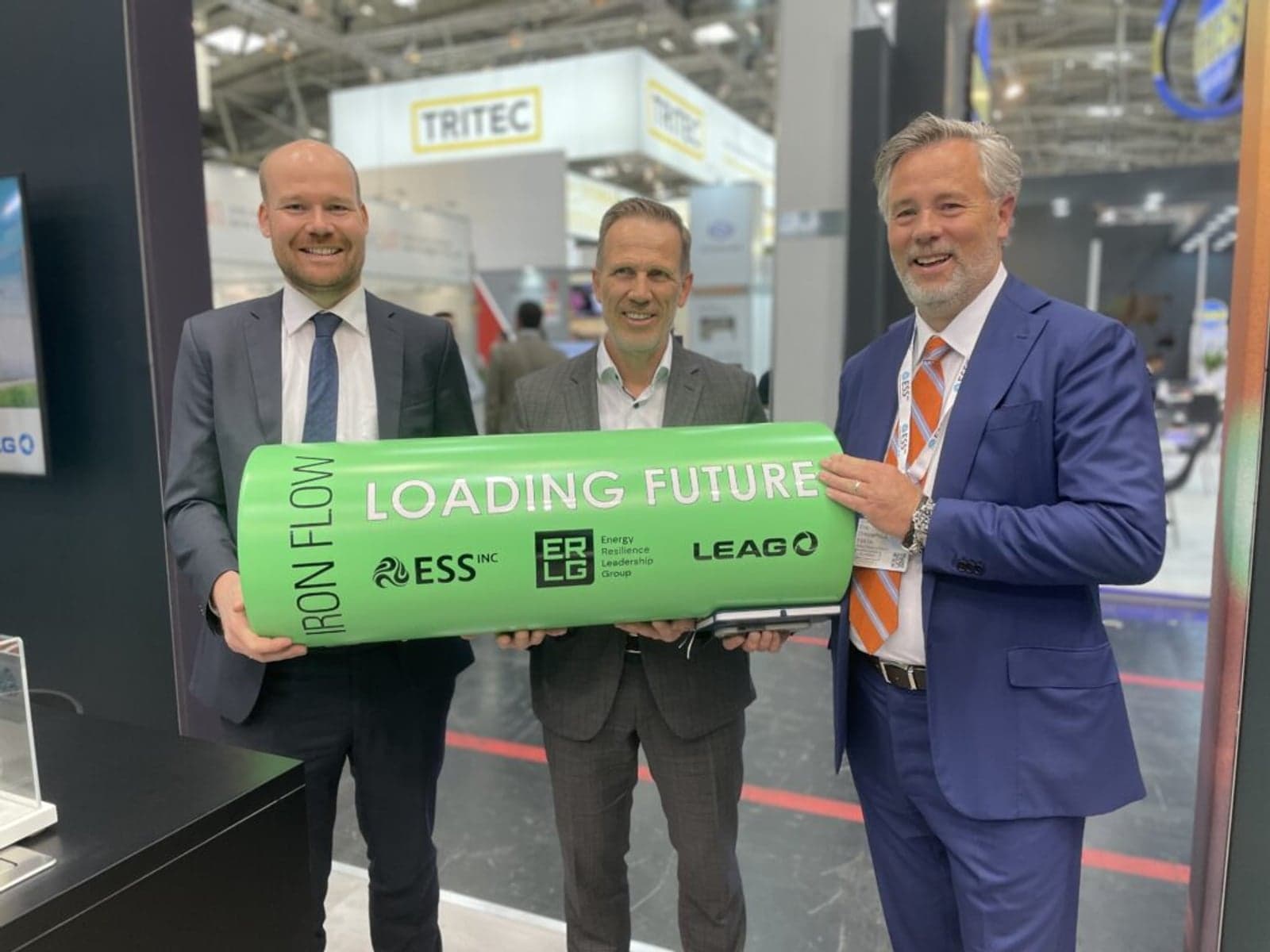
Now, the owner of Boxberg power station is looking to transform the coal burning site into what will be the largest clean energy hub in Europe. Lausitz Energie Bergbau AG (LEAG), which operates four open cast coal mines in the region, has been encouraged by Germany’s commitment to phase out all coal-generated electricity, without the use of natural gas, by 2038.
A greener future
Globally, we are reaching an inflection point as the demand for fossil fuels for electricity generation peaks, we are now entering the era of renewable energy.
Research from the American climate and energy non-profit Rocky Mountain Institute (RMI) suggests that this watershed moment is imminent. The report’s findings project that the demand for burning fossil fuels to produce electricity will plateau over the next few years, before beginning to decline in the final half of the decade. The data suggests that demand has peaked in 95% of OECD countries, such as the UK. The situation in non-OECD countries is a little more complex, however there are encouraging signs, with fossil fuel demand having also likely peaked in countries like Brazil.
Progress is not globally uniform. In China, one of the world’s largest fossil-fuel producers, demand has not yet peaked but is expected to do so by 2030.
Even where demand for fossil fuels continues to climb, the economic fundamentals are pointing in the right long-term direction. A recent BNEF study found that coal-generated energy costs around $74 per MWh, in comparison to $46 and $45 for on-shore wind and solar respectively.
In 2022, wind and solar sources generated a combined 600-700 TWh of new electricity, while 100-200TWh was obtained from other clean energy sources like hydropower and biomass. This combined production of at least 700TWh is sufficient to meet projected global electricity growth in demand.
Also of interest
EU Commission finalises Fit for 55 in a bid to reach net zero targets
Norway overtakes France as biggest power exporter into GB
The importance of energy storage
The missing piece of the energy transition – until recently – has been the ability to store intermittent renewable energy for use when needed. While fossil fuels can generate energy on demand, renewable energy needs to be captured when the sun is shining and the wind is blowing.
The European Association for Storage of Energy (EASE) predicts that by 2030, 200GW of energy storage will be needed to decarbonise our energy systems. The LEAG Boxberg project includes 2-3GWh of energy storage, which will support this goal and enable the provision of green baseload power.
While energy storage is a critical need, incumbent storage technologies have significant downsides. The cost, durability and fire-safety risk of lithium-ion batteries make them largely unsuited to the task of grid-scale long-duration energy storage, particularly in populated or wildfire prone regions.
Fortunately, new technologies have recently come to market that avoid these drawbacks, including the iron-flow battery pioneered by ESS Inc.
For LEAG’s Boxberg clean energy hub, ESS will initially supply a 50MW / 500MWh long-duration iron flow system. These batteries will store electricity for 10 hours and are made from safe, sustainable and earth-abundant materials - iron, salt, and water.
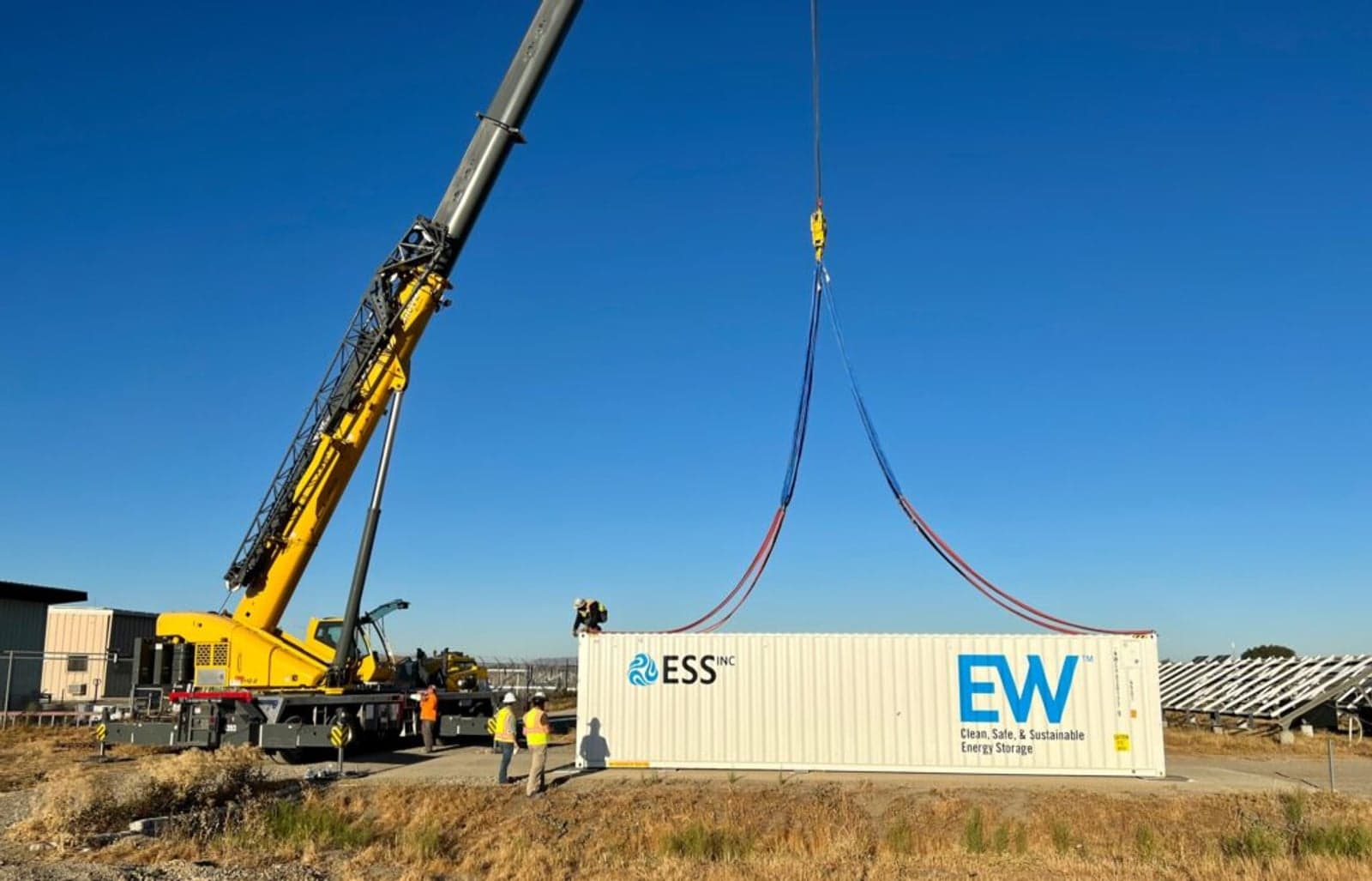
LDES supports the 24/7 supply of renewable energy and mitigates power outages caused by mismatches on the grid of supply and demand of electricity.
As Rainer Schiller, project lead for stationary large-scale storage at LEAG explained in an interview with energy publication Recharge, wind and solar power are not sufficient to “generate baseload”, or to “secure grid stability 24/7”. This stresses the importance of LDES for the project to be efficient.
A post-coal world
The encouraging data from RMI combined with the emergence of large clean energy deployments like Boxberg illustrates what a clean energy future may look like.
Boxberg provides a blueprint for the transition from coal to clean energy by demonstrating that it is possible to deliver green baseload energy and completely retire coal-fired power generation.
As the transition away from fossil fuels continues worldwide, this is a model that can be replicated at the thousands of remaining coal-fired power stations to eliminate harmful emissions, support local economies, and drive forward the global clean energy revolution.