Creating data space with smart meter hubs
Enlit Editorial Team
Posted on: 31 July 2023
Laurent Schmitt of Dcbel explains in an exclusive interview the ambitions of project EDDIE, which aims to create an energy data space.
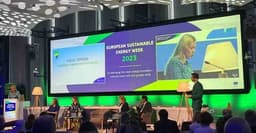
Speaking in an exclusive interview during European Sustainable Energy Week, Laurent Schmitt – Head of Utilities & European Developments at dcbel – explains the ambitions of project EDDIE (European Distributed Data Infrastructure for Energy), which aims to create an energy data space.
When it came to accessing data for EDDIE’s solution - a decentralised, distributed, open-source data space – “we decided to be very pragmatic…and start with available data – smart metering data,” states Schmitt.
“We picked a few countries in Europe, (namely) Austria, France, Spain (and) Denmark, where there are existing smart meter data hubs.
“The first layer we create is a pan-European interconnection of data hubs, so that in the future there will be a single API access into Europe, into any country, so that if (one is) an energy service provider (they) can, with consumer consent, access a meter in Spain or Austria or France. This is the basic building block.
Also of interest:
Flexibility key within new EU electricity market reform proposal
Data as the foundation of the energy transition
“The next step will be to go beyond just the main meter and go to the sub-meter to the dedicated measurement device.”
According to Schmitt, a major goal behind project EDDIE is to better utilise the data points that are generated by users of low-carbon technologies, such as heat pumps and electric vehicles.
Such access would better enable the participation of these consumers and their DERs (Distributed Energy Resources) in flexibility markets and drive home the energy transition:
“The consumer, (who is) in his or her home environment, has a lot of DER (such as) heat pumps or smart chargers, which themselves have their own sub-meters.
“We want to make use of this sub-metering data as complementary data to the main meter.
“In the future, we want to create an infrastructure which will allow (users) to manage energy and flexibility data for every European citizen on one side, as per the Data Act, and for each citizen to decide with whom she or he wants to share the data to benefit from the best retail offer or the best flexibility offer.”
Watch the rest of the interview with Laurent Schmitt to learn more about project EDDIE's data space, how it is incorporating the ‘plug and play’ concept and the other data projects he has been overseeing.
Related tags
Most popular
Join the community for freeAnd get access to all content
Related companies
European Sustainable Energy Week
Related projects
EDDIE
+2
1 January 2023 - 31 December 2025
View project