DEWA tops performance and efficiency indicators
Jonathan Spencer Jones
Posted on: 14 July 2026
Dubai Electricity and Water Authority (DEWA) has reported ranking first in 13 key performance indicators across its operations.
DEWA has asserted recording the world’s lowest customer minutes lost for electricity, averaging just 0.82 minutes (49 seconds) per customer annually.
DEWA also has recorded the lowest electricity transmission and distribution network losses at 2%, while water network losses reached 4.4%, among the lowest rates globally.
Overall the reliability and availability of Dubai’s power system exceeded 99.99% – an achievement supported by advanced smart technologies, including the automatic smart grid restoration system, which isolates affected feeders and restores service automatically without human intervention, ensuring uninterrupted service around the clock, a DEWA statement reads.
HE Saeed Mohammed Al Tayer, MD & CEO of DEWA, commented, saying that the company translates Dubai’s vision into transformational projects and measurable outcomes.
“At DEWA, we adopt an integrated operational framework that combines clear vision, proactive planning, meticulous execution and strategic partnerships to ensure measurable outcomes in the energy and water sectors.
“We continue to implement projects that go beyond meeting Dubai’s current demands to anticipating the needs of rapid economic and population growth, enhancing the emirate’s future readiness and consolidating its position as a global hub for sustainability,”
Also of interest
Powering the most digitally complex World Cup ever
Unlocking data analytics could turbo-charge energy storage
DEWA ascribes its achievements to the Dubai-It vision, which is focussed on transforming ideas to reality at speed.
Solar park
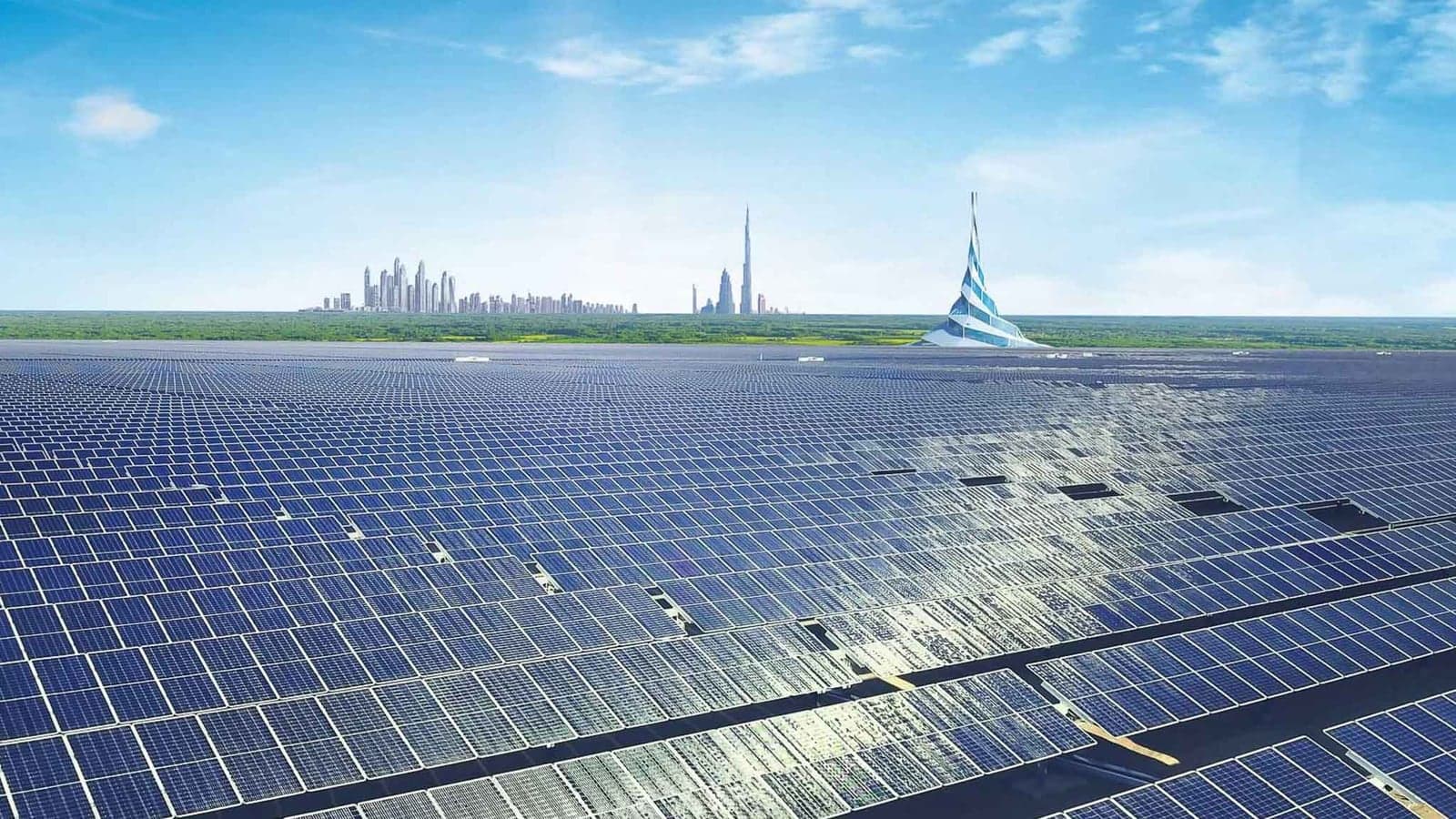
Another example cited is the Mohammed bin Rashid Al Maktoum Solar Park, which is developing into what is expected to be the largest single-site solar park in the world based on the independent power producer (IPP) model.
The solar park’s total production capacity has reached 3,860MW and will exceed 8,000MW by 2030, surpassing the initial target of 5,000MW.
DEWA says that the fourth phase of the solar park combining PV and concentrated solar power CSP technologies has secured four Guinness World Records, while the seventh phase further strengthens Dubai’s clean energy ecosystem through additional clean energy capacity and advanced energy storage solutions.
The IPP model adopted by DEWA to develop the Mohammed bin Rashid Al Maktoum Solar Park represents one of the most successful applications of the Dubai-It approach, states DEWA. It has transformed public-private partnerships into a key driver for accelerating project implementation, enhancing economic efficiency and attracting global investment.
Today, clean energy accounts for more than 21.5% of Dubai’s energy mix and is projected to reach 36% by 2030, supporting Dubai’s long-term ambition of achieving 100% clean energy production capacity by 2050.
Looking ahead, DEWA is investing D7 billion ($1.7 billion) in its smart grid strategy through to 2035, which is designed to enhance the efficiency of electricity transmission and distribution, reduce losses and optimise load management.
DEWA also leverages AI and advanced digital technologies to predict and manage risks, accelerate response times and ensure service continuity.
DEWA reports one of its AI-powered services as Rammas, a virtual employee supported by generative AI. Since its launch in 2017 and until mid-June 2026, Rammas has handled more than 13 million inquiries across DEWA’s communication channels.