DEWA deploys smart tech to boost solar and networks
Yusuf Latief
Posted on: 13 January 2026
Solutions will allow Dubai utility to better manage its distributed solar and design smarter electricity distribution networks.
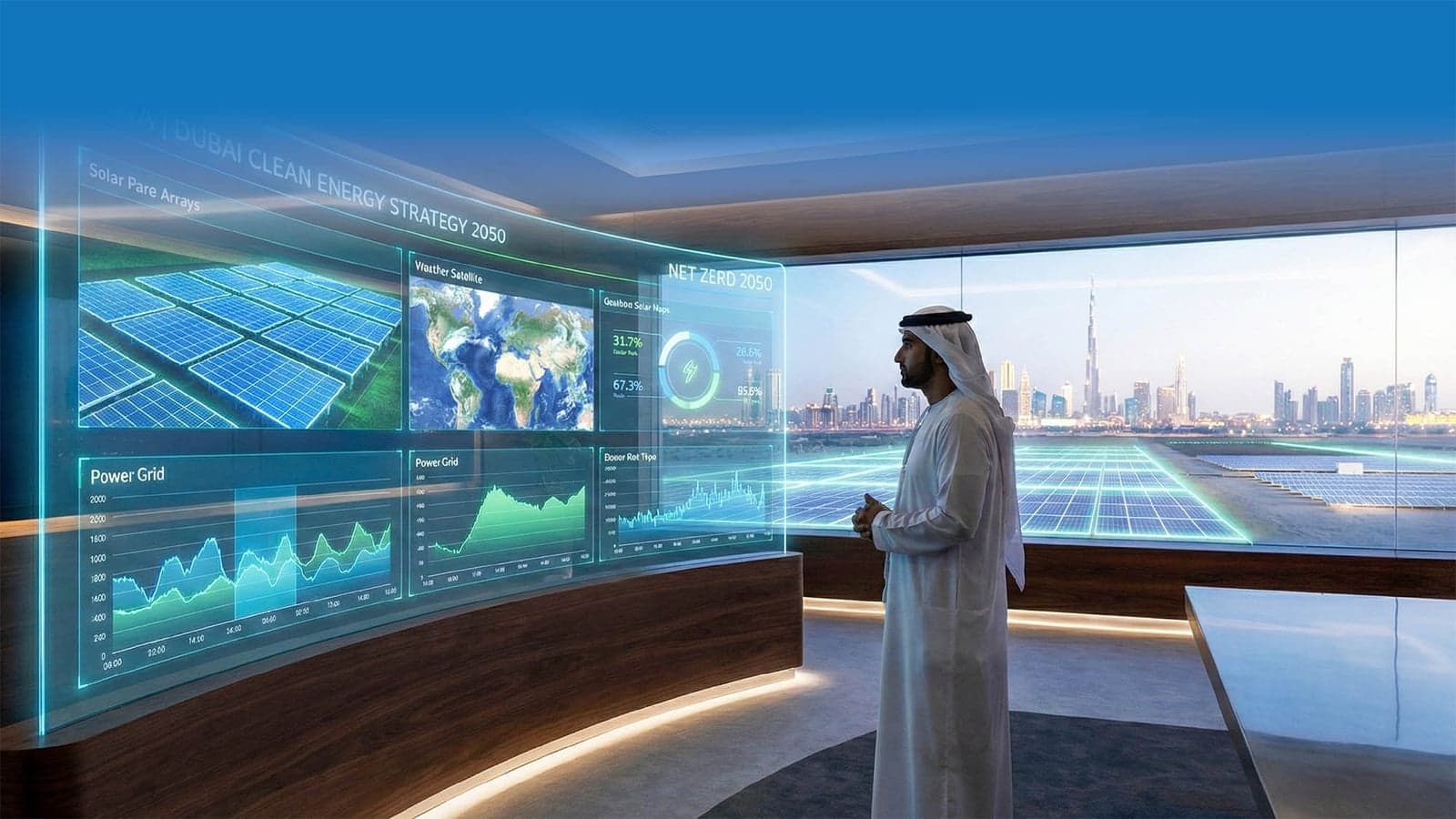
Dubai Electricity and Water has announced solutions for designing electricity distribution networks and better managing and planning distributed solar PV systems.
Under Dubai’s Clean Energy Strategy, the city aims to produce 75% of its energy requirements from clean sources by 2050.
It has developed a number of techniques and practices to enhance the efficiency of the energy sector while finding alternative solutions to conventional energy.
Now, over the first two weeks of 2026, Dubai Electricity and Water (DEWA), has announced two more, including how it approaches and manages network design and solar assets.
Smart solar planning
A copyright was granted to the Dubai utility for a digital application designed to manage and plan distributed solar PV systems.
The application integrates data related to weather conditions and energy operational performance into a digital simulation system and links it directly to the Shams Dubai Master Database.
According to DEWA, the application supports data-driven decision-making and enhances the efficiency of future planning for the emirate’s electrical distribution networks, ensuring they can accommodate the expansion of renewable energy.
DEWA chief executive Saeed Mohammed Al Tayer said: “At DEWA, we continue to utilise advanced digital solutions and technological innovation to enhance the readiness of Dubai’s energy system.”
He noted how the new solution will enable the optimal use of data on weather and operations to support the expansion of distributed solar energy, while “enhancing network efficiency and supporting the objectives of the Dubai Clean Energy Strategy 2050 and the Dubai Net Zero Carbon Emissions Strategy 2050”.
The tool is hoped to provide accurate and integrated grid-level data for better decision making.
According to DEWA, the application enables the generation of comprehensive and more specific datasets for existing and proposed PV installations at any point on the distribution network, up to main 132/11 kV substations, over any specified time frame.
This capability, says the utility, provides advanced support for planning solar energy projects and accurately assessing their operational impact on the electrical grid.
Have you read?
Italy’s ENEA gamifies smart grid management with video game
Smart grid performance indicators proposed for Europe
Distribution network design
A week prior to the copyright being granted, DEWA also announced that it had developed an innovative smart solution for designing electricity distribution networks to support the effective planning of 11kV networks.
Currently being implemented within the power and water planning division, the solution comprises advanced software that creates two databases linked to network design software, enabling end users to design 11kV networks more efficiently.
The network design software collects data from multiple sources, including peak load sheets, the SAP system and master single-line diagrams, then analyses and consolidates the data into a unified format.
Al Tayer added: “By transforming multiple data sources into practical tools, the solution supports decision-making and improves performance efficiency.
“Designing electricity distribution networks using advanced software solutions reduces the time required to prepare plans, lowers costs and enhances design accuracy and flexibility. This, in turn, strengthens the readiness of the electricity network to keep pace with rapid urban and economic growth.”
According to DEWA, the smart solution has already delivered tangible results, including reduced planning and design costs, shorter processing times and more streamlined and efficient electricity distribution network designs.