Why efficient heat exchange is the key to clean energy success
Guest/partner contributor
Posted on: 26 November 2025
New clean energy applications bring challenging requirements for established industry suppliers. One proven thermal technology has a key part to play – Printed Circuit Heat Exchangers.
Growing urgency in establishing a net-zero energy sector has prompted a profound reappraisal of some existing technologies; among them is a proven heat exchanger technology that is enabling cutting edge low-carbon energy applications.
Heat transfer can help to decarbonise some of the hardest to abate areas of the energy value chain by improving efficiency, supporting clean heating and cooling, enhancing grid stability and balancing variable output for renewables like wind and solar with changing power demand.
Today, heat exchanger technology from Heatric, part of Parker Hannifin’s Filtration & Energy Solutions Division, is already demonstrating that the path to a net-zero world can be realised by rethinking heat transfer.
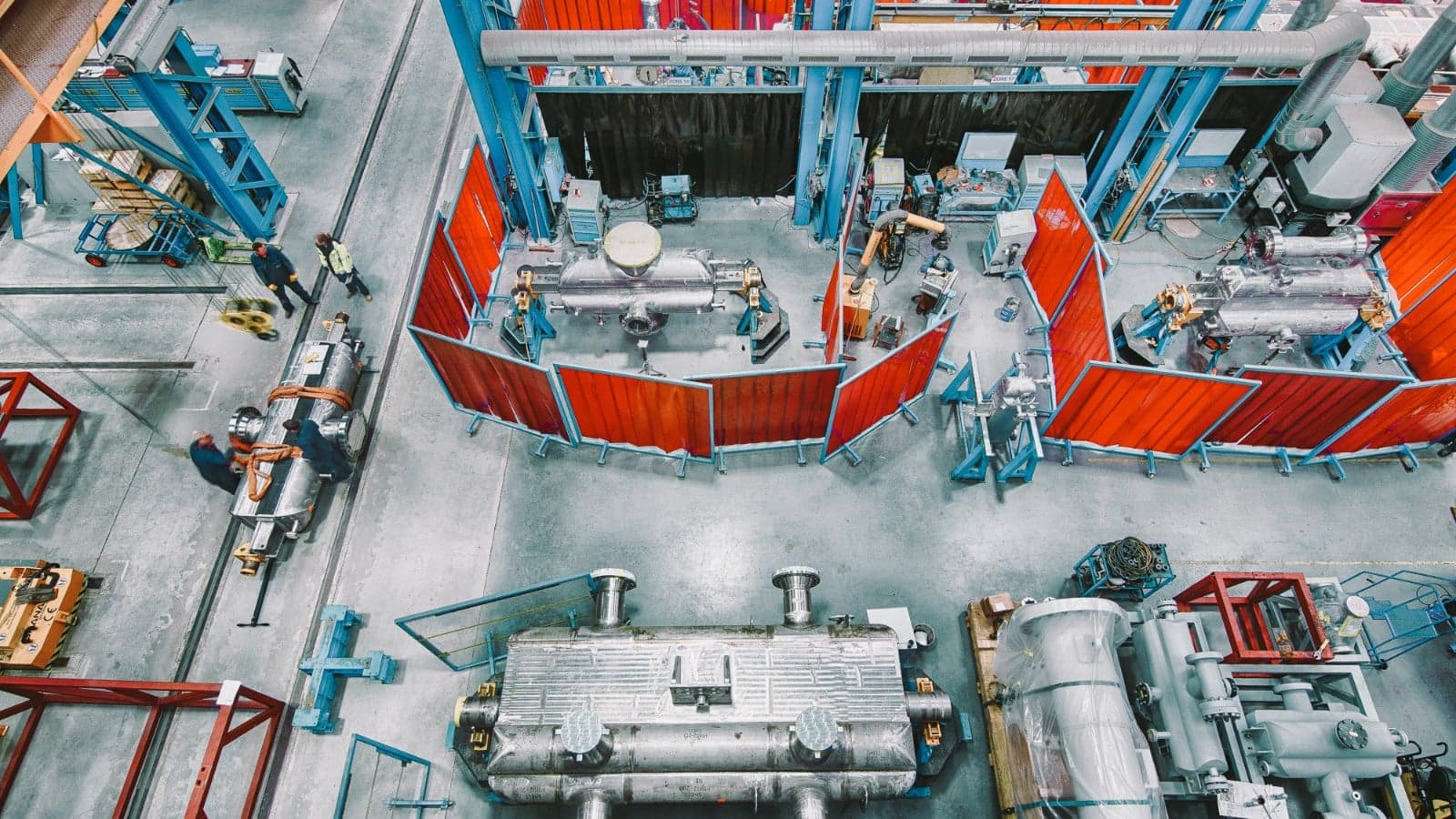
At the heart of Heatric’s approach is the Printed Circuit Heat Exchanger (PCHE), a technology first pioneered in 1980. Each heat exchanger flow path is designed bespoke to meet the operational and process requirements. A diffusion bonding process is used to create the heat exchanger core, resulting in the exchanger core material reaching greater integrity.
The specialist design and manufacturing allow Heatric PCHEs to be up to 85% smaller and lighter for the same thermal and hydraulics characteristics than conventional heat exchangers.
Heatric PCHE’s ability to withstand high pressures and temperatures in combination with highly specific thermal tuning, contribute to delivering greater thermal efficiency, which is vital to maximising process performance and proving commercial viability in pilot projects.
sCO2 and efficient energy generation
Alongside its use in traditional gas compression for the existing fuels, Heatric PCHE technology is also enabling the future of clean energy power generation applications.
In Texas, for example, Heatric PCHE technology is playing a central role in a power project centred on the novel use of supercritical carbon-dioxide (sCO2). By turning a problem into the solution, the demonstrator plant aims to prove the viability of a working fluid alternative to steam, which offers significant efficiency gains over the conventional steam cycle.
Also of interest: Inside the world's largest low-temperature district heating system
The project has already completed the first phase of testing in late 2024, generating about 4MWe. sCO2 can reach very high temperatures, which imparts a higher cycle efficiency, driving down costs and minimising the environmental impact.
Under development since the 1950s, limitations in conventional shell and tube heat exchangers have stalled sCO2 development as a working fluid alternative to steam. With the emergence of Heatric PCHE technology, enabling efficient heat transfer at higher temperatures and pressures, the 10MWe project could be realised.
The pilot project features three separate Heatric PCHEs; reaching temperatures of up to 600°C coupled with pressures of 290 bar. The extreme conditions, large temperature gradients, and the need for a heat exchanger with a compact footprint all predicate the use of PCHE technology.
Along with the efficiency gains, using supercritical CO2 also allows for a far more compact turbine and generator to be utilised. The turbomachinery components in this project are about a tenth the size of the steam equivalent for example, with the turbine having a diameter of just 12 cm. This pilot project is both pushing the envelope of sCO2 cycle viability and proving a cleaner, scalable alternative to baseload power generation.
Decarbonising district heat
An efficient use of Heatric PCHE technology is also playing a significant role in decarbonising the domestic heating for an entire city in Denmark, linking renewable electricity, heating and cooling in a high efficiency, innovative process.
The city has deployed a new domestic heating system as part of its plans to become a carbon-free city by 2030. This installation uses sCO2 as the working fluid, which is compressed and expanded in a closed-loop cycle providing the outputs of either hot or cold water or electricity. Again, the ability to manage high pressure and high temperatures is critical to the success of this application.
Read more:
Google in partnership to prove viability of CCS-enabled cogeneration
EU’s electrification and heating and cooling plans open for consultation
In this project a new domestic heating system is powered by renewable electricity from wind farms and will use heat exchangers to transfer heat into the water, supplying district heating to around 100,000 people.
The system has accelerated the decommissioning of an existing coal-fired plant with clear environmental benefits for the residents. As a low-emission alternative to conventional fossil-fuelled heating and cooling technologies, this application shows the value of efficient heat exchange to address of the energy transition sectors showing high barriers to abatement.
In addition, and crucially for the deployment of variable output renewables, systems like this one also support greater grid management by absorbing excess power when it is available and releasing it to the grid when required. Any excess energy is stored in large, insulated water tanks and successive heat exchange cycles are used to extract that energy when required, putting heat exchange at the core of this unique and forward-thinking approach to an existing thermal problem.
Energy storage
The limited storage capacity for generated power globally is a key barrier to a renewables-based energy system, with greater scale required to manage the hourly variation in power generation to meet a constantly changing energy demand profile.
Without enough storage capacity, potential energy is wasted when supply exceeds demand. Conversely, when demand exceeds renewable energy supply, additional generation - typically thermal fossil-fuelled gas turbine gensets, are bought online.
Efficient heat exchange presents an opportunity here, as demonstrated with a recent landmark project in the UK. Heatric will supply its PCHE technology for a full-scale long duration energy storage (LDES) project under development. Once operational, this bulk energy storage system represents a key milestone for UK energy infrastructure by minimising energy waste and maximising energy security for the UK.
The 50MWe (300MWh) energy storage facility has been developed and refined through a long-term collaborative relationship with Heatric stretching back to 2009, allowing Heatric PCHEs to provide the critical evaporative heat exchange functions that form the core of the cryo-plant.
The project is due to begin commercial operations in 2026, and the project relies on the high efficiency Heatric PCHEs to minimise any potential energy losses during the process of heat capture and release.
As a long-term energy storage application, minimising heat loss whilst awaiting power demand is a critical factor in ensuring input power is not wasted. The project marks an important step on the road towards net zero and enabling the expansion of cleaner power infrastructure.
Given the growing demand for clean energy solutions, novel heat transfer approaches are vital to address the challenge of climate change at both the scale and timeframe necessary to have a meaningful impact.
To date, thousands of Heatric Printed Circuit Heat Exchangers are in operation in on- and offshore applications, serving in critical global ‘must-run’ applications to ensure maximum uptime on gas processing operations in extreme environments.
Whilst Heatric PCHE is a technology with decades of experience reliably meeting the needs of the most demanding environments, combining heat transfer expertise and fresh design approaches offers a surprisingly elegant route to a greener energy future.
ABOUT THE AUTHOR
Richard Bowcutt is the Sales and Services Director at the Filtration & Energy Solutions Division of Parker Hannifin Filtration Group
Related tags
Latest content
+1
Heat recovery steam generators design options and benefits
The heat recovery steam generator (HRSG) is a heat exchanger designed to recover the exhaust ‘waste’ heat from power generation plant prime movers, such as gas turbines or large reciprocating engines, thus improving overall energy efficiencies.
- Power Engineering International
- 01/05/2008