Electric trucking faces headwinds
Vic Wyman
Posted on: 13 March 2025
Zero-emission electric and other heavy-duty trucks will continue to be exempted from EU road charges beyond the planned deadline of the end of this year.
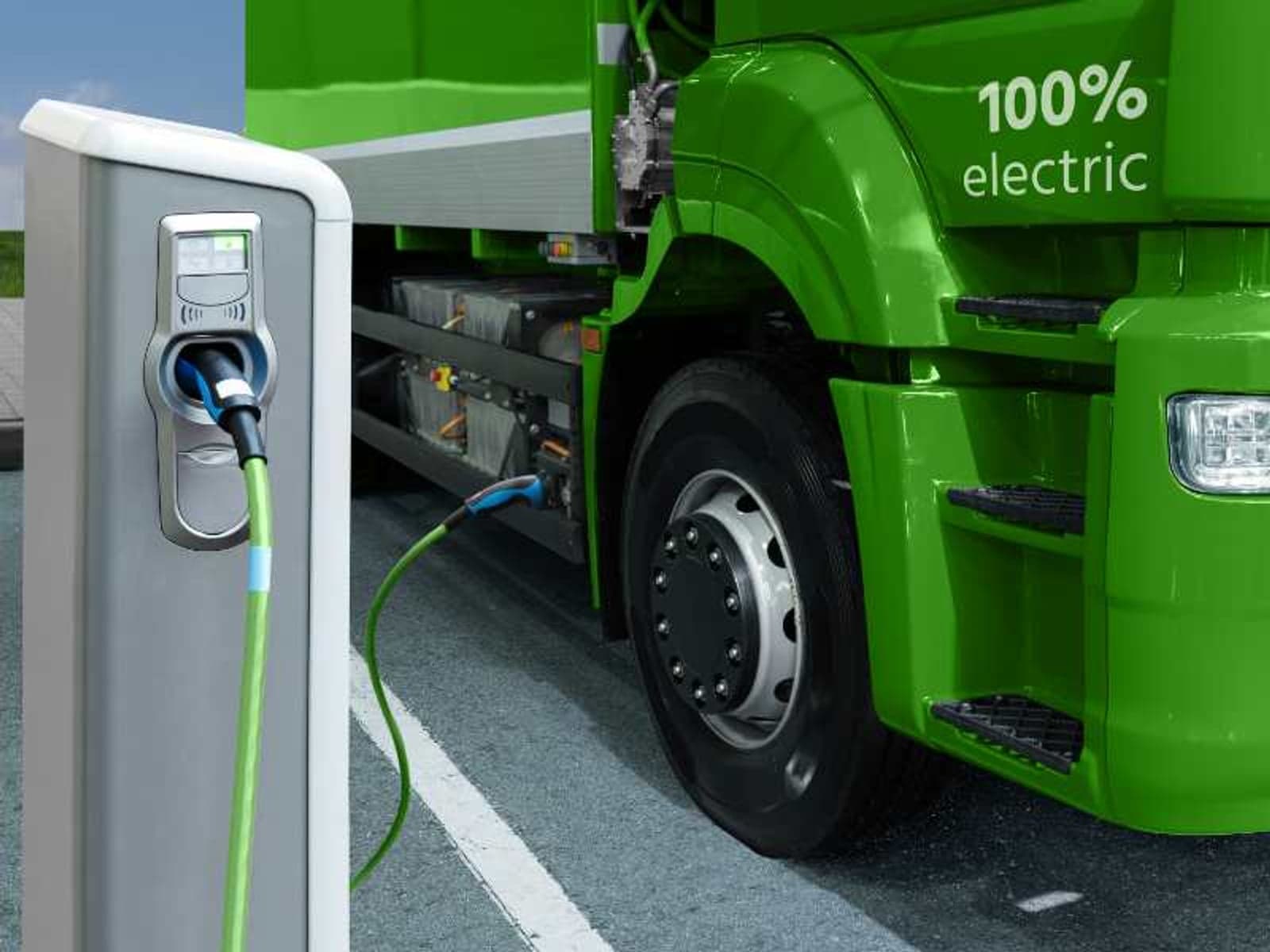
Zero-emission electric and other heavy-duty trucks will continue to be exempted from EU road charges beyond the planned deadline of the end of this year, to help boost the bloc's shift from fossil fuels, writes Vic Wyman.
The measure was among a lorry-load of proposals in an action plan for the automotive industry unveiled on 5 March 2025 by the European Commission. "Data is what will fuel everything," said Serge Colle, global power and utilities sector leader of the consultancy EY.
Other proposed measures in favour of electric commercial vehicles included enacting the EU's Weights and Measures Directive to ensure payload parity with diesel vehicles and fast-tracking the building of truck charging hubs along main EU logistics corridors, including in urban areas and multimodal freight terminals.
Such measures are intended to kick-start the sluggish take-up of electric commercial vehicles. EVs accounted for 22.7% of new car registrations in Europe in 2024, but at the end of 2023, electric medium-duty trucks were 7% of the emobility market, rising to 8.3% in the first nine months of 2024, said a bew report by EY and the Eurelectric federation representing more than 3500 European power generation, distribution and supply utilities on EVs and grid flexibility. New sales of heavy-duty electric trucks increased from 1% of the market in 2023 to 1.3% by the end of October 2024.
S&P Global Mobility recently forecast that the Western European commercial vehicle market would fall by 4.2% year-on-year in 2025, to about 290,000 vehicles, after having contracted to 303,000 in 2024.
Commercial vehicles are a relatively small share of the global on-road fleet but contribute to a disproportionate share of on-road fuel consumption and emissions. Christoph Wolff, chief executive of the non-profit organisation Smart Freight Centre, told the recent Eurelectric EVision regulatory affairs conference in Brussels, Belgium that heavy-duty vehicles are 4% of global on-road vehicles but account for 36% of fuel consumption and greenhouse gas emissions and 73% of nitrogen oxide emissions.
Have you read?
How to stimulate Europe’s bidirectional charging market
European Commission shifts gears to support e-mobility infrastructure
Buyers wary
Yet operators are often wary of buying electric because of concerns about initial costs, residual battery value and refuelling costs, said Wolff. The answer could be better policy. An EU tightening of tailpipe emission limits, for example, could produce a shift towards electric, and perhaps hydrogen-fuelled, vehicles.
Norway is now shifting its policy focus towards trucks, after having succeeded in turning car drivers electric. In January 2025, said Christina Bu, the Secretary General of the Norwegian EV Association, whose members are mainly individuals, 96% of new car registrations in Noway were of EVs. Electric trucks were 8% of its market and light commercial vehicles 44% of its market.

The Swedish truck maker Scania, which claimed a 3% share of the truck market for its electric vehicles last year (compared with a 2% total for all suppliers) contrasts European demand with that in China, where 30% of new trucks are electric, in a larger market. "Our customers are simply not buying," said Christian Levin, Scania chief executive and chair of the commercial vehicles board of the European Automobile Manufacturers’ Association (ACEA). "That's very, very serious."
Although European firms account for more than 40% of the world truck production, the European Commission is keen to avoid a hit to their sales from more competitive rival firms, probably from China.
Yet Levin said that you only buy a truck if you can make a business case for it and diesel is cheeper than electricity. "It's not too late but we as Europe need to get together and decide to do this," said Levin about the need to boost electric truck sales. "In Europe we need to realise that we need to speed up."
Levin also pointed out that China has been focused narrowly on electric trucks in closed environments, such as mines and quarries, and is only now is pushing the market more generally.
Financing of EVs is a problem for truck firms, as most are small with profit margins of 2.5—5.0%, with little spare cash to spend on chargers, said Benedikt Nesselhauf, head of the Brussels office of MAN Truck & Bus SE. The future availability of more bidirectional chargers, which can both charge vehicle batteries and sell power back to the grid when the vehicles are not being used for grid flexibility, was perhaps a route to a greater take-up of electric trucks, he said.
However, Nesselhauf reckoned urban trucking to be a good economic candidate for EVs, thanks to factors including short distances travelled (typically 50km per day and with a 250km radius of travel) and regular access to depots and chargers. He saw long-haul trucking further down the road to viability.
Yet Wolff is cautious. Increased sales of electric trucks with big batteries that need megawatt charging will pose a massive challenge to energy grids, he said, pointing out that already in 2023, the global EV fleet consumed about 130TWh of electricity, or about the same as Norway’s total demand that year.
Electricity suppliers also face more demand from owners of vehicles such as electric buses. "They are five to 10 years ahead of the truck business," said Steffen Schaefer, head of future cities and mobility at the engineering company AFRY.
Schaefer also saw potential for bidirectional charging in the large fleets of school buses, which are used for perhaps four hours a day, for 200 days a year. The rest of the time they could be used for smart charging to exploit the cheapest electricity supplies and for feeding unneeded energy back into the grid.
He also sees such buses as suitable for new ways of financing EVs and grid investment, by companies that provide a service, typically by owning buses, batteries and chargers, with transport firms just proving drivers.
Slow charge
Although a growing charging infrastructure is in place in Europe for cars, with EU targets having been met, commercial vehicle charging is less established, said Leonhard Birnbaum, the chair and chief executive of the Germany-based electricity utility E.ON and the Eurelectric president: "The infrastructure is not there for trucks."

Levin pointed out that the new EU automotive action plan focused on cars, with little for commercial vehicles. He felt it "too early to say" if the plan would succeed, but was encouraged by the European Commission's support for charging corridors: "That gives some hope." The Commission said that it would work with EU countries on a European Clean Transport Corridor initiative to quickly deploy heavy-duty vehicle charging hubs along main logistics corridors, including in urban nodes and multimodal freight terminals.
Levin said that an estimated 10,000 chargers were needed in Europe, spaced every 200km, to cope with trucks typically driving two shifts a day, or three shifts often.
He claimed that a Scania buyer cut an order for 60 trucks to five because of a lack of charging points and an expected wait of years for more grid connections. Birnbaum added that permitting and associated work for high-voltage grid connections in Germany can take eight years, before construction taking perhaps three years can start. He said that in Germany E.ON is flooded with requests for grid connections: "We don't know what has priority."
Delays in grid connections was a "major, major bottleneck", the European Commission's transport and tourism commissioner Apostolos Tzitzikostas of DG Move told EVision: "More work is needed to ensure an even spread [of chargers]." He said that only five of the 27 EU countries have a good record: "The others have a lot to do."
Tzitzikostas added that grid-charger connections could be prioritised: "We are looking it mandatory for all [EU] member states."