BRIDGE: energy innovation in Europe in the year ahead
Jonathan Spencer Jones
Posted on: 1 April 2026
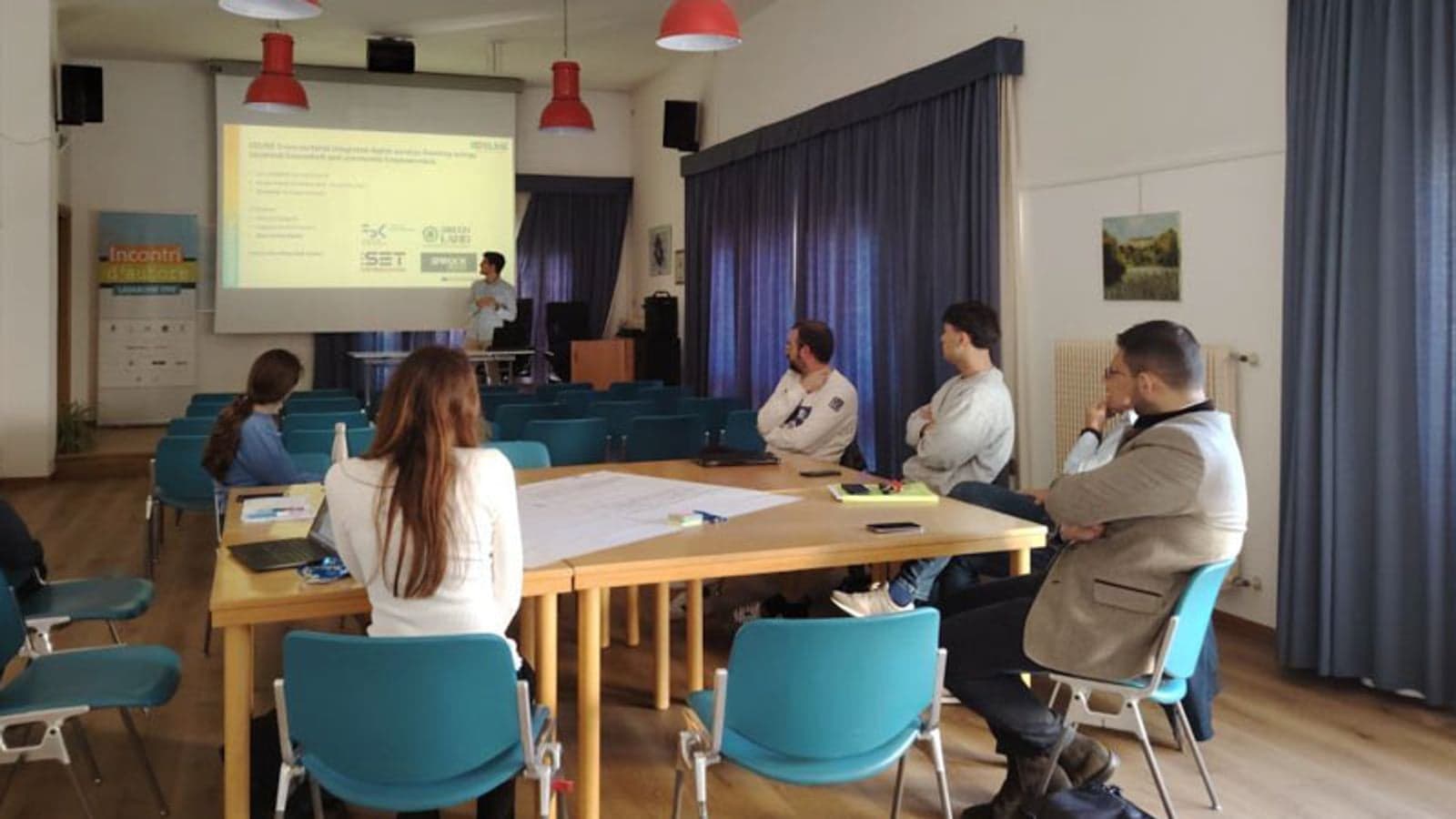
The BRIDGE initiative’s four working groups agreed on their innovation actions for the year ahead at its general assembly.

Regulatory barriers and funding gaps continue to be the twin systemic blockers to market uptake of solutions, project participants at the BRIDGE general assembly agreed.
However, early-stage business-model thinking in projects is still the exception rather than the norm. Moreover, while the BRIDGE portfolio is strong in technology, with a clear smart grid and a digitally distributed focus, its commercialisation structure can be improved.
The Initiative's response to this is the development of a business model handbook and a directory – the handbook covering issues such as the design and implementation of business models and the directory as a repository of project examples and good practices.
Also of interest
BRIDGE investigates Europe’s energy transition’s increasing complexity
“The aim is to develop and test drive the business model handbook so that by next year we will have an approach that can impact policy making at the European Commission level,” said Andrej Gubina, Director of the Institute for Innovation and Development at the University of Ljubljana and honorary co-chair of the business models workng group.
“If it can become a recommended or even a required tool for project proposals, then business model thinking can be built in from the start.”
Regulation
Points that emerged from the regulation working group are that energy communities are becoming widely recognised, but are mainly focused on self-consumption and market access is limited or requires intermediaries such as suppliers or aggregators.
Local flexibility markets are the most widely assessed mechanism, with aggregation and demand side management as central to enabling this flexibility, with congestion management as the main service targeted.
Recommendations are to set up dynamic regulatory sandboxes that can accelerate the development and testing of flexibility solutions and to remove barriers such as minimum bid sizes that can prevent access to markets for small participants.
There is also a need for a comprehensive set of rules governing energy sharing, for example, for peer-to-peer and among energy communities, and clear compliance and penalty rules to reduce the gaming risks for providing flexibility.
“There have been new flexibility acquisition mechanisms and new agreements and all these need to be coordinated to provide the correct signals,” highlighted regulation working group chair José Pablo Chaves Ávila, deputy director of the Institute for Research in Technology at the Universidad Pontificia Comillas.
A priority for the coming year is to assess the role of data spaces in supporting flexibility and to continue the coordination of multiple flexibility markets not only at the distribution level but also at the transmission and wholesale levels.
Data management
One of the main features of 2025 about data management was the number of different activities ongoing across the sector in Europe, Dune Sebilleau, smart grid engineer at Trialog and chair of the data management working group, reported.
“All of these are linked, so we really want to put the accent on the coordination and alignment of these different activities,” she said, adding the need also for more involvement in these efforts from BRIDGE projects.
Prominent among these are the joint ENTSO-E, DSO Entity working group, the standards organisations CEN/CENELEC/ETSI and ETIP SNET.
Other priorities highlighted are to grow the use case repository with more cases and to contribute to other stakeholders, such as the Github community.
Consumer and citizen engagement
Findings from the consumer and citizen engagement working group are that engagement is still a challenge for many projects, but that “meaningful cocreation" can help to overcome this.
Engagement is also a multi-dimensional concept, including not only behavioural aspects but also emotions – and now also AI.
“We need to understand why engagement sometimes works and sometimes it doesn't, or why people are hesitating to take up the great solutions our engineers are creating, and we think that AI can support our activities,” says Michael Brenner-Fliesser, a social scientist at Joanneum Research and chair of the working group.
“But we need to be careful when and how we actually use it and currently our view is that we should not use it without human interaction or control.”
Assessment of that then forms an objective for the coming year, along with further efforts to enhance the ‘social readiness’ concept and to make the WG outputs more widely accessible.