ENGIE advances nearly 400MW of BESS in Spain and France
Yusuf Latief
Posted on: 9 April 2026
The company's battery energy storage capacity now adds up to over 1GW across Europe.
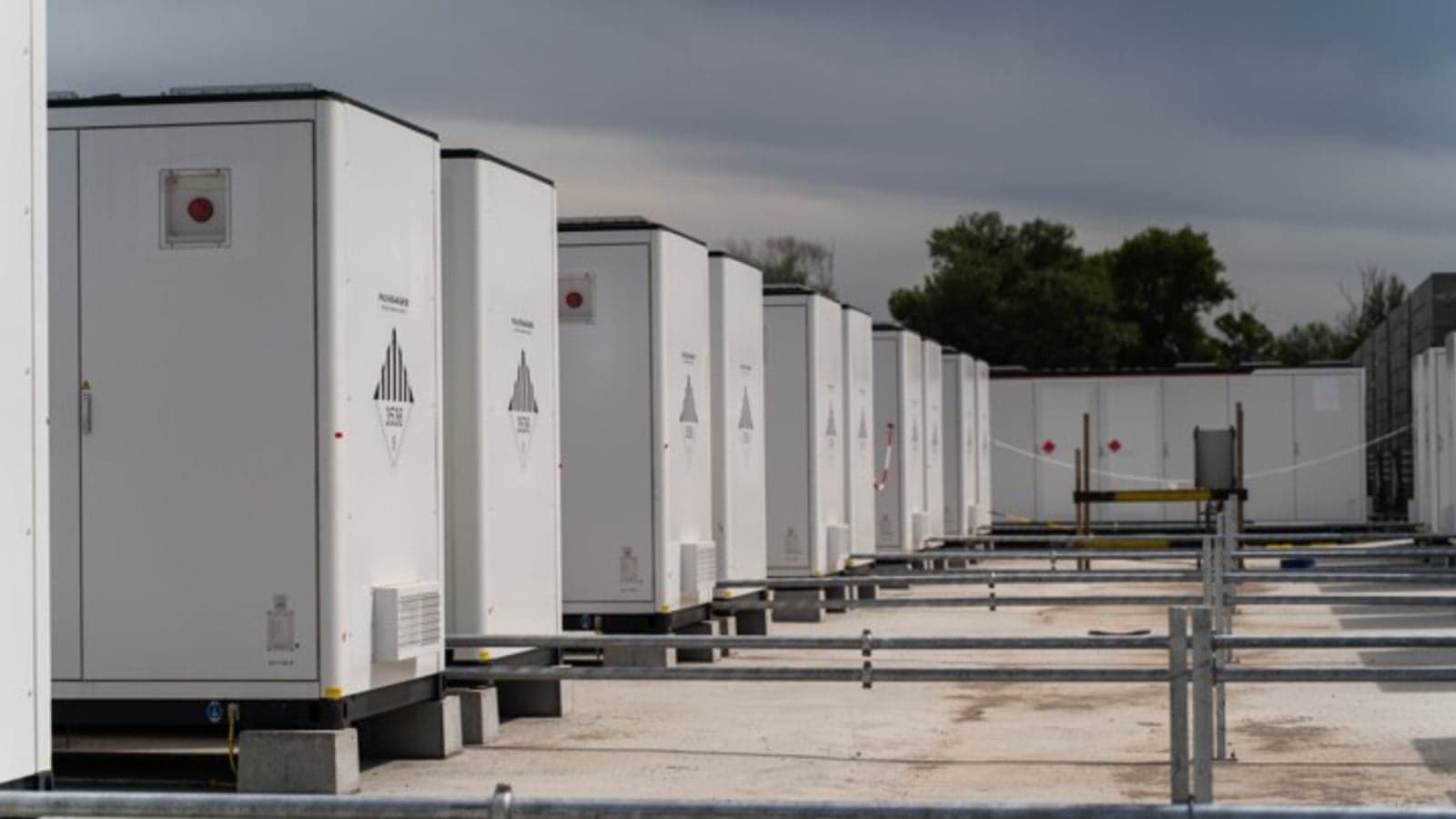
France-based energy company ENGIE has acquired two BESS projects in Spain and started construction on its first BESS project in France, with a combined capacity of 388MW/1.2GWh of battery storage.
According to the company, the new projects will enhance grid stability, support the 24/7 integration of renewable energy, and strengthen the complementarity between key technologies.
Paulo Almirante, ENGIE Senior Executive Vice President in charge of Renewable & Flexible Power, commented: “These storage projects address a key challenge of the energy transition: combining growth in renewable energy with the stability of the electricity system.
“They strengthen ENGIE’s ability to provide its customers with reliable, decarbonised, and affordable electricity.”
Two BESS acquisitions in Spain
ENGIE’s two BESS projects in Spain total 278MW/1.1GWh. These projects, which will enable the storage of up to four hours of energy, are the largest currently under development in the country, says the company.
Nationally, the Group already operates 1.8GW of renewable capacity.
The two standalone storage projects are located in Andalusia, in Álora (78MW/312MWh) and Tarifa (200MW/800MWh). They are equipped with synchronous condensers, a technology that helps stabilise the grid by providing inertia and enabling the absorption or injection of reactive power.
Construction will begin in 2027, with progressive commissioning in 2028.
In a battery storage market review of 2025, Solar Power Europe expected that by the end of last year, the top five EU markets for battery storage delivered more than 60% of all new capacity, with Spain ranking one of the five.
Indeed, according to the association, Spain closed the top five, deploying BESS at a greater scale, officially recognising storage as a strategic asset for the energy transition and improving the framework conditions for accelerated deployment.
More on BESS:
BESS roundup: Scottish storage systems to keep an eye on
BESS roundup: How Europe’s storage momentum is gathering pace
ENGIE taps Kraken for Italian battery optimisation
ENGIE's first BESS in France
In its home territory, ENGIE has just started construction of its first BESS, where the Group claims leadership in renewables, touting 5.3GW of installed capacity in solar and onshore wind.
Located in the municipality of Castelnau d’Aude, in the Aude department, in southern France, the site covers 2 hectares near a grid connection point.
It will consist of 51 modules for a total capacity of 110MW/220MWh. Once commissioned — scheduled for summer 2027 — it will store and release up to 2 hours of electricity.
According to research by Modo Energy, France's battery fleet reached 1.5 GW at the end of 2025, with the French PPE3 energy roadmap, presented in early February, offering a more stable outlook for nuclear and renewables. This increased stability, says the company, gives battery developers a clearer horizon for investment and planning.
Additionally, analysis conducted by Aurora Energy Research in 2025, growth for France’s battery segment has been fuelled by expanding revenue streams from ancillary services, declining CAPEX costs, and a significant increase in intermittent renewable capacity.
The battery storage market in France is expanding rapidly, but with deployment dominated by the development of large batteries, markets are at a higher risk of saturation.
According to Aurora, by 2030, France will reach a 179% ratio of installed battery capacity to procured capacity in the ancillary service market that helps balance the grid, indicating a high risk of market saturation, similar to trends seen in other European countries.
Christina Rentell, Research Lead for Iberia and France, Aurora Energy Research, said at the time: "The battery storage market in France is expanding rapidly, but with deployment dominated by the development of large batteries, markets are at a higher risk of saturation.
"Effectively hedging against downside scenarios, such as saturation risk, will be key to facilitating continued large-scale battery deployment, whilst ensuring emissions from ancillary services remain low as nuclear capacity declines."
ENGIE’s capacity
With these new projects in Spain and France, and 700MW already in operation or under construction, ENGIE Group says it now has more than 1GW of BESS capacity in Europe, in eight counties. In addition to Spain and France, ENGIE is developing projects in Belgium, Germany, Italy, the Netherlands, Romania and the United Kingdom.
These developments support ENGIE’s ambition to reach 95GW of renewable and storage capacity by 2030. At the end of 2025, the company had 57.2GW of installed capacity.
According to Solar Power Europe’s research, 27.1GWh of batteries were installed in the EU in 2025, marking the 12th consecutive record-breaking year.
The association says that a fundamental shift occurred in 2025, with utility-scale batteries becoming the main engine for growth, delivering 55% of all new capacity. Improved market conditions and policy support led to a record year for large-scale systems, while distributed segments continue to face persistent barriers.
In 2025, it adds, Germany and Italy led the EU battery storage market. Bulgaria became the fastest-growing market, advancing to third place, while the Netherlands and Spain completed the top five ranking. The bar for entering the top five rose sharply, where connecting substantial volumes of grid-scale batteries became essential; reaching the GWh-scale is no longer sufficient.