BESS roundup: How Europe’s storage momentum is gathering pace
Yusuf Latief
Posted on: 14 March 2026
Battery energy storage is accelerating across Europe, with new partnerships, project milestones and market data illustrating its growing role in the energy transition.
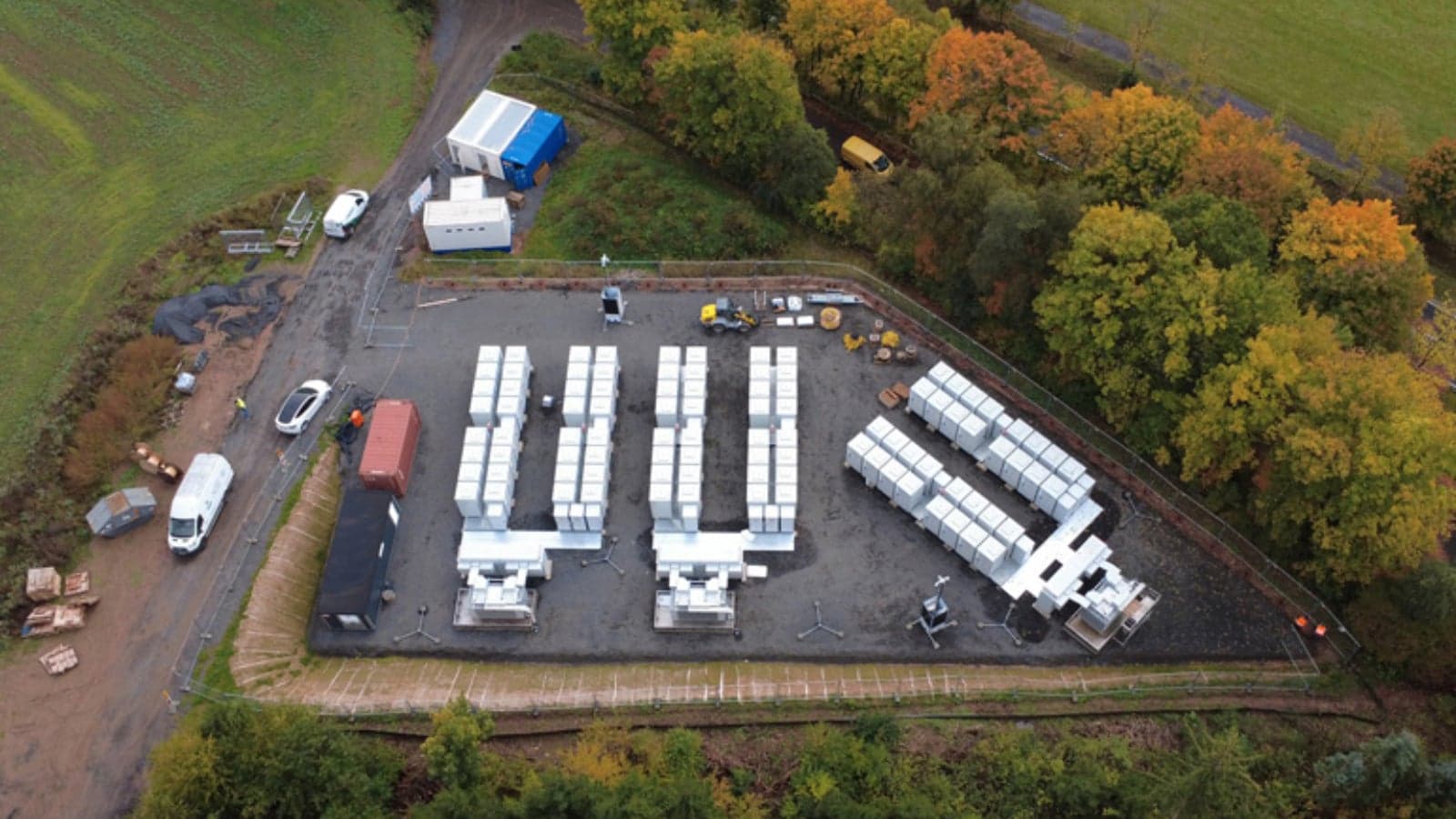
From hybrid solar-battery projects in Portugal to multi-gigawatt development pipelines across southeastern Europe, recent announcements show how storage is moving from early deployment toward large-scale integration in power systems.
At the same time, new research suggests that Europe’s battery market is entering a phase of rapid expansion, with installed capacity expected to grow dramatically by the end of the decade.
Together, these developments highlight how storage is becoming a central tool for balancing renewable generation, improving grid stability and unlocking new flexibility in power markets.
Hybrid solar-battery projects advance in Portugal
One milestone comes from Sonnedix, which recently completed the financial close of its first hybrid battery energy storage system (BESS) projects in Portugal.
The transaction covers two developments: Sonnedix Acail, a project combining 28MW of solar photovoltaic capacity with a 24MW battery system, and Sonnedix Felgueiras, which pairs 40MW of PV with a 32MW battery installation. The solar facilities are expected to begin operations in the second quarter of 2026, while the battery systems are scheduled to follow in the third quarter.
The financing marks one of the first structured deals with commercial banks in Portugal for hybrid solar and battery projects. Both sites were designed with a hybrid configuration from the outset, allowing solar generation and storage to operate together.
This operation reflects the growing maturity of the market in financing hybrid projects that combine renewable generation and storage.
According to the company, this integrated design allows the projects to better align electricity generation with demand, optimise energy management and support the integration of renewable energy into the grid.
The company expects to complete additional financings for hybrid BESS projects in other European markets, including Spain and Italy.
Commenting in a release was Miguel A. García Mascuñán, Chief Financial Officer at Sonnedix:
“This operation reflects the growing maturity of the market in financing hybrid projects that combine renewable generation and storage.
“We have structured a solid solution adapted to the technical and regulatory complexity of these assets, reinforcing commercial banks’ confidence in the potential of hybrid BESS projects and expanding our financing capabilities in Europe,”
Sungrow and Delta Capacity’s 1GWh BESS framework
Elsewhere, the supply chain for battery storage is also expanding through new partnerships.
Inverter and energy storage manufacturer Sungrow and developer Delta Capacity signed a framework agreement covering 1GWh of battery storage capacity using Sungrow’s PowerTitan 2.0 system. The projects are planned for delivery and deployment during 2026.
The agreement supports Delta Capacity’s strategy to build a diversified portfolio of utility-scale battery storage assets across multiple European markets, including Scandinavia, Germany, southern Europe and central Europe.
Said Patrik Hes, founder and chief executive of Delta Capacity: “Our ambition is to build one of Europe's highest-quality BESS portfolios spanning several markets and to hold these assets long term.
“This 1GWh framework agreement reflects both our rapid growth and our ability to execute large projects quickly while maintaining high standards.”
Founded in 2022 and headquartered in Switzerland, Delta Capacity is currently developing and acquiring battery projects across Europe and aims to build more than 6GWh of flexible assets by 2030.
More on battery energy storage in Europe:
Nidec Conversion and Rolls-Royce to power a 582MWh BESS in Lithuania
Statkraft signs 235MW battery deal in Finland as storage becomes system-critical
Why Latvia’s first grid-scale battery is a breakthrough for the Baltics
Major storage pipeline in southeastern Europe
Another major development involves a large regional pipeline being advanced by PPC Group and METLEN Energy & Metals.
The two companies have signed a joint venture agreement to develop up to 1,500MW/3,000MWh of battery energy storage projects across Romania, Bulgaria and Italy. Of this total, around 1,000MW is expected to be implemented within the next 12 months.
The facilities will deploy two-hour liquid-cooled battery systems using lithium iron phosphate technology. According to the companies, these systems are designed to maximise usable energy output while maintaining high operational safety.
The storage projects are expected to support nearby renewable energy plants by storing surplus electricity from solar and wind generation and releasing it when renewable output is lower. In addition, they will contribute to system stability and help optimise renewable energy production.
Konstantinos Mavros, deputy chief executive for renewables at PPC Group, said the agreement strengthens the company’s regional presence. “This agreement creates value for both parties and further expands our Group’s already significant presence in Southeast Europe.
At the same time, the energy storage projects already under implementation will ensure the optimal use of electricity generation from Renewable Energy Sources and, additionally, the stability of the electricity system in our country and across the entire European continent.”
For METLEN, the collaboration forms part of a wider strategy to expand its role in European storage infrastructure.
Chief Executive Director, Renewables, Storage & Energy Transition Platform of METLEN, Mr. Nikos Papapetrou:
“By combining METLEN’s international experience and expertise in the development, construction and operation of energy projects with PPC’s strong presence and footprint in regional markets, we demonstrate in practice that energy storage is a catalyst for maximizing the value of renewable energy sources and ensuring the reliability of power systems.”
New project commissioned in Germany
Deployment is also continuing at the project level.
Developer ABO Energy and renewable infrastructure company Field recently commissioned a battery park in Waldkappel in the German state of Hesse.
The facility has an output of 16MW and a capacity of more than 33MWh, allowing it to store roughly as much electricity as almost 10,000 two-person households consume in one night. It represents the fourth stand-alone battery storage project implemented by ABO Energy in Germany and the first capable of delivering full power for more than two hours.
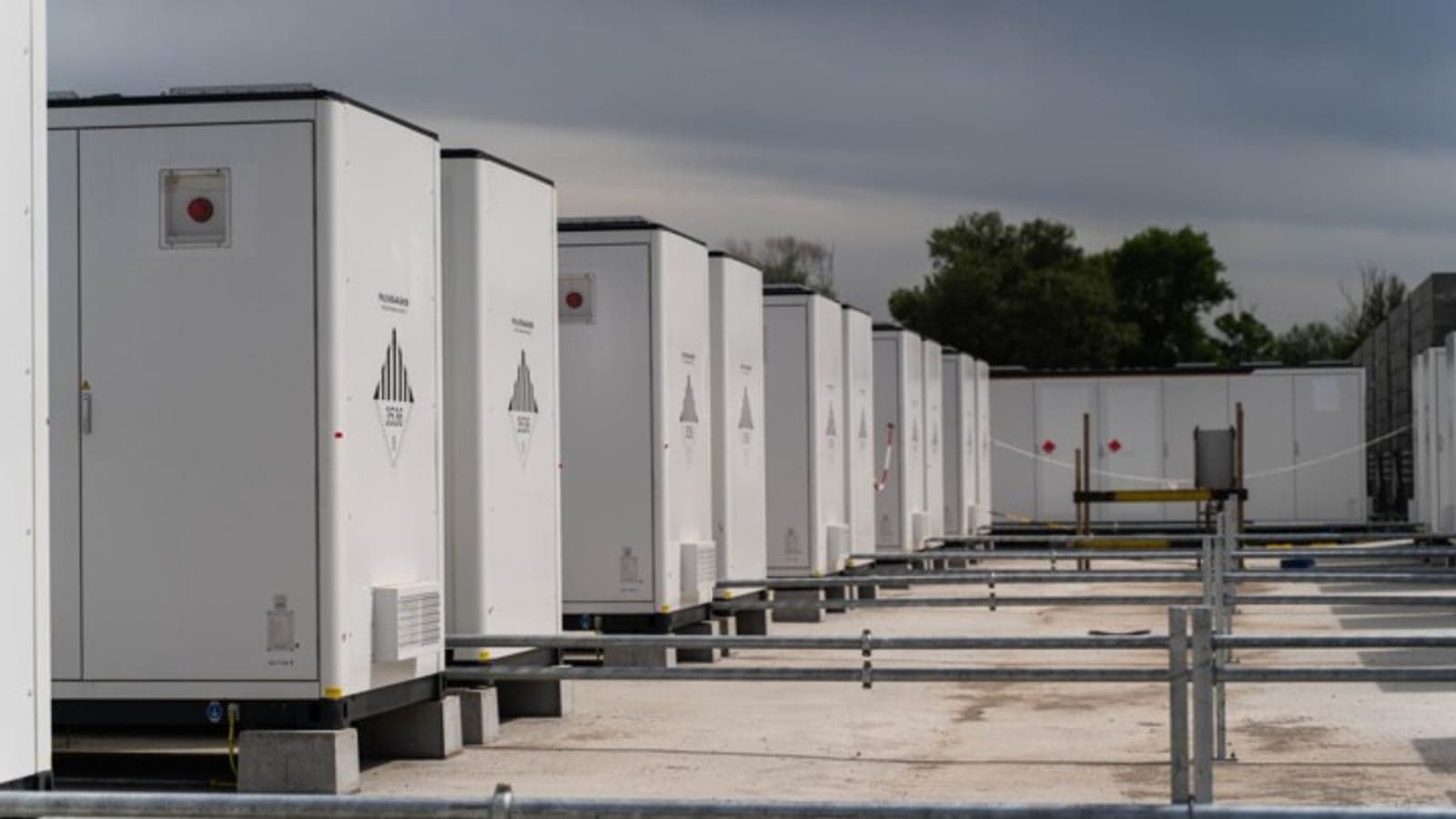
Unlike many battery installations, the system components are mounted in modular racks on a steel frame rather than in shipping containers. The racks were delivered to the site pre-assembled, reducing installation time.
The battery system can stabilise grid frequency by providing Frequency Containment Reserve, participating in intraday power trading and supplying electricity to the grid during peak demand periods.
Joachim Hundt, head of cooperations in financing and sales at ABO Energy, emphasised the role of private investment in scaling the sector. “This enables us to create attractive investment opportunities for energy suppliers and funds, because we are convinced that private investment is a key lever for a sustainable and independent energy future in Europe.”
Luke Gibson, chief operating officer at Field, added: "Waldkappel is an important milestone in executing Field’s strategy in Germany and advancing our wider European flexibility platform.
“As our first asset in Germany, it marks the start of a broader build-out focused on high-quality, TSO-connected projects in locations of clear system need - forming the foundation of a flexibility portfolio that will strengthen energy security, enhance system resilience and renewable integration, and ultimately reduce costs for end consumers."
Market growth accelerates
These project announcements coincide with strong growth projections for Europe’s battery sector.
According to a recent report by Aurora Energy Research, installed battery capacity across Europe rose by more than 7GW between 2024 and 2025, bringing the total to just over 17GW.
The firm forecasts that capacity will exceed 80GW by 2030, reflecting increasing demand for flexibility as renewable generation expands.
“Battery markets in Europe are evolving rapidly,” said Eva Zimmermann, Pan-European Senior Research Associate, at Aurora Energy Research.
“But they are still at different stages of market development: while Great Britain, Germany and Italy are maturing and as a result face issues such as grid connection constraints, more nascent markets only have their first projects coming online in 2026 or later.”
Longer-duration storage is expected to play an increasingly important role as costs decline. Aurora estimates that €24 billion will be invested in four-hour battery systems by 2030, representing more than half of total investment.
As realising large-scale projects becomes more of a challenge in markets with few secure cash flows, battery investors are starting to move to more innovative offtake structures...
Emerging markets in southeastern Europe are also gaining momentum, with Romania and Bulgaria now ranking among the top 10 European markets for batteries.
At the same time, the report highlights that grid infrastructure and connection pipelines are becoming increasingly important factors in battery deployment, as flexibility needs grow and developers seek new ways to structure project financing.
Said Jörn Richstein, Research Lead for pan-European power markets, policies and technologies at Aurora Energy Research:
“As realising large-scale projects becomes more of a challenge in markets with few secure cash flows, battery investors are starting to move to more innovative offtake structures such as tolling agreements to secure financing.”