Partner contentGeneration
The untapped opportunity inside North America's nuclear plants
Pamela Largue
Posted on: 2 July 2026
Nuclear refurbishment is emerging as one of North America’s fastest routes to new clean capacity, according to Chris Ferraro of Siemens Energy.

As demand for carbon-free, always-on electricity accelerates across North America, utilities are increasingly turning to a resource they already own: their existing nuclear fleet.
Nuclear refurbishment, upgrades and life extensions can ensure new carbon-free generation, which can be provided by nuclear plants already connected to the grid.
More than half of North American nuclear plants are equipped with Siemens Energy technology. With 59 operating units, the company has decades of expertise in turbine generator technology, maintenance, upgrades, life-extension projects, and power uprates of nuclear power plants.
Its dedicated nuclear service organisation, specialised workforce, and local refurbishment and manufacturing capabilities uniquely position the company to support the growing nuclear refurbishment trend, explains Chris Ferraro, Vice President of Nuclear Sales for North America at Siemens Energy.
“We’ve been servicing our technology for 60+ years in the US and equipment at all the major utilities in the United States. That builds longstanding relationships,” says Ferraro.
The business case for refurbishment
The surge in refurbishment activity is being driven by the fact that upgrading existing nuclear plants can add substantial new capacity far faster than building new generation assets.
“It’s about speed to market of adding megawatts to the grid,” says Ferraro.
Ferraro explains that on a typical gigawatt nuclear plant, refurbishment and uprate projects can deliver significant increases in output within a relatively short timeframe.
“Within a two- to three-year timeframe from order to implementation, in some cases you can add up to 150MW to the unit.”
In today's power market, it is vital to add capacity.
“It’s baseload, carbon-free power that does not require an additional grid connection. You’re just incrementally adding power to an existing asset. That’s significant.”
The economics have become even more compelling as utilities respond to rising demand from data centres, electrification and industrial growth.nuclear
It’s baseload, carbon-free power that does not require an additional grid connection. You’re just incrementally adding power to an existing asset. That’s significant.
According to Ferraro, nuclear generation is increasingly contributing in this development because of its ability to constantly deliver firm, carbon-free electricity.
“The data centre hyperscalers care about very reliable baseload power,” he says.
Combined with government support programmes, such as the Uprise Programme, and a growing emphasis on energy security, the result is a strong investment case for utilities seeking additional generation without the long timelines associated with greenfield projects.
Capturing this opportunity requires more than steam turbine expertise. It demands specialised nuclear engineering, project management and manufacturing capabilities that relatively few suppliers possess.
Dedicated nuclear capabilities
One of Siemens Energy’s key differentiators in North America is the scale and specialisation of its nuclear business.
Unlike many regions where nuclear support is integrated into broader power services teams, Siemens Energy operates a nuclear service organisation across North America.
Have you read?
How Siemens Energy has positioned itself for the nuclear revival
“We have a dedicated service team that works only on North American nuclear projects,” Ferraro explains. “The same engineers, project managers, safety personnel, and quality personnel use their experience from various different plants for upgrades and maintenance.”
Supporting the company’s nuclear-specific capabilities is its manufacturing and refurbishment infrastructure, including its Charlotte facility in North Carolina.
The one-million-square-foot behemoth accommodates 80 to 100-foot manufacturing bays and runs 24 hours a day.
It’s what Ferraro refers to as “our centre of competence for nuclear,” effectively combining local engineering expertise, manufacturing capability and field execution.
Engineering expertise for complex uprates
While the business case for uprates is compelling, delivering them is technically complex and specialised engineering expertise is key.
Ferraro emphasises that nuclear uprate projects are highly complex undertakings that require close coordination between reactor operators and turbine-generator specialists.
It’s like a marriage to the industry…It requires commitment, capital and people.
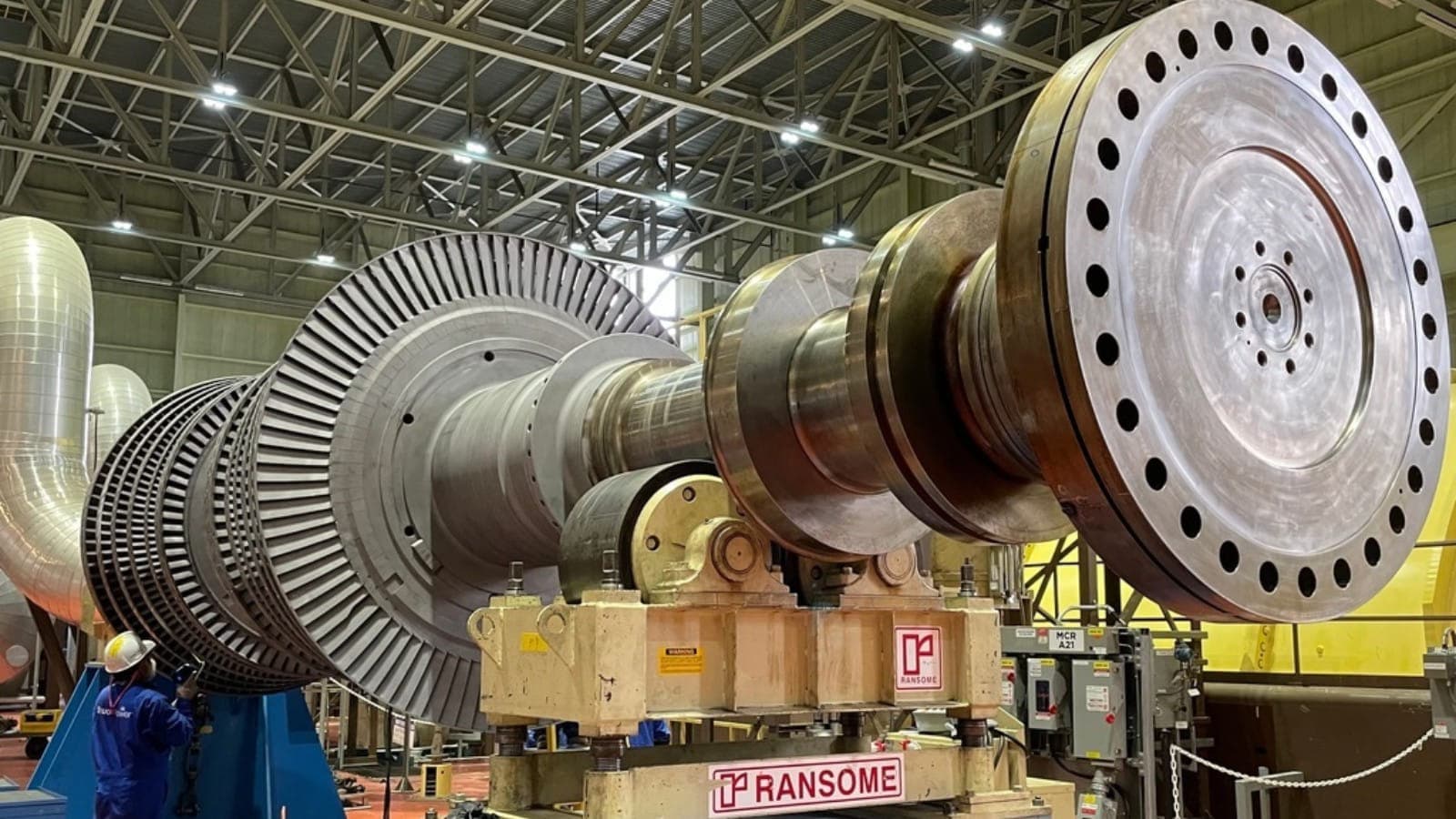
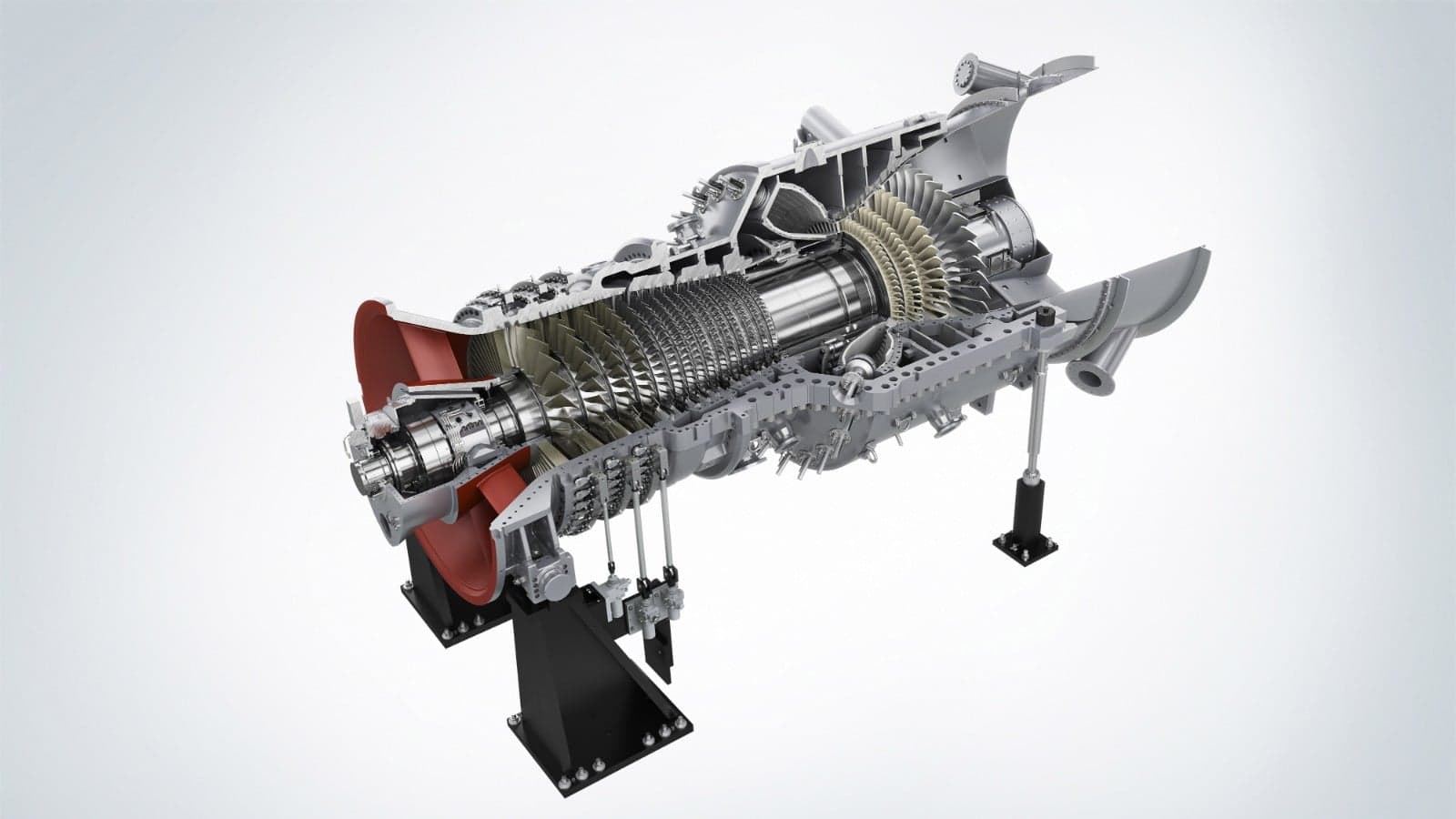
Plant operators typically work first with reactor companies to implement reactor-side improvements aimed at increasing thermal output. These modifications fall outside Siemens Energy's scope. Once additional steam flow, pressure or temperature becomes available, the Siemens Energy team evaluates how the turbine-generator system must be adapted to utilise the extra energy.
“In the majority of cases, unless it’s a very small reactor upgrade, you need to adjust the blading geometry in the steam turbine to handle the additional flow and megawatt thermal energy coming out of the reactor,” Ferraro explains.
The generator itself must then be assessed to determine whether upgrades are required to accommodate increased output.
What distinguishes Siemens Energy is its ability to deliver the entire process, from design, to manufacturing, installation and commissioning, all in-house.
“We design, build, install and commission it - all from within Siemens Energy,” says Ferraro.
“We don’t sub-contract out any part of that process. That is a differentiator in the market and makes us a unique end-to-end player in the power uprate space when it comes to turbine generators.”
Delivering high-profile projects
The company’s capabilities are demonstrated through some of North America’s most significant nuclear refurbishment programmes.
Among them are uprate projects at Byron and Braidwood in Illinois, operated by Constellation Energy.
“At the Byron and Braidwood stations, we are currently processing some of those upgrades,” Ferraro says, adding those upgrades will add approximately 150MW of capacity each, when completed.
Also of interest: Nuclear sustainability mindset must move beyond compliance
He credits Constellation with recognising the opportunity early.
“They’re doing a great job and leading the way. They were one of the first companies to recognise the opportunity on the horizon and started acting and making capital investments.”
Siemens Energy is also playing a major role in the restart of the Palisades nuclear plant in Michigan, a project owned by Holtec International.
The sector must compete with fast-moving industries for top engineering talent, which is why sustained investment in people and skills is critical.
Ferraro describes the project as a complete refurbishment involving a full turbine teardown, rebuild and upgrade programme designed to support another 20 to 40 years of operation.
North of the border, Siemens Energy is also participating in refurbishment programmes in Ontario, including a major project with Bruce Power.
Together, these large projects provide practical evidence of the growing trend of extending plant life while simultaneously extracting additional output from existing assets.
Building the workforce for nuclear growth
As the number of refurbishment programmes increases across North America, one challenge looms larger than any technical obstacle: talent.
“The people element cannot be underestimated,” Ferraro says. “It is extremely difficult to get qualified talent in this industry.”
Competition is coming not only from traditional engineering sectors but also from aerospace, technology and the rapidly expanding data centre industry.
“The sector must compete with fast-moving industries for top engineering talent, which is why sustained investment in people and skills is critical,” he says.
It’s a valid issue and one Siemens Energy is addressing head-on by investing heavily in workforce development, training and knowledge transfer. The company recruits from universities, technical colleges, experienced industry professionals and former military personnel.
“We invest a lot of time in training and people to make sure we retain talent.”
Ultimately, Ferraro sees today’s refurbishment market as more than a business opportunity; it is also preparing the workforce needed for future nuclear deployment.
“The upgrade and refurbishment projects that we’re doing right now are a type of training ground for the personnel that are needed for building the new nuclear projects.”
Career opportunities: Working at Siemens Energy | Careers & Job Opportunities
Beyond refurbishment
While life extensions and uprates remain a key strategic focus, refurbishment is only one part of Siemens Energy's broader nuclear strategy.
The company is actively partnering with leading Small Modular Reactor (SMR) developers and engaging with both Generation III+ and Generation IV reactor programmes.
Partnerships with companies such as Rolls-Royce SMR and Oklo reflect that strategy.
Energy Transitions podcast: Nuclear in transition: Insights from Siemens Energy
At the same time, Siemens Energy continues to invest in long-term technologies, including fusion, recognising that sustained commitment is essential in an industry where projects span decades.
“It’s like a marriage to the industry,” says Ferraro. “It requires commitment and capital and people.”
While Siemens Energy acknowledges the potential of future technologies – advanced reactors, SMRs and even fusion- Ferraro believes the value proposition is clear with some of the fastest gains being within the existing fleet. Siemens Energy is positioning itself at the centre of that opportunity.