Europe Energy Briefs: why space weather is the next frontier for grid resiliency
Jonathan Spencer Jones
Posted on: 20 October 2025
Space weather is attracting growing interest alongside the Earth’s weather when it comes to forecasting and building resiliency into the world’s grids.
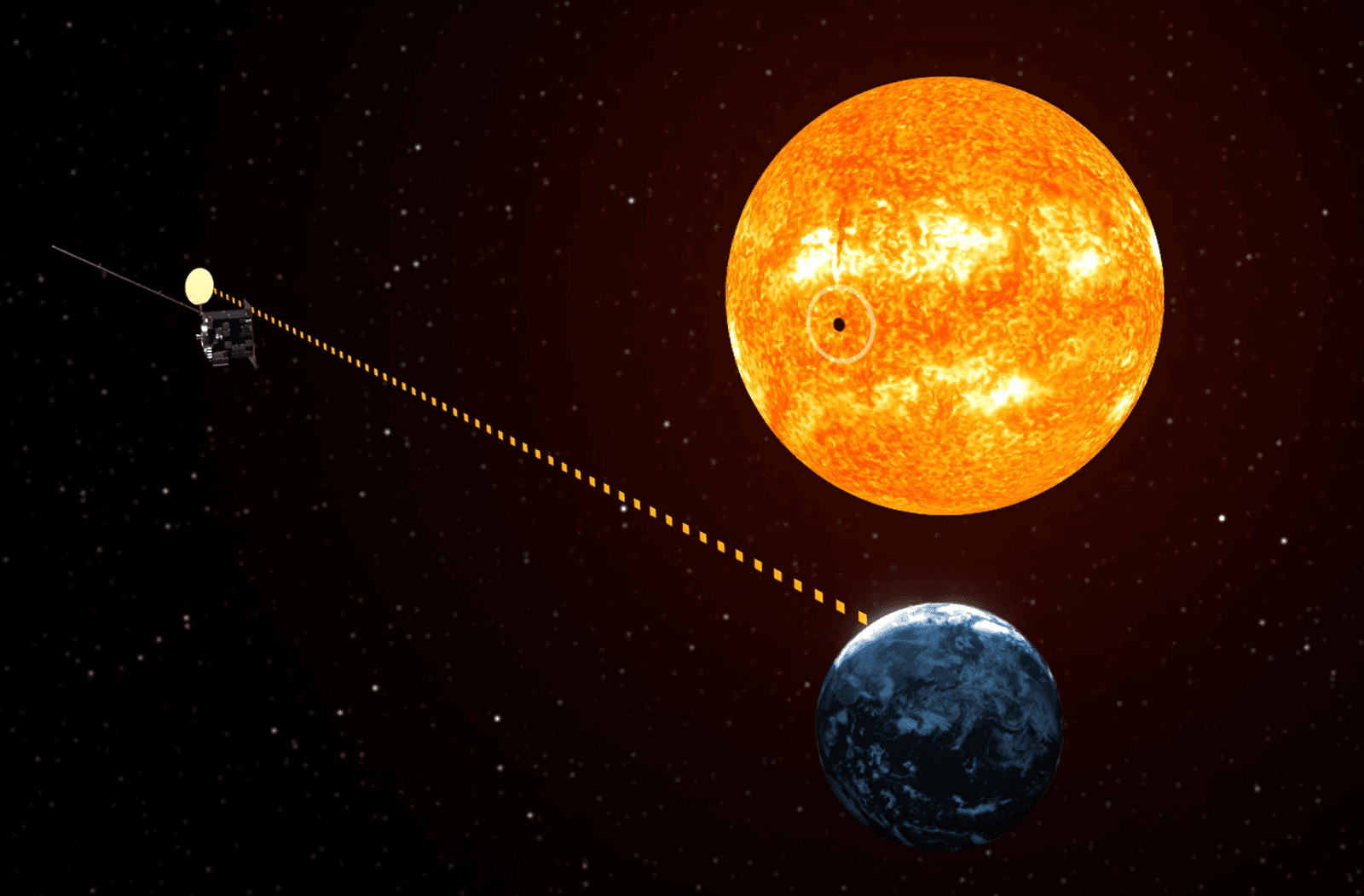
As weather forecasting is coming to rely increasingly on space-based data – and new data sources such as Europe’s August-launched Metop-SGA1 and Arctic weather satellites – satellite data is also being looked to for space weather forecasting.
Since the launch of the first satellite for monitoring the Sun, the joint US-Europe SOHO (Solar and Heliospheric Observatory) mission in 1995, a succession of satellites have followed over the years gathering data on different aspects of the Sun’s activity and its interaction with the Earth system – and with their number continuing unabated.
For example, in the US NASA’s two TRACER satellites were launched in July and its IMAP accompanied with the Carruthers Geocorona observatory and NOAA’s Space Weather Follow-On Lagrange 1 craft followed on September 24.
In Europe, the most recent launch was ESA’s Proba-3 pair of satellites in December 2024, with the Smile mission jointly with the Chinese Academy of Science due to follow in early 2026, the NanoMagSat constellation in 2027/2028 and the Vigil satellite in the second half of 2031.
Meanwhile, much effort is also being put into the analytical side with the data to improve understanding of the Earth-Sun interaction and ultimately to improve space weather forecasting and the early warning capabilities of space weather events.
In the Horizon 2020 supported PROGRESS (PRediction of Geospace Radiation Environment and Solar wind parameterS) and PAGER (Prediction of Adverse effects of Geomagnetic Storms and Energetic Radiation) projects, several new prediction tools were developed.
These are now being advanced further in the April 2025-launched FLAG project (Forecasts and Long-term probabilistic data Assimilative prediction of the effects of Geomagnetic storms), which is aimed at developing an operational early warning system for space weather events by 2027.
In April 2025, Fujitsu also launched a new space data research domain, focused on equipping satellites with AI to enable real-time transmission and utilisation of satellite imagery and enhancing the accuracy of space weather predictions.
In August IBM and NASA released an open source AI model named Surya on Hugging Face to predict solar weather and help protect critical technology.
Space weather event scenario
Why does space weather matter and why is so much effort being put into its monitoring and understanding?
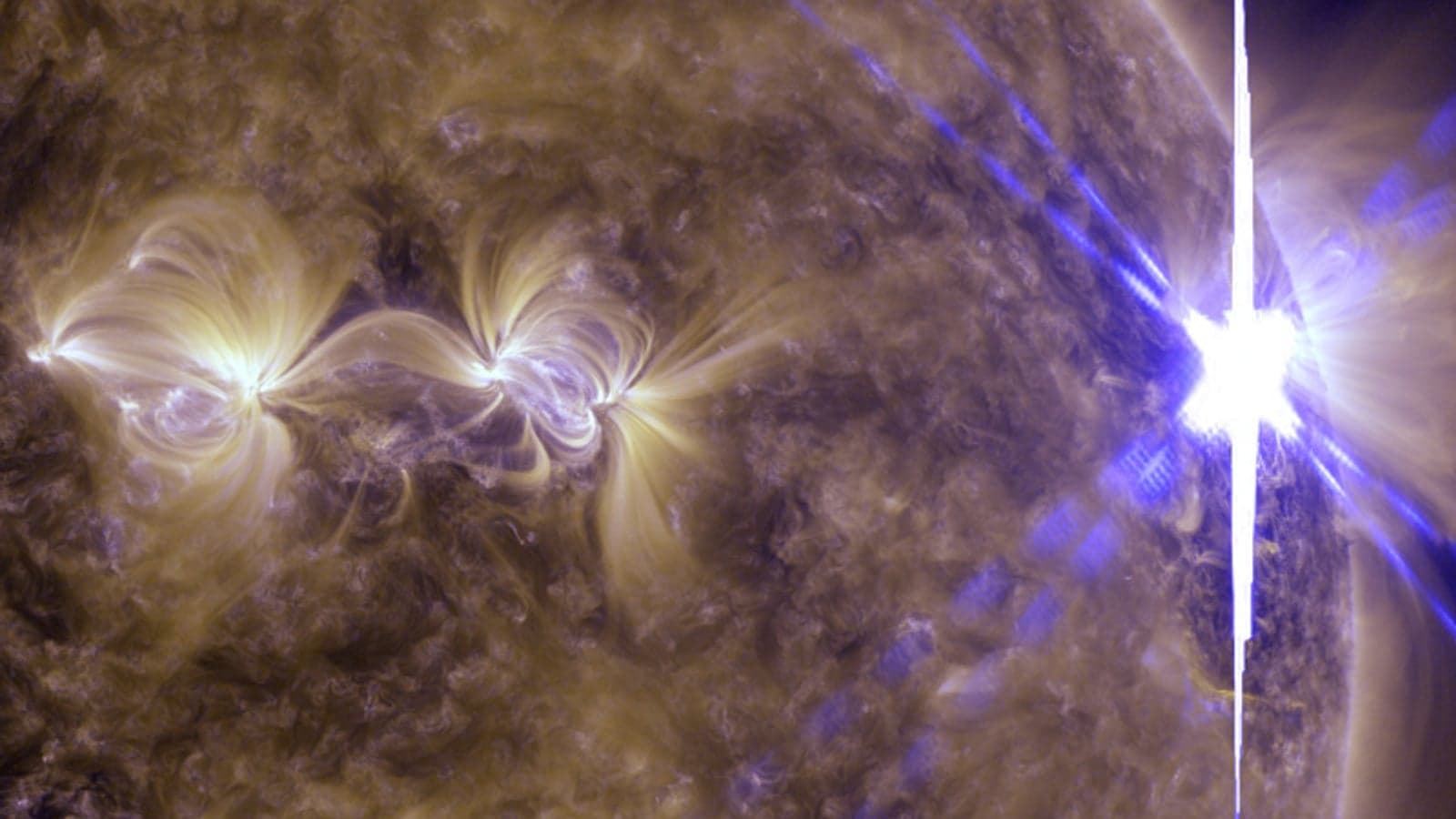
Space weather is caused by flares on the Sun or coronal mass ejections – particularly around the maximum of the 11-year solar cycle, as currently – in which charged particles are ejected into space and when they interact with the Earth’s magnetic field can create geomagnetic storms.
Visually these storms appear as aurorae but it is the invisible that can be so damaging. Lloyd’s, long standing insurers of the space industry, has developed a hypothetical scenario of how a large, rare solar storm on the scale of the 1859 Carrington event – the largest ever recorded – could unfold into a costly event.
The storm starts with solar scientists at an observatory seeing increased sunspot activity over a period of hours, highlighting a potential threat to Earth, and they start alerting governments and critical infrastructure operators.
High solar activity continues over hours, resulting in a release of energy that sees very large coronal mass ejections thrown out towards the Earth. For an hour, the Earth is hit with a Carrington-level storm and is followed by numerous substorms forming every few hours on the daylight side of the planet.
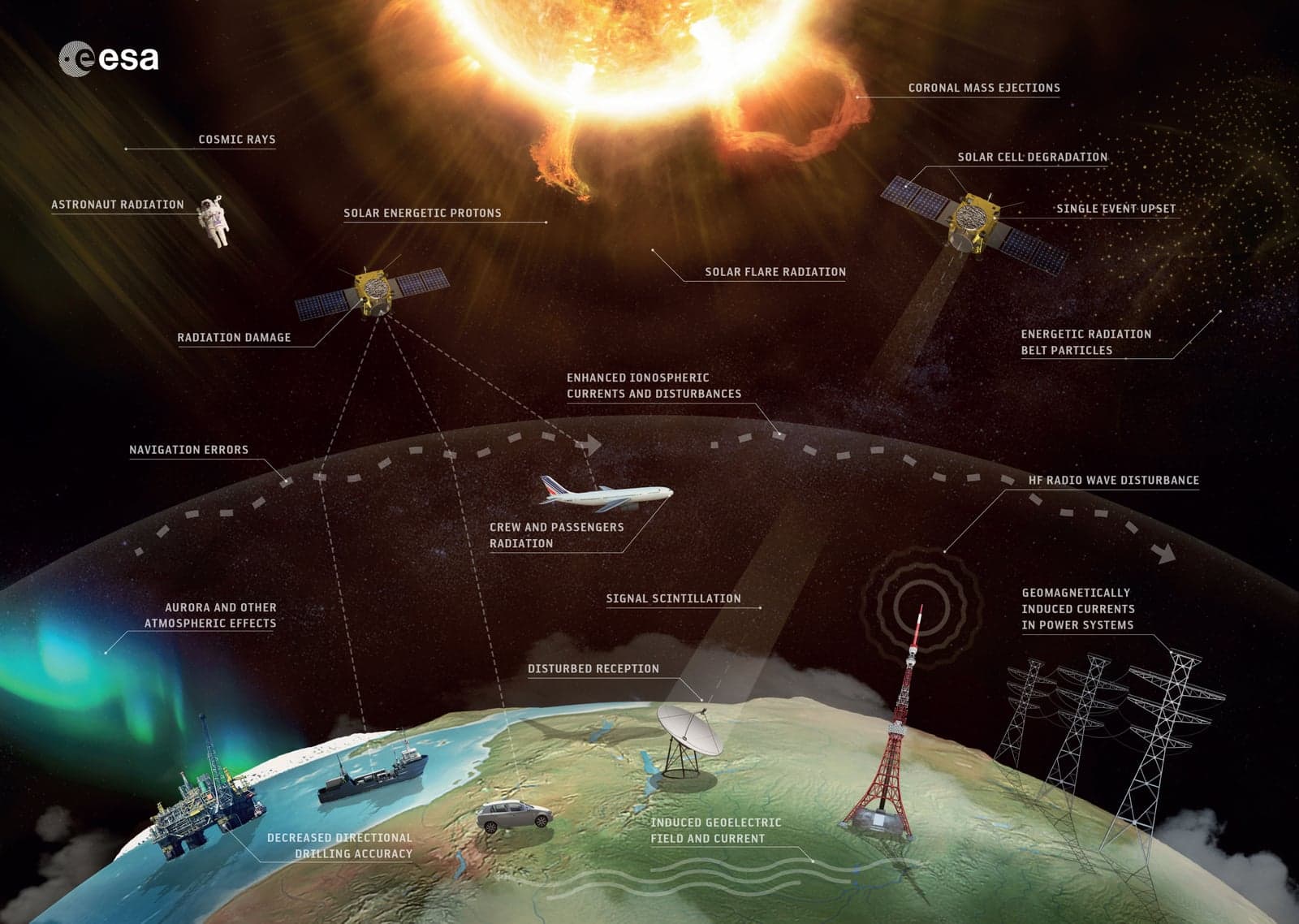
Over the next hours, the build-up of charged particles trapped within the Earth’s magnetic field causes signal scintillation, which inhibits communication signals from satellites – including those used for navigation – from reaching users on the ground.
Over a further period of hours, the geomagnetic storm induces high electric currents along electricity cables, while in space, the solar arrays that satellites rely on for power begin to degrade. Thanks to early mitigation actions taken, both satellites and energy grids largely weather the initial assault.
Eventually, over the following weeks, wiring and sensitive EHV components across the energy grid are damaged beyond repair, leaving the grid unable to take the heightened induced currents. Nodes collapse and remaining electrical assets fold under very large loads, resulting in cascading failure. This leads to power outages across whole regions and major industrial centres. In space, numerous satellites in geostationary orbit lose power or re-enter low Earth orbit, increasing their risk of collision.
With key satellite constellations failing and navigation interrupted, global aviation and shipping grind to a halt. Meanwhile, power surges across the grid cause cabling at industrial sites to overheat, igniting fires and forcing high demand on emergency services. Supply chains are unable to respond to the volume of repairs required, resulting in a sustained reduction in capacity, or even outages, across critical communication, navigation and power services potentially over months.
Putting a cost to this, Lloyd’s has estimated the global economy could be exposed to losses of $2.4 trillion over a five-year period, with the expected loss of $17 billion from the threat of a hypothetical solar storm.
North America is identified as the region likely to be most financially impacted by the scenario, suffering a potential economic loss of $755 billion over the modelled five year period, followed by Europe with a $697 billion hit.
Greater China and Asia Pacific have modelled impacts of $428 billion and $375 billion, respectively.
Mitigating actions
Coming down to the country level, a study for the British government from infrastructure engineering services company Starion and Northumbria University on the effects of severe space weather on the energy sector highlights that induced currents in the transmission network infrastructure remain the most likely impact.
The study finds that the consensus on an operational response is that rather than limiting the impact on assets by isolating parts of the network, as much generation capacity and connectivity across the network as possible should be engaged. This should increase the stability of the network while avoiding the flow of high induced currents through network pinch points.
However, the risk to generation transformers is identified as particularly pressing, not because they are any more likely to be damaged than grid transformers, but because there is a concern that generators may disconnect from the grid pre-emptively before a major geomagnetic storm, potentially exacerbating impacts.
The report recommends the installation of induced current blockers should be considered for safety-critical assets, such as nuclear power stations, and also there should be a coordinated response among generation asset operators and transmission and distribution network operators to maintain grid stability.
System operators are also recommended to incorporate the fragility of the international supply chain for grid transformers into assessments of transformer spare capacity and broader transmission network resilience to geomagnetically induced currents.
They also should increase the measurement of geomagnetically induced currents in strategic locations in the transmission network and continue risk assessments for each grid transformer and grid supply point across the transmission network.
In the UK, the socio-economic impacts of power outages are estimated to range from £5,000 to £40,000 ($6,800-54,000) per MWh of lost load but updated studies should be prioritised.
In addition to the grid, the report also notes the vulnerability of IoT device communication, as some of the frequencies used may be susceptible to radio noise from the Sun during solar radio bursts.
Future space-based solar could also be doubly impacted, from both the degradation of solar PV on satellites and the effects of ionospheric scintillation on the signals beaming the energy down to Earth.
How resilient is Europe’s energy system today? We’re gathering insights from across the sector, and we’d love your perspective! Take this short survey for a chance to win a €100 Amazon voucher.