Europe sees conventional power generation fall to record low in Q1
Power Engineering International
Posted on: 19 April 2023
Gas and coal-fired power generation in Europe plummeted to record low levels| generating 220.7TWh in the first three months of this year.
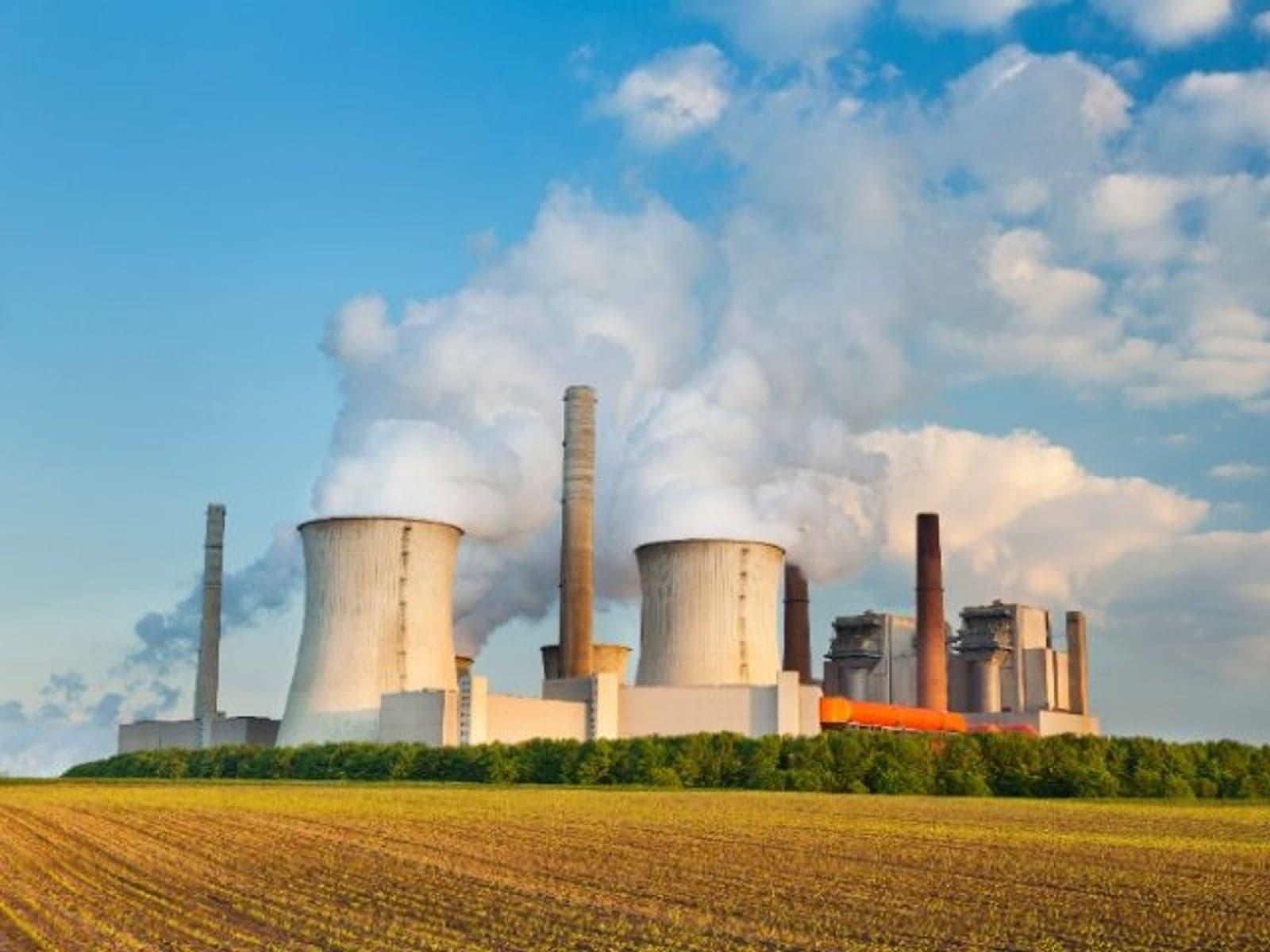
Gas and coal-fired power generation in Europe plummeted to record low levels in the first quarter of this year, generating 220.7TWh in the first three months.
This was the standout highlight from the latest report on the European energy market from data analyst EnAppSys.
The reduction was attributed largely to milder than usual winter weather, which led to a 5% drop in demand for power compared with Q1 2022, coupled with high prices suppressing demand.
Significant levels of wind generation were also a factor in keeping coal and gas-fired output low, which also meant that gas storage levels remained high during the quarter.
Prices for the benchmark TTF gas decreased throughout the quarter, falling from €74/MWh at the start of January to €47.30/MWh by the end of March.
Have you read?
Europe’s solar PPA prices drop for first time in two years
Undersubscribed renewable power auctions pose concerns in Europe
The first three months of the year also saw some of the French nuclear fleet return to service – although not at the rate originally anticipated under which nuclear availability was expected to reach a maximum of 50GW by the middle of Q1.
However, this schedule ended up being repeatedly pushed back due to several reasons, including the need for additional repairs and maintenance when stress corrosion cracking first appeared in several reactors last year, and strikes at EDF that led to widespread employee walkouts from nuclear power plants. Early in February, nuclear availability reached its highest level for the quarter (45GW) but then dropped to below 38GW for most of March.
The increased availability of its nuclear fleet meant that France was able to resume its position as a net exporter during Q1 2023 after having been a net importer of power during Q2, Q3 and Q4 of 2022.
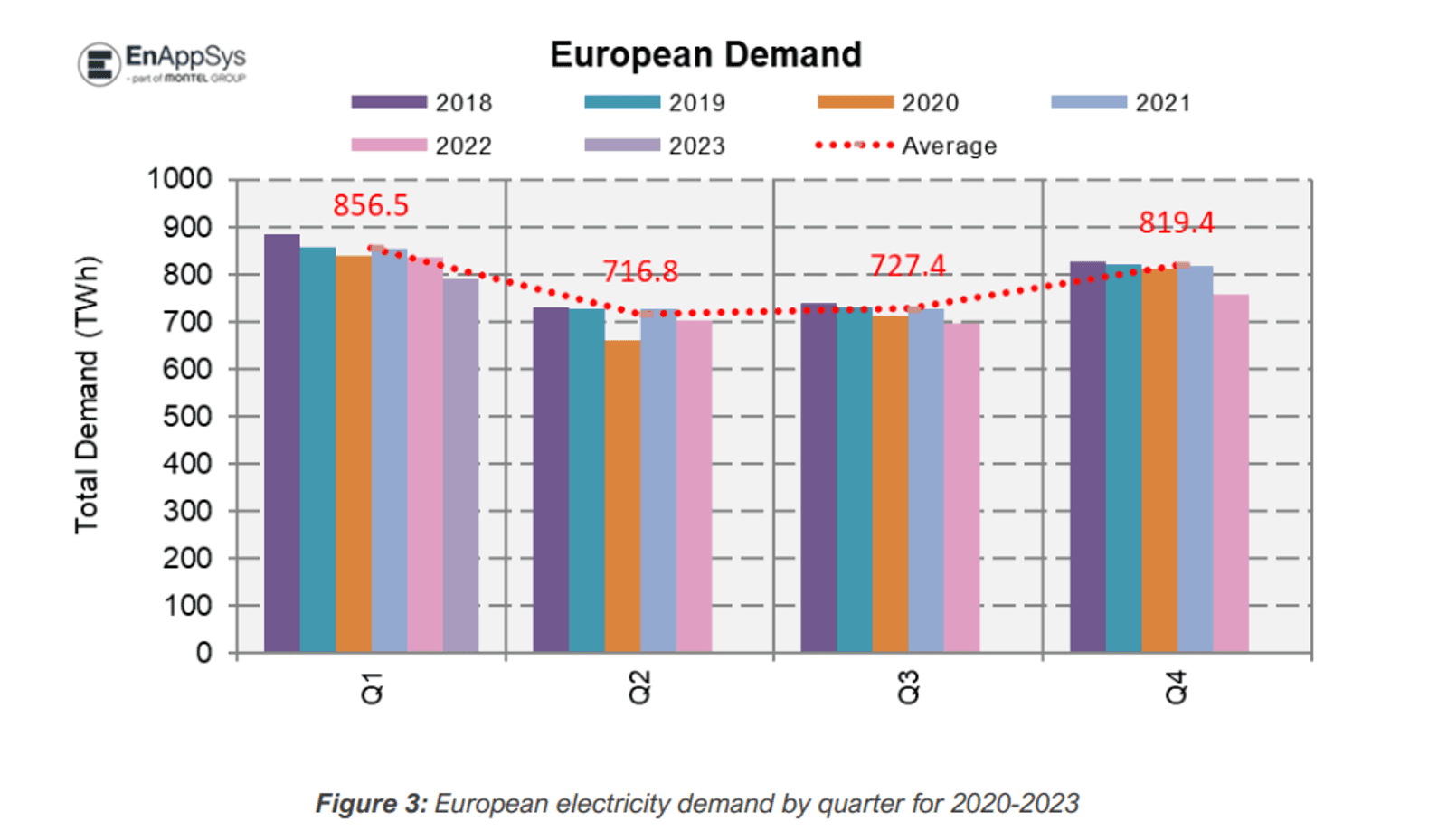
Jean-Paul Harreman, director of EnAppSys BV – which is part of the Montel Group – said: “Demand for power in Europe was lower than normal for the winter months because temperatures were generally higher this quarter than in recent Q1s. This led to the lowest conventional generation – including gas and coal-fired generation – of any quarter in recent years, paired with significant levels of wind generation. Total demand this quarter was only around 790TWh, a significant drop on levels seen in previous first quarters.
“European countries that rely on power exports from France will have been encouraged by the return to action of nuclear power plants in this country. While extreme market conditions resulted in France becoming a primary importer of power during long periods of 2022, this trend was reversed in the first three months of 2023 as the country was once again a net exporter of electricity.
“However, because France continues to import significant amounts of power from Belgium, Germany and Spain, net power exports from France were lower than in the quarters preceding Q2 2022.”
Britain becomes net importer
Britain returned to a position of being a net importer of power during the first three months of this year.
High volumes of imports from France and Norway were largely responsible for Britain once again becoming a net importer of electricity, after predominantly exporting during Q3 and Q4 last year during a period of French nuclear outages and a European drought.
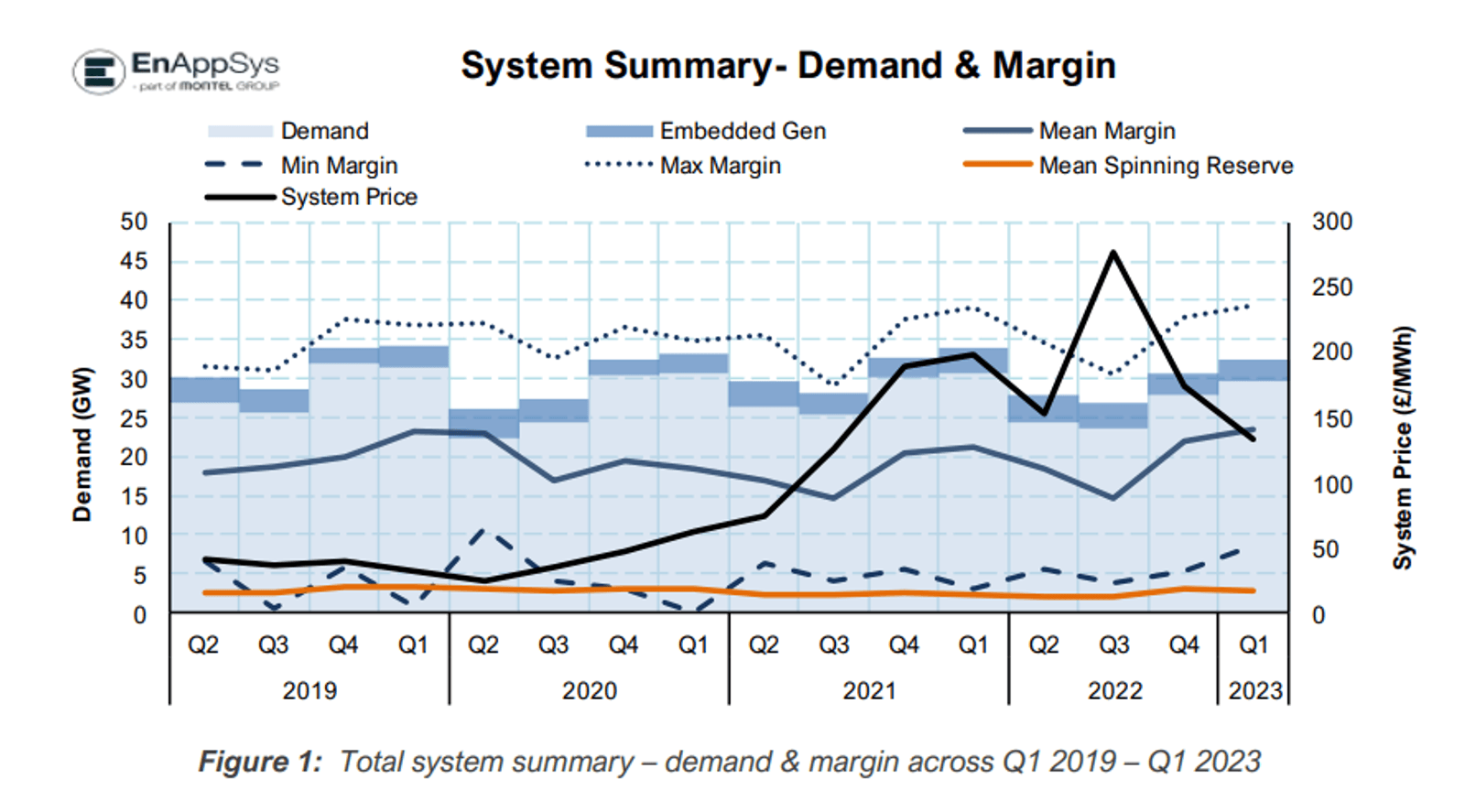
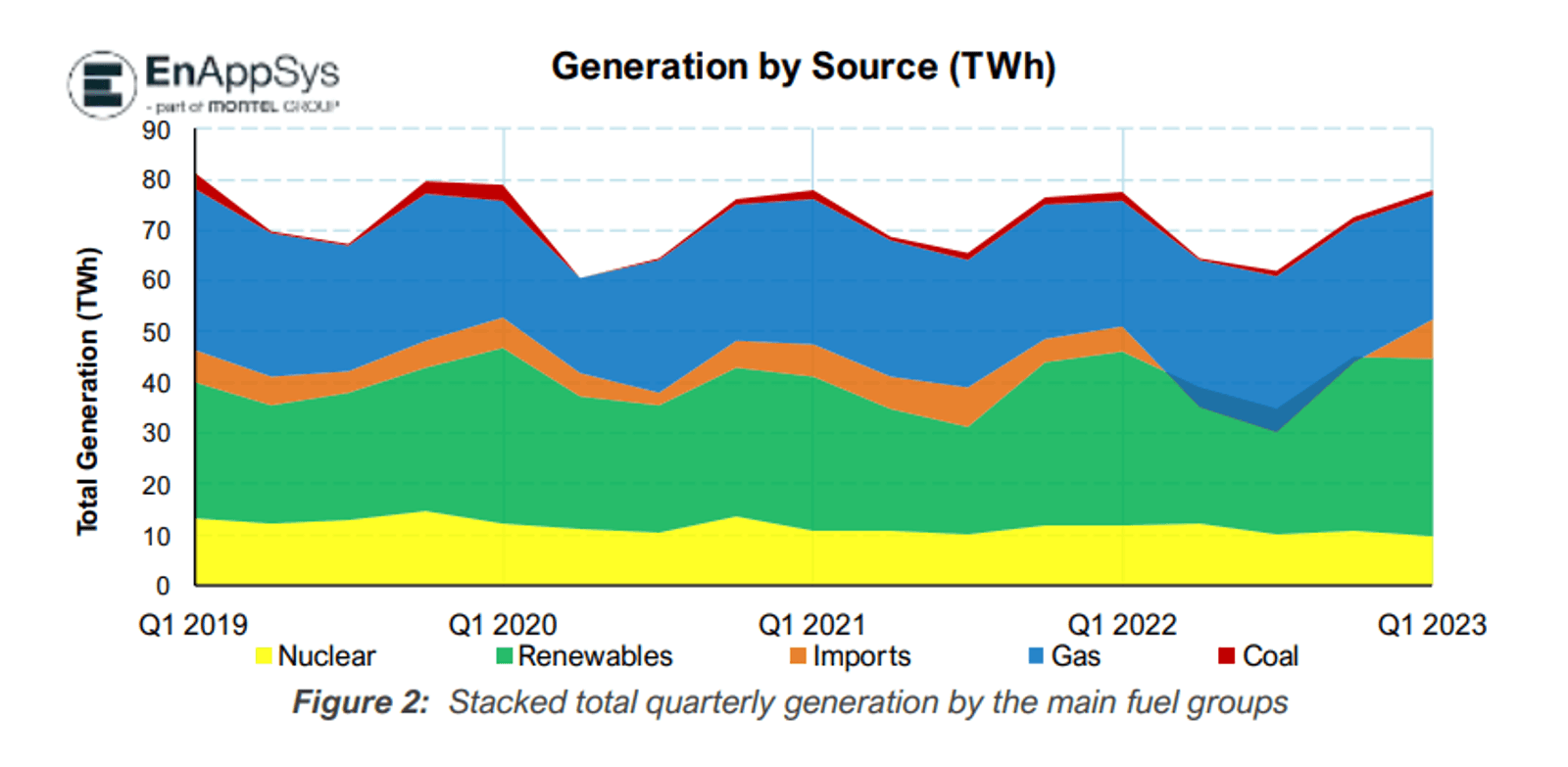
Britain imported 7.25TWh of power from the continent during Q1 of this year, which accounted for 9.7% of the total generation mix.
Mild weather during the first quarter of this year led to lower demand for power which, along with high volumes of wind generation (24TWh across the quarter), meant that conventional generation occupied a smaller share of the fuel mix than in any other Q1 on record. Gas-fired and coal-fired output had a combined share of 32.7% of total GB generation, while gas storage stocks remained at high levels throughout the quarter.
Although wind was the primary source of renewables generation in Q1 2023, other sources of renewable generation were relatively low, with solar generation (1.69TWh) lower than in any first quarter since Q1 2021 and nuclear output (9.21TWh) dropping below 10TWh for the first time. Hydro generation (1.84TWh) equalled levels seen in Q1 2022 and was marginally higher than in Q1 2021.
Renewables generation (wind, biomass, solar and hydro) was the largest contributor to the GB power generation mix during the quarter, accounting for 45.1% of total output. Gas-fired generation made up 31.5% of the total, with nuclear (12.4%), imports (9.7%) and coal (1.2%) accounting for the rest.
Another notable feature in Q1 was National Grid ESO’s implementation of additional measures in the system to ensure security of supply. These were the Demand Flexibility Service (DFS) and the Winter Contingency Contracts for several coal units.
Both measures were activated infrequently. The DFS was activated on two days in late January, while West Burton 1 and 2 were utilised for several hours on March 7 under their Winter Contingency Contracts, each reaching a peak output of 250MW. System imbalance prices peaked at £1,950/MWh at 18:00 that day, the highest system price seen in GB since January 2022.