Renewables + energy efficiency + demand response = the new transition equation
Guest/partner contributor
Posted on: 14 November 2022
Experts of the International Renewable Energy Agency discuss the role of renewables to solve the energy crisis in Europe.
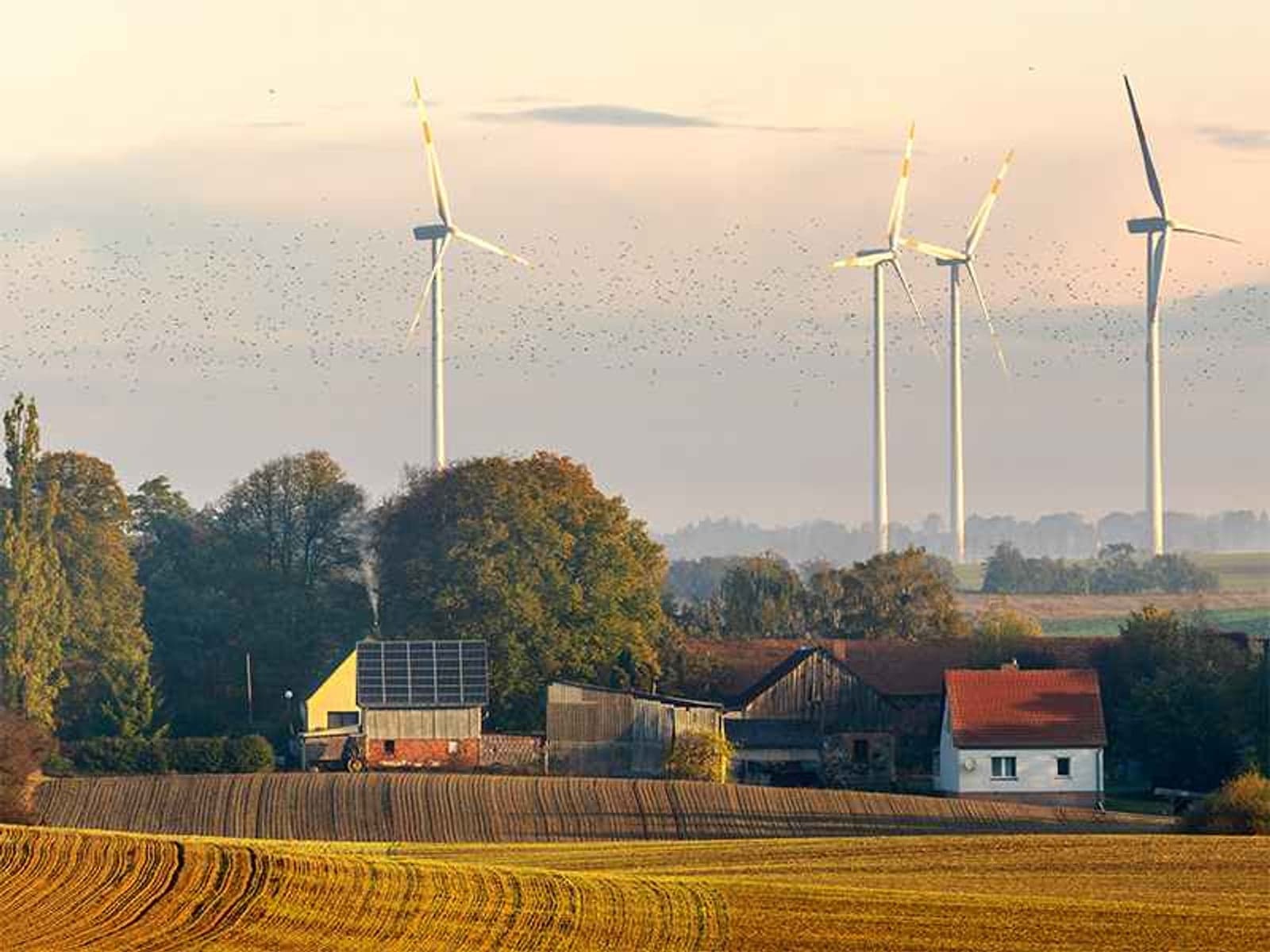
Experts of the International Renewable Energy Agency discuss the lessons learned from the energy crisis in Europe and offer both short- and long-term solutions.
Europe is experiencing an unprecedented energy crisis. The coming winter is highly uncertain and increasingly there is talk that the crisis may last several years.
This situation is exacerbated by additional problems. Power generation in France is experiencing problems with half the nuclear reactors out of operation in the second largest national power market in Europe.
Exceptional drought has severely affected hydropower generation and it has also affected the operation of inland nuclear and fossil thermal plant with river water cooling.
Also, the cost of landed thermal coal in Europe rose with futures for the coming year between 300 and 350 per tonne. All these developments result in a gas dependency.

This article was originally published in The Guide 2022-2023,
our exclusive, annual print magazine.
Read more articles from the magazine.
Rising wholesale prices are belatedly translated into rising consumer prices. But the gradual doubling or even tripling of consumer prices burdens households with an energy bill that rises by thousands of euros per year.
As a consequence, many poorer households face a crisis situation. This has raised concerns regarding an autumn and winter of discontent and therefore changes to pricing mechanisms are being considered as well as subsidies and energy price rebates.
This complex set of factors has affected power markets profoundly. In the year 2022 till mid-August, EU27+UK electricity demand has decreased by 9%, nuclear generation was down by a whopping 17.5%, gas generation decreased by 12.7% and coal generation was up by 9.5%, compared to the previous year.
The high gas price has resulted in a re-orientation towards coal power.
Renewable power was down by 8% in absolute terms, but it increased its share to 41%. Notably solar and wind generation increased. For example, in Germany, more than half of all electricity generated in H1 was from renewable sources due to favourable wind conditions.
Renewable energy for security
Europe must build a more robust energy system, less vulnerable to supply disruptions. It is first of all important to identify the root cause of the problem. Today’s crisis illustrates how fossil and nuclear energy are not as affordable and reliable as their proponents would like to portray them.
Meanwhile, domestic renewables, with cost structures fixed and predictable at the time of investment, and with close to zero marginal cost, are contributing to support supply and contain the price shock.
Clearly, a new concept of reliability and supply risk is needed. It is also clear that higher shares of renewable energy not only reduce supply risks, they also reduce CO2 emissions. So this poses a win-win situation.
Investments in renewables are paying huge dividends in 2022, in financial and in energy security terms. IRENA estimates that globally, new renewable capacity added in 2021 could save $55 billion this year alone, given the fossil fuel price crisis.
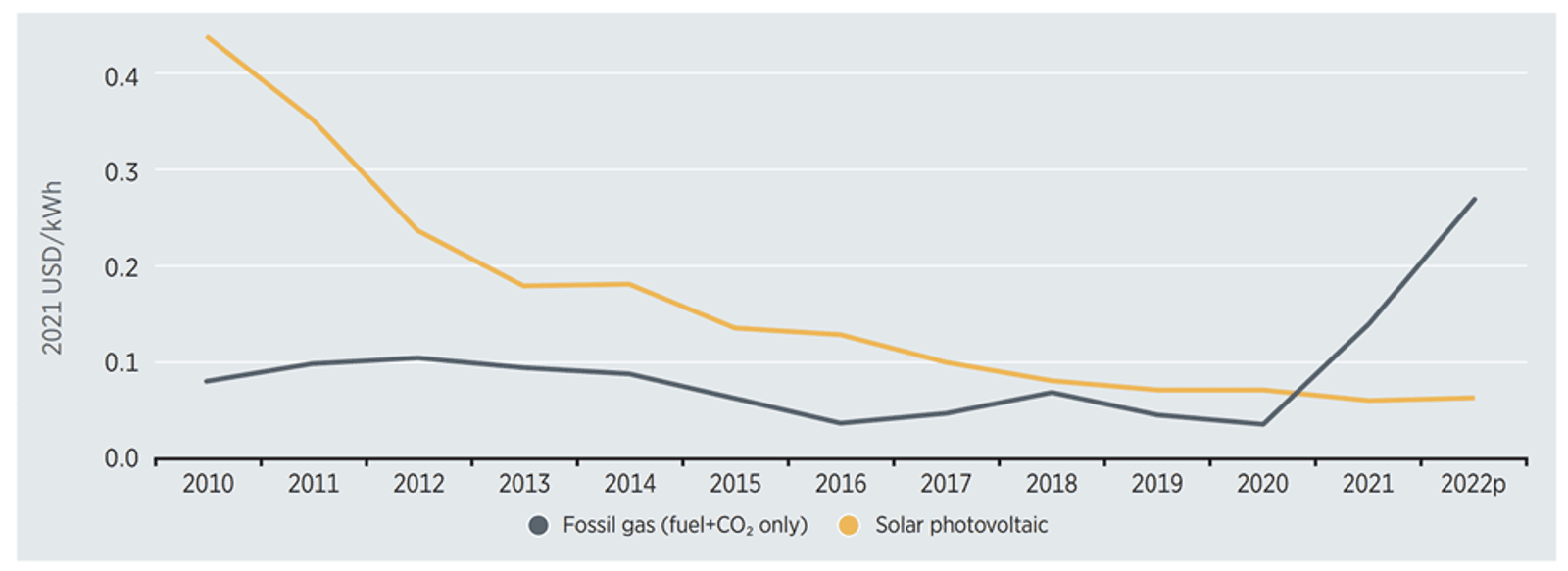
The lessons from this energy crisis in Europe are clear:
- We need to rapidly increase renewable energy production;
- Promote true accounting and awareness of the costs of fossil fuel price volatility and the environmental impacts of its use;
- Reduce gas demand through the electrification of heating and building renovations; and
- Design robust policies to support the use of green gases.
The role of renewables to solve the energy crisis
Renewable capacity expansion rates in Europe are behind what is needed for a Paris-compatible decarbonisation of the energy system. The current crisis adds urgency to accelerate deployment. The EU hopes that renewables can replace as much as 20BCM of gas this year in the power sector.
This would require around 100GW additional capacity, nearly a tripling compared to 37GW solar and wind added in 2021. Given that much of this replaced gas capacity will be from such variable renewable sources, power systems’ flexibility is also a key priority.
The European solar industry calls for on average 90GW/yr of new solar PV between now and 2030 (more than a tripling from 2021 levels), and the wind industry calls for nearly a tripling of capacity additions to 27GW per year.
One key problem is the slow permitting of new renewables capacity. Streamlined permitting processes will be key to accelerating deployment to the required pace. Also, grid integration is hampered by regulatory constraints.
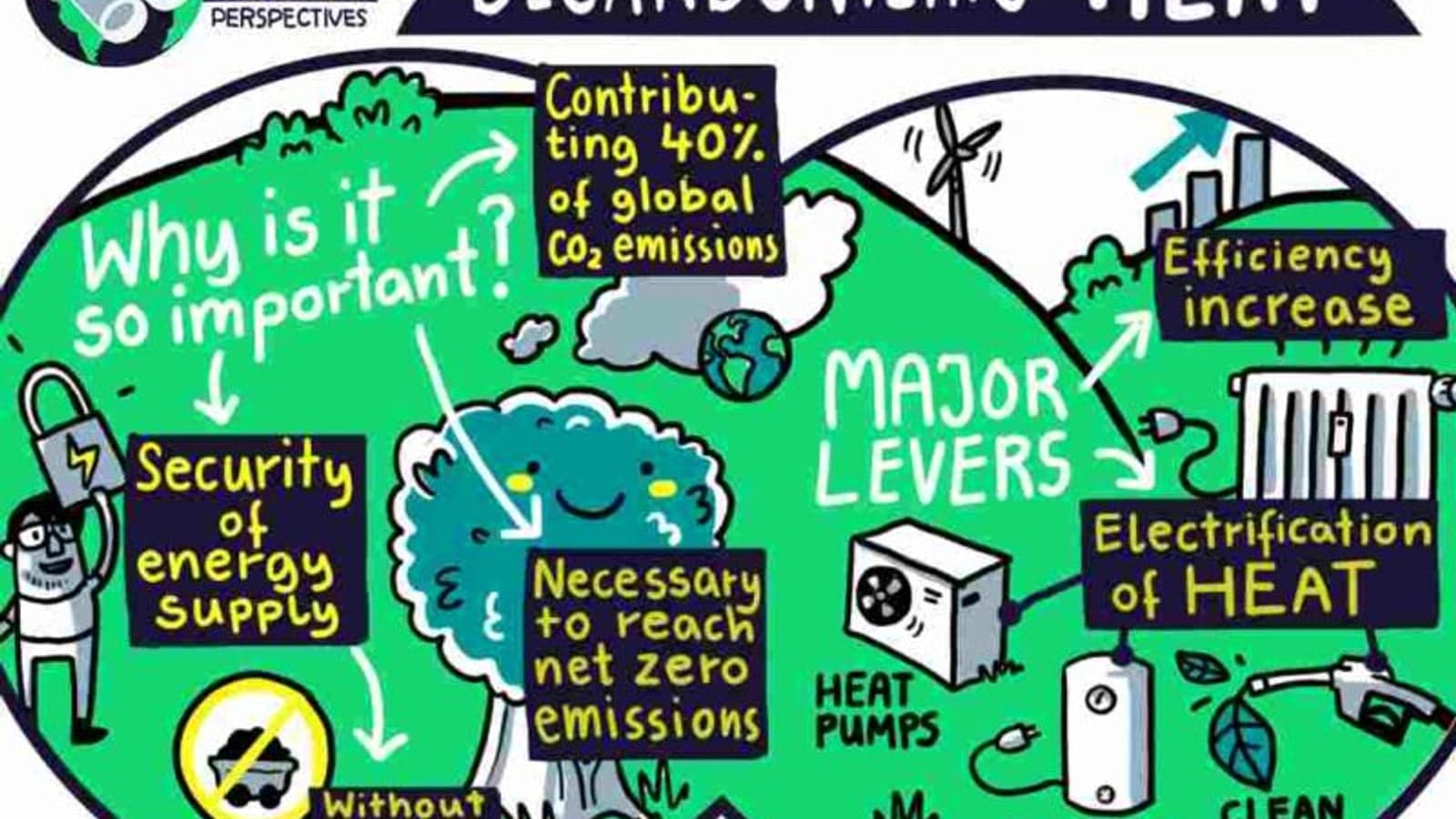
Direct electrification of heat demand is a priority to avoid similar crises in the future. Heat accounts for more than half of natural gas consumption in Europe, and a large fraction of this heat demand can be met with electric heat pumps, which are a proven technology, including for large district heating systems and low to medium temperature industrial applications.
Production and installation of heat pumps is currently expanding fast in several European markets, and its contribution to gas demand reduction will grow in the years to come.
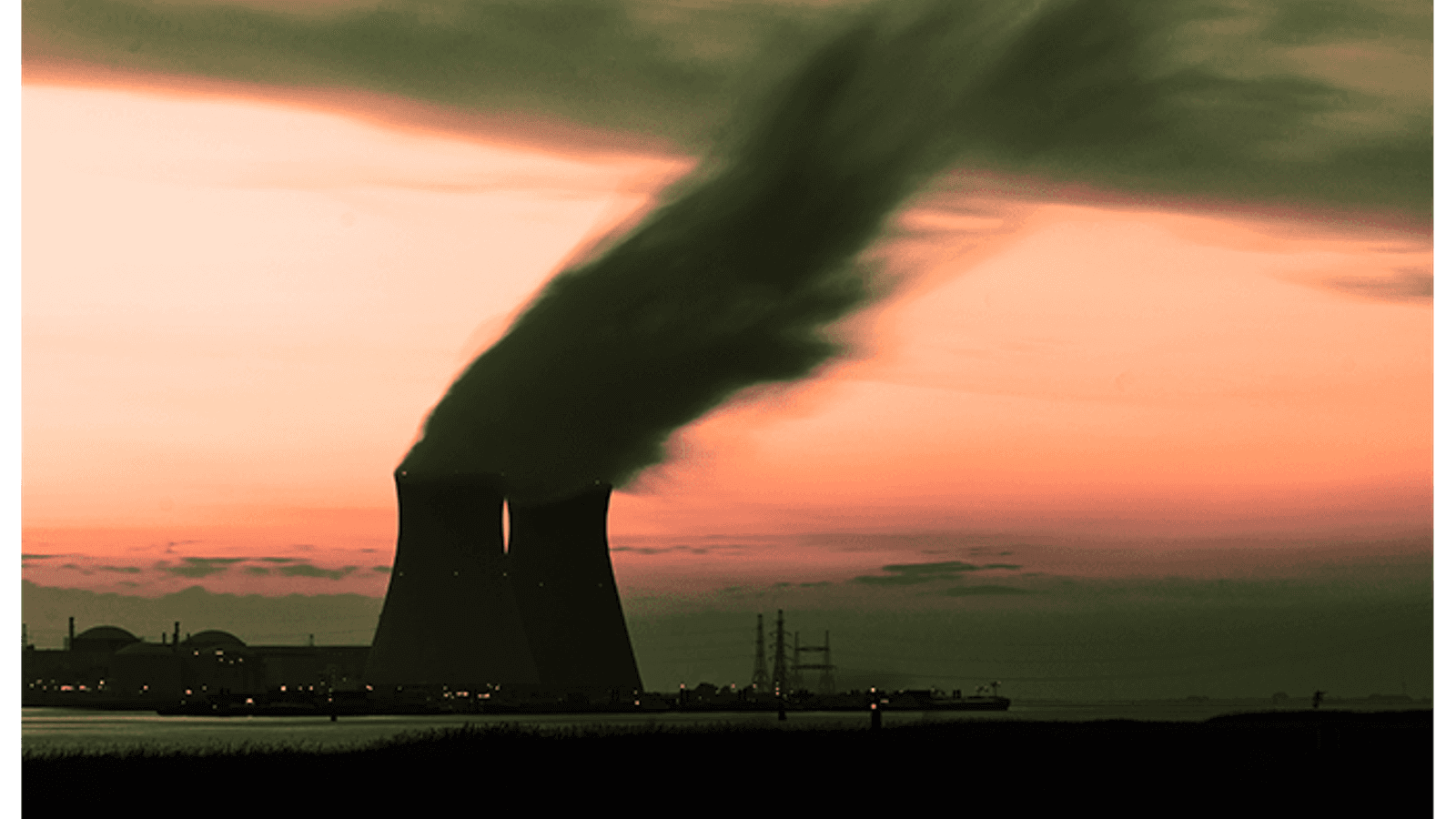
The energy crisis has led to new calls for nuclear. In fact, nuclear is part of the root cause of Europe’s energy problems today.
New nuclear takes decades to build, and it is more expensive than a renewables based power system, a recent study concludes. However, France has announced new nuclear capacity and other European countries are considering this option.
The role of green gasses
Various analyses have assessed the potential of green gases in Europe. Biogas and biomethane already account for 4.6% of gas supply. Expansion to 35BCM is foreseen for 2030.
The number of biomethane plants grew substantially in 2021, with more than 1,000 plants in operation.
The European Commission plans to foresee 20 million tonnes of green hydrogen production and imports by 2030, the equivalent of 85BCM natural gas.
To put that ambitious objective into perspective, this will require 200GW of electrolyser capacity and 400GW of solar and wind generation capacity: at present there is only 0.5GW of new electrolysers – installed in 2021 – worldwide.
Have we underestimated demand response?
European gas demand has remained resilient through 2021 despite record high spot prices, showing limits to demand-side response.
Western European demand is expected to fall by around 4.5% this year, partly driven by reduced burning of gas in the power sector which could fall by 6% from 2021, the IEA said in its quarterly gas market report.
That may be an overly conservative estimate. For example in the Netherlands gas demand in the first six months of this year was 25% lower than the previous year.
That’s already a significant impact but because of the delay in consumer price increases, the demand response is delayed. In some European countries changes in wholesale prices are reflected almost immediately in retail prices whereas in others it takes up to two years.
In the residential sector, reliance on gas could be reduced by 14BCM if all households turned down their thermostat by 1°C. It remains to be seen if voluntary measures yield significant savings.
Also energy substitution at consumer level can play an important role. And solar water heaters can save gas. Much more is possible longer term but new customers are currently facing long waiting times as equipment and installers are scarce.
The revision of the Energy Performance of Buildings Directive, a key part of energy transition and a key option to reduce natural gas dependency, faces similar constraints. It’s critical to accelerate on all these aspects but they will not solve the short-term gas dependency issues.
Accelerating building renovation including fuel switching demands higher priority.
Have you read?
IRENA’s Francesco La Camera spotlights next steps for climate action after COP26
Digging deep to fuel Europe’s energy transition
Cryptocurrency mining and renewable energy: Friend or foe?
Don't stall the transition
The Ukraine crisis has brought renewed and urgent attention to the issue of energy supply security in Europe.
The pressing need to reduce import dependency of key carriers such as natural gas and oil has reopened a public debate about European energy policy priorities.
Further diversification of fossil energy sources can improve energy security in the short to medium term.
Temporary increase of indigenous natural gas production – for example in the Netherlands – is being explored, as well as more LNG flows and import terminals.
It is critical that such new sourcing and infrastructure is developed in a way that it does not create stranded assets or delays in the energy transition.
Diversification of fossil sources does not solve import dependency, nor does it address fundamental long-term energy and climate challenges for Europe.
A strategy based on renewable energy supply, with a decisive push towards electrification of end-use sectors and energy efficiency, can deliver the bulk of the emission reductions needed to combat climate change in the medium and long term.
Europe has vast renewables potential which can supply the bulk of its energy needs in a fully decarbonised energy system.
The current crisis brings additional arguments to accelerate the efforts to pursue such a sustainable energy system with renewables at the core, as a priority.
Governments must take account of the true cost of energy and consider the opportunities that renewable energy offers us to future-proof our economies and insulate them from the volatility and insidious long-term costs of fossil fuels.
But it will take time to develop the renewables capacity. In the meantime, energy efficiency and demand reduction may play a greater role than anticipated.
ABOUT THE AUTHORS

Francisco Boshell is a Renewable Energy Markets and Standards Analyst at IRENA.

Luis Janeiro is Programme Officer at IRENA’s Innovation and Technology Centre.

Dolf Gielen was Director of IRENA’s Innovation and Technology Centre a the time of writing and is now working for the World Bank.
Most popular
Join the community for freeAnd get access to all content
Related companies
International Renewable Energy Agency (IRENA)
Latest content
+1
Is the energy transition immune to Covid?
Advances in low carbon technology, shifting consumer preferences, shareholder scrutiny and government policies will see the energy transition continue post-coronavirus, argues Georgina Hayden, energy consultant and co-founder of research and analysis firm, North Shore Analysis.
- Guest/partner contributor
- 25/01/2021