From waste to wealth: The multi-billion-dollar carbon removals market
Guest/partner contributor
Posted on: 4 February 2025
The carbon market is expected to grow rapidly in the next five years – and with it| the investment opportunity for engineered carbon removals.
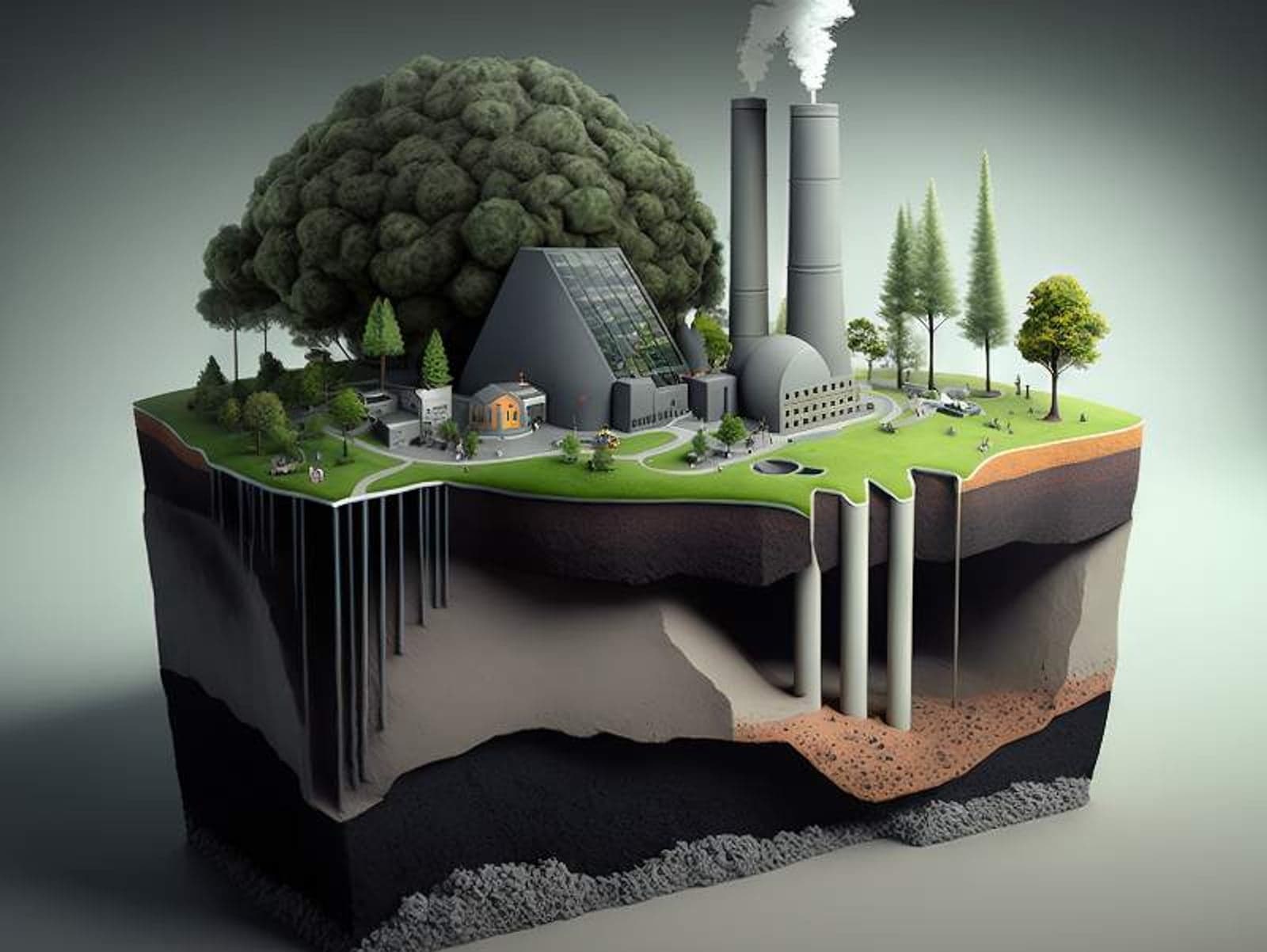
As the pressure mounts for businesses to decarbonise, the carbon market is expected to grow rapidly in the next five years – and with it, the investment opportunity for engineered carbon removals.
By Elliot Renton, chief financial officer, Evero Energy
Just last year there was a 65% year-on-year increase in the number of businesses setting climate targets validated by the Science Based Targets initiative. With many more businesses expected to rely on carbon removals to achieve net zero, forecasts suggest the carbon removal market could grow to $1.2 trillion by 2050, according to McKinsey.
More striking still, those forecasts predict that the value of the carbon removals portion of the market could match or even outstrip that of carbon offsets in the next five years.
This is because carbon removals result in a direct decrease in atmospheric carbon, while offsets only avoid further emissions. Early adopters like Google have abandoned carbon offsets, and switched their investment into removals.
Buying carbon removals is increasingly attractive to those companies in ‘hard to abate’ industries such as data centres, shipping and aviation in which it is often costly or technically difficult to decarbonise operations.
Notably, Microsoft and Airbus are two of the largest offtakers of carbon removals globally buying into projects such as bioenergy carbon capture and storage (BECCS) and direct air capture.
Have you read?
Rio Tinto and Hydro evaluate carbon capture for aluminium smelters
Carbon capture project resumes at waste-to-energy plant in Oslo
Setting up carbon credits for success
Understanding the transformative potential of carbon credits and the need for greater transparency and regulation within the market to attract investors and participants, this year’s COP29 delegates agreed how carbon credits should be created, traded and registered. From next year, businesses will be able to offer carbon credits backed by the credibility of an internationally agreed standard.
Separately, the UK government intends to offer revenue support to spur market growth by extending the Contract for Difference (CfD) scheme to incorporate greenhouse gas removals. This would create investor certainty using the same pioneering scheme that has successfully brought forward over 9GW in renewable generation with a further 20GW under construction or in planning.
While the business model is currently in detailed design, the government has already confirmed that CfD contract durations will be for 15-year terms.
Taken together, these actions are helping to derisk investment in carbon removals so that large-scale projects such as bioenergy carbon capture and storage (BECCS) can be constructed to meet demand.
Carbon capture and storage is progressing at pace
Carbon capture and storage involves the capture of CO2 emissions from industrial processes, such as steel and cement production, or from power generation such as waste to energy (including bioenergy), and fossil fuels.
This CO2 is then transported from where it was produced and stored deep underground. In some cases, it can also be used as a feedstock for producing materials used to carbonate drinks, or processed into a chemical or sustainable fuel, to name just a few.
It is often mistakenly believed that carbon capture technologies are new or there is little expertise in the field. Oil companies have been capturing carbon and injecting it into oil reservoirs to improve production yields for around half a century.
Also of interest:
GHG emissions scopes and the need for effective carbon accounting
How carbon capture tech can boost Europe’s industrial competitiveness
With a vast amount of existing expertise and capability to tap into from a catalogue of previous studies, for an experienced team, delivering a CCS project is not any more complicated or higher risk than any other infrastructure asset. Indeed, there are already 45 commercial facilities operating globally and the UK has over 90 CCS projects in the pipeline.
CCS will play a critical role in tackling climate change, creating jobs and boosting economic growth. This has led the UK government to make big commitments to the technology this year; in October £21.7 billion in funding over 25 years was committed to make the UK an early leader in CCS and hydrogen.
This was followed in December with contracts signed to begin construction of the UK’s first CCUS scheme in Teesside, the East Coast Cluster. The UK’s second most advanced scheme, of which Evero’s first CCS plant will connect to – Hynet in Cheshire – is expected to follow in its footsteps in early 2025.
Carbon reductions versus carbon removals
As more CCS projects come forward, there will be an important distinction to be made between those that only offset carbon and those that remove it.
When applied to a fossil fuel plant, CCS simply stops carbon from being emitted into the atmosphere – in other words a carbon offset. However, when applied to a waste wood to energy plant (also known as BECCS) it permanently removes carbon from the atmosphere.
This is because as a tree grows it removes carbon dioxide from the atmosphere, when it is burned to generate electricity the CCS plant captures the embedded carbon from the flue gas; once the carbon is stripped from the flue gas and stored it creates a carbon removal.
The choice of fuel source is important too.
Wherever possible, waste wood should always be reused or recycled to maximise its monetary value and reduce its carbon and ecological footprint before being burnt to generate electricity. The life of a kitchen cupboard is a prime example. Typically made from plyboard or MDF, kitchen cabinets are made from recycled materials which are too brittle to be processed again. With over a million kitchens replaced every year in the UK, hundreds of thousands of tonnes of waste wood are created that has no other value or use to society.
While previously this waste wood would have been landfilled, as the UK moves to eliminate almost all biodegradable waste from landfill by 2028, finding sustainable methods of disposal has become increasingly important.
This has led to the construction of several waste wood to energy plants (also sometimes referred to as bioenergy plants) that use the waste wood as a fuel source to produce renewable electricity.
As an example, across its portfolio of assets, Evero Energy diverts around 380,000 tonnes of locally sourced waste wood from landfill to generate renewable electricity for over 125,000 homes annually.
With stable, high quality cash flows underpinned by government subsidies, long-term power purchase agreements and fuel contracts, it is an infrastructure asset that performs well. And it also makes these plants ideal candidates for installing carbon capture and storage onto, with the sale of carbon removals credits poised to unlock a substantial new revenue stream.
Indeed, the UK already has several such sites investigating or in the pre-FEED or FEED stages of applying CCS.
Many more opportunities to be explored
While accessing the carbon removals market is a sizeable opportunity alone, it is the tip of a much larger iceberg of potential.
In the future, waste wood could be turned into sustainable fuel for ships transporting food and goods into the country or to fuel the plane you take on holiday.
New use cases for CO2 and waste wood are being developed all the time. Just before Christmas, German scientists announced that they had developed a biotechnological process that converts waste wood into biohydrogen, which could be used to power local industry.
Meanwhile e-methanol can already be produced by blending CO2 and hydrogen.
Altogether applying CCS to waste wood to energy represents a multifaceted opportunity that is well supported by the UK government and by market dynamics. Applying CCS to existing successful infrastructure assets is low risk, and opens the door to a multitude of future opportunities.