Germany’s net-zero future needs 41TWh hydrogen storage capacity says study
Yusuf Latief
Posted on: 5 July 2022
To store sufficient amounts of energy to achieve GHG neutrality, Germany needs 41TWh of hydrogen storage facilities, a new study finds.
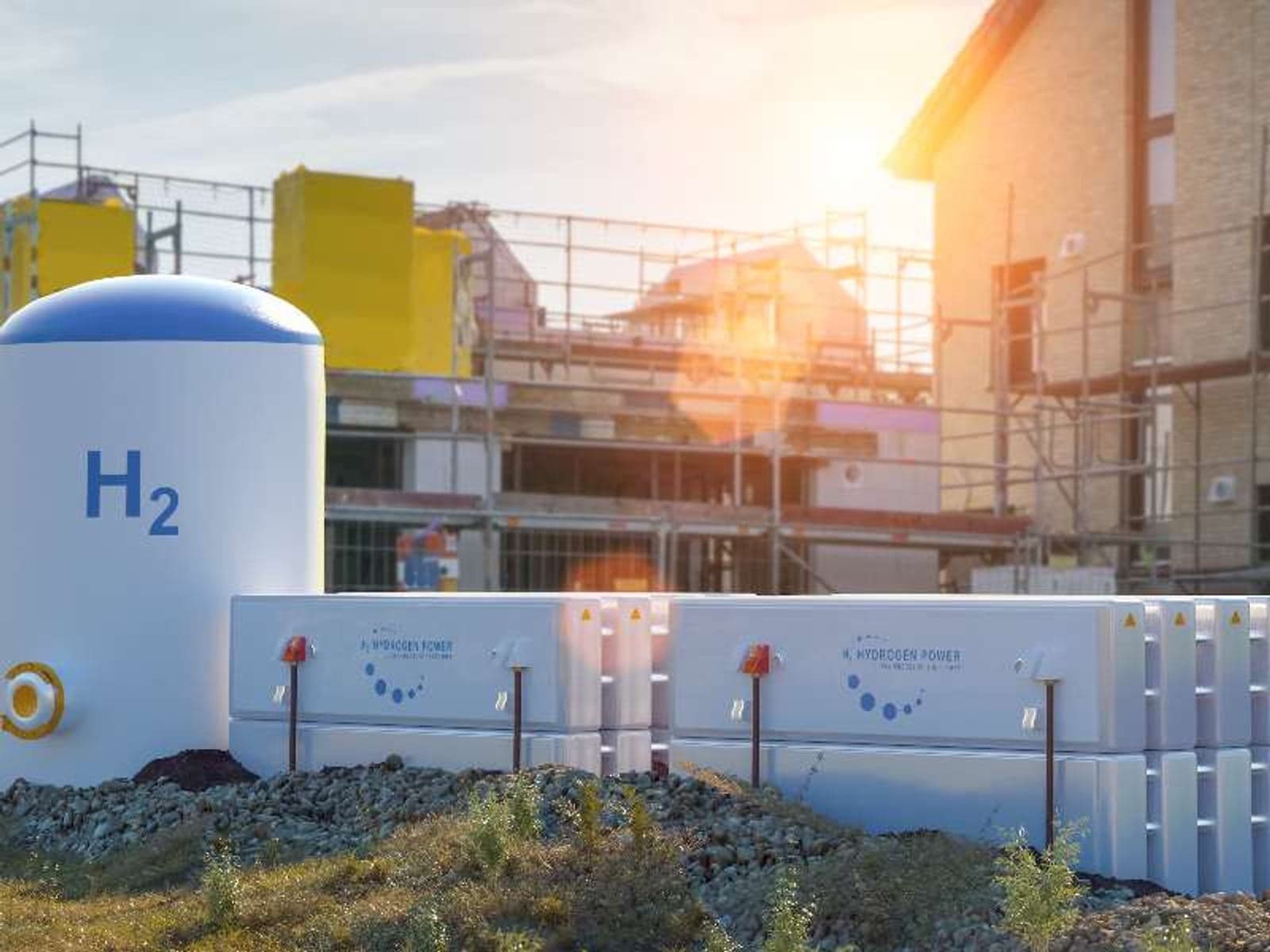
For Germany to be able to store sufficient amounts of energy to achieve greenhouse gas neutrality, additional hydrogen storage facilities with a capacity of up to 41TWh must be built, a new study finds.
The Federal Association for Natural Gas, Oil and Geoenergy eV (BVEG), the German Technical and Scientific Association for Gas and Water (DVGW) and the Energy Storage Initiative (INES) conducted the techno-economic study.
Storing Hydrogen – that’s for certain examined the potential of storing hydrogen in gas storage tanks in Germany.
According to INES, hydrogen offers the possibility of storing electricity from volatile renewable energies and making it available again as required. Current gas storage facilities can be converted and used to store around 32TWh of hydrogen.
The study finds, however, that to store sufficient amounts of energy to achieve greenhouse gas neutrality, additional hydrogen storage facilities with a capacity of up to 41TWh must be built.
Have you read:
Why long duration storage could be the solution to the energy crisis
How hydrogen can help decarbonise the UK’s energy system
“The study illustrates that an integral transformation must be initiated for the entire hydrogen value chain in order to achieve greenhouse gas neutrality in a timely manner. Both gas networks and storage facilities are required for the energy transition in order to store energy in the form of hydrogen, to transport it and to make it available to all sectors if required," says Frank Gröschl, head of technology and innovation management at DVGW, classifying the results.
INES managing director Sebastian Bleschke added: "In order to implement the energy transition according to the long-term scenarios of the BMWK, we not only need all the potential of today's gas storage facilities for the future storage of hydrogen, but an increase of between 15 and 41TWh will also be necessary.”
Based on the results of the long-term scenarios of the Federal Ministry of Economics and Climate Protection (BMWK), the study also describes the costs that could arise over time from the conversion of current gas storage to hydrogen storage facilities and from the construction of new hydrogen storage facilities.
The results show that cumulative investments of up to €12.8 billion ($13.3 billion) could be necessary to develop the hydrogen storage systems required for the energy transition.
Have you read:
Why the grid needs long-duration energy storage
UK’s first carbon storage licensing round launched
“Developing these storage systems will be challenging for the storage industry, which is why politicians must also support them. However, the costs for the new construction and transformation of the gas storage facilities are hardly significant in view of the expected total costs of the energy transition. Continued use of existing pore storage based on e.g. biogas/methane can reduce the challenges and costs,” explained Bleschke.
The study, Storing Hydrogen – that’s for sure, was developed on behalf of the INES, the BVEG and the DVGW, a consortium of consultants led by the Gas Technological Institute gGmbH (DBI-GTI).
Read the full study and its findings.
Latest content
+3
UK: £5 million for research into hydrogen production from biomass
The UK government has launched the new Hydrogen BECCS (biomass with carbon capture and storage) Innovation Programme to support the development of new technologies that will generate hydrogen from biomass and waste.
- Jonathan Spencer Jones
- 17/01/2022