Global advancements of 450 MHz networks
Jonathan Spencer Jones
Posted on: 16 July 2026
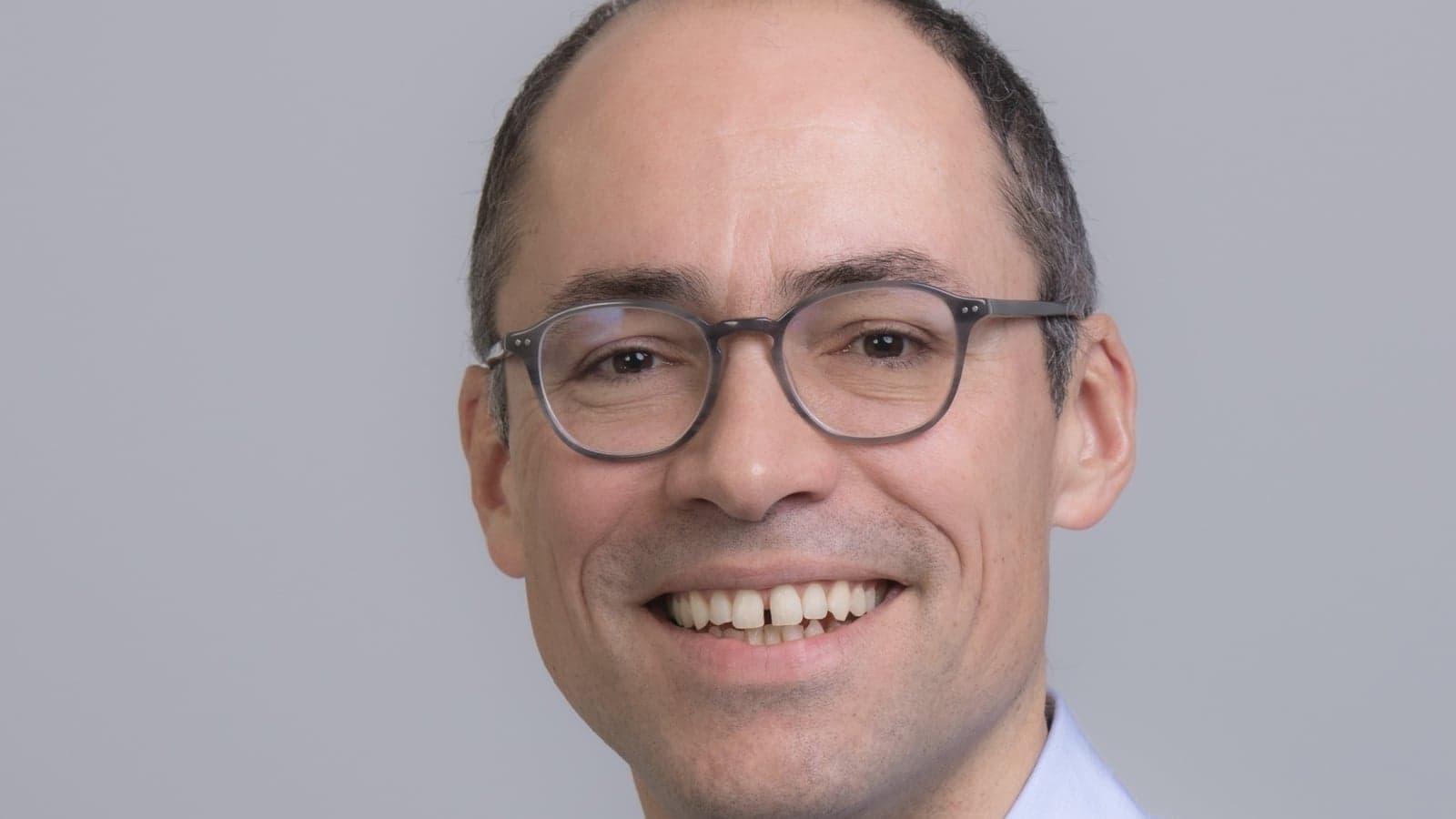
The growing potential of 450 MHz networks is reflected on by Gösta Kallner, chairman of the 450 Alliance, and Noel Kirkaldy, Head of Spectrum Management at Nokia.

The 450 MHz spectrum band is gaining growing interest for smart grid and other mission-critical networks.
Long known for characteristics such as wide geographic coverage with cost effective infrastructure, 450 MHz formed the basis for the early mobile networks in the late 1980s and early 1990s.
However, as mobile telephony evolved, the main application now is for mission critical networks and disaster relief. More than 40 major projects are being deployed or being planned in all parts of the world.
“We are seeing a big drive from next generation power utility networks with more and more prosumer local production, and this is requiring more and more connectivity further out in the network and reliable, stable and robust connectivity,” says Kallner, who also serves as an advisor on private networks.
“We also are seeing more and more digitalisation such as digital twins and tools for better visibility of the grid, and these also requires this stable connectivity.”
The 450 Alliance is the industry organisation that supports 450 MHz and 410 MHz stakeholders, which encompass not only the energy utility sector as the main one but also water, oil and gas, transport and public safety.
Typically, the 450 MHz networks are operated as dedicated standalone infrastructure, including the spectrum and base stations. Examples are 450connect in Germany and Aramco Digital in Saudi Arabia.
But equally, such as in The Netherlands and Austria where there are number of regional utilities, the 450 MHz operators have been formed by a consortium of these regional utilities.
“The reason is that in the past there would be a single network for each use case, but today mobile networks need to cover many different use cases,” says Kallner.
He adds that in addition there are usually connections to other private or public networks for additional use cases and as back up.
“For devices dedicated and commercial networks are similar but especially for utilities we recommend a dedicated network for primary connectivity, mainly from the security point of view, but with failovers to commercial networks as these are a good backup and the easiest to implement.”
View more news and insights in: Digitalisation
The 450 MHz and 410 MHz end to end ecosystem
There are a large number of partners in the 450 MHz ecosystem, of which one of the longest standing with wide geographical coverage as a supplier is Nokia.
“Much of what we have been developing at 450 MHz has been focussed on the mission critical and enterprise space,” says Kirkaldy, who is also a board member of the 450 Alliance and Vice Chairman of The Critical Communications Association’s spectrum group.
“What binds the sectors together in the mobile space is they're all have or are migrating towards 3GPP-based technology and our role is very much working in partnerships with industry and other participants on end-to-end ecosystems – no one company can do it alone.”
Specifically, Nokia has advanced a reference architecture enabling both centralised and decentralised solutions encompassing cloud to devices, access and transport and with integration not only to terrestrial networks but also increasingly to non-terrestrial such as satellites as air-to-ground communication is gaining prominence.
“With this we are seeing that the infrastructure and the architecture is really matching not only the commercial mobile operators but that it is adapted with specificities into the mission-critical enterprise markets such as utilities as well,” says Kirkaldy.
He also highlights the varying ‘go to market’ options, including shared and hybrid networks and in particular the strong emergence of dedicated networks, either fully dedicated or with dedicated spectrum as a fallback solution.
Standards are another crucial issue with three ‘tiers’ – the ITU, with its global activity on issues such as public protection disaster recovery, 3GPP with its 4G, 5G, 6G and RAN focus, and regional organisation such as the European Conference of Postal and Telecommunications Administrations (CEPT) in Europe with its regional standardisation focus.
In that connection the recent recognition by the ITU of utility radio communication services and systems is regarded as a milestone as being indicative of the critical importance of energy and utilities to society, Kirkaldy notes.
Industry groups including CIGRE and the European Utilities Telecom Council (EUTC) also are important contributors to standardisation and spectrum harmonisation.
“Overall, there is a huge amount of activity going on and we are continually learning from the wider ecosystem.”
Spectrum for mission-critical networks
The 450-470MHz bands have two FDD 3GPP bands and the associated 410-430 MHz spectrum that also has two FDD bands are ideally suited for current key utility use cases including mission critical voice, SCADA, automation smart grid and smart meters.
“My advice when considering spectrum is ‘go low and go high’ by which I mean avoid the high demand spectrum that is used by the mobile operators and rather look at low spectrum that has been used that can provide the wide area coverage and if needed additional capacity with mid band spectrum” says Kirkaldy.
“Add to that the low number of base stations and the migration of technologies makes it an ideal fit, not only for utilities but other sectors as well.”
He adds that many utilities already have an existing PMR or SCADA network in the 450 MHz and or 410 MHz bands, so it allows them to migrate within their own band.
In many markets also, such as Germany, 450connect is starting to provide connectivity not only for regional utilities but also for other mission critical providers.
“So, it’s a perfect fit and a trend that we see and anticipate continuing for many years to come,” says Kirkaldy.
And Kallner adds the recommendation to start a deployment as early as possible in a smart grid project with 450 MHz enabled devices.
“This enables support for these on day one while other traffic is gradually moved onto the network – basically two transitions in one with the learning it offers.”
As utilities accelerate grid digitalisation and prepare for increasingly decentralised, data-driven energy systems, the resurgence of 450 MHz reflects a broader shift in communications strategy.
Once viewed as a legacy spectrum band, it is now emerging as a strategic enabler of resilient, secure and scalable mission critical dedicated networks, positioning it to play a central role in the next generation of critical national infrastructure (CNI).
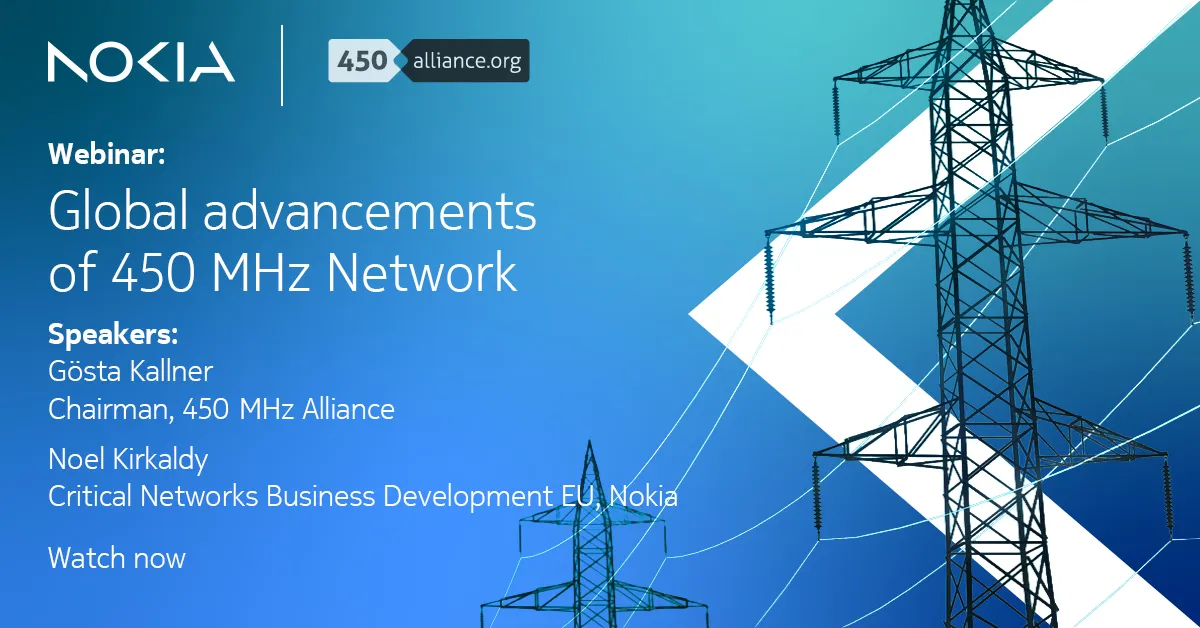
Global advancements of 450 MHz Network
In this recorded discussion, Noel Kirkaldy from Nokia and Gösta Kallner, Chairman of the 450 MHz Alliance, explores how 450 MHz is evolving from a regional niche into a globally coordinated ecosystem.
View webinar on demand