Green hydrogen for heating to pilot in Canary Islands
Jonathan Spencer Jones
Posted on: 12 July 2023
The H2Heat project is being developed to demonstrate green hydrogen production from offshore wind for heating.
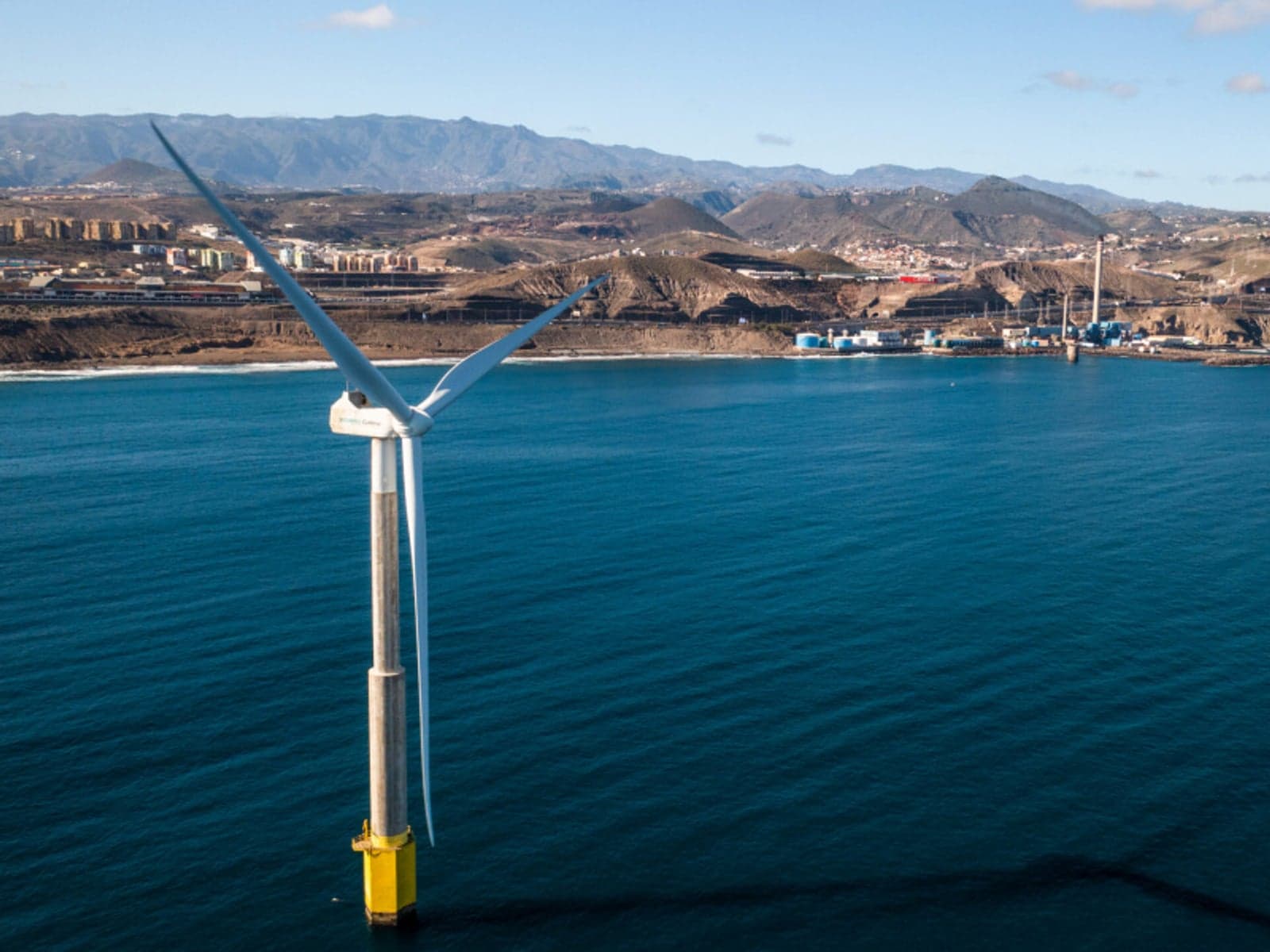
The H2Heat project is being developed to demonstrate green hydrogen production from offshore wind for heating.
The project, which is being undertaken by a multi-disciplinary consortium led by the Oceanic Platform of the Canary Islands (PLOCAN), is aimed to demonstrate the complete value chain of green heating with hydrogen in a commercial setting.
The project intends to use renewable energy from Esteyco’s 5MW Elican offshore wind facility to produce green hydrogen using a high efficiency electrolysis unit at the PLOCAN site on Gran Canaria.
The green hydrogen and oxygen produced will then be delivered to the Canary Health Service for heating at a local hospital complex.
Have you read?
Spain’s first floating wind platform exports power via subsea cable
Webinar Recording: Sustainable Energy Islands in Action
Over time with the development of a replicable model, Canary Health Services hopes to extend the approach to all its hospitals in order to help it meet its net zero health strategy.
“The comprehensive and complementary combination of experience and expertise provided by the consortium partners will ensure an efficient realisation of the technical objectives of the project, reduce the cost of H2 fuel for consumers and develop replicable business models for the large-scale commercial use of H2 as a direct heating alternative in Gran Canaria,” a PLOCAN statement reads.
The project, due to formally get under way in September, has a duration of five years and a total budget of €13 million (US$14.3 million), of which €10 million ($11 million) is being provided by the European Union from the Horizon Europe scheme.
In addition to the novel and practical use of green hydrogen for heating, the H2Heat project includes other new innovations.
The Elican wind turbine was developed with earlier EU support to demonstrate a new structure with a self-erecting telescopic tower for deep offshore wind. With the lowered centre of gravity of the tower on manufacture, the proposal is that effectively it can be floated to the offshore site and there ballasted to rest on the seabed, thereby lowering the cost and complexity of the process.
The other innovation still in its infancy is the maritime production of green hydrogen, in this case not at sea itself but nevertheless within the marine environment.
In addition to Esteyco and Stargate Estonia, which is providing its 1MW Gateway electrolyser, other partners in the consortium include engineering company Neodyne, CHP specialist 2G Solutions, the Canary Islands Research, Innovation and Information Society Agency and the UK headquartered European Marine Energy Centre.