Green hydrogen for Japan’s Woven City and beyond
Jonathan Spencer Jones
Posted on: 1 April 2022
Petroleum company Eneos Corporation and Toyota are to explore CO2-free hydrogen production and usage at the motor company’s future city, Woven City.
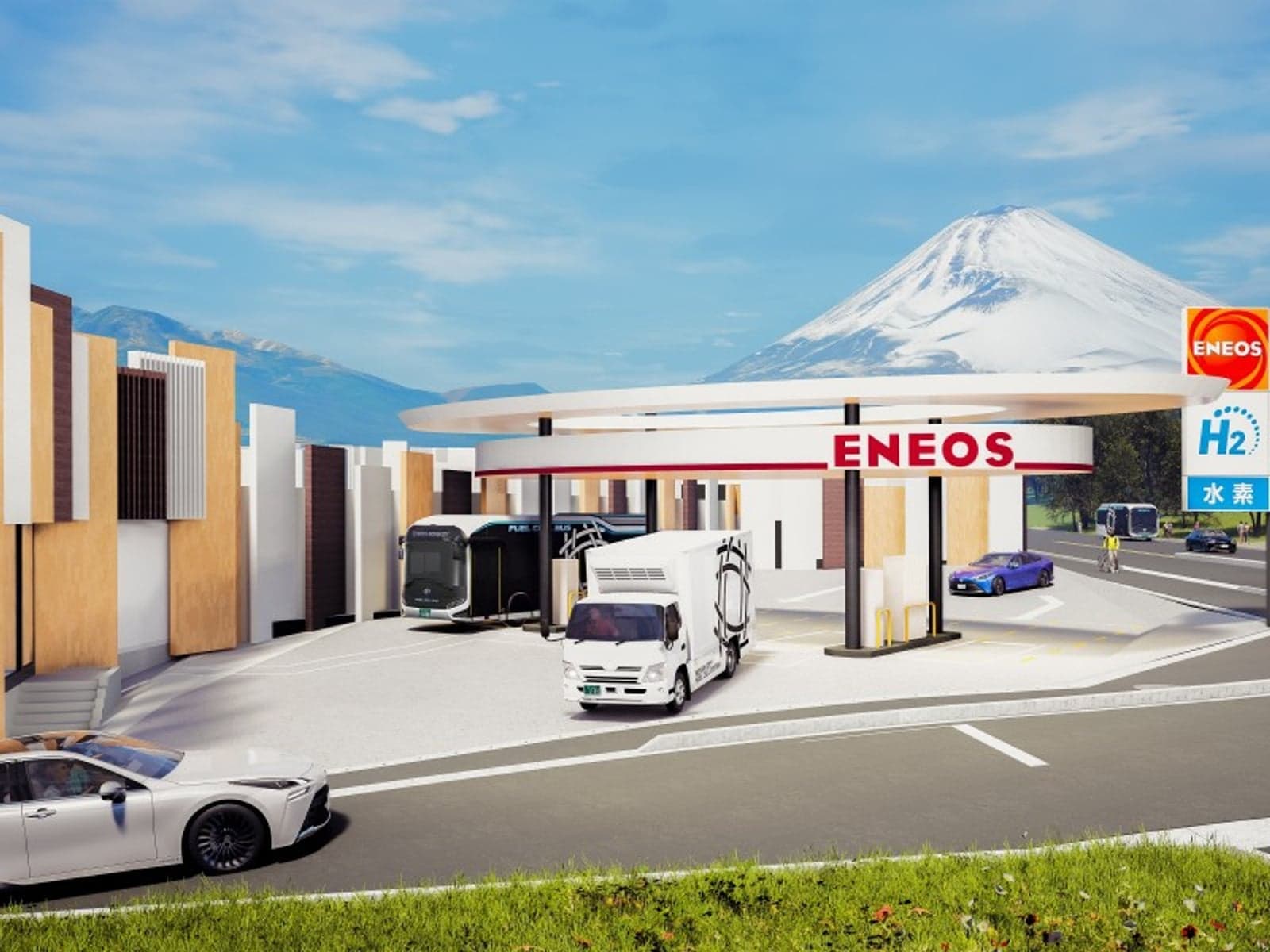
Petroleum company Eneos Corporation and Toyota are to explore CO2-free hydrogen production and usage at the motor company’s future city, Woven City.
The two companies plan to construct a green hydrogen production and refuelling station in close proximity to Woven City, which will supply hydrogen to passenger and commercial vehicles as well as into the City via a pipeline and to a fuel cell generator at the station for back-up power during outages.
The companies also intend to research and develop a hydrogen supply and demand management system in order to optimise the green hydrogen production.
Woven City is intended as a prototype of the city of the future that Toyota has started to develop in Susono City in the foothills of Mount Fuji in Shizuoka Prefecture, Japan.
Have you seen?
Toyota’s Woven City – a future smart city prototype
Hydrogen-fueled vehicles in the Dakar and beyond
Explore the burgeoning potential of hydrogen throughout the Asia Pacific region and Oceania
It is focussed on three pillars – a human-centred approach to improve people’s happiness, a living laboratory in which new innovations and technologies can be demonstrated in a real world setting, and ever evolving with the uptake of new ideas and concepts to improve the mobility of information, goods and people.
The Eneos hydrogen station is scheduled to begin operations before the opening of Woven City in 2024-2025.
“This collaboration expedites our progress toward realising a truly carbon-neutral society and will facilitate and normalise clean energy operations first at Woven City and eventually the world,” says Eneos in a statement.
The new agreement builds on an earlier agreement from May 2021 in which the companies envisioned hydrogen as key to carbon neutrality by 2050 and for Woven City to become “the most hydrogen-based society”.
Eneos already operates hydrogen refueling stations in the four major metropolitan areas in Japan and is developing technologies that facilitate hydrogen production and building an entire green hydrogen supply chain.
For its part Toyota has positioned hydrogen as one of the most viable clean energy sources in the future, investing in hydrogen and fuel cell technology and its application in mobility and stationary generation.
Fukuoka City
Among its other activities earlier in the year Toyota entered a cooperation agreement with Fukuoka City on working towards the realisation of a hydrogen society and commencing with the introduction of fuel cell vehicles for commercial uses.
Fukuoka City in southern Japan has taken an early interest in the potential of hydrogen and initiated the Hydrogen Leader City project, with a world first initiative producing hydrogen from household sewage (via biogas) and supplying it to fuel cell vehicles.
Topics under discussion include broadening hydrogen based mobility, using hydrogen energy at residential facilities and events and revising the regulations required for realising a hydrogen society.
Going forward, the companies also intend to work together to develop and verify technologies for the production, transport and use of hydrogen.