Home
/
Harmonizing innovation and sustainability: The PROBONO Project's vision for Green Building Neighbourhoods
Harmonizing innovation and sustainability: The PROBONO Project's vision for Green Building Neighbourhoods
Guest/partner contributor
Posted on: 21 May 2024
The PROBONO project aims to accelerate the transition to net-zero and energy-positive buildings by focusing on the renovation of existing urban structures in a resource-efficient manner and leveraging technological, business, and socio-economic innovations.
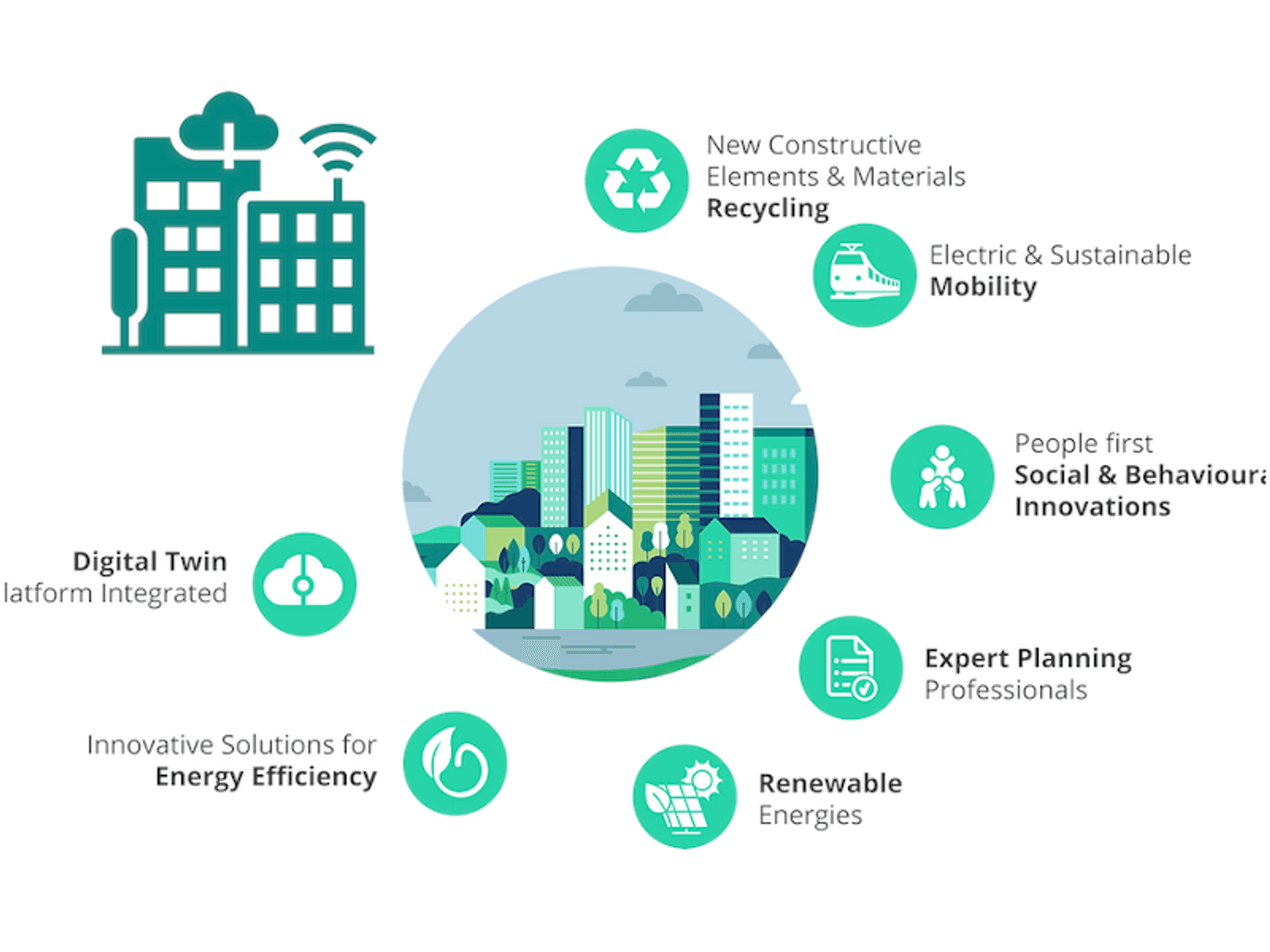
The PROBONO project aims to accelerate the transition to net-zero and energy-positive buildings by focusing on the renovation of existing urban structures in a resource-efficient manner and leveraging technological, business, and socio-economic innovations.
This transition is expected to pave the way for the development of more sustainable Green Building Neighbourhoods (GBNs) and thriving, eco-friendly communities.
In an era marked by rapid urbanisation and technology-driven progress, it has become imperative to prioritise the well-being of both people and the planet. PROBONO - short for "The Integrator-centric approach for realising innovative energy-efficient buildings in connected sustainable green neighbourhoods" - is a groundbreaking initiative designed to address this pressing need.
Initiated on January 1st, 2022, as part of the Horizon 2020 Framework Programme, the PROBONO project was chosen among 115 project proposals under the Green Deal Call, which focuses on building and renovating in an energy and resource-efficient manner.
Challenges in achieving the Green Building Neighbourhoods vision
The aspiration for sustainable and green buildings across Europe has faced numerous obstacles, including high upfront construction costs, limited access to capital, social attitudes, information gaps, lack of experience, and inadequate incentives.
To address these challenges and create a harmonious relationship between the European construction industry, public authorities, and citizens, PROBONO envisions a people-focused approach. This approach aims to deliver scalable, sustainable, and viable energy-positive and zero-carbon Green Building Neighbourhoods.
PROBONO Living Labs: Catalysts for change
The PROBONO project takes a bold step by establishing living labs across six EU states. These living labs play a crucial role in piloting sustainable green neighbourhood developments, connecting them with business and municipality greening plans. The six living labs are diverse, including two large-scale demonstrators driven by municipalities (Madrid and Dublin) and four representing business/owner promoters of Green Building Neighbourhoods transitions (Porto, Brussels, Aarhus, and Prague).
Living Labs are dynamic environments where innovative ideas are tested and refined, ensuring that sustainability solutions are practical and effective in real-world settings. They serve as testbeds for the latest technologies, construction practices, and sustainable initiatives, offering the potential to test how social and technological innovations are perceived in the real world and, how they impact and are impacted by social interactions.
Defining Green Building Neighbourhoods
While a GBN can be broadly described as a cluster of physical, technical, natural, and social attributes operating within an interdependent ecosystem, the precise definition varies depending on context.
The newly formed Green Building Neighbourhoods Committee (GBNC) is actively refining and maturing the GBN definition. In the context of PROBONO, a neighbourhood is defined as a collection of buildings within the urban environment, encompassing technology, physical structures, natural elements, social constructs, and human behaviour.
These attributes, guided by enabling policies, encompass concepts such as circular economy, just transition, and mobility. GBNs have fluid boundaries that adapt to different contexts, including geographical, legislative, and sustainability considerations (Ismayilzada & Marzell, 2023).
Digital twins: Revolutionising sustainable design
A key component of the PROBONO project is the implementation of digital twins, revolutionising the design and planning of carbon-neutral Green Building Neighbourhoods systems. Digital twins are virtual replicas of physical systems that add value by providing enhanced insights and facilitating better decision-making. What sets digital twins apart from other digital models is their seamless connection to their physical counterparts, enabling real-time data exchange and decision-making.
Digital twins consist of connectors and data capturing the physical twin's state. This information is processed through sense-making tools, including models and artificial intelligence, culminating in informed decision-making through reports and dashboards. To maximize their utility, digital twins are interconnected with other systems using technologies such as IoT, sensors, cloud computing, AI, and machine learning. Additionally, a "service" space has been introduced to emphasize the digital twin's purpose.
PROBONO's innovative tools and people-centered approach
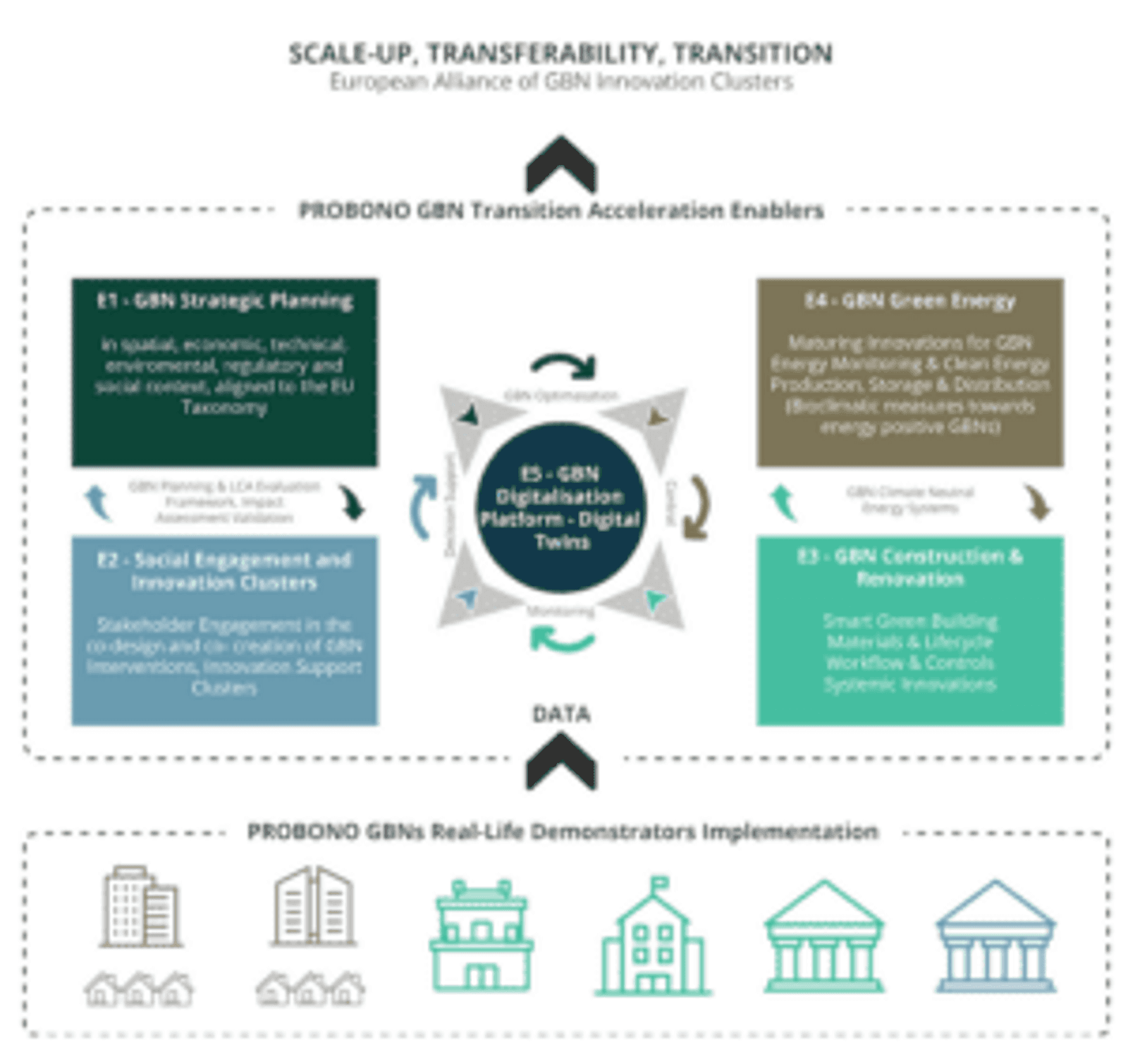
PROBONO's cloud-based decision-support and planning tool harnesses the power of digital twins to optimize the design of carbon-neutral Green Building Neighbourhoods. It balances demand and response dynamics while incorporating cutting-edge technologies such as Building-Integrated Photovoltaics, HVAC solutions, energy storage, and electric vehicle charging stations. This tool streamlines the process of creating sustainable neighbourhoods, ensuring that energy-efficient solutions are implemented effectively (Niavis et al., 2022).
People-centred design is essential for creating energy-efficient neighbourhoods that prioritize residents' well-being, comfort, and engagement. The goal is to make these neighbourhoods not only sustainable, but socially vibrant, inclusive, and liveable by involving people in the decision-making process, promoting energy-efficient behaviours, and ensuring social equity. In order to achieve this, PROBONO is testing a variety of social and behavioural innovations,
both in terms of engaging GBN stakeholders and changing behavioural patterns related to energy consumption and sustainable living.
Conclusion: A bright future with Green Building Neighbourhoods
The PROBONO project stands as a beacon of hope in an increasingly urbanised world. By focusing on sustainability, community well-being, and cutting-edge technology, PROBONO aims to pave the way for a greener, more sustainable future.
Through its living labs, digital twins, and comprehensive planning tools, PROBONO promises to transform urban landscapes into vibrant, eco-friendly Green Building Neighbourhoods where people and the planet thrive in harmony. As we move forward, let us embrace these innovative solutions and work together to build a brighter and sustainable future for all.
Authors:
Salima Ismayilzada, Sidsel Bruun
References:
Ismayilzada, S., & Marzell, L. (2023, January 13). GBN - green buildings and neighbourhoods. Probono.
Niavis, H., Laskari, M., & Fergadiotou, I. (2022, August 19). Trusted DBL: A blockchain-based digital twin for sustainable and Interoperable Building Performance Evaluation. Zenodo.
Most popular
Join the community for freeAnd get access to all content
Related projects
Probono
+1

Latest content
+3
The EU Energy Projects Podcast: Green buildings and neighbourhoods with project PROBONO
In this episode of The List Podcast, Areti delves into the world of green buildings and neighborhoods with the PROBONO project, exploring the challenges and opportunities presented by this crucial transition.
- Enlit Editorial Team
- 28/02/2024