The psychology behind climate action: How CERNA makes social norms visible
Guest/partner contributor
Posted on: 16 December 2025
The CERNA assessment explores how citizens think about climate change, what they believe works and what they assume others believe.

Across Europe, citizens care deeply about the climate yet many believe they are alone in that concern. This invisible gap between what people feel and what they think others feel can quietly slow progress toward sustainability.
The CERNA assessment (Climate and Energy Related Norms and Attitudes) was developed by Smart Innovation Norway within the PROBONO project to bring a psychological perspective to sustainability. The tool examines what individuals believe about climate change, how they perceive others’ beliefs and which everyday actions they consider most effective.
CERNA has been applied in six PROBONO living labs, Madrid (Spain), Dublin (Ireland), Porto (Portugal), Aarhus (Denmark), Brussels (Belgium) and Prague (Czech Republic), revealing shared patterns across diverse cultural and social contexts.
The psychology behind CERNA
CERNA is based on the concept of pluralistic ignorance, when people care about climate change but assume others do not. This misunderstanding often leads to hesitation or inaction.
The assessment also draws on research showing that behaviour is shaped by habits, context and cues, not only by motivation. As the CERNA authors explain, lasting behavioural change occurs when people understand how to build new routines from their actions and when they feel that the social norms around them support these routines.
By offering a diagnostic tool, CERNA identifies how people tend to misinterpret social norms, which often affects climate-related behaviour.
Key findings across living labs
Conducted in six European cities, the CERNA Assessment results, publicly available on the PROBONO website, offer a consistent picture of how citizens perceive climate change and collective action.
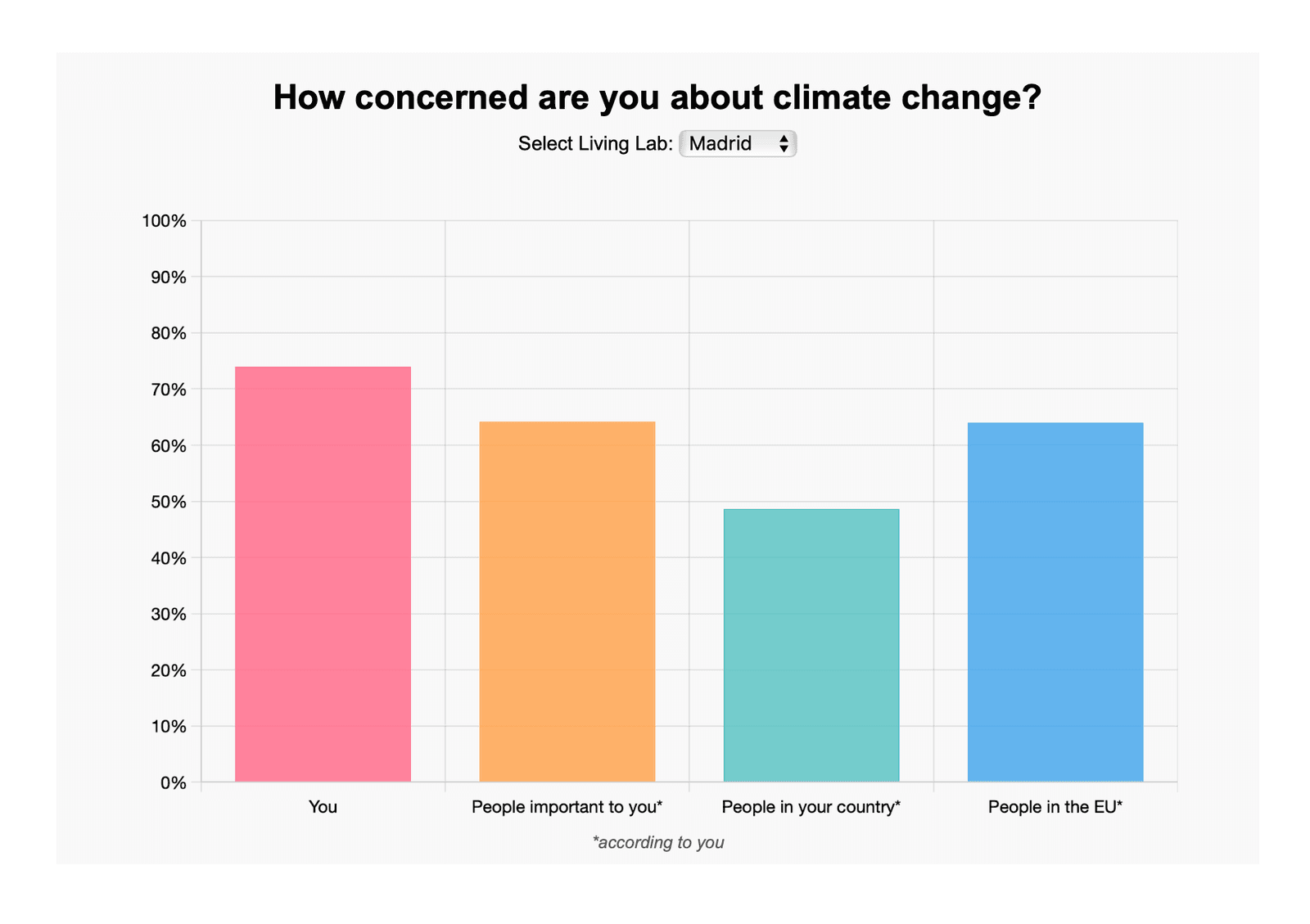
Across all living labs, the findings show that a large majority of people are concerned about climate change, yet they believe others in their city and country are less concerned. This consistent pattern appears in every city where the assessment was conducted.
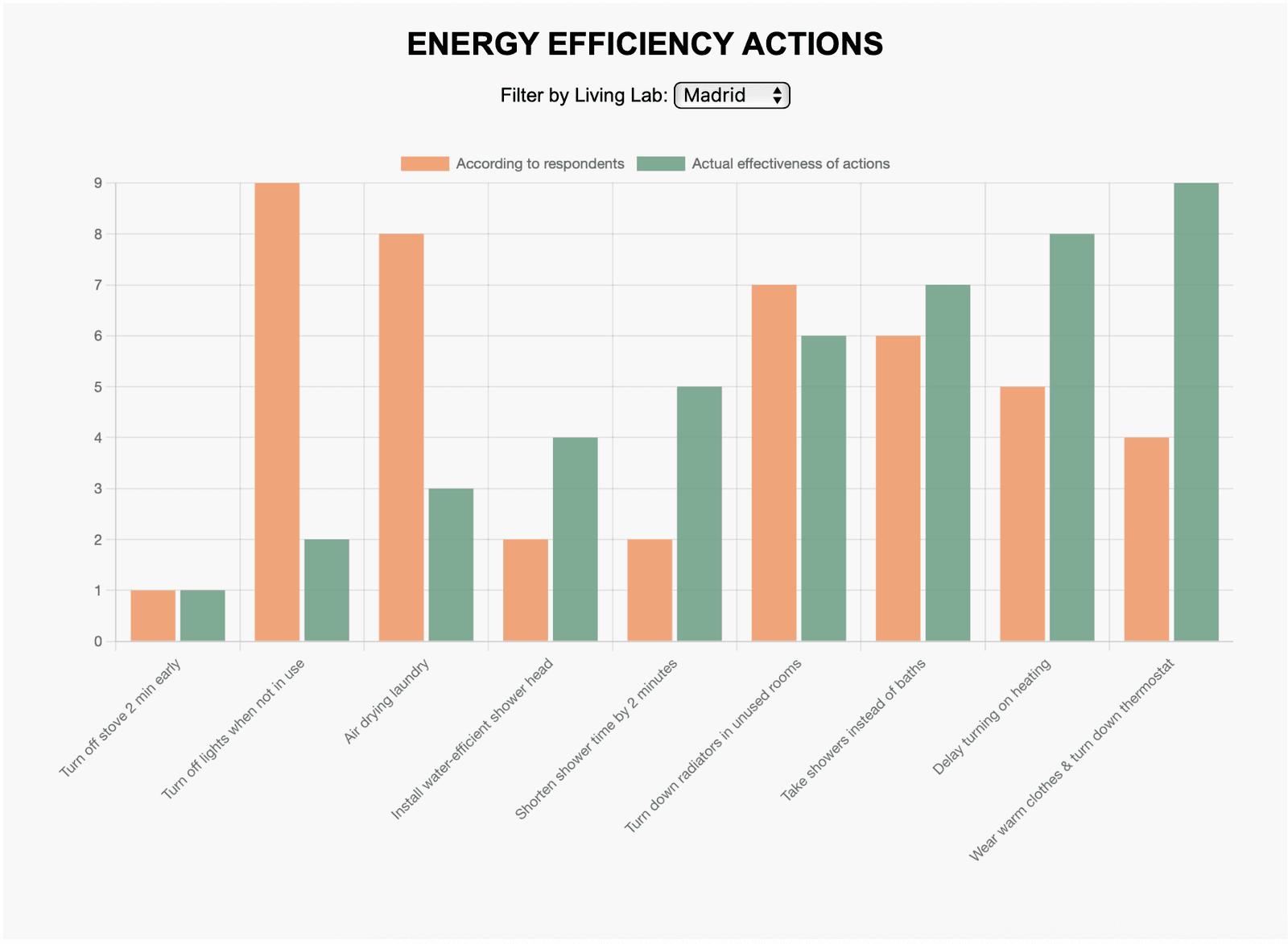
Questions about general knowledge of energy efficiency actions highlighted some gaps in understanding: many participants ranked low impact actions such as turning off lights among the most effective climate measures, while in reality, higher impact behaviours, such as taking shorter showers, lowering indoor heating by one degree or starting the heating season later, contribute significantly more to energy savings.
CERNA translates these insights into visual form, using comparative graphs that clearly show how beliefs, perceptions and action priorities differ across the six European cities.
From research to practice
In PROBONO, CERNA supports the project’s goal of developing green building neighbourhoods that combine technology, design and community engagement. The assessment helps city partners and stakeholders better understand the human side of sustainability: the attitudes, perceptions and behavioural factors that influence participation in climate initiatives. By understanding what people actually believe and what they think others believe, cities can design approaches that reflect real attitudes and support more effective climate action.
Beyond PROBONO, CERNA serves as a replicable and adaptable method for organisations, municipalities, and other projects seeking to include behavioural insights into their climate work.
In conclusion, the CERNA assessment demonstrates that people are both concerned about climate change and support green policies but many underestimate how widespread that commitment is. By identifying these perception gaps, CERNA provides an evidence-based pathway to strengthen social alignment and accelerate behavioural change.
Through its cross-European implementation, CERNA has proven its ability to turn theoretical frameworks into actionable data for behavioural interventions. As a result, it offers a reliable, transferable solution for any project or organisation seeking to integrate human understanding into the green transition.
To learn more about the CERNA assessment, visit the project website and view the project video.
About the author
Salima Ismayilzada is a communication expert at Smart Innovation Norway, specialising in strategic communication, dissemination and stakeholder engagement across EU Horizon projects. With a strong focus on sustainability, she creates impactful narratives that connect research and innovation with society, making complex ideas accessible to diverse audiences.