Hockey, uni and a brewski: three innovations in district heating
Yusuf Latief
Posted on: 8 August 2025
What does a Latvian ice hall, Queen Mary University of London and a German brewery have in common: Each use innovations in waste heating.

What do a Latvian ice hockey hall, Queen Mary University of London and a German brewery have in common? Each, in its unique way, is innovating in its approach to waste heat.
Europe’s district heating and cooling (DHC) sector has seen interesting boosts, both in terms of decarbonisation and innovation. According to the latest DHC market outlook from Euroheat and Power, for the first time, fossil fuels in the sector have declined significantly, with the contribution of coal and natural gas down respectively by 12.3% and 3.7%.
Renewable energy and waste heat sources now represent 44.1% of the district heating and cooling energy mix, an increase of 9.4% since 2022. And what intrigues is the latter of these two sources – waste heat.
There are many ways to innovate in this sector, and three use cases - a local ice hockey arena in Latvia's capital city, a university data centre in London, and the König brewery in Duisburg, Germany – have been demonstrating how.
Ice hockey rink to district heat
Latvia’s capital city, Riga, is home to the VOLVO Ice Arena. Primarily used for ice hockey and figure skating, its potential for new approaches to heating isn’t something to skate past.
Cleantech & Energy SIA, a consultancy specialising in clean energy solutions, recognised this and, in a project for logistics company PRIZMA SA, has been developing an integrated technical solution for heat recovery.
The Arena comprises three ice rinks and a separate hotel building. Currently, heating is supplied via an individual substation connected to the district heating network. Cleantech believes that the heating demand of the Ice Arena could be met through recovered waste heat from the refrigeration system.
Said Cleantech & Energy SIA Director Sandra Šlihte: “The ice hockey arena is currently producing ice and as a byproduct of producing ice from a compressor, they have heat. But what do they do with that heat? They throw it in the air.
“We have about 20 ice hockey arenas across Latvia with a ‘copy and paste’ mistake - not only so they ‘dump’ the heat into the air, they also buy heat from district heating companies for space heating and hot water.
“The energy bill of buying heat from the district energy grid is about €100,000 a year. And for an ice hockey arena, that's a big sum for not a massive business.”
Indeed, looking into the Arena's use of this waste heat provides significant potential.
Cleantech said as much over on LinkedIn: around 40% of the waste heat (~1500MWh) could meet the arena’s own heating and hot water needs; a surplus of ~2000 MWh could be fed back into the district heating network; the heat is high-grade - up to 70°C, making it perfect for integration.
As part of the project, Cleantech is carrying out the development of an energy consumption model, a technical and economic feasibility study, the design of the heat recovery solution, negotiations with the district heating operator, and the preparation of all necessary documentation for funding.
The initiative also includes preparing a funding application for the modernisation of the refrigeration system.
Also of interest:
The cost of keeping warm: Delivering a just clean heat and cooling transition for European citizens
Energy Transitions podcast: Is power-to-heat the missing link to industrial decarbonisation?
Brewing beer with furnace heat
In the city of Duisburg, Germany, sits a steel plant owned by the country’s largest steelmaker, Thyssenkrupp.
A hundred meters away is a brewery with roots stretching back to 1858.
Linking these two facilities is an innovative project run by the steelmaker and the German energy company E.ON.
Under an agreement between E.ON, thyssenkrupp Steel and König Brauerei, waste heat captured from steel production is repurposed to brew a beer with 75% lower carbon emissions.
The König Brauerei has been in operation for more than 150 years and today has around 55,000 bottles passing through its filling line every hour – 1,32 million bottles per day.
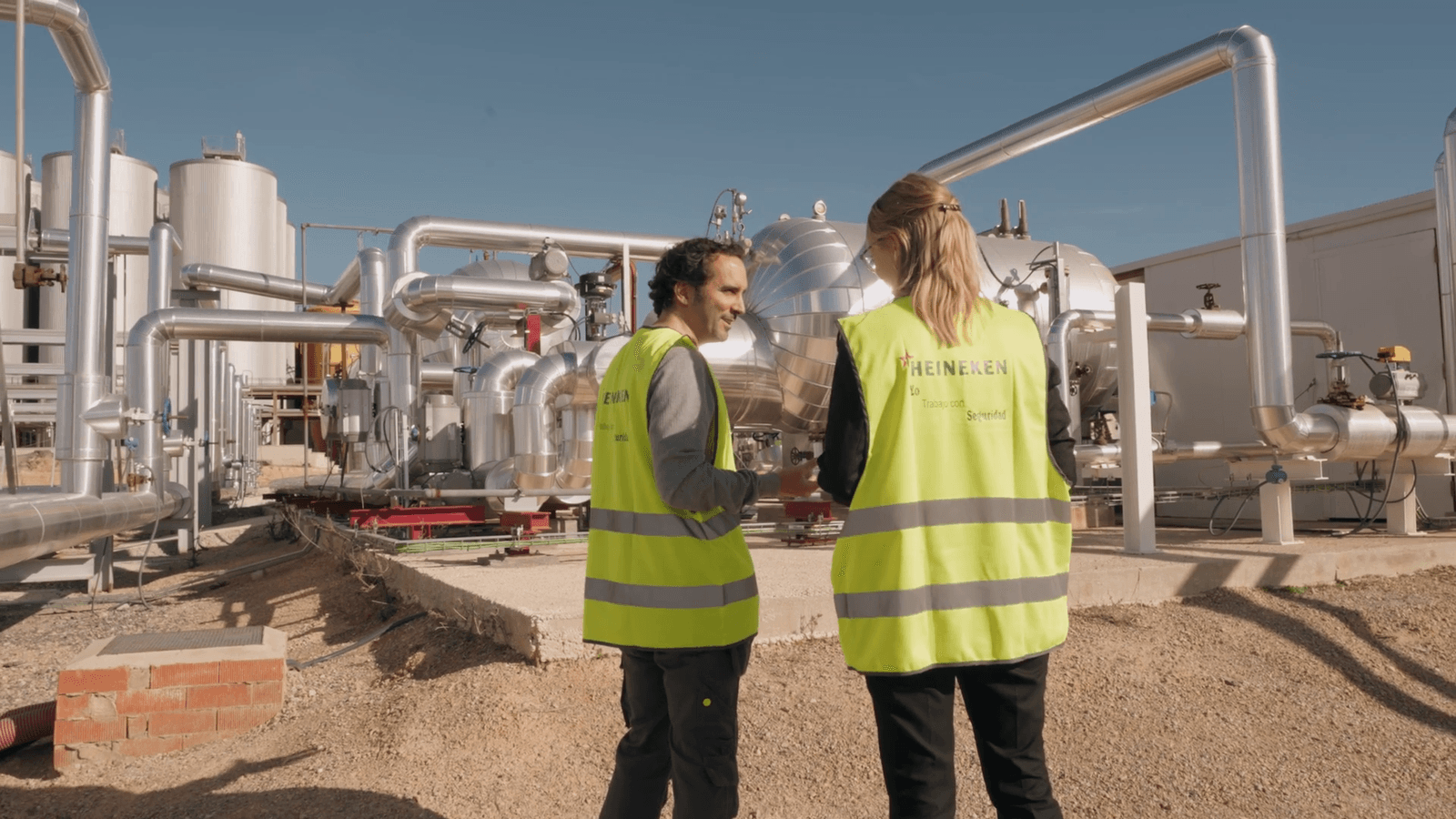
Under the partnership, industrial waste heat is captured from the steel production process, transferred through a new steam pipeline built and operated by E.ON, and then into the König brewery’s existing steam network where it supplies energy for the brewery's processes.
As its energy partner, E.ON built the entire pipeline infrastructure and the steam heat exchanger and will also be responsible for energy management in the future.
At the time of the project’s announcement, Wolfgang Wiese, Head of Power Plants and Energy Control at thyssenkrupp Steel, said:
“The entire project is proof of how companies can effectively promote local climate protection in good neighbourhoods. This innovative joint project not only helps the climate. The three companies involved also benefit.”
A data centre-heated campus
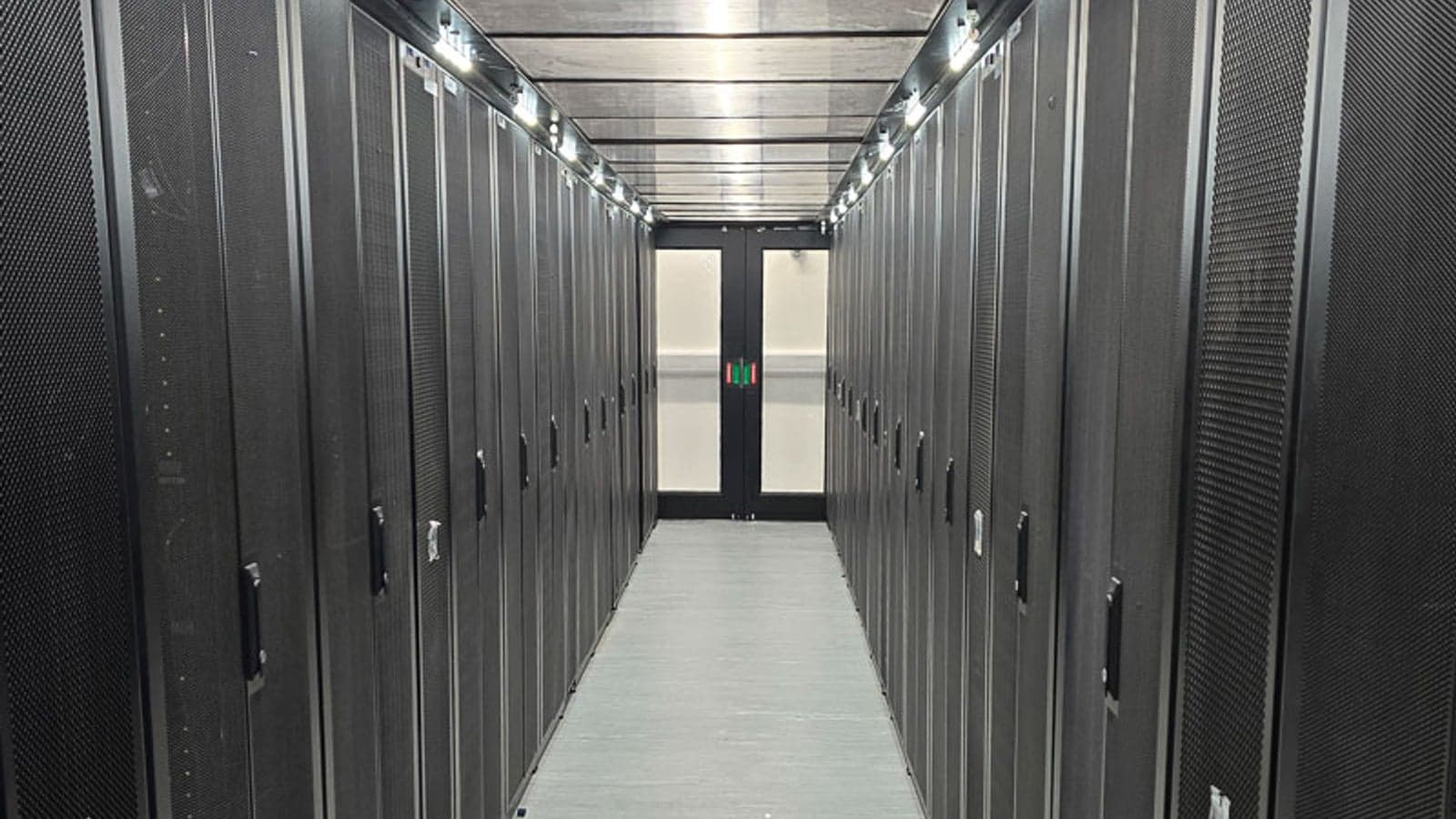
Over in the UK, Queen Mary University - one of the world’s top 100 universities - partnered with tech major Schneider Electric to create a platform for heat recovery at the University’s data centre.
The University is a participant in the Grid for Particle Physics (GridPP) project, a collaborative effort among particle physicists, computer scientists, and engineers to analyse data generated by high-energy physics experiments, such as those conducted at the world-famous Large Hadron Collider (LHC) at CERN.
The size, scale, and importance of this work mean that the University must operate and maintain a highly efficient, on-premises data centre - ensuring it meets the technical requirements of existing and future research developments, especially those requiring High Throughput Computing (HTC) applications.
However, Queen Mary’s data centre was experiencing reliability, scalability, and availability issues, which required manual on-site interventions to fix. It was also becoming outdated, and its operations were, at times, impacted due to a build-up of heat in its server racks from its inefficient cooling systems.
As a fix, Schneider Electric and its EcoXpert Partner, Advanced Power Technology (APT), delivered a data centre modernisation project, enabling waste heat from the facility to be connected to a campus-wide district heating network, providing heating and hot water for the buildings and student accommodation nearby.
More on the Queen Mary data centre project:
How a university data centre delivers heat to the campus district heating network
The project reduces the campus's scope 1 CO2 emissions in line with Queen Mary’s sustainability goals while also reducing the costs of its energy bills.
Further, the new energy efficient data centre has provided the University with increased resiliency and processing power for its on-premises, large-scale research and intensive computing applications, helping it to provision for future expansion.
Future research computing may also have been hindered for the data centre due to hosting limitations.
Therefore, says Schneider Electric in a release, the refresh was vital to improve and stabilise day-to-day operations, and its proximity to the campus’ district heating network presented an opportunity for a new solution to be designed and implemented to bring the data centre in line with the University’s sustainability goals.
Latest content
+2
How a university data centre delivers heat to the campus district heating network
Queen Mary University of London’s data centre has been modernised and upgraded to be more energy efficient and sustainable as well as to provide heat to the local heating network in a project led by Schneider Electric.
- Jonathan Spencer Jones
- 07/07/2025