How a university data centre delivers heat to the campus district heating network
Jonathan Spencer Jones
Posted on: 7 July 2025
Queen Mary University of London’s data centre has been modernised and upgraded to be more energy efficient and sustainable as well as to provide heat to the local heating network in a project led by Schneider Electric.
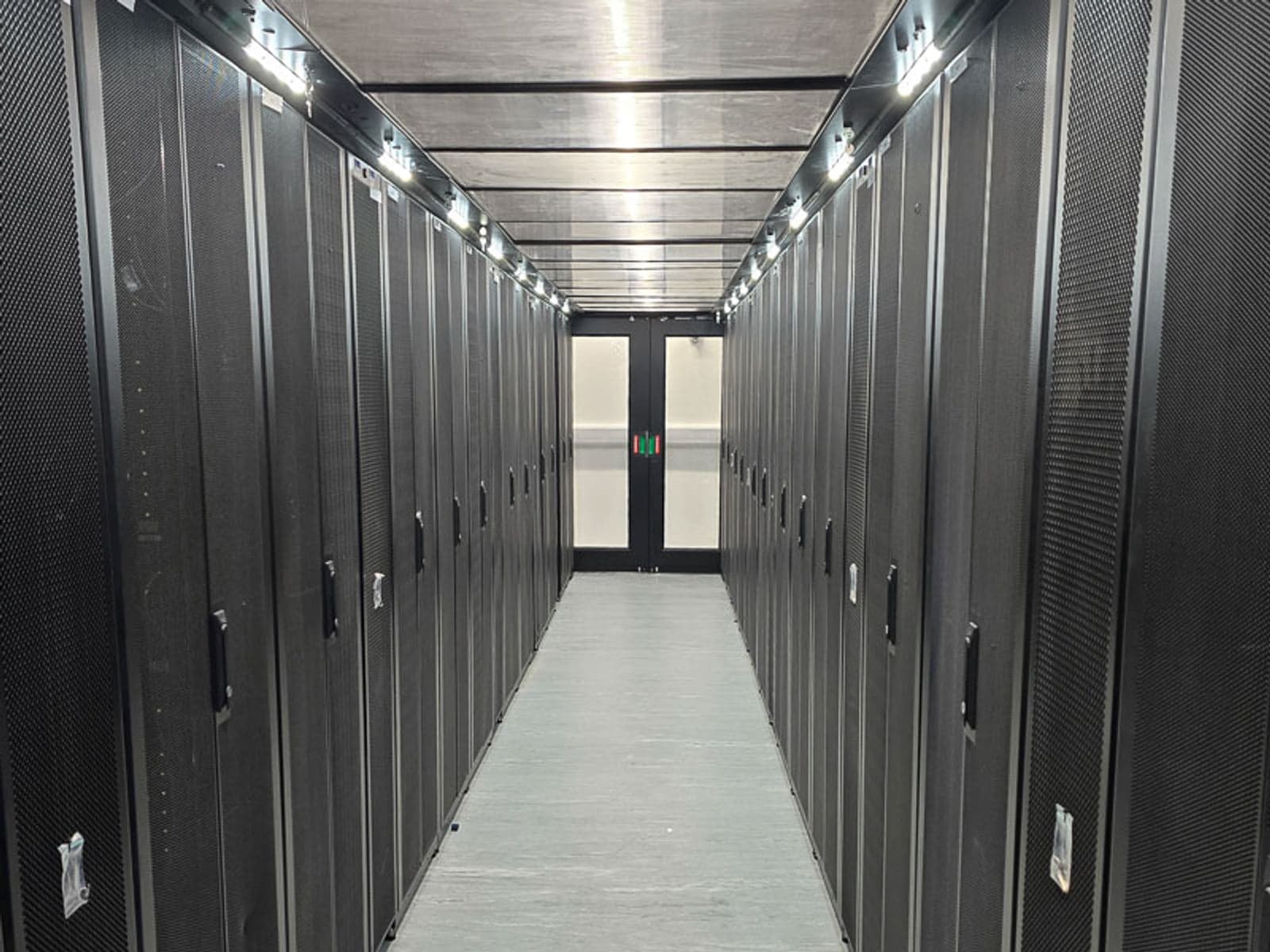
Queen Mary University of London’s data centre has been modernised and upgraded to be more energy efficient and sustainable, as well as to provide heat to the local heating network in a project led by Schneider Electric.
The data centre, primarily providing computing services for the CERN Large Hadron Collider (LHC) programme as part of the national Grid Computing for Particle Physics (GridPP) network and in turn the Worldwide LHC Computing Grid network, is one of several such centres around the world that are required collectively to deliver a 24/7 autonomous service for researchers in high energy particle physics.
Located in the University’s Priestley building, the data centre, classified as tier 2, is modest by commercial standards but is a key component of the data centre infrastructure – notably declared in the UK as a ‘critical national infrastructure’.
In addition to forming one of GridPP’s largest computing clusters, the centre hosts equipment for the national IRIS (E-Infrastructure for Research in Science) programme, providing resources for other large scale collaborations in areas including astronomy and nuclear physics.
Also of interest
Hyperscaler data centres and predictable power – top trends shaping Europe’s data centre landscape
At a press event to mark the completion of the new data centre, QMUL Professor Jon Hays, a particle physicist responsible for the data centre, explained that the ageing infrastructure was experiencing reliability, scalability and availability issues that were requiring periodic on-site interventions and down times.
In addition, it would have been unable to meet the future research computing requirements, which are expected to increase fourfold over the next decade.
“We are committed to embedding sustainability into all we do and so when it came to upgrading the centre, we realised that it’s a big opportunity to not just replace the facilities but to do something bigger that would make our infrastructure more sustainable and reduce our carbon footprint and also would drive savings for the university,” he outlined.
At that point, Schneider Electric partner Advanced Power Technology (APT) was brought into the project to provide new power and cooling solutions that could meet those modernisation and sustainability goals.
The approach that was selected was built around Schneider Electric’s EcoStruxure Row Data Centre solution – a pre-engineered, configurable and scalable system encompassing racks, power, cooling and management.
It also incorporated the APC NetShelter Racks, APC NetBotz environmental monitoring equipment, InRow fans and water cooling and the EcoStruxure Data Centre software platform to provide visibility and real-time monitoring.
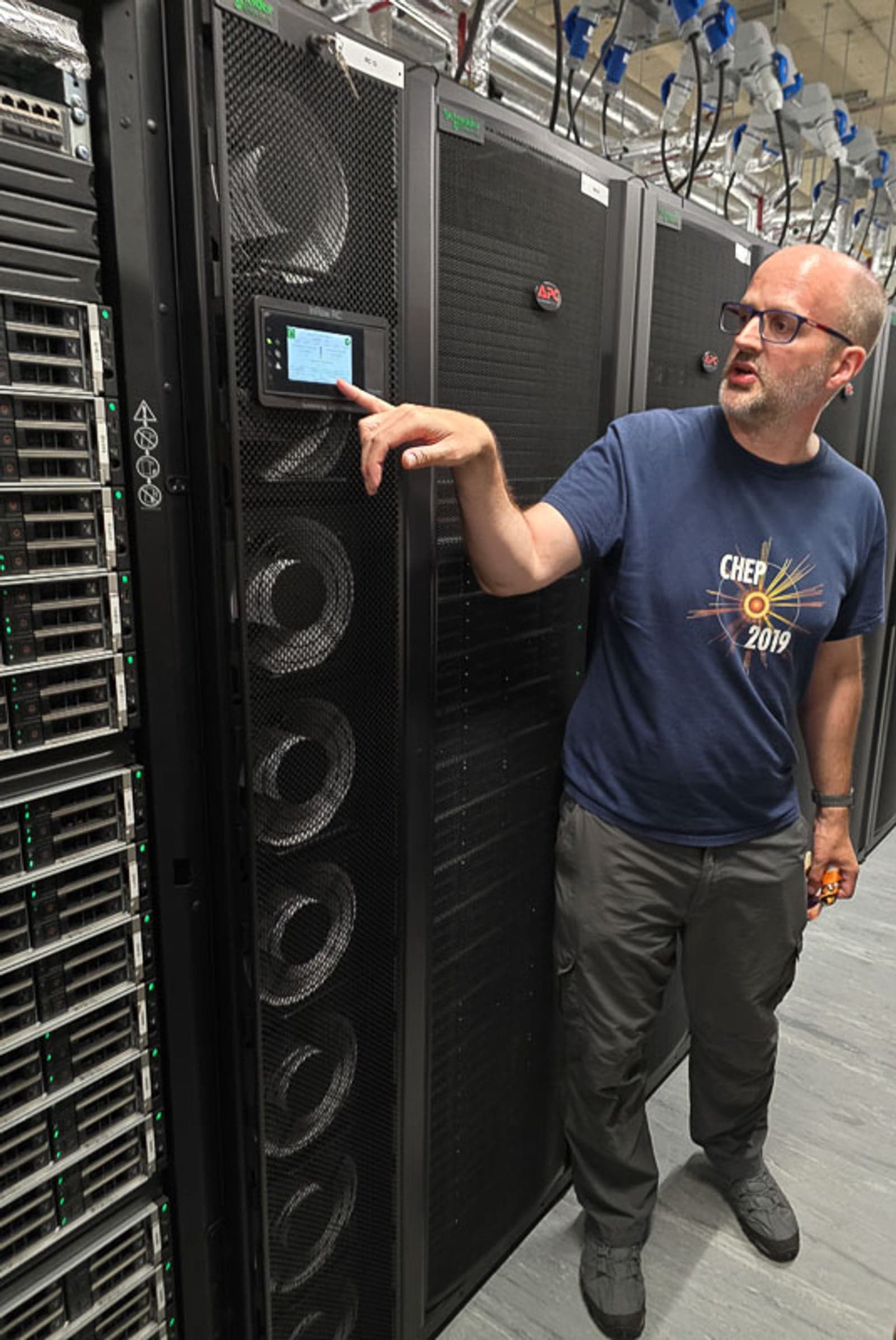
The opportunity was also taken to connect the data centre to the University’s district heating system via water-to-water heat pumps to enable its waste heat from the water cooling system to be utilised.
“The project almost doubled the compute capacity from around 200kW to 390kW, increased the maximum rack capacity up to 20kW and improved the up-time and redundancy – and critically waste heat is now being reused elsewhere in the campus, allowing the University to deliver on its sustainability strategy,” said John Andrew, Technical Sales Manager of APT.
Other options for the use of the waste heat, in addition to the district heating system at times of limited heating demand – although this has not occurred so far – are for it to simply be efficiently rejected using dry coolers or for the water to be cooled with chillers and returned to the data centre for cooling.
“The objective is to avoid burning natural gas within the district heating system,” added Andrew, noting that if the data centre were to run at full capacity, it could provide the equivalent of 2.8 million back to back showers per year, save £240,000 ($328,000) in gas bills and reduce 700t of CO2 per year.
Full data is awaited, however, with a full year of data necessary to indicate the heat requirements for the system and which is being gathered, alongside the current expansion of the University’s district heating network.
Data centre district heating
Using waste heat from data centres for district heating is an option increasingly being eyed to support sustainability goals and also comes with the potential of an additional revenue stream, depending on the individual business model and local regulatory conditions.
Of course, this requires the data centre to be located close to the demand for heating. Andrew pointed to the potential, highlighting the increasing compute demands and rack capacities and the emergence of direct-to-chip cooling, allowing for higher send and return water temperatures.
“In the past, 1MW of compute would have comprised of over 300 racks but today we can achieve that with 12 racks,” he commented, saying such a system could be built within a ‘pod’ of approximately 23x12m in size with the ability to provide heat for over 100 homes.
“This would open up the opportunity to locate high-density compute facilities near to demand, rather than in large out-of-town facilities.”
While such a ‘plug and play’ approach is still conceptual, the notion of location close to demand is already being implemented, as Mark Bjornsgaard, Chief Innovation Officer of data centre operator Deep Green, an Octopus Energy company, described.
“Our critical component is to capture as much heat as we can and to give it away free to anyone who can use it,” Bjornsgaard commented, saying that the company’s proposal is based on the use of the heat for ‘social licence’ to heat public facilities such as swimming pools.
“We started with swimming pools and have managed to qualify two – in Manchester and York – but they are hard to do, and also we are landing district heating systems. People need to understand that when they build district heating, they need a data centre next door to supply the heat.”
He adds: “Use the ground as a thermal store with a thermal energy storage option, such as from Kensa, another Octopus Energy company, and we can keep harvesting heat pretty much all year round.”